
Views: 222 Author: Leah Publish Time: 2025-12-02 Origin: Site


Content Menu
● What Is an Automatic OTF Knife?
● Single‑Action vs Double‑Action Mechanisms
● Tactical Automatic OTF Knives: Core Features
● Everyday Carry (EDC) Automatic OTF Knives
● Tactical vs EDC: How They Differ
● Legal and Safety Considerations
● Blade Shapes, Steels, and Edge Types
● Handle Materials, Ergonomics, and Carry
● Durability, Maintenance, and Reliability
● Automatic OTF Knife Size and Weight Choices
● Use Cases: Tactical vs Everyday Scenarios
● OEM and Customization Opportunities for Brands
● How to Select the Right Automatic OTF Knife
● FAQ
>> 1) Is an Automatic OTF Knife suitable for self‑defense?
>> 2) Can an Automatic OTF Knife be used as an everyday work knife?
>> 3) How should I maintain an Automatic OTF Knife?
>> 4) What blade steel is best for an Automatic OTF Knife?
>> 5) Why should brands choose an OEM factory in Yangjiang for Automatic OTF Knives?
Automatic OTF Knives have evolved from niche tactical gear into versatile tools that serve military, law‑enforcement, outdoor, and everyday users around the world. An Automatic OTF Knife ("out‑the‑front" knife) deploys its blade in a straight line from the front of the handle using a spring‑driven mechanism activated by a button or slider. For overseas brands, wholesalers, and manufacturers, choosing or designing the right Automatic OTF Knife for tactical versus everyday use is essential to meeting market expectations and legal requirements.[10][11][12]
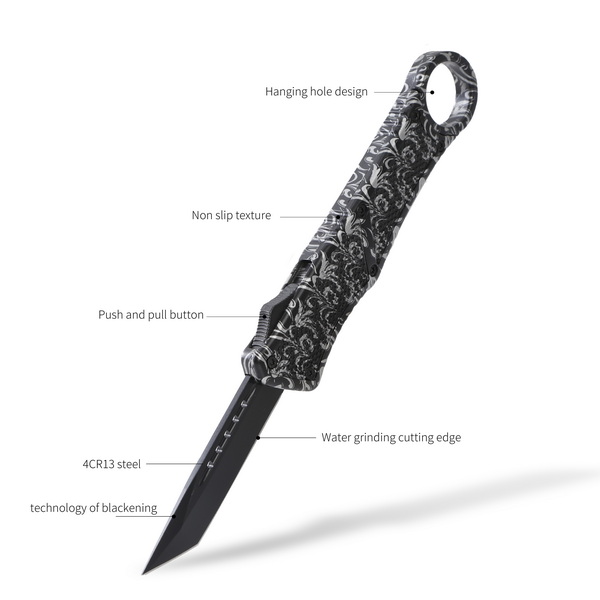
An Automatic OTF Knife is a type of automatic knife that stores its blade entirely inside the handle and launches it forward along an internal track when the user actuates a switch. Unlike side‑opening automatics or traditional folders, the Automatic OTF Knife uses a linear deployment path and relies on precision‑machined internal components to guide the blade in and out. This design allows fast one‑handed operation while keeping the knife compact, flat, and easy to carry.[6][7][13][10]
Modern Automatic OTF Knife designs are popular among military personnel, law‑enforcement officers, first responders, outdoor enthusiasts, and EDC (everyday carry) users who value instant access to a dependable cutting tool. Many high‑end models use CNC‑machined handles, premium blade steels, and carefully tuned springs to provide reliable deployment even after thousands of cycles.[4][14][15][6][10]
Most Automatic OTF Knife mechanisms fall into two categories: single‑action and double‑action. A single‑action Automatic OTF Knife uses the spring only to fire the blade; after deployment, the user must manually reset the blade and compress the spring to prepare for the next use. A double‑action Automatic OTF Knife, by contrast, both deploys and retracts the blade via the same switch, allowing the user to open and close the knife quickly with one hand.[7][10]
For tactical or professional use, double‑action Automatic OTF Knife designs dominate because they offer faster, more intuitive operation in stressful situations. Single‑action Automatic OTF Knife models are sometimes chosen by collectors or specialized users who want very strong deployment or unconventional mechanisms, but they are less convenient for frequent open‑and‑close cycles.[15][6][7]
A tactical Automatic OTF Knife is built for demanding environments such as law‑enforcement duty, military operations, and emergency response. In these roles, the Automatic OTF Knife is often used for cutting seatbelts, webbing, clothing, or light materials during rescue or combat‑related tasks rather than as a primary offensive weapon.[16][15]
Key tactical priorities for an Automatic OTF Knife include:
- Rapid, positive deployment with a glove‑friendly switch and strong spring.[7][15]
- Secure lock‑up with minimal blade play to support piercing and controlled cutting.[6][15]
- Durable, corrosion‑resistant blade steels and non‑reflective finishes suitable for wet, dirty, or low‑visibility environments.[2][8]
- Aggressive handle texturing, guard elements, and reliable clips for carry on duty belts, tactical vests, or MOLLE gear.[17][2]
Many tactical Automatic OTF Knife models also integrate features such as glass breakers and robust sheaths, emphasizing their role as emergency tools.[5][8]
An EDC‑oriented Automatic OTF Knife focuses on practicality and comfort for daily use rather than extreme durability under combat conditions. Typical EDC tasks include opening packages, trimming cord, cutting tape, and handling light outdoor chores in home, office, and casual environments.[14][18][10]
Common EDC priorities for an Automatic OTF Knife are:
- Compact, lightweight handles that disappear in the pocket without printing heavily.[4][14]
- Smooth, controlled deployment that feels safe and unobtrusive around coworkers or bystanders.[10][14]
- Utility‑oriented blade shapes like drop points or sheepsfoot profiles that slice well and are easy to control.[18]
- Simple maintenance and easy cleaning to handle dust, pocket lint, and adhesive build‑up.[19][4]
In this context, the Automatic OTF Knife is treated more like a modern utility tool than a tactical weapon, and design language often reflects a more "civilian‑friendly" look.[14][10]
Although the same basic mechanism underlies both categories, tactical and EDC Automatic OTF Knife designs differ in several ways. Understanding these differences helps brands position their products and helps users choose the right knife for their needs.[2][15][18][10]
Typical contrasts include:
- Size and blade length: Tactical Automatic OTF Knife models often push toward legal length limits to maximize reach and cutting efficiency, whereas EDC models stay more compact for comfort and discretion.[2][10]
- Blade style: Tactical knives favor spear‑point or tanto blades with reinforced tips, while EDC Automatic OTF Knife designs lean toward drop point or other utility shapes.[15][18][2]
- Handle ergonomics: Tactical handles prioritize aggressive grip and glove compatibility; EDC handles emphasize smoothness and pocket comfort.[17][14][2]
- Finish and color: Tactical Automatic OTF Knife models use dark, non‑reflective finishes; EDC models may add satin, stonewash, or more varied color options.[13][18][2]
Both types share common advantages: fast one‑handed deployment, compact storage, and a modern, high‑tech image that appeals strongly to knife enthusiasts.[13][10]
Before carrying or marketing an Automatic OTF Knife, legal restrictions must be checked carefully in each target region. Many countries and local jurisdictions regulate automatic knives by blade length, opening mechanism, or intended use, and an Automatic OTF Knife can fall into stricter categories than manual folders or assisted‑openers.[16][19][10]
From a safety standpoint, modern Automatic OTF Knife designs incorporate multiple safeguards, such as internal blade locks and mechanisms that prevent full‑power deployment if an obstruction is encountered. However, proper training and responsible handling are still essential: the user should avoid pointing the knife toward themselves or others during deployment, keep fingers away from the blade path, and store the Automatic OTF Knife in a secure pocket or sheath when not in use.[20][19][7]
Blade geometry plays a critical role in how an Automatic OTF Knife behaves in tactical versus everyday tasks. Tactical models often use dagger, spear‑point, or tanto blades that emphasize penetration and tip strength, making them suitable for cutting heavy fabrics, webbing, or light barriers. EDC‑focused Automatic OTF Knife designs tend to use drop point or modified utility shapes that provide better slicing characteristics and more control for delicate work.[8][18][10][15][2]
Blade steels in quality Automatic OTF Knife models range from mid‑tier stainless steels such as 440C and D2 to high‑end alloys like S35VN, depending on price and positioning. Higher‑end steels offer improved edge retention and hardness but may require more careful maintenance, while mid‑range steels provide a balance of toughness, corrosion resistance, and ease of sharpening for general users. Many tactical Automatic OTF Knife blades also receive coatings such as titanium or dark PVD to reduce glare and enhance corrosion resistance.[3][9][5][18][2]
The handle is where users directly experience the difference between a tactical Automatic OTF Knife and an EDC Automatic OTF Knife. Popular handle materials include 6061‑T6 or 6061 aluminum, high‑strength polymers, zinc alloy, and rubberized or inlaid surfaces, all chosen to balance durability with weight. Premium models often use CNC‑machined aluminum for precise tolerances and refined ergonomics, which is important for the smooth operation of an Automatic OTF Knife mechanism.[5][4][6][2]
Tactical handles typically incorporate aggressive texturing, finger grooves, and sometimes integrated glass breakers at the pommel for emergency use. EDC handles prioritize smoother edges, slimmer profiles, and deep‑carry clips that keep the Automatic OTF Knife discreet in pockets or waistbands. The choice of clip orientation, retention strength, and carry height influences how quickly a user can draw and deploy an Automatic OTF Knife in real‑world scenarios.[8][4][5][14][17][2]
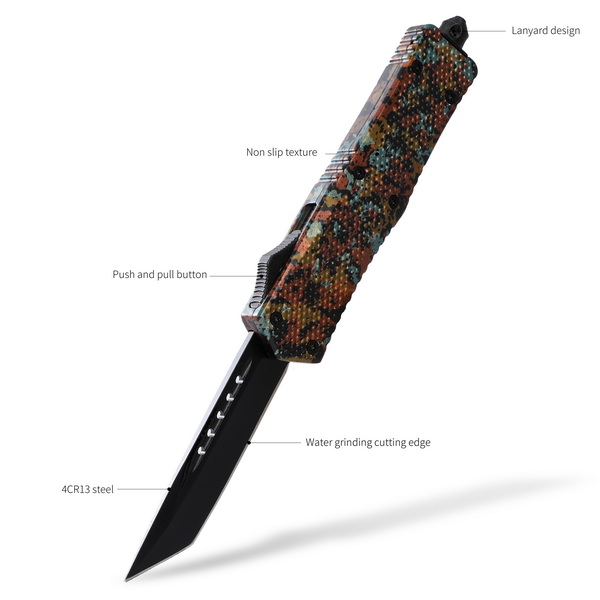
Because an Automatic OTF Knife relies on precision internal mechanisms, construction quality and maintenance routines are crucial to long‑term reliability. Dust, sand, and pocket debris can interfere with the internal track, so regular cleaning with compressed air or gentle brushing is recommended. Light lubrication—applied according to the manufacturer's instructions—can improve smoothness, but over‑lubrication may attract more debris and should be avoided.[19][4][6][15]
High‑quality Automatic OTF Knife makers use robust internal springs, guides, and locking gates that withstand repeated firing and retraction cycles without losing tension or alignment. Some double‑action designs use a "sling" principle where the spring propels a carrier that launches the blade with momentum; if the tip meets resistance, the blade will not fully lock and can be reset safely. For both tactical and EDC users, periodically inspecting the Automatic OTF Knife for unusual movement, reduced firing strength, or visible contamination is a simple way to catch issues early.[4][6][7][19]
Size and weight are central to comfort and performance in any Automatic OTF Knife. Large tactical models often feature overall lengths around 8–9 inches with 3.5–4 inch blades, giving them better reach and cutting leverage at the cost of increased bulk and weight. Medium and compact Automatic OTF Knife designs, in contrast, optimize for everyday carry, weighing significantly less and fitting more easily in pockets while still delivering adequate cutting power.[3][5][6][8][4]
EDC‑focused Automatic OTF Knife designs such as utility‑style OTFs highlight how compact mechanisms can support interchangeable blades and very light builds, making them especially attractive for tradespeople and general users. Tactical models may be heavier and more solid, with reinforced handles, steel liners, and additional hardware for mounting or emergency functions.[3][5][6][4]
The best Automatic OTF Knife for a given user depends heavily on the environment and typical tasks. Tactical users—including police officers, soldiers, and security professionals—may require an Automatic OTF Knife that can be deployed reliably under stress, potentially while wearing gloves, in low light, or in adverse weather. In this setting, robust construction, aggressive grip, and a strong lock take priority over minimal size.[10][15][16][2]
Everyday users may engage in frequent but low‑intensity tasks, such as cutting packaging, opening mail, or light outdoor use during camping and hiking. For them, the ideal Automatic OTF Knife is light, easy to carry, socially acceptable in appearance, and quick to clean after routine tasks. Outdoor enthusiasts who fall between these categories often prefer Automatic OTF Knife designs that blend ruggedness with EDC comfort, making them suitable for both city life and weekend trips.[18][14][15][10]
For foreign brands, wholesalers, and knife companies, working with a capable OEM partner is the most efficient route to launching a differentiated Automatic OTF Knife line. OEM manufacturers can adapt frame sizes, blade styles, steels, finishes, and locking strength to create Automatic OTF Knife models targeted at tactical, outdoor, or EDC segments.[11][12][6]
Yangjiang, Guangdong, is one of China's leading knife manufacturing hubs, with factories offering OEM and ODM services for outdoor knives, tactical knives, and pocket knives. Yangjiang Ruizhen Industry and Trade Co., Ltd. is part of this cluster and focuses on providing OEM solutions for overseas brands, including custom blade designs, handle shapes, surface treatments, and packaging for Automatic OTF Knife and related products. By collaborating closely with such a factory, foreign partners can co‑develop Automatic OTF Knife models that balance performance, compliance with local laws, and brand identity in appearance and function.[12][21][22][11]
When choosing or designing an Automatic OTF Knife, both end users and brand buyers can follow a simple process.[18][10]
Key steps include:
1) Check local laws and regulations regarding automatic knives, maximum blade length, and carry restrictions.[16][10]
2) Define the main role of the Automatic OTF Knife: tactical duty, rescue, outdoor survival, professional utility, or casual EDC.[15][10]
3) Choose between single‑action and double‑action mechanisms based on the need for powerful deployment versus frequent, fast open‑and‑close cycles.[7][10]
4) Select blade geometry, steel, and edge style that match expected cutting tasks and preferred maintenance level.[9][5][18]
5) Evaluate handle material, ergonomics, and clip configuration to ensure comfortable, secure carry in realistic clothing and gear setups.[6][2][4]
By carefully balancing these factors, users can identify the Automatic OTF Knife that fits their lifestyle, while brands can fine‑tune product lines to target specific customer segments.[11][10][18]
An Automatic OTF Knife is a modern, highly efficient cutting tool that serves both tactical and everyday users when designed and chosen correctly. Tactical Automatic OTF Knife models emphasize strength, aggressive ergonomics, and reliable operation under harsh conditions, whereas EDC‑oriented Automatic OTF Knife designs prioritize comfort, compactness, and utility‑oriented blade shapes. For international brands and wholesalers, partnering with experienced OEM factories in knife hubs such as Yangjiang enables the development of customized Automatic OTF Knife lines that meet legal standards, performance expectations, and market trends in both tactical and everyday carry segments.[21][12][11][13][14][2][10][15][18]
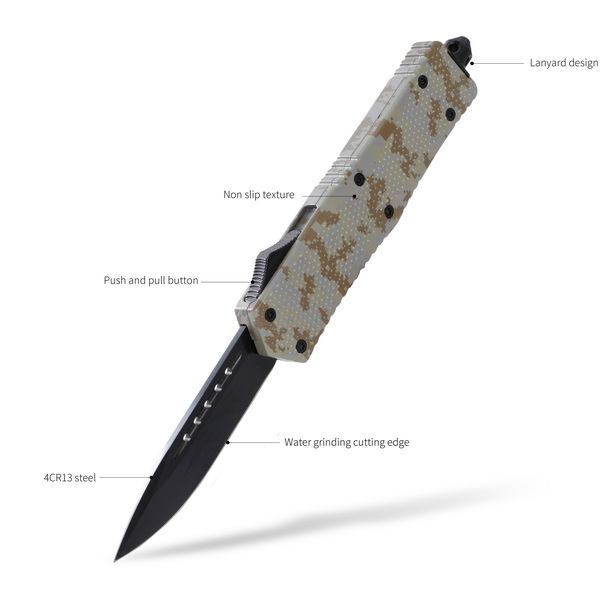
In some regions and contexts, an Automatic OTF Knife is carried as a last‑resort defensive tool due to its rapid deployment and compact design. However, legal and ethical considerations vary widely, and many trainers recommend focusing first on situational awareness, avoidance, and dedicated self‑defense training instead of relying solely on any Automatic OTF Knife for protection.[23][16]
Yes, many users carry an Automatic OTF Knife daily for tasks such as opening boxes, cutting cord, and light outdoor chores, provided local laws permit automatic knives. For this purpose, a smaller, lighter Automatic OTF Knife with a practical blade shape and smooth, controllable action is generally the best choice.[14][10][18]
To maintain an Automatic OTF Knife, keep the blade clean and dry, occasionally clear lint and debris from the handle with compressed air, and apply light lubrication if the action feels rough. Avoid unnecessary disassembly unless the manufacturer gives clear instructions, as improper reassembly may affect function or safety in a precision‑built Automatic OTF Knife.[19][4][7]
There is no single "best" steel, but many Automatic OTF Knife blades use stainless steels like 440C, D2, or premium alloys such as S35VN to balance hardness, edge retention, and corrosion resistance. Everyday users often prefer steels that are easy to sharpen and maintain, while professionals and enthusiasts may choose higher‑end steels and coatings for enhanced performance in demanding environments.[9][5][3][18]
Yangjiang has an established knife manufacturing ecosystem with skilled labor, specialized equipment, and a strong supply chain, allowing OEM factories there to produce competitive Automatic OTF Knife lines with good quality‑to‑cost ratios. Working with a factory such as Yangjiang Ruizhen Industry and Trade Co., Ltd. enables brands to customize blade designs, handle profiles, finishes, and branding to create unique Automatic OTF Knife products for tactical, outdoor, and EDC markets.[22][12][21][11]
[1](https://www.sogknives.com/pentagon-otf-black/)
[2](https://www.benchmade.com/products/5370fe-shootout-otf)
[3](https://tacknivesusa.com/product/tacknives-automatic-otf-knife-mlt7-series/)
[4](https://cobratecknives.com/product/special-purpose/utility-knives/otf-utility-knife/)
[5](https://www.vipertecknives.com/products/black-reaper-d-a-otf)
[6](https://ravencresttactical.com/otf-knife-models/)
[7](https://uppercuttactical.com/blogs/news/how-does-an-otf-knife-work)
[8](https://www.trueswords.com/Armed-Force-Tactical-Non-Reflective-Automatic-OTF--51801/51801.html)
[9](https://www.tektoknives.com/products/a5-spry)
[10](https://nobliecustomknives.com/what-is-an-otf-knife-and-how-does-an-otf-knife-work/)
[11](https://www.58hrcknives.com/best-custom-otf-knives-for-tactical-outdoor-and-everyday-use.html)
[12](https://rank1982.en.alibaba.com/index.html?from=detail&productId=1601160025843)
[13](https://bladeops.com/knives/out-the-front/)
[14](https://swordsswords.com/blog/why-otf-automatic-knives-should-be-a-part-of-your-edc/)
[15](https://bladeops.com/blog/pros-and-cons-of-otf-knives-for-tactical-operations/)
[16](https://crateclub.com/blogs/loadout/are-otf-knives-good-for-self-defense-a-comprehensive-analysis)
[17](https://kratetactical.com)
[18](https://eknives.com/blog/the-benefits-of-buying-an-otf-knife/)
[19](https://www.reddit.com/r/knives/comments/12oftl8/people_who_edc_an_otf_why_people_who_dont_why_not/)
[20](https://www.youtube.com/watch?v=ZvbgC-2UjKA)
[21](https://www.made-in-china.com/showroom/88320feed9b56289/)
[22](https://www.alibaba.com/product-detail/Yangjiang-oem-outdoor-custom-tactical-fixed_1600903866866.html)
[23](https://www.reddit.com/r/CCW/comments/18shr70/whats_the_best_otf_knife_for_self_defense/)


