
Views: 222 Author: Leah Publish Time: 2025-12-01 Origin: Site


Content Menu
● What Is an Automatic OTF Knife?
● Key Components of an Automatic OTF Knife
● Single‑Action vs Double‑Action Deployment
● How Blade Deployment Actually Works
● Safety Behavior During Deployment
● Legal Considerations for Consumers
● Practical Safety Tips for Everyday Use
● Common Deployment Problems and User Errors
● Maintenance for Smooth Blade Deployment
● Storage and Spring Longevity
● Design and Specification Choices That Affect Deployment
● Choosing the Right Automatic OTF Knife for Your Needs
● Responsible Use and Public Perception
● FAQ
>> 1) Is an Automatic OTF Knife safe for everyday carry?
>> 2) How often should I clean my Automatic OTF Knife to maintain smooth deployment?
>> 4) What are the main advantages of a double‑action Automatic OTF Knife over a single‑action model?
>> 5) Why should brands and wholesalers consider OEM production for Automatic OTF Knives?
Automatic OTF knives are sophisticated cutting tools designed for rapid, one‑handed blade deployment straight out of the front of the handle. For consumers, understanding how this blade deployment works is the key to choosing the right model, using it safely, and maintaining reliable performance over time. This article explores the structure, mechanisms, safety features, and best‑use practices of an Automatic OTF Knife, with a focus on what users should know before buying and while using this type of knife.
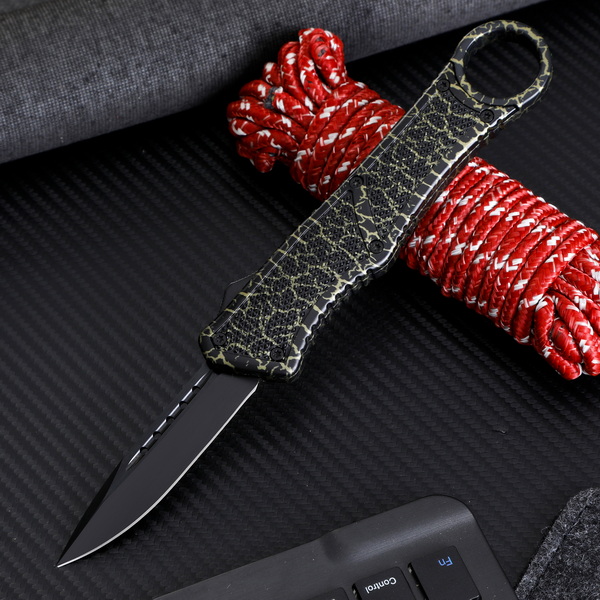
An Automatic OTF Knife (Out‑The‑Front knife) is a spring‑powered automatic knife whose blade travels in a straight line through an opening at the front of the handle instead of pivoting from the side like a traditional folding knife. This design allows the user to deploy and, in many cases, retract the blade with a simple thumb movement on a switch or slider.[7][10]
Because of its quick linear deployment, an Automatic OTF Knife is popular with outdoor enthusiasts, EDC (everyday carry) users, first responders, and collectors. The appeal lies in its combination of speed, compact size, and the ability to operate the knife with one hand while the other hand is occupied.[10]
Although the outside of an Automatic OTF Knife looks simple, the interior contains a precisely engineered mechanism. The most important components include the blade, the internal carriage or slider, one or more springs, locking gates, and the external activation switch. When consumers understand these parts, they can better judge how robust and reliable a knife will be in real use.[7]
- The blade rides on rails or channels inside the handle, which guide its forward and backward travel during deployment and retraction.[7]
- A spring or set of springs stores mechanical energy when the blade is retracted, then releases that energy to drive the blade out the front when the user moves the switch past a certain point.[7]
These parts must work together smoothly for an Automatic OTF Knife to deliver fast, consistent blade deployment and a secure lockup in the open position.
For consumers, one of the first choices is between single‑action and double‑action deployment. This decision affects how the blade moves and how the knife is used in everyday tasks.
A single‑action Automatic OTF Knife uses spring energy only to deploy the blade. The user activates the switch to fire the blade out, but must manually retract or reset the blade afterward, usually via a separate control or by physically pulling the blade back into the handle. These knives are often very strong and fast, but they require an extra step before the blade can be deployed again.[7]
By contrast, a double‑action Automatic OTF Knife uses the same switch or slider to deploy and retract the blade. Pushing the switch forward drives the blade out; pulling it back retracts the blade into the handle using the same internal spring system. This style is highly convenient for EDC because it allows quick in‑and‑out cycling without changing grip or using the other hand.[7]
The internal mechanism of an Automatic OTF Knife can vary slightly by design, but the general principle is consistent. In a double‑action model, the switch is connected to a sliding carriage that compresses the spring when the blade is retracted and then releases that spring to "sling" the blade forward when the switch passes a certain point. The blade's momentum carries it along the track until it engages a front locking gate that holds it firmly in the open position.[7]
When the user pulls the switch back, the carriage again loads the spring and reverses the process, pulling the blade back into the handle and engaging a rear lock that secures the blade in the closed state. In single‑action Automatic OTF Knives, the spring usually works in only one direction—deployment—while retraction is performed manually after a release mechanism is triggered.[7]
Many new users worry that an Automatic OTF Knife blade will punch straight through anything in its path. In reality, most modern designs intentionally reduce power or "derail" if the blade hits an obstacle before it locks fully open. Since the mechanism relies on momentum to carry the blade into the front lock, striking a solid object robs the blade of that momentum and prevents it from reaching the locking position.[7]
As a result, if the blade encounters resistance during deployment, it often stops partially extended and can be pushed back into the handle with light pressure, although the mechanism must then be reset before it will fire normally again. This characteristic does not remove all risk—any sharp blade can injure—but it does mean a quality Automatic OTF Knife will usually not drive through heavy clothing or tough materials at full force merely from the deployment action.[7]
Because an Automatic OTF Knife is a form of automatic or switchblade knife, legal status differs widely between countries, states, and even local jurisdictions. Some regions allow ownership but restrict carry methods or blade lengths, while others reserve automatic knives for law enforcement or military users, or prohibit them altogether.[11][10]
Before purchasing or carrying an Automatic OTF Knife, consumers should carefully research applicable laws, rules for public carry, and regulations on shipping or import. This is especially important for international buyers ordering from overseas manufacturers or brands, as customs agencies may treat automatic knives differently from manually operated folders.[11]
Safe operation of an Automatic OTF Knife begins with fundamental knife‑handling habits. The user should always ensure the blade opening is pointed away from the body and from other people before activating the switch, and all fingers must stay behind the front opening of the handle. A solid, full‑hand grip prevents the knife from twisting in the hand when the blade deploys.[12]
New owners should practice deploying and retracting the Automatic OTF Knife over a soft surface such as a workbench mat, with no obstacles in front of the blade, until the speed and force of the deployment feel familiar. The knife should never be fired toward hard surfaces at close range, because sudden impact can cause the blade to bounce, derail, or damage the edge. Treating the deployment switch as a serious control, not a fidget toy, greatly reduces the chance of accidents.[12]
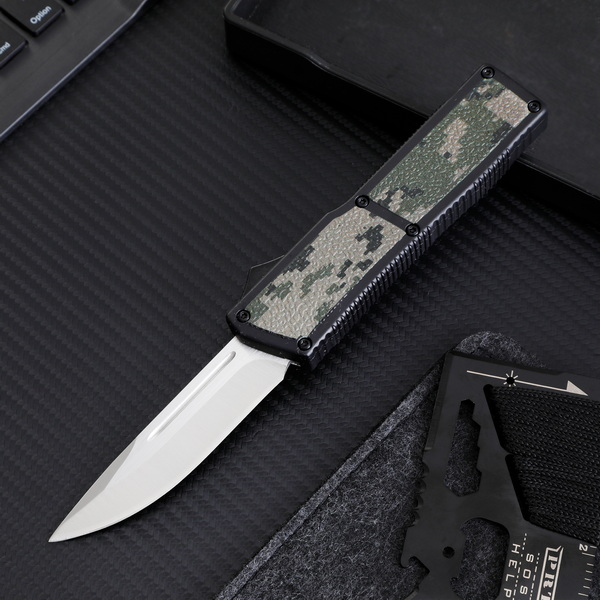
Like any mechanical tool, an Automatic OTF Knife can malfunction if misused or neglected. A frequent issue is "short‑stopping", where the blade fails to travel fully forward and does not lock open. This is often caused by debris in the handle, an obstacle in the blade path, or an incomplete movement of the switch. Users sometimes try to force the switch or snap the knife sharply in the air, which does not fix the internal problem and can worsen wear.[12]
Another common user error is over‑tightening body screws after disassembly, which can pinch the internal rails and cause slow or inconsistent deployment. Disassembly beyond what the manufacturer recommends may void warranties or damage the mechanism, so consumers should follow only approved cleaning and maintenance steps and seek professional service when the mechanism appears seriously damaged.
Reliable blade deployment in an Automatic OTF Knife depends heavily on regular but gentle maintenance. Pocket knives inevitably collect lint, dust, and residue from cutting tasks, and this material can migrate into the internal tracks and springs, increasing friction. Users should periodically blow out the handle opening with compressed air or carefully use soft tools to remove visible debris.[12]
Light lubrication with a suitable oil or dry lubricant helps the carriage and blade move smoothly, but over‑lubrication can trap more dirt inside the mechanism. After heavy use, exposure to sand or mud, or noticeable slowing of the action, the Automatic OTF Knife should be cleaned and lightly re‑lubricated before further carry. Wiping the blade dry and clean before retracting it also prevents moisture and contaminants from being dragged into the handle.[12]
Consumers often ask whether keeping an Automatic OTF Knife open or closed affects the life of the spring. While opinions vary, many collectors and manufacturers recommend storing the knife clean, dry, and closed for general safety and edge protection. Closed storage also minimizes the chance of accidental deployment and keeps the blade better shielded from corrosion.[13]
High‑quality springs and properly machined internal parts are designed to withstand many thousands of deployment cycles when the Automatic OTF Knife is used normally. However, constant repetitive firing simply for entertainment can accelerate wear and weaken internal parts over time. Users who want their Automatic OTF Knife to last should treat it as a tool, not as a toy, and reserve frequent cycling for training or actual tasks.
Behind many international brands selling Automatic OTF Knives are specialized OEM factories that handle design, machining, heat treatment, assembly, and quality control. These factories play a crucial role in ensuring the blade deploys straight, locks securely, and retracts consistently over its service life. Precision CNC machining allows tight tolerances in the handle, tracks, and internal parts, which are essential for smooth operation.[6]
Yangjiang Ruizhen Industry and Trade Co., Ltd. is one of the professional OEM manufacturers in China focusing on advanced outdoor knives, including Automatic OTF Knife models for global brand owners, wholesalers, and producers. By working with such a factory, overseas customers can customize blade shapes, handle materials, finishes, and internal structures to match their market, while relying on stable production capacity and strict QC to protect their brand reputation.[14]
Several technical specifications of an Automatic OTF Knife directly influence how the blade feels during deployment. Blade steel and thickness, for example, affect overall weight and momentum; heavier blades may feel more forceful but put more stress on springs, while thinner blades deploy faster but must still be strong enough for cutting tasks. Handle material, such as aircraft‑grade aluminum or zinc alloy, also shapes the balance of the knife in the hand and the durability under repeated use.[3][5][6]
Consumers should pay attention to the advertised action type (dual‑action or single‑action), the overall length, and the ergonomics of the switch. A well‑designed Automatic OTF Knife should allow the thumb to move the slider positively without excessive force, but with enough resistance to prevent accidental activation in the pocket. Knives built with fully CNC‑machined internal parts tend to offer more consistent deployment and smoother feel, especially over long‑term use.[4][6]
The "best" Automatic OTF Knife depends heavily on how it will be used. For outdoor or tactical tasks, many users prefer medium to large models with strong springs, grippy handles, and robust blade steels capable of handling rope, webbing, and packaging. For everyday carry in urban environments, slimmer, lighter Automatic OTF Knives with more subdued styling may be more practical and socially acceptable.[8][3]
Potential buyers should consider these points when choosing:
- Intended use: camping, rescue, work utility, or collection.
- Size and weight: comfortable for daily pocket carry vs dedicated field gear.
- Action type: single‑action or double‑action Automatic OTF Knife.
- Blade shape: dagger, drop point, tanto, or utility‑style blades depending on cutting tasks.[9]
By matching the specification of the Automatic OTF Knife to real‑world use, consumers get more value and a safer, more satisfying experience with blade deployment.
Automatic OTF Knives are powerful tools, but they are also visible symbols that can attract attention. Responsible users make an effort to deploy and use their Automatic OTF Knife only when necessary and in appropriate settings. Opening the blade discreetly, pointing it safely away from others, and immediately retracting it after the task helps maintain good public perception of knife ownership.
Owners should never lend an Automatic OTF Knife to people unfamiliar with automatic mechanisms, especially minors or untrained users. Clear explanation of the deployment switch, the front opening, and safe closing procedures is essential whenever another person handles the knife. Respectful, controlled use supports a positive environment in which law‑abiding consumers can continue to enjoy and benefit from Automatic OTF Knives.
Automatic OTF Knives offer unique advantages in speed, one‑handed operation, and compact design, all made possible by a sophisticated internal deployment mechanism. For consumers, truly understanding how blade deployment works—how the springs, tracks, and locks interact—translates directly into safer handling, better purchasing decisions, and longer service life. By choosing an Automatic OTF Knife from reliable brands and experienced OEM manufacturers like Yangjiang Ruizhen Industry and Trade Co., Ltd., and by maintaining and using it responsibly, users can enjoy consistent, confident blade deployment in both everyday and outdoor applications.[14]
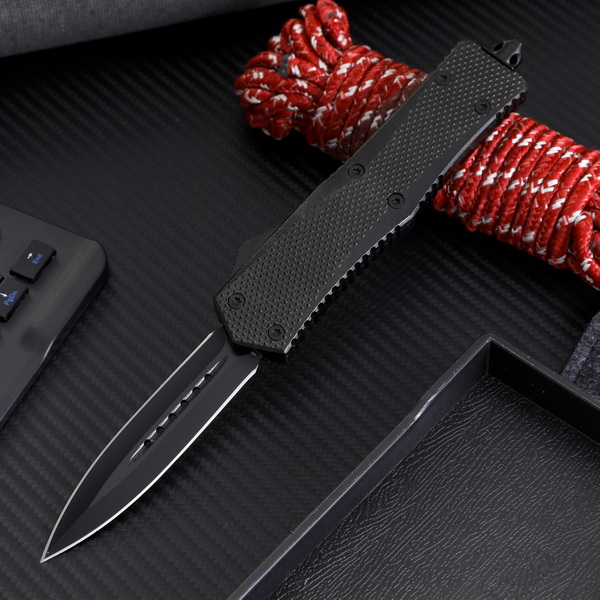
Yes, an Automatic OTF Knife can be safe for everyday carry when local laws allow it and the user follows fundamental safety practices such as keeping the blade fully retracted, using the pocket clip or sheath, and ensuring the switch cannot be accidentally activated. Choosing a quality model with secure locks and an appropriately stiff switch also reduces the risk of unintended deployment.[12]
Cleaning frequency depends on use, but most owners should at least remove debris and lightly lubricate the mechanism after exposure to dirt, sand, or heavy cutting tasks, and whenever the action begins to feel sluggish. Regular, light maintenance helps preserve the speed and reliability of the blade deployment and extends the overall life of the knife.[12]
High‑quality Automatic OTF Knives typically lose much of their energy if the blade encounters an obstacle before locking fully open, so the blade often stalls or derails rather than punching through solid material at full force. However, any sharp blade can still injure if misused or pointed at the body, so users must always observe safe direction and handling.[7]
A double‑action Automatic OTF Knife allows both deployment and retraction using the same switch, making it very convenient and fast for one‑handed use in tasks like opening packages or cutting cord. Single‑action knives may offer slightly simpler or more powerful deployment but require manual retraction to reset the mechanism, adding an extra step after each use.[7]
OEM factories with experience in Automatic OTF Knife manufacturing provide advanced CNC machining, heat treatment, and assembly skills that are critical for smooth, reliable blade deployment and long‑term durability. By partnering with a professional OEM like Yangjiang Ruizhen Industry and Trade Co., Ltd., overseas brands and wholesalers can offer customized Automatic OTF Knife models that meet their market's design, quality, and price expectations.[6][14]
[1](https://www.sogknives.com/pentagon-otf-black/)
[2](https://www.benchmade.com/products/5370fe-shootout-otf)
[3](https://tacknivesusa.com/product/tacknives-automatic-otf-knife-mlt7-series/)
[4](https://cobratecknives.com/product/special-purpose/utility-knives/otf-utility-knife/)
[5](https://www.vipertecknives.com/products/black-reaper-d-a-otf)
[6](https://ravencresttactical.com/otf-knife-models/)
[7](https://uppercuttactical.com/blogs/news/how-does-an-otf-knife-work)
[8](https://www.trueswords.com/Armed-Force-Tactical-Non-Reflective-Automatic-OTF--51801/51801.html)
[9](https://www.tektoknives.com/products/a5-spry)
[10](https://nobliecustomknives.com/what-is-an-otf-knife-and-how-does-an-otf-knife-work/)
[11](https://swordsswords.com/blog/a-comprehensive-guide-to-automatic-knife-use/)
[12](https://tacknivesusa.com/safety-suggestions-for-otf-knives/)
[13](https://pvk.com/our-blog?p=storing-automatic-knives-open-or-closed-collectors-guide)
[14](https://www.58hrcknives.com/top-10-automatic-otf-knife-manufacturers-in-china.html)


