
Views: 222 Author: Leah Publish Time: 2025-11-30 Origin: Site


Content Menu
● What Is an Automatic OTF Knife?
● Why Brands Choose Automatic OTF Knife OEM/ODM
● Typical OEM Options for Automatic OTF Knife Projects
● Deeper ODM Customization for Automatic OTF Knives
● Mechanism and Safety Engineering
● Materials and Performance Tuning
● Branding and Visual Identity
● Role of Yangjiang Ruizhen in Automatic OTF Knife Projects
● Step‑by‑Step OEM/ODM Process for Automatic OTF Knives
● Compliance and Legal Considerations
● Marketing and Positioning Strategies
● After‑Sales Service and Long‑Term Cooperation
● FAQ
>> 1. What is the main difference between OEM and ODM for an Automatic OTF Knife?
>> 2. How long does it usually take to complete an Automatic OTF Knife project?
>> 3. What information should a brand prepare before starting an Automatic OTF Knife OEM/ODM project?
>> 4. Are Automatic OTF Knives legal to sell in every market?
>> 5. Why choose a Yangjiang‑based factory like Yangjiang Ruizhen for Automatic OTF Knife production?
Automatic OTF Knives offer one of the most exciting and flexible categories for global tactical and outdoor brands. By leveraging OEM and ODM services, overseas brands, wholesalers, and manufacturers can create Automatic OTF Knife lines that reflect their own visual identity, performance requirements, and target price points. These projects build on a mature Chinese supply chain, with Yangjiang Ruizhen Industry and Trade Co., Ltd. standing out as a specialized partner for high‑quality automatic knives.
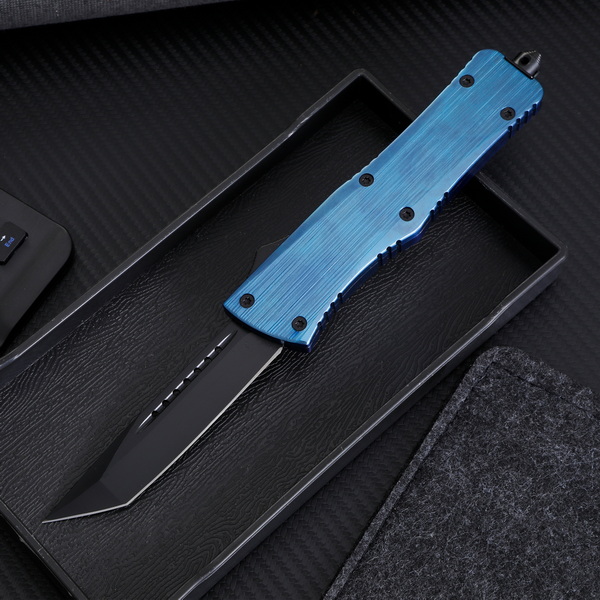
An Automatic OTF Knife (Out‑The‑Front knife) is a spring‑powered knife where the blade deploys straight out of the front of the handle when the user presses a switch or button. This linear deployment makes the Automatic OTF Knife extremely fast to open with one hand, which is why it is popular in tactical, rescue, EDC, and outdoor scenarios.
There are two main types of Automatic OTF Knife mechanisms: single‑action and double‑action. A single‑action Automatic OTF Knife deploys automatically but requires manual retraction, while a double‑action Automatic OTF Knife both deploys and retracts the blade using the same thumb slider, delivering smoother and more convenient use for professionals and enthusiasts.
Automatic OTF Knife products have a strong visual and mechanical appeal, making them ideal for brand differentiation. The aggressive blade profiles, detailed handle machining, and dynamic deployment mechanisms give brands a product that stands out in catalogs, online listings, and retail displays.
From a business standpoint, Automatic OTF Knife lines offer high perceived value and margin potential. With OEM and ODM support, brands can fine‑tune materials, finishes, and packaging to hit target price levels while maintaining consistent function and safety, which is crucial for long‑term reputation.
OEM (Original Equipment Manufacturer) customization means the factory uses its existing Automatic OTF Knife platforms and adjusts them to the customer's specifications. In an OEM project, the brand typically chooses blade steel, finish, handle color, logo placement, and packaging while the core mechanism and structure remain the same.
ODM (Original Design Manufacturer) goes much deeper. In an ODM Automatic OTF Knife project, the supplier collaborates with the client to create a unique design from the ground up—new handle silhouettes, internal structures, blade geometries, and even exclusive locking systems. This process often includes concept development, 3D engineering, prototyping, and full testing before mass production.
OEM customization is usually the fastest and most cost‑effective path for brands that want to build or expand an Automatic OTF Knife line. Existing platforms provide proven mechanisms, allowing the project to focus on aesthetics, branding, and minor performance tuning.
Common OEM options for an Automatic OTF Knife include:
- Blade steel selection (for example, economical stainless for entry‑level lines versus tool steels for premium Automatic OTF Knife models).
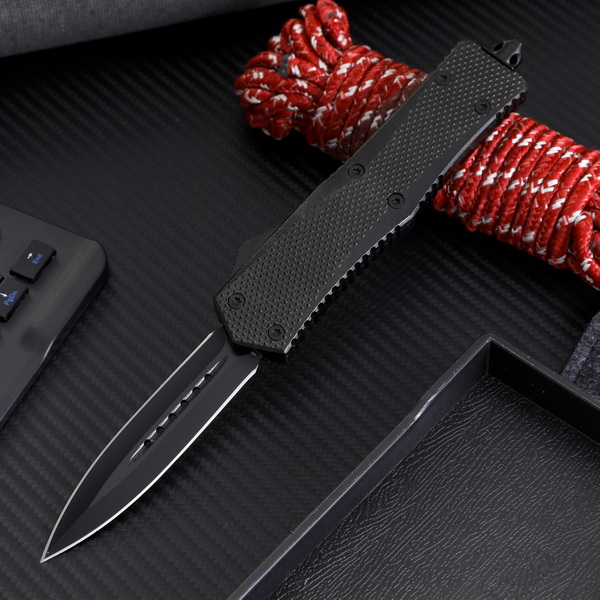
- Blade style (drop point, tanto, spear point, double‑edge, or partial serrations according to user needs).
- Handle material (aluminum alloy, stainless steel, G10, or hybrid constructions for weight and grip optimization).
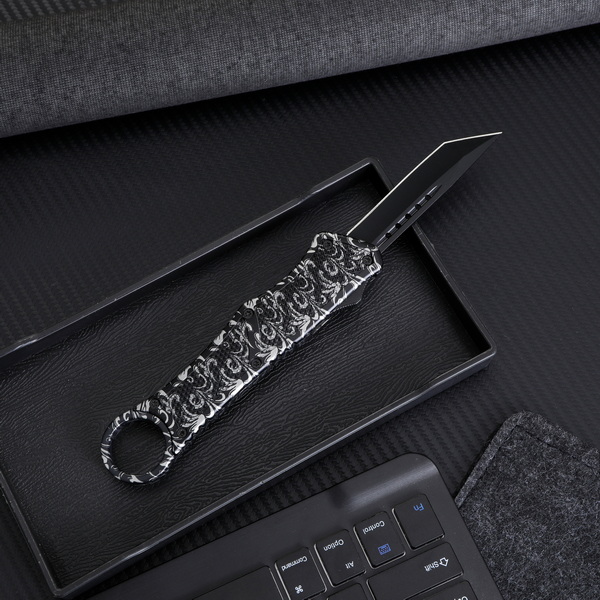
- Color and surface finish (anodizing, stonewash, PVD coating, matte black, camo or graphic prints).
- Logo and branding (laser‑engraved logos on blade, clip, or handle, custom serial numbers, special edition marks).
- Packaging (branded boxes, pouches, foam inserts, barcodes, and inserts tailored to the destination market).
For brands that want complete exclusivity, ODM Automatic OTF Knife development is the ideal route. Instead of starting with an existing shell, the brand and factory jointly define the target user, usage scenario, performance goals, and visual style.
The ODM process for an Automatic OTF Knife may include:
- Market and user analysis to position the knife (law enforcement, rescue, outdoor survival, or everyday carry).
- Concept sketches and mood boards that define the personality and styling of the Automatic OTF Knife.
- Full 3D CAD design for the handle frame, internal tracks, lock tabs, firing plate, and blade.
- Ergonomic shaping to ensure secure grip under wet, cold, or gloved conditions.
- Structural and durability analysis of the Automatic OTF Knife, including stress points around the spring path and locking areas.
The mechanism is the heart of every Automatic OTF Knife. In a double‑action system, the blade rides on a track inside the handle, guided by a stop pin and pushed by a spring assembly. A thumb slider or button controls the firing plate; moving it forward stores and releases energy in the spring, driving the blade out, while pulling it back retracts the blade and resets the spring.
Safety is critical. A well‑engineered Automatic OTF Knife incorporates:
- Positive locking in both open and closed positions using front and rear latches.
- A controlled travel path that prevents the blade from overshooting or falling out of the handle.
- Fail‑safe behavior, where the blade stops harmlessly if it meets resistance during deployment, avoiding serious injury or damage.
These safety features are particularly important when an Automatic OTF Knife is aimed at professional or rescue markets, where reliability and control matter as much as speed.
Material selection has a direct impact on performance, durability, and price of an Automatic OTF Knife. For blades, mid‑range steels can balance sharpness retention, toughness, and corrosion resistance, while higher‑end steels support premium tactical Automatic OTF Knife series that demand long service life and hard use.
Handles for Automatic OTF Knife models are often machined from aluminum alloy for light weight and strength, sometimes combined with steel reinforcement at critical wear points. Surface treatments like anodizing, stonewash, or textured coatings help improve corrosion resistance and grip feel, while hardened steel components inside the mechanism maintain tight tolerances through repeated cycles.
OEM and ODM Automatic OTF Knife projects are powerful tools for building a brand's visual identity. By coordinating blade shape, handle profile, clip design, and color schemes, a brand can create a recognizable "family look" across multiple Automatic OTF Knife models.
Many brands structure their Automatic OTF Knife portfolio into tiers:
- Entry line: simpler machining, practical steels, strong value positioning.
- Mid‑range line: upgraded materials, more detailed milling, and richer finishes.
- Flagship line: distinctive designs, premium steels, special coatings, and limited‑edition branding.
All three levels can share core design language so that customers immediately recognize them as part of the same Automatic OTF Knife family.
 x
x
Yangjiang Ruizhen Industry and Trade Co., Ltd. is based in Yangjiang, a Chinese city known globally for its knife and hardware manufacturing ecosystem. The company leverages local resources, experienced technicians, and a dense network of suppliers to deliver competitive and reliable Automatic OTF Knife OEM and ODM solutions to overseas clients.
For foreign brands, wholesalers, and manufacturers, Yangjiang Ruizhen can provide:
- Custom design and engineering support for Automatic OTF Knife mechanisms and styling.
- Flexible OEM options built on proven Automatic OTF Knife platforms with controlled quality.
- Efficient communication on specifications, compliance, and packaging suited to different markets.
- Stable production capacity for small pilot runs through to large wholesale Automatic OTF Knife orders.
A clear workflow reduces risk and keeps Automatic OTF Knife projects on schedule. A typical OEM/ODM roadmap looks like this:
1. Requirement and market definition
The brand defines the purpose of the Automatic OTF Knife line—tactical, outdoor, EMS, EDC, or collector—along with target pricing, quantity, and regulatory environment.
2. Concept and platform selection
For OEM, the client chooses an existing Automatic OTF Knife platform and specifies desired changes (colors, steel, logo, packaging). For ODM, the client and factory co‑create new design concepts and agree on technical direction.
3. Engineering and prototyping
The factory prepares drawings, 3D models, and prototypes of the Automatic OTF Knife. During this phase, details such as deployment speed, lock strength, spring rate, and ergonomics are adjusted based on testing feedback.
4. Validation and refinement
Pilot samples of the Automatic OTF Knife are subjected to deployment cycle tests, drop tests, edge holding checks, and real‑world use simulations. Any issues are resolved before committing to full production.
5. Mass production and quality control
Once approved, the Automatic OTF Knife enters serial production. Quality control covers incoming materials, machining precision, heat treatment, assembly, and operation checks to ensure each knife fires and retracts correctly.
6. Branding, packaging, and shipment
The final stage includes laser‑engraving logos, assembling accessories, packing into branded boxes, and organizing logistics. Clear documentation and labeling help the Automatic OTF Knife shipments pass customs smoothly and reach distribution channels quickly.
Automatic OTF Knife regulations vary significantly from country to country and even between states or regions. Some markets restrict ownership, carry, or import of automatic knives, while others allow them under specific conditions.
Before launching any Automatic OTF Knife line, brands should:
- Research legal frameworks in each target market.
- Ensure product descriptions and labels clearly reflect intended use and compliance.
- Consider alternative versions (such as manual or assisted‑opening models) for regions where Automatic OTF Knife restrictions are strict.
This proactive approach helps avoid legal complications and protects both the brand and its distributors.
A successful Automatic OTF Knife project does not end with production; marketing and positioning bring it to life. Because Automatic OTF Knives are mechanical and visually dynamic, they lend themselves especially well to video and rich media.
Brands can:
- Create deployment demo videos that highlight the smooth action, sound, and speed of the Automatic OTF Knife.
- Produce short feature videos focusing on specific benefits such as rescue use, tactical grip, or compact EDC convenience.
- Use close‑up photography to showcase machining details, edge finishing, and unique colorways in the Automatic OTF Knife lineup.
Storytelling around design inspiration, user scenarios, and quality testing also reinforces the perceived value of the Automatic OTF Knife in the eyes of end customers.
Long‑term success in the Automatic OTF Knife market depends on consistent quality and responsive after‑sales support. Because these knives rely on precise mechanisms, occasional issues such as spring fatigue, debris in the track, or user damage can occur over time.
Manufacturers and brands can support their Automatic OTF Knife customers by:
- Providing clear maintenance instructions, including cleaning and lubrication guidelines.
- Offering spare parts or service options where appropriate and legal.
- Collecting feedback from distributors and users to guide future Automatic OTF Knife improvements or new models.
A strong partnership between brand and factory allows the Automatic OTF Knife line to evolve with market trends and user expectations.
Automatic OTF Knife products combine engineering, aesthetics, and strong market appeal, making them a strategic choice for international brands and wholesalers. OEM customization lets companies quickly enter the market with proven Automatic OTF Knife platforms tailored through colors, branding, and configuration, while ODM development creates truly unique designs for long‑term brand differentiation.
By working with an experienced manufacturer such as Yangjiang Ruizhen Industry and Trade Co., Ltd. in China's Yangjiang knife hub, overseas buyers can access comprehensive OEM and ODM services, from concept and engineering to mass production and after‑sales support. With clear planning, regulatory awareness, and a focus on safety and quality, an Automatic OTF Knife portfolio can become a core asset in any tactical or outdoor product strategy.
OEM uses an existing Automatic OTF Knife platform with custom logos, colors, and configuration, so development is faster and requires lower investment. ODM develops a new Automatic OTF Knife design from the ground up, including mechanism, styling, and tooling, resulting in exclusive models but needing more time and budget.
A typical OEM Automatic OTF Knife project can move from confirmation to mass production within a few months, depending on complexity and order size. ODM Automatic OTF Knife projects may take longer because they include design, engineering, multiple prototype rounds, and more extensive testing before production.
A brand should define its target users, market positioning, budget range, and expected order quantity, as well as preferred materials, features, and design references. Clear expectations for the Automatic OTF Knife—such as deployment feel, blade style, and packaging—help the manufacturer design more accurately and reduce revision cycles.
No. Automatic OTF Knife regulations differ widely between countries and even between regions within a country. Brands must research local laws regarding automatic knives, import rules, and carry restrictions and may need to adapt their Automatic OTF Knife lineup or documentation to remain compliant.
Yangjiang has a long history and dense industrial base in knives and tools, which means access to skilled workers, specialized suppliers, and efficient logistics. A factory such as Yangjiang Ruizhen can use this ecosystem to provide stable quality, flexible customization, and competitive pricing for Automatic OTF Knife OEM and ODM projects.
[1](https://www.youtube.com/watch?v=EwG2oytZCl8)
[2](https://www.youtube.com/watch?v=_TEVM4NAlxk)
[3](https://www.youtube.com/watch?v=krPPEd3X1sM)
[4](https://www.youtube.com/watch?v=pAYLfzSzWdw)
[5](https://nobliecustomknives.com/what-is-an-otf-knife-and-how-does-an-otf-knife-work/)
[6](https://www.youtube.com/watch?v=WH-tXXd3pG8)
[7](https://eknives.com/blog/microtech-knives-manufacturing-process/)
[8](https://tacknivesusa.com/how-does-an-otf-knife-work/)
[9](https://knifedogs.com/threads/sr1-scale-release-automatic-build-tutorial.52152/)
[10](https://www.youtube.com/watch?v=s0mx_j5ihJg)


