
Views: 222 Author: Leah Publish Time: 2025-10-16 Origin: Site


Content Menu
● Understanding Heavy-Duty OTF Knives
>> Key Features of Heavy-Duty OTF Knives
● Advantages of Heavy-Duty OTF Knives for Self-Defense
>> Enhanced Control and Precision
● Considerations and Limitations
>> Mechanical Complexity and Reliability
>> Safety Risks Due to Rapid Deployment
>> Limited Stabbing Force Compared to Fixed Knives
● Practical Uses Beyond Self-Defense
>> Emergency Situations and Rescue Use
● Effective Usage and Maintenance Tips
● Comparing Heavy-Duty OTF Knives to Other Self-Defense Knives
● Frequently Asked Questions (FAQs)
>> 1. Are heavy-duty OTF knives legal to carry for self-defense?
>> 2. How durable are heavy-duty OTF knives in harsh conditions?
>> 3. Can anyone use a heavy-duty OTF knife safely for self-defense?
>> 4. What maintenance is required for OTF knives?
>> 5. What makes heavy-duty OTF knives different from regular folding knives?
Out-the-Front (OTF) knives have carved a notable niche in the world of tactical and everyday tools, particularly for those who value quick access, reliability, and durability. Among these, heavy-duty OTF knives stand out for their robustness and enhanced utility. This article explores whether heavy-duty OTF knives are suitable for self-defense, considering factors such as deployment speed, ease of use, legal considerations, maintenance, and overall effectiveness.
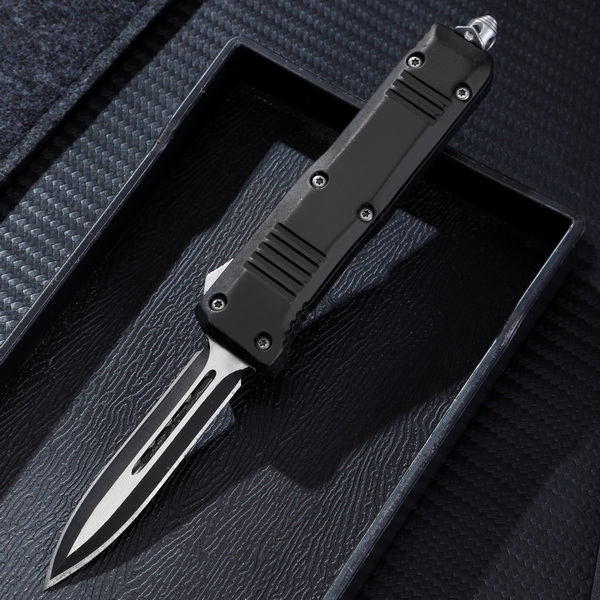
An OTF knife is characterized by a blade that deploys and retracts out of the front of the handle through a sliding mechanism. Unlike traditional folding knives that pivot open, OTF knives provide rapid blade extension—an essential factor in self-defense and emergency scenarios. A heavy-duty OTF knife takes this concept further with enhanced blade materials, reinforced locking mechanisms, and durable handles designed to withstand rigorous use.
Heavy-duty OTF knives typically feature:
- Robust Blade Steel: Usually crafted from premium steels such as D2, CPM-S30V, or M390, these blades are capable of withstanding heavy cutting and impact without losing sharpness or structural integrity.
- Strong Locking Mechanism: A heavy-duty OTF knife includes a secure locking mechanism that ensures the blade remains in place during aggressive use, reducing the risk of accidental closure.
- Ergonomic, Textured Handles: These knives come with handles designed for superior grip even in wet or slippery conditions, essential for maintaining control and precision during high-stress situations.
- Rapid One-Handed Deployment: Typically controlled by a thumb slide or button, enabling quick blade release, a critical advantage when seconds count.
- Compact Design: Despite their heavy-duty nature, these knives maintain a sleek profile for easy carry and concealment.
- Additional Tactical Features: Some models incorporate glass breakers, multi-functional blade shapes, or other survival features that increase the knife's utility beyond self-defense.
Heavy-duty OTF knives bring a collection of advantages to the table that make them highly suitable for self-defense:
One of the most significant benefits of heavy-duty OTF knives is the ability to deploy the blade instantly with a simple thumb slide or button press. This allows users to respond swiftly in high-pressure confrontations, where hesitation can be costly.
The straight blade deployment mechanism provides superior control over the blade's position compared to traditional folding knives. This precise control enhances effectiveness when aiming for disabling strikes or cutting movements.
Constructed with reinforced materials, heavy-duty OTF knives resist damage from heavy use and maintain functionality even under extreme conditions. This reliability is crucial for self-defense where failure could mean serious consequences.
Beyond self-defense, these knives serve multiple practical purposes such as cutting ropes, opening packages, or as rescue tools in emergencies, adding value for everyday carry users.
The aggressive design and swift deployment mechanism of OTF knives often act as a deterrent to potential attackers, possibly preventing physical confrontations altogether.
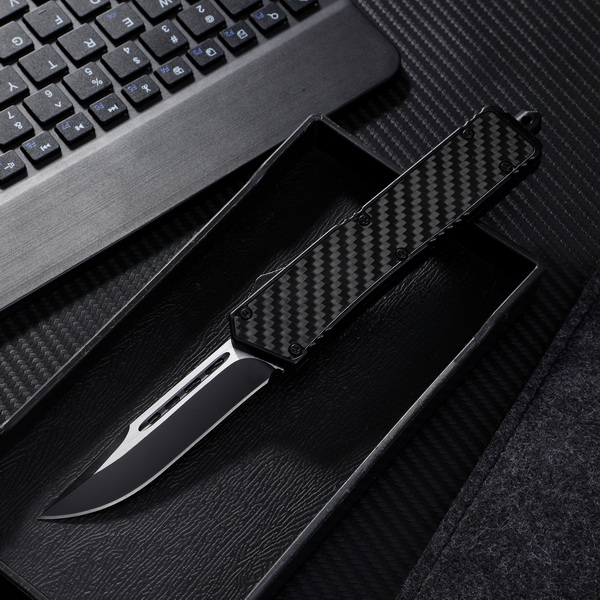
While heavy-duty OTF knives offer numerous benefits, there are important considerations to bear in mind:
The sliding mechanism and internal components of OTF knives are more complex than fixed or traditional folding knives. Cheaper or poorly constructed models may suffer from blade deployment or retraction failures over time. Investing in a high-quality heavy-duty OTF knife is essential for ensuring reliability when it matters most.
In many jurisdictions, automatic knives like OTFs fall under strict legal regulations or outright bans. Users must thoroughly research and comply with local laws and regulations to avoid potential legal consequences. Carrying an OTF knife without understanding legal restrictions can lead to costly fines, confiscations, or even criminal charges.
Heavy-duty OTF knives require consistent care to keep their sliding mechanism functioning smoothly. This involves regular cleaning, lubrication, blade sharpening, and periodic inspection to prevent jams or mechanical wear.
Quick blade deployment comes with the risk of accidental injury, especially for inexperienced users. Learning proper handling techniques and always practicing safety protocols are vital to prevent accidents.
Due to the sliding mechanism, heavy-duty OTF knives might have slightly reduced stabbing penetration power compared to fixed blades, which can deliver more forceful thrusts because of their solid construction.
Heavy-duty OTF knives are not only weapons but also valuable tools in emergency and tactical situations.
- Cutting through seat belts or restraints in vehicle accidents
- Breaking car or building windows quickly with integrated glass breakers
- Performing medical sheath cuts to free trapped limbs or clothing in emergencies
- One-handed operation allows for simultaneous use of other equipment like flashlights or communication devices.
- Compact size fits seamlessly into tactical gear or everyday carry kits.
- Sturdy blades capable of handling harsh environments and multiple rapid uses.
To leverage the full potential of a heavy-duty OTF knife safely and effectively:
- Familiarize yourself with the blade's deployment button or slider sensitivity.
- Always deploy the blade away from yourself and ensure no one is in the path.
- Maintain a firm, controlled grip to avoid accidental slips.
- Never deploy the blade unless prepared for immediate use.
- Regularly practice safe opening and closing techniques.
- After use, clean the blade and mechanism with mild soap and dry thoroughly to prevent rust.
- Use a light lubricant regularly on the sliding components to maintain smooth action.
- Sharpen the blade with appropriate sharpening tools to keep it razor-sharp.
- Frequently inspect the locking mechanism and other parts for wear or damage.
- Store the knife in a dry, temperature-stable environment away from humidity.
Compared to other popular self-defense knives, heavy-duty OTF knives present distinct advantages and some trade-offs.
- Deployment Speed: OTF knives deploy much faster than folding knives due to their mechanical sliding system.
- Portability: OTF knives are more compact and easier to carry discreetly than fixed blades.
- Tactical Advantages: The design allows for one-handed use, unlike fixed blades which require both hands to draw and ready.
- Maintenance: OTF knives demand more regular maintenance than fixed or folding knives.
- Legal and Safety Concerns: OTF knives tend to be more regulated legally and require more skilled handling.
Heavy-duty OTF knives are highly suitable for self-defense when chosen wisely and used responsibly. Their advantages include swift deployment, durability, precise control, and versatile emergency utility, making them powerful tools for personal protection. However, users must be aware of legal restrictions and maintenance demands, and commit to safety training to minimize risks. For those who value speed, reliability, and tactical versatility, a heavy-duty OTF knife is a compelling choice as a self-defense tool and everyday carry item.
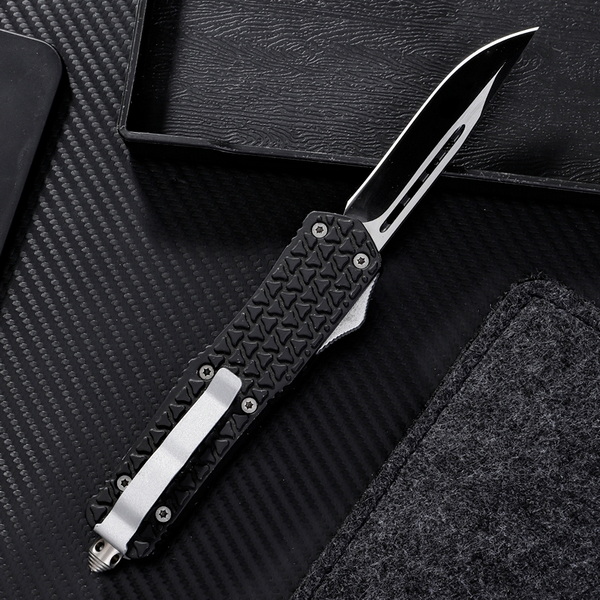
Legality varies widely depending on the region. Some places strictly regulate or prohibit automatic knives, including OTF models. Researching and adhering to local laws is essential before carrying one for self-defense.
Heavy-duty OTF knives are built with premium materials and reinforced mechanisms, making them highly durable in rugged environments, including outdoor and tactical use.
With proper training and familiarity with deployment mechanics and safety procedures, both beginners and experienced users can operate these knives safely and effectively.
Regular cleaning after use, application of light lubricant to the sliding mechanism, sharpening the blade, and inspecting mechanical parts for wear are necessary to maintain optimal performance.
An OTF knife deploys the blade straight out the front instantly through a sliding mechanism, unlike folding knives that pivot open. This feature enables faster blade deployment and improved tactical utility.


