
Views: 222 Author: Leah Publish Time: 2025-11-09 Origin: Site


Content Menu
● What Are Tactical OTF Knives?
● Why Choose Tactical OTF Knives for the Outdoors?
>> Safety First
● Drawbacks: Where OTF Knives Fall Short
● Blade Shapes, Steels, and Outdoor Performance
>> Blade Shapes
● Tactical OTF Knives vs Fixed-Blade Knives
● Choosing Your Outdoor OTF Knife
● Maintenance Tips for OTF Knives in the Wild
● Top OTF Knife Brands and Models for Outdoors
>> Game Processing and Food Prep
● User Testimonials and Collector Appeal
● Extended Considerations: When to Carry OTF Knives Outdoors
>> Self-Defense
● FAQ
>> 1. Are Tactical OTF Knives legal in all camping locations?
>> 2. Can Tactical OTF Knives handle bushcraft tasks like wood batoning and chopping?
>> 3. How often should an OTF knife be cleaned during camping?
>> 4. Do Tactical OTF Knives require special skills to use?
>> 5. Are there tactical OTF knives designed specifically for outdoor activities?
Tactical OTF Knives (Out-The-Front Knives) offer unique advantages outdoors, but their all-round suitability for camping and bushcraft depends on individual preferences, environments, and practical needs. Their fast-action deployment, portability, and modern design have made them a favorite among enthusiasts, yet also invite debate compared to traditional fixed-blade and folding knives.[1][2]
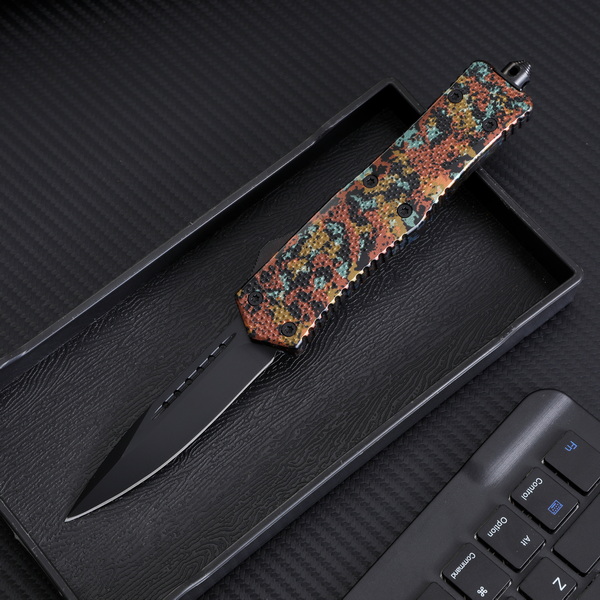
Tactical OTF knives feature blades that slide directly out from the front of the handle thanks to spring-loaded mechanisms activated by switches or buttons. These knives became popular among military, tactical, and law enforcement users for their rapid deployment and one-handed operation but are increasingly favored by campers and bushcrafters for their convenience and reliability in emergency or utility tasks.[2][3]
The heart of an OTF knife lies in its internal coil spring, which stores energy when the blade is closed. Engaging the deployment switch releases this energy, sending the blade forward. Advanced models incorporate sophisticated blade carriers and track systems for smooth operation. Once extended, the blade typically locks in place through ball-bearing, mechanical, or friction mechanisms, ensuring user safety during rugged use.[3][6]
In a survival or tactical scenario, speed matters. The OTF knife's spring mechanism allows it to be ready for action in less than a second—with just one hand—even under stressful or physically demanding conditions.[1][2]
OTF knives are generally compact, lightweight, and equipped with pocket clips. Their slim profile enables users to carry them comfortably for long stretches on trails or in camp, minimizing bulk without sacrificing readiness.[11][1]
A well-designed OTF knife can tackle:
- Cutting rope or paracord for shelters and gear[1]
- Slicing kindling, shaving wood, or prepping food[7]
- Skinning game or filleting fish with specialized blade shapes[1]
- Emergency glass-breaking and defensive use (some models feature glass-breakers)[5]
Modern OTF knives integrate sophisticated locking mechanisms to prevent accidental closure or opening, reducing the risk of injury during high-intensity bushcraft operations.[4][12]
Dirt, grit, or moisture can interfere with the internal mechanisms, causing jams or loss of deployment reliability. In wet or sandy environments, regular cleaning is essential to maintain functionality.[13][3]
A key bushcraft consideration is blade strength. Most OTF knives lack the full-tang construction and blade thickness needed for batoning wood, prying, or hardcore chopping. Fixed-blade knives remain superior for brutal tasks.[8][14]
Many jurisdictions restrict the carry, purchase, or use of automatic and OTF knives. It's crucial to verify local laws to avoid legal setbacks, especially when camping across state lines or internationally.[12][15]
OTF knives come in a variety of shapes:
- Tanto: Excellent for piercing and slicing—a favorite for tactical and everyday utility
- Drop Point: Versatile, suitable for general camp tasks
- Dagger/Bayonet: Double-edged, best for self-defense and aggressive cuts, with limited utility for food prep or carving[9][7]
- Serrated Edges: Aid in cutting rope and tough vines; some models offer hybrid designs for added flexibility
Premium outdoor OTF knives feature tough steels like M390, CPM-S30V, or D2, ensuring edge retention and resistance to corrosion. Budget options may use simpler steels, which require more frequent sharpening.[7][1]
Textured, weather-resistant handles ensure a reliable grip across all conditions. Materials like G10, Micarta, or anodized aluminum provide toughness and comfort.[8][1]
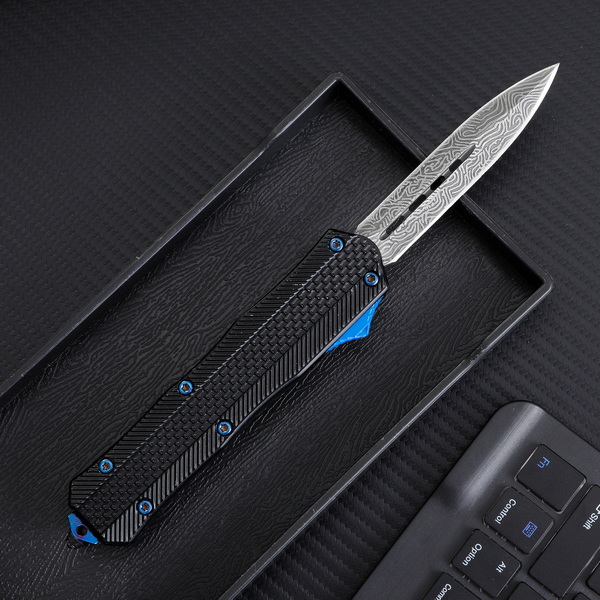
| Feature | Tactical OTF Knives | Fixed-Blade Knives |
|---|---|---|
| Deployment Speed | Instant | Manual |
| Strength/Durability | Moderate, prone to jamming | High, ideal for harsh bushcraft |
| Maintenance | Requires cleaning | Generally low maintenance |
| Portability | High, compact | Lower, with sheath required |
| Blade Profiles | Multiple, some tactical designs | Wide diversity for specialized tasks |
| Safety Mechanisms | Advanced locking systems | Simple construction, fewer risks |
| Price Range | Mid to high | Wide, from economy to premium |
| Legal Status | Restricted in some areas | Usually less restricted |
For serious bushcraft, many experts favor fixed blades for durability and versatility. OTF knives shine in quick-access scenarios, everyday carry (EDC), and tasks where speed or compactness matter most.[10][14][16][1]
When selecting an OTF knife for camping or bushcraft, consider the following:
- Intended Use: Will you be performing heavy-duty tasks, or do you need quick and easy access for lighter camp chores?
- Environmental Conditions: Wet, muddy, or sandy conditions demand superior sealing and regular cleaning.
- Blade Size & Shape: A blade longer than 3.5 inches and robust steel is ideal for survival situations.
- Handle Comfort & Grip: Opt for ergonomic and non-slip handles to increase safety and comfort during extended use.
- Local Law Compliance: Always check the latest regulations for possession and use before your trip.[15][12]
Proper care will keep your tactical OTF knife operating reliably on extended camping trips:
- Clean out debris and moisture after each use with compressed air or a brush, especially around the mechanism
- Lubricate the deployment system lightly with knife oil after cleaning
- Inspect and tighten all screws and hardware periodically
- Store dry when not in use; avoid prolonged exposure to humidity or saltwater[17][3][15]
- Heretic Manticore-X: Rugged design known for toughness in challenging conditions
- Microtech Combat Troodon: Large, robust blade with tactical features
- Boker Kalashnikov OTF: Durable construction and budget-friendly for entry-level users
- Microtech Ultratech: Features dependable deployment and standard glass-breaker, popular for EDC and emergency scenarios[5][1]
A tactical OTF knife can rapidly slice paracord, shave kindling, and prep small sticks for shelters. However, intensive wood splitting or batoning is best left to a fixed blade.[1]
OTF knives are handy for striking ferro rods (with the right blade spine) and prepping tinder. Their compactness ensures you can keep them close in changing weather.
Single-edged OTF blades work well for skinning game and preparing food. Some models feature finer points for precision but may underperform against thick bone or tough joints compared to purpose-built bushcraft knives.[7]
Glass-breakers and lightning-fast deployment make OTF knives essential in rescue scenarios, such as escaping vehicles or cutting harnesses and tangled ropes.[5]
Outdoor experts and knife collectors highlight the craftsmanship and innovation behind premium tactical OTF knives. These models are as much pieces of engineering as practical tools. Many enthusiasts carry both an OTF and a fixed blade, combining rapid access with brute durability for well-rounded preparedness in remote environments.[2]
Lightweight, sleek, and stylish OTF knives are excellent for urban outdoor enthusiasts needing a robust but inconspicuous cutting tool.
For those concerned with self-defense in wilderness and urban survival, the OTF's rapid deployment and secure lockup could be lifesaving.
OTF knives often feature stunning materials, finishes, and limited-edition releases—appealing to collectors who value both aesthetics and function.[2]
Tactical OTF knives have rightfully earned a place in the packs of modern campers and bushcrafters. They combine convenience, rapid deployment, and versatility in a compact form ideal for light-to-moderate outdoor tasks. However, their mechanical complexity, susceptibility to environmental conditions, and limits in heavy-duty use mean they are best viewed as complementary tools rather than sole survival solutions. Pairing a reliable tactical OTF knife with a robust fixed blade offers the best of both worlds for safety, efficiency, and preparedness in the wilderness. Always stay mindful of local laws, maintenance needs, and personal safety to maximize the value of your knife choice.[14][12][13][17][8]
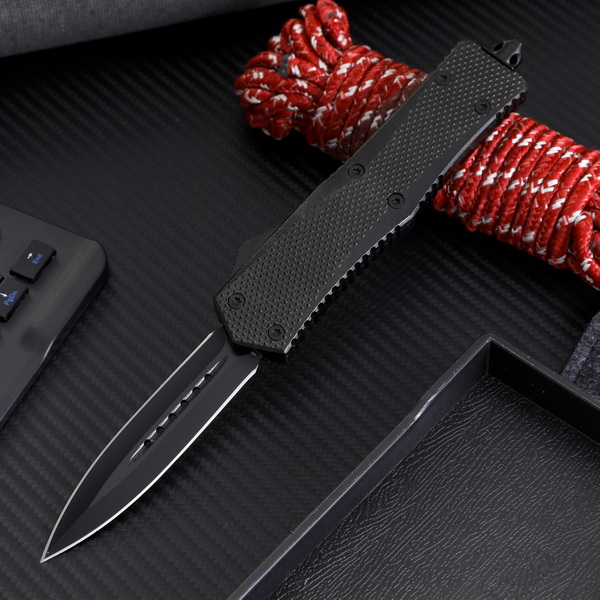
No. OTF knives (automatic knives) face restrictions in many countries and states. Always research the laws of your destination before carrying them.[12][15]
Not as well as full-tang fixed blades. OTF knives excel at light tasks but are less durable for heavy-duty work.[13][14]
Clean after each day of use, especially if exposed to dirt, moisture, or sand. Light lubrication ensures smooth operation.[3][17]
No special skills are needed, but proper handling and care improve safety and reliability. Beginners should read the manufacturer's instructions.[18][12]
Yes. Many top brands offer rugged, weather-resistant models made for camping and bushcraft. Popular models include Heretic Manticore-X, Microtech Combat Troodon, Boker Kalashnikov OTF, and Microtech Ultratech.[5][1]
[1](https://bladeops.com/blog/otf-knife-buyers-guide/)
[2](https://www.tacticalsportinggoods.com/blogs/news/understanding-otf-knives-a-comprehensive-guide-to-their-features-and-uses)
[3](https://knife-depot.com/blogs/sharpened-values/otf-knives-explained-the-complete-guide)
[4](https://ravencresttactical.com/how-to-choose-the-perfect-tactical-knife-a-comprehensive-guide/)
[5](https://eknives.com/blog/wilderness-survival-essentials-best-tactical-knife-gear-more)
[6](https://uppercuttactical.com/blogs/news/what-are-otf-knives-out-the-front-knives-explained)
[7](https://www.bladehq.com/blog/how-to-choose-an-otf-knife)
[8](https://heinnie.com/blog/the-ultimate-survival-bushcraft-and-knife-guide-part-1-survival-knives-reddit-answered/)
[9](https://www.youtube.com/watch?v=M6XHl-mgD0s)
[10](https://www.reddit.com/r/BuyItForLife/comments/1dctnpt/best_pocket_knife_for_campingsurvival_boxes_food/)
[11](https://ravencresttactical.com/why-ravencrest-tactical-otf-knives-are-perfect-for-camping-and-hiking/)
[12](https://louismartincustomknives.com/otf-knives-vs-folding-knives/)
[13](https://www.58hrcknives.com/otf-knives-for-survival-are-they-a-good-choice.html)
[14](https://www.58hrcknives.com/otf-knife-vs-fixed-blade-which-one-fits-your-lifestyle-better.html)
[15](https://leeknives.com/what-is-an-otf-knife/)
[16](https://ravencresttactical.com/fixed-blade-vs-out-the-front-tactical-knives/)
[17](https://bladeops.com/blog/the-advantages-and-disadvantages-of-otf-knives-in-tactical-settings/)
[18](https://tacknivesusa.com/are-otf-knives-practical/)


