
Views: 222 Author: Leah Publish Time: 2025-11-26 Origin: Site


Content Menu
● Understanding Knife Mechanisms
>> Blade Motion
● Automatic OTF Knife: Design and Benefits
>> How an Automatic OTF Knife Works
>> Technical Specifications and Features
● Manual OTF Knife: Design and Benefits
>> How a Manual OTF Knife Works
>> Technical Specifications and Features
● Feature Comparison: Automatic vs Manual OTF Knives
>> Mechanism Complexity and Maintenance
>> Cost
>> Blade Options and Customization
● Practical Considerations and Tips for Buyers
>> Storage
>> Sharpening
● FAQ
>> Q1: What is the main difference between an Automatic OTF Knife and a Manual OTF Knife?
>> Q2: Are Automatic OTF Knives legal to own and carry?
>> Q3: Which is easier to maintain: Automatic or Manual OTF Knife?
>> Q4: Which OTF knife is better suited for tactical or emergency use?
>> Q5: What should I consider when choosing an OTF knife for professional use?
The knife you choose can make a significant difference in emergency response, outdoor survival, tactical operations, or everyday utility. Among the many types available, the Out-The-Front (OTF) knife is regarded as one of the most innovative and practical choices for both professionals and enthusiasts worldwide. Central to the OTF world are two main options: the Automatic OTF Knife and the Manual OTF Knife. Each offers distinct benefits and considerations, making a detailed comparison essential for anyone interested in knives for personal, professional, or collector use.[1][3]
Whether your priorities are speed, reliability, safety, or technical sophistication, understanding these tools' mechanics, advantages, and key differences is critical. This article provides a comprehensive exploration of Automatic and Manual OTF Knives, discussing everything from design and deployment to legal issues and maintenance.
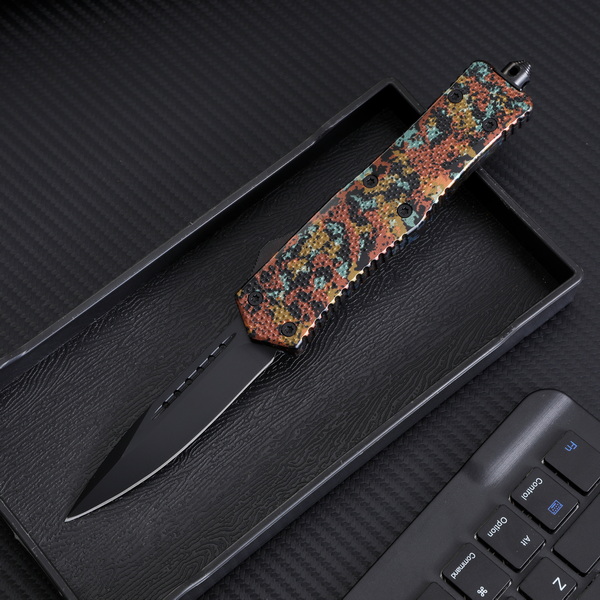
OTF knives, or Out-The-Front knives, get their name from the unique mechanism by which the blade extends straight out from the front of the handle, rather than swinging out from the side as in traditional folding knives. This linear action contributes to their distinctive look and utility. OTF knives can be further categorized as "automatic" or "manual," based on the deployment mechanism.[1]
Both types of OTF knives share core components such as the blade, handle, and track—yet their internal mechanisms differ dramatically. The main distinguishing part is the deployment system:
- Spring: Automatic OTF Knives feature a powerful coil or leaf spring inside the handle. This spring stores kinetic energy for deployment and, in double-action models, for retraction as well.[3][1]
- Button or Slider: Used to activate the knife's action. In automatics, this instantly releases the blade; in manuals, it directly pushes the blade out.
- Firing Plate and Safety: The firing plate (actuator) is the interface between the user's action and the blade mechanism, and many automatics include a safety switch to prevent accidental engagement.[1]
When operating an OTF knife, the blade follows a straight path out of the handle's front. This direct deployment is not only visually appealing but allows for rapid readiness, which is particularly important in tactical or high-stress situations.[3]
The hallmark of an Automatic OTF Knife is its spring-assisted, rapid-action deployment. When the user presses the button or switch, the internal spring releases, propelling the blade outward at high speed. In dual-action (double-action) models, the same control both deploys and retracts the blade.[3][1]
This seamless, controlled action is a result of finely tuned engineering. More advanced models often use high-grade spring steel, precision-machined interiors, and resilient safety features.
- Blade Length: Typically ranges from 2 to 4 inches, with some tactical variants longer for specific utility.
- Handle Material: Common options are aluminum alloys (6061-T6), G-10, stainless steel, and composite synthetics for strength and grip.[5]
- Blade Steel: Premium steels such as M390, CTS-204P, S35VN, and AUS-8 are often used, offering excellent edge retention and corrosion resistance.[2][7]
- Mechanism: Double-action for most tactical models (automatic extend and retract), while some entry-level or specialty knives feature single-action deployment with manual retraction.[1]
- Extras: May include belt clips, glass breakers, and textured grips for enhanced utility and safety.[7]
- Rapid Deployment: One-handed opening for immediate use, which can be lifesaving.[3]
- Tactical Readiness: Favored by emergency responders, law enforcement, and military for unpredictable or high-threat environments.
- User-Friendly: Easily operated even with gloved hands or under pressure.
- Aesthetic Appeal: The "out-the-front" mechanism is a draw for collectors and enthusiasts.
- Tactical Uses: Law enforcement, military, security personnel.[2]
- First Response: EMTs and search-and-rescue rely on lightning-fast opening for urgent situations.
- Outdoor and EDC: Hikers, campers, and survivalists for daily and survival utility.
- Collectors: Sophisticated spring mechanisms and custom finishes attract knife lovers.
A Manual OTF Knife relies entirely on the user's physical input. Instead of activating a spring, the user engages a slider, thumb stud, or lever to manually extend the blade along the internal track. Retraction is also fully manual.[10][11]
The absence of springs or complex mechanisms results in a different feel: the operation is usually slower and requires more deliberate effort.
- Blade Length: Similar to automatics, often 2-4 inches, but with occasional oversized utility versions.
- Handle Material: Frequently aluminum, steel, or composite materials for strength and reduced weight.
- Blade Steel: Can be premium or standard grades, depending on intended use (S30V, AUS-8, 440A).
- Mechanism: Only manual sliders or levers—no assists, coils, or springs.
- Simplicity: Fewer internal parts, making cleaning and long-term reliability much simpler.
- Reliability: Fewer moving parts promise longer, trouble-free operation, and less maintenance.[12]
- Durability: The sturdy mechanism is less prone to mechanical failure or grit-induced sticking.
- Wider Legal Status: Many jurisdictions permit manual OTF knives even where automatics are restricted, increasing their utility for travelers and outdoorsmen.[13]
- Controlled Opening: Minimizes risks involved with accidental opening or mishandling.
- Outdoor Utility: Hunters, campers, hikers, and workers who value robust design over rapid deployment.
- Everyday Carry (EDC): Anyone seeking a reliable, straightforward tool for common daily tasks.
- Collectors and Hobbyists: Those who appreciate precision engineering and minimalist mechanics.
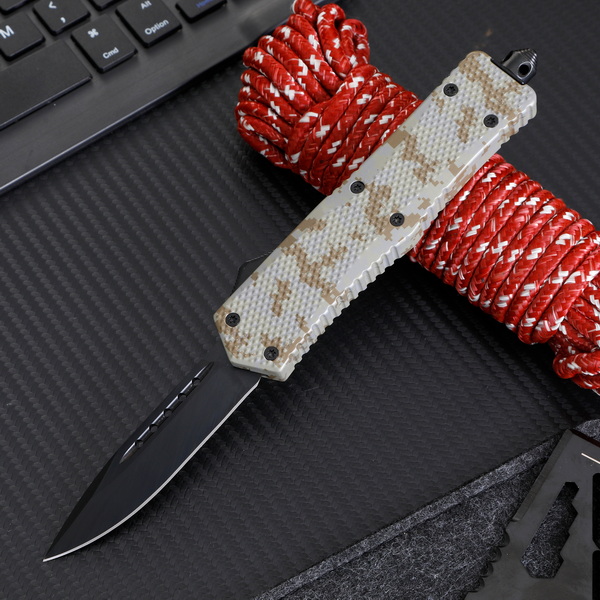
When it comes to deployment, the Automatic OTF Knife is unrivaled. Squeeze the button, and the blade locks open in a fraction of a second. This rapid action is invaluable for tactical operations or first-response emergencies. Manuals, while slower, give users a reassuring sense of control—a trait favored for everyday use and utility work where speed is less critical.[14][3]
Automatic knives are more complex due to their spring systems and safety mechanisms. This complexity raises maintenance demands: springs must be kept clean and lubricated, and debris must not interfere with moving parts. Manual knives, with their simple sliders and direct-motion tracks, are typically easier to clean, resistant to mechanical issues, and require little to no lubrication.[12][3]
While both designs can be rugged, the reduced number of internal parts in a Manual OTF Knife usually equates to greater durability and reliability under harsh conditions or heavy use. Automatics, though robust, are susceptible to spring wear and grit accumulation, which may necessitate occasional repair or replacement of parts.[12][3]
Automatic OTF Knives, especially those with premium materials, advanced features, or custom manufacturing, cost more on average due to the technical complexity of their mechanisms. Manuals are generally more affordable, making them attractive to budget-conscious buyers and those seeking reliable function over high-tech appeal.
For safety, many Automatic OTF Knives include safety switches or locks, but accidental deployment—though rare—is possible. Manual designs, requiring deliberate action to open, are less likely to result in accidental injuries or misuse. From a legal perspective, Automatic OTF Knives face more restrictions in many jurisdictions, whereas manuals are more widely accepted worldwide.[13]
Both types of knives offer a range of blade styles, such as drop point, tanto, dagger, and spear point, as well as choices in steel quality. Automatics, however, are more commonly available in tactical, double-edged, or highly customized finishes, reflecting their focus on specialist use and collector appeal.[4][6][2]
When choosing any OTF knife, prioritize build quality—especially for automatic models. Look for:
- CNC-machined handles: For consistent fit and reliable function.
- High-grade blade steel: For edge retention and corrosion resistance (e.g., M390, S35VN, D2).[4][2]
- Textured, ergonomic grips: For secure handling in wet or gloved conditions.
Consider blade length and weight based on the intended use. Tactical knives are often larger (3–4 inches blade length), while discreet or EDC options might emphasize compactness and lightweight construction.[6][5]
Determine if your primary need is for rapid, tactical deployment or day-to-day utility and compliance. This will guide whether you should favor an Automatic or Manual OTF Knife.
Buy from reputable manufacturers that stand behind their products with warranties, replacement parts availability, and support. High-quality knives last longer, perform better, and are safer to use.[5]
- Automatic OTF Knife: Regularly remove debris and lubricate internal mechanisms to keep springs and sliders operating smoothly.
- Manual OTF Knife: Less maintenance required, but periodic cleaning prevents buildup and ensures effortless action.[12]
Always store your knife in a dry, clean place. For long-term storage, lightly oil the blade and mechanisms (in automatics), and ensure all safety locks are engaged to prevent accidental openings.
Regardless of the knife type, maintain a sharp blade. Use the correct sharpening stones or systems recommended for your steel. Dull blades are less effective and more prone to dangerous slips.
Before purchasing, carrying, or exporting an OTF knife, check the relevant local and international regulations. While some jurisdictions ban, limit, or require permits for Automatic OTF Knives, Manuals are usually legal globally but always verify first.[13]
Safe handling is your responsibility. Always engage safety features when carrying an automatic model, and never use any OTF knife in inappropriate or unlawful ways.
The OTF knife offers a uniquely effective blend of speed, precision, and engineering ingenuity. The right choice between an Automatic OTF Knife and a Manual OTF Knife depends on your priorities: automatics deliver rapid deployment for tactical, emergency, or high-demand uses, while manuals provide reliability and legal peace of mind for utility and EDC enthusiasts. Before buying, evaluate your needs, local laws, and product quality to ensure safe, satisfying use for years to come.[13][1][3][12]
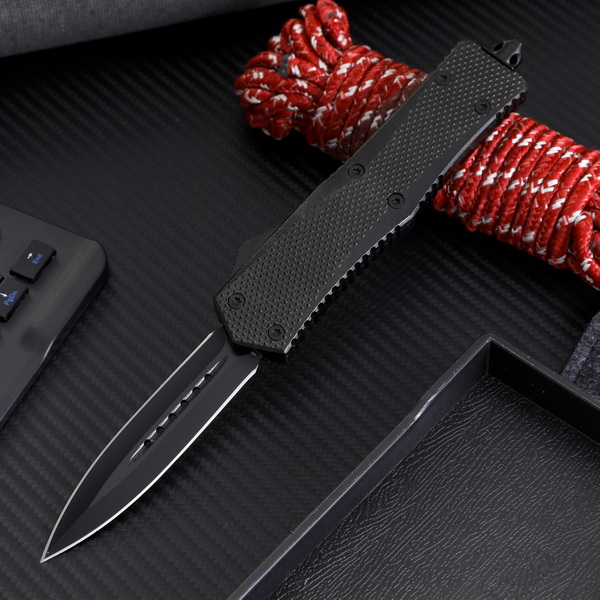
A1: An Automatic OTF Knife deploys and retracts the blade automatically using a spring when a button is pressed, while a Manual OTF Knife requires the user to physically slide the blade in and out without spring assistance.[10][1][3]
A2: Laws vary by country and even within regions. Automatic OTF Knives are often heavily regulated or banned in some areas, while Manual OTF Knives have broader legal acceptance but should still be checked against local regulations.[13]
A3: Manual OTF Knives are generally easier to maintain, as they have fewer moving parts and less risk of spring or mechanism failure. Automatic models need periodic internal cleaning and lubrication.[12]
A4: Automatic OTF Knives are favored for tactical and emergency contexts because of their rapid, one-handed deployment and ability to operate even when speed is critical.[15][2]
A5: Consider your environment, local laws, blade material, reliability, maintenance requirements, and intended tasks. Make sure the knife meets professional standards for durability, speed, and ergonomic design.[4][3]
[1](https://nobliecustomknives.com/what-is-an-otf-knife-and-how-does-an-otf-knife-work/)
[2](https://bladeops.com/blog/the-advantages-and-disadvantages-of-otf-knives-in-tactical-settings/)
[3](https://knife-depot.com/blogs/sharpened-values/otf-knives-explained-the-complete-guide)
[4](https://eknives.com/blog/5-characteristics-to-consider-automatic-knives/)
[5](https://cobratecknives.com/product/special-purpose/utility-knives/otf-utility-knife/)
[6](https://tacknivesusa.com/what-is-an-otf-knife-and-how-is-it-different-from-other-switchblades/)
[7](https://store.smith-wesson.com/sale/smith-wesson-swotf9b-assist-opening-otf/SWOTF9B.html)
[8](https://www.sogknives.com/pentagon-otf-black/)
[9](https://www.benchmade.com/products/5370fe-shootout-otf)
[10](https://www.crkt.com/knife/katanax-black-manual-otf)
[11](https://www.benchmade.com/blogs/beyond-the-bench/knife-opening-guide)
[12](https://swordsswords.com/blog/automatic-knives-vs-manual-knives-which-is-right-for-you/)
[13](https://artisancutlery.net/blogs/knife-knowledge/otf-vs-folding-knives-comparison-guide)
[14](https://bladeops.com/blog/automatic-knife-vs-manual-folding-knife-which-is-right-for-you/)
[15](https://bladeops.com/blog/pros-and-cons-of-otf-knives-for-tactical-operations/)


