
Views: 222 Author: Leah Publish Time: 2025-11-14 Origin: Site


Content Menu
● Understanding the OTF Pocket Knife
>> The Mechanics Behind the Magic
>> Main Types: Single-Action vs. Double-Action
>> Key Parts of an OTF Pocket Knife
● Blade Materials, Profiles, and Edge Types
>> Blade Steel
● Handle Construction and Ergonomics
● Choosing the Best Size for Your Needs
● Deployment, Safety, and Convenience
>> Portability and Everyday Integration
● Legal and Social Responsibility
● Real-World Applications and User Tips
● OTF Pocket Knife Care and Maintenance
● Market Trends and Innovation
● Comparing OTF Pocket Knives to Other Knife Types
● Buyer's Guide—What to Look For in a Compact OTF Pocket Knife
● FAQs
>> 2. Are OTF pocket knives legal to carry?
>> 3. How should I clean and maintain my OTF pocket knife?
>> 4. What is the difference between single-action and double-action OTF knives?
>> 5. Why choose a compact OTF pocket knife over other types?
In the diverse world of everyday carry (EDC), the OTF pocket knife—short for “Out the Front”—has rapidly emerged as a top contender for both utility and innovation. Whether you are an outdoor enthusiast, an urban professional, or a tactical gear aficionado, a compact OTF pocket knife offers benefits that are difficult to overlook: ultra-fast blade deployment, robust safety, and superior versatility for both daily chores and emergencies. Their seamless design makes them stand out as the modern standard in pocket tools, appealing to those who value efficiency, reliability, and style in one compact package.[3][4][5]
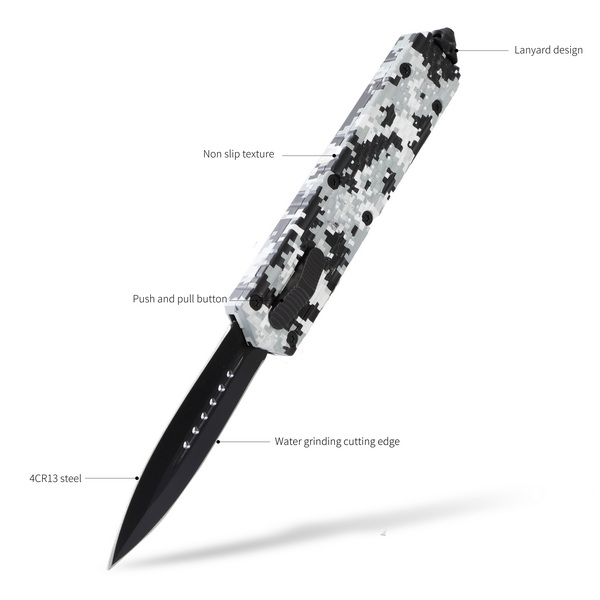
At the core of every OTF pocket knife is an intricate blend of engineering and functional design. Unlike traditional folding knives where the blade swings out from the side, OTF knives feature a blade that extends and retracts directly forward out of the handle when actuated by a button, switch, or slider. This mechanism uses a carefully calibrated coil spring—usually crafted from high-carbon steel for resilience—that stores and releases energy on demand, allowing instant, one-handed deployment.[1][5]
The blade travels along precision-machined tracks within the handle, ensuring straight, smooth movement with each use. Once extended, the blade locks securely in place through a combination of ball-bearing, mechanical, or friction-based lock systems, preventing accidental retraction and maximizing user safety. For closure, the action depends on the knife type: double-action models allow full automatic retraction, while single-action knives require manual reset after use.[5][1]
- Single-Action OTF Knives: Blade is deployed automatically via the internal spring but requires manual retraction. Mechanically simpler, these knives offer more reliable deployment and are typically easier to maintain.[4][6][5]
- Double-Action OTF Knives: The blade both deploys and retracts automatically through one actuator. Double-action OTF knives emphasize convenience, making them ideal for users needing rapid, repeated deployment and closure for tactical or heavy-duty EDC tasks.[6][5]
- Spring: Stores/release energy for deployment or retraction.
- Blade: Usually high-quality steel, extending directly from the front.
- Firing Plate/Switch: Engages the spring's energy release.
- Safety Mechanism: Prevents unintended blade action.
An OTF pocket knife's effectiveness and longevity hinge on both material quality and blade design.
Top-rated OTF pocket knives use premium steels like S35VN, M390, or CTS-204P for exceptional edge retention and corrosion resistance. More budget-friendly knives use steel grades like 154CM, AUS-8, and 8Cr13MoV, offering respectable sharpness and easier maintenance.[1]
- Drop Point: Balanced for everyday utility, excellent for slicing and detail work.
- Tanto: Reinforced tip for piercing or precision tasks, common in tactical models.
- Dagger/Spear Point: Double-edged, designed for thrusting and self-defense, often restricted legally.
- Straight Edge: Clean cuts, easy to sharpen, versatile for most tasks.
- Serrated Edge: Excels at cutting rope and fibrous materials, holds sharpness longer but is harder to sharpen.
- Partially Serrated: Hybrid option, balancing clean cuts and tough material slicing.[3]
The handle's weight, grip, and durability can define your user experience.
- Aluminum: Lightweight, corrosion-resistant, textured for grip.
- G10/Composites: Excellent texture, reliable grip security, and resistance to chemicals and moisture.
- Carbon Fiber: Minimal weight, striking visual appeal, but can be slippery when wet.
- Steel: Maximum durability and solid feel, but weighs more and can be less comfortable for EDC.[1]
Top compact OTF pocket knives use ergonomically contoured handles to minimize fatigue and maximize control, vital for both extended work sessions and sudden emergencies.
Blade length and handle size directly impact function, portability, and legality.
- Mini OTF Knives: Blades under 2 inches, extremely discreet, often carried on keychains.
- Medium OTF Knives: Blades 2-3 inches, the most versatile for daily tasks and legal carry in most locations.
- Large OTF Knives: Blades 3.5 inches and up, preferred for professional use or heavy-duty cutting but face greater legal restrictions.[3][1]
For daily urban or light outdoor EDC, a medium-size OTF pocket knife typically strikes the right balance between utility and compliance.
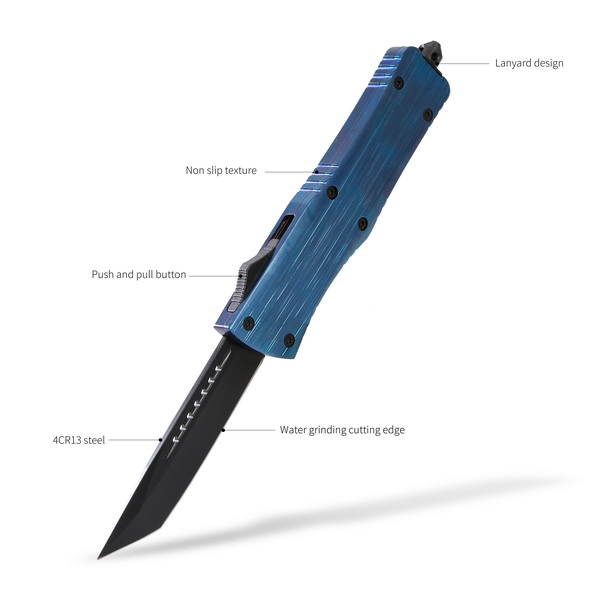
The defining feature of OTF pocket knives is rapid, one-handed blade deployment—especially critical in situations where speed or efficiency may be lifesaving. Double-action models enable both deployment and retraction through the same control, streamlining use for chores, first aid, or tactical applications.
A dependable lock is essential for user safety. Practice employing and securing the blade in controlled environments to familiarize yourself with the lock mechanisms before carrying an OTF pocket knife for EDC. Safety switches, common on quality models, reduce the risks of accidental opening or closing.
A compact OTF knife slides easily into pockets, belt holsters, or packs, remaining out of sight until needed. Textured handles, integrated glass breakers, and even discreet money clip features enhance the practical value and concealability of these tools, making them ideal for users who value both readiness and subtlety.
OTF pocket knives are subject to complex laws that vary across regions and countries. Many jurisdictions limit automatic knife ownership or restrict blade length to 2-3.5 inches for legal carry:[11][1][3]
- US Law: Federal rules often prohibit interstate auto-knife sales, but most decisions are at the state level, with some states outright banning OTF pocket knives and others allowing them under strict criteria.
- International Norms: Many European and Asian countries restrict possession, especially of double-action or large-blade OTF knives. Always check the latest local regulations before carrying your knife abroad.
Responsible knife owners prioritize both lawful possession and respectful public conduct—avoiding display or use in sensitive areas, informing themselves of property-specific bans (such as schools or government buildings), and emphasizing safe, discreet use.
Most users choose compact OTF pocket knives for the following reasons:
- Utility: Fast access for opening boxes, cutting cord, or general daily tasks.
- Outdoor Adventures: Use in fishing, camping, hiking, or survival settings.
- Emergencies: Breaking glass, self-defense, or first aid.
- Work: Trusted by tradespeople who rely on one-handed operation for safety and speed.
- Practice deploying and retracting your OTF pocket knife in a controlled, safe environment.
- Store the knife in its sheath or pocket clip when not in use.
- Respect others' comfort—avoid unnecessary flashing or handling in public spaces.
- Always check and clean for debris if the blade “sticks” or the mechanism feels sluggish.
Proper care keeps your OTF pocket knife reliable and long-lived:
1. General Cleaning: Remove dust, debris, and pocket lint using compressed air and a dry brush.
2. Oiling: Lightly apply a dry lubricant (like Tuf-Glide) to the mechanism every few weeks if carried regularly.[12][13][1]
3. Sharpening: Use a suitable sharpening system or ceramic rod—straight edges are simpler, serrated require a specialized tool. Clean thoroughly after sharpening.
4. The Right Storage: Always store your knife clean and lightly oiled, especially if unused for weeks. Avoid moisture buildup and exposure to corrosive materials.
5. Inspect Regularly: Check the lock mechanism, spring tension, and handle integrity. Address small problems early to prevent bigger failures.
Modern OTF pocket knives are available in dozens of designs, catering to diverse EDC needs. Some high-end models feature:
- Advanced materials like titanium and carbon fiber for weight reduction.
- Modular designs that allow tool or blade swapping.
- Integrated emergency tools including glass breakers and multi-tools.
- Enhanced safety features, including child-resistant switches and passive locks.
The rise of customizable OTF pocket knives allows buyers to select blade style, handle color, edge pattern, and even personal engraving for a personalized touch.
While every knife type offers its merits, the OTF pocket knife delivers distinct advantages:
- Faster than folding knives: Both in deployment and closure, especially double-action.
- Compact and discreet: Medium/mini OTF pocket knives disappear into any pocket or bag.
- Safer in confined spaces: No swing-out blade means less risk of harm when awkwardly deployed.
- Legal considerations: OTF knives are heavily regulated; always ensure compliance.
- Quality blade steel: Prioritize edge retention and ease of sharpening.
- Handle ergonomics: Seek textured, well-contoured handles for comfort and control.
- Action type: Double-action for convenience, single-action for durability.
- Proven safety: Strong locking systems and secondary safety switches.
- Brand reputation: Quality assurance, warranty, and accessible customer service.
Research recent user reviews and, whenever possible, test out a model in person before buying.
The compact OTF pocket knife is the ultimate tool for modern EDC—streamlined, powerful, and ready at a moment's notice for any challenge. Whether your need is daily convenience, split-second emergency action, or reliable utility outdoors, a well-chosen OTF pocket knife brings precision engineering and ergonomic design right to your fingertips. By selecting the right style, being mindful of local laws, and maintaining fundamental care habits, you ensure both safety and satisfaction for years to come with your OTF pocket knife.
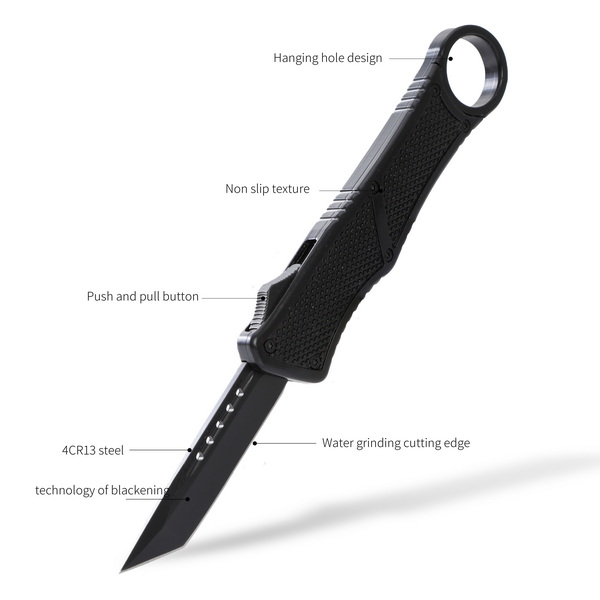
OTF stands for “Out the Front,” referring to how the blade deploys straight from the front of the handle.[4][5]
Legality depends on your local laws. Many places restrict blade length or the use of automatic mechanisms; always verify current regulations in your region.[11][1]
Clean internal mechanisms regularly with air and gentle brushing, oil with a dry lubricant, and keep the blade sharp for best performance.[13][12][1]
Single-action OTF knives deploy automatically and retract manually. Double-action knives both deploy and retract with one actuator.[5][6]
Compact OTF pocket knives offer quicker, one-handed access, better performance in tight situations, and superior convenience for everyday carry—provided they are legal where you live.[4][3]
[1](https://knife-depot.com/blogs/sharpened-values/otf-knives-explained-the-complete-guide)
[2](https://bladeops.com/blog/otf-knife-buyers-guide/)
[3](https://tacknivesusa.com/what-is-an-otf-knife-and-how-is-it-different-from-other-switchblades/)
[4](https://www.selfdefensesupply.com/otf-knives-guide)
[5](https://nobliecustomknives.com/what-is-an-otf-knife-and-how-does-an-otf-knife-work/)
[6](https://uppercuttactical.com/blogs/news/how-does-an-otf-knife-work)
[7](https://ravencresttactical.com/otf-knife-buyers-guide/)
[8](https://www.stunster.com/blog/the-ultimate-guide-to-otf-out-the-front-knives/)
[9](https://www.youtube.com/watch?v=WN8PDfEbZw4)
[10](https://swordsswords.com/blog/otf-knife-ultimate-buyers-guide-get-the-right-knife/)
[11](https://sanityjewelry.com/blogs/news/otf-knife-state-laws-legality-explained-by-sanity-jewelry)
[12](https://www.bladehq.com/blog/basic-otf-care-maintenance)
[13](https://bladeops.com/blog/otf-knife-care-101-maximize-the-life-of-your-knife/)


