
Views: 222 Author: Leah Publish Time: 2025-11-13 Origin: Site


Content Menu
● Understanding OTF Pocket Knives
● Blade Materials: The Core of OTF Pocket Knife Quality
>> High-Carbon and Tool Steels
>> Exotic and Decorative Steels
● Handle Materials: Ergonomics, Strength, and Style
>> Zinc Alloy
>> Stainless Steel and Titanium
>> Essential Hardware and Finishes
● Precision Engineering in OTF Knife Manufacturing
>> CNC Machining and Quality Control
>> Blade Grinding, Heat Treating, and Coating
>> Assembly, Mechanism, and Testing
● The Role of OEM in Global OTF Knife Supply
● Features and Advantages of High-Quality OTF Pocket Knives
>> Superior Durability and Low Maintenance
>> Ergonomic, Lightweight Design
>> Enhanced Safety and Customization
● FAQ
>> 1. What is the best material for OTF pocket knife blades?
>> 2. Why is aluminum alloy preferred for OTF knife handles?
>> 3. What's the difference between double-action and single-action OTF knives?
>> 4. Are OTF pocket knives legal everywhere?
>> 5. Can OTF pocket knives be customized through OEM manufacturing?
OTF pocket knives (Out-the-Front pocket knives) are a marvel of precision engineering, seamlessly combining rapid blade deployment with compact, ergonomic design. Favored by outdoor enthusiasts, tactical professionals, collectors, and everyday users, these knives stand out for their reliability in demanding situations. The foundation of any premium OTF pocket knife lies in the thoughtful selection of materials—each chosen for its mechanical advantages, durability, and compatibility with stringent manufacturing standards. This article explores the finest materials utilized in OTF pocket knives, their roles in performance and longevity, and the manufacturing processes essential for OEM production geared toward global brands.[3][5][7][8]
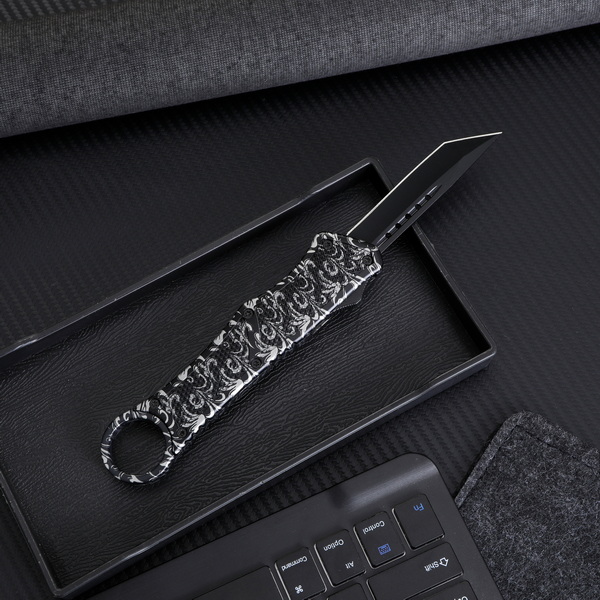
OTF pocket knives differ from traditional folding knives through their unique blade deployment mechanism. The blade extends and retracts linearly from the handle with a single action, usually activated by a button or slider. This construction offers significant advantages in speed, one-handed operation, and safety during urgent use.[5][7]
- Double-action OTF knives allow users to both deploy and retract the blade using the same thumb control.
- Their robust, reliable nature makes them ideal for law enforcement, military, rescue, and outdoor scenarios.[11][12]
The inner mechanics rely on springs, tracks, and lock systems built to tight tolerances, ensuring that precision and reliability are maintained throughout the knife's lifecycle.[7][3]
The blade is the centerpiece of an OTF pocket knife, dictating its capacity for sharpness, durability, and versatility in use. Several premium materials are common in the industry, each selected for a balance of hardness, edge retention, and corrosion resistance.
Stainless steel is the industry standard for OTF pocket knife blades, prized for its high resistance to rust and wear. The most respected grades for blades include:[8][13]
- CPM-S30V: Offering impressive corrosion resistance and edge retention, CPM-S30V is favored in tactical and high-end EDC knives due to its combination of toughness and ease of sharpening.[13][14]
- 440C: A classic choice, 440C presents a good balance of hardness, ease of maintenance, and cost-effectiveness, making it suitable for all-purpose outdoor use.[11]
- VG-10, 154CM: Both are high-performance stainless alloys providing consistent sharpness and durability for demanding tasks.
- M390, CPM-MagnaCut: These powder metallurgy steels are at the cutting edge (literally and metaphorically), providing superior resistance to corrosion and long-lasting sharpness—often featured in top-tier or collector-grade knives.[6][3]
High-carbon steels such as D2, S35VN, and 20CV offer unmatched cutting ability and edge retention. Tool steels, especially D2, are semi-stainless and require regular care, but their toughness makes them popular in applications where hardness is key.[13]
- D2: Extremely tough and maintains a keen edge, best for utility or heavy-duty OTF pocket knives.
- S35VN: Powder metallurgy stainless steel, delivering a mix of elite performance, corrosion resistance, and high toughness.[6]
Damascus steel is sometimes used for custom or collectible OTF pocket knives. Its beautiful layered patterns and unique structure provide strength and sharpness, but at a higher price point and complexity in OEM production.[15][13]
The handle of an OTF pocket knife must complement the blade's function with strength, comfort, and enhanced grip. The most desirable materials in contemporary OTF knife manufacturing include:
6061-T6 aircraft-grade aluminum is widely used for its lightweight strength and excellent corrosion resistance. Anodizing adds color options, scratch resistance, and a tactile surface, making anodized aluminum both practical and stylish.[1][8]
- Aluminum handles are preferred in tactical and everyday carry models for their balance of durability and portability.[1]
Often found in tactical and budget-friendly models, zinc alloy handles are robust and can be finished with rubberized coatings for superior grip in wet or cold conditions.[11]
For users who prioritize maximum resilience, stainless steel and titanium offer a substantial, long-lasting feel. Both materials provide a premium weight and finish.
- Titanium handles, though costly, are lightweight and nearly impervious to corrosion, making them ideal for collector-grade or luxury OTF pocket knives.[6]
Advanced composites like G10 and carbon fiber are used for lightweight, textured, and highly durable handles. G10 is particularly valued for its grippy surface and resistance to wear.[16]
- Carbon fiber adds an attractive, modern look but may be somewhat slippery in wet conditions.
A premium OTF pocket knife often features specialized hardware such as:
- Stainless steel or alloy pocket clips, designed for reversible or deep-carry options.
- Glass-breaker pommels made from hardened steel.
- Precision-machined screws and pivots for easy disassembly and maintenance.
All internal moving parts, including triggers and springs, are typically made from corrosion-resistant materials to ensure reliable action and low maintenance needs.[5][1]
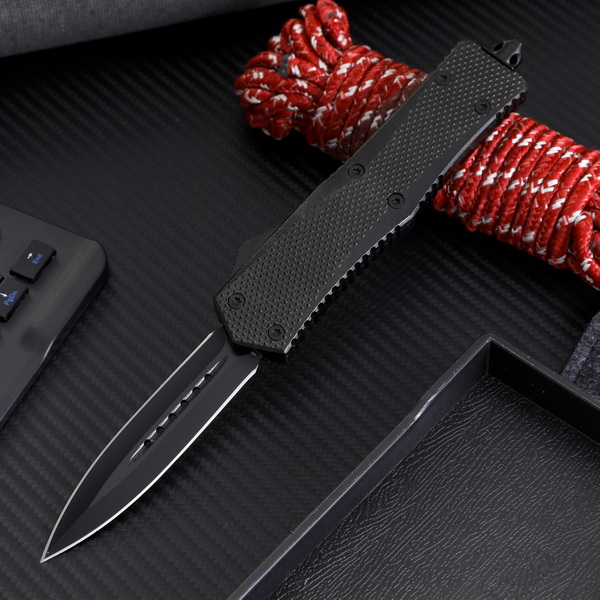
Producing a top-quality OTF pocket knife requires exceptional manufacturing precision at every stage. High-performing OEM factories operate advanced CNC machinery, hold critical tolerances, and execute rigorous quality inspections.[3][1]
- Bar-stock aluminum is deburred and milled, with each handle and blade component produced to tolerances as fine as 1/1000 of an inch.[1]
- Tumbled finishing and deburring processes smooth out surfaces and remove sharp imperfections for comfortable grip and flawless blade action.
- Every production step builds upon the last; even minor deviations can compromise the knife's final functionality.[3]
- Blades are cut from sheets of steel or alloy slightly oversized, then precision ground and heat-treated to optimize hardness and edge retention.
- Final grind and hand sharpening ensure a razor edge; blades receive either stonewashed or advanced DLC (Diamond-Like Carbon) coatings for surface protection.[1]
The performance of OTF pocket knives relies on the fit and finishing of internal hardware: springs, tracks, triggers, and locking plates. All moving parts are CNC machined from stainless steel, thoroughly tested for smooth operation and reliability.[7][5][1]
- Internal springs store and release the energy required to rapidly deploy and retract the blade. Only high-quality springs ensure consistent snap and safe blade closure.
- The trigger mechanism—typically a button, slider, or switch—must engage precisely with lock tabs and followers, allowing fast action without risk of accidental deployment.
- Rigorous testing cycles verify blade deployment speed, safety features, and overall durability.[7]
China's advanced OEM factories supply tailored OTF pocket knives for international brands, wholesalers, and production partners. These facilities offer:
- Custom blade profiles, grinds, and handle textures to client specifications.
- Branding, logo engraving, and packaging options for seamless integration into foreign markets.
- Highly efficient production cycles thanks to automated machining, quality controls, and scalable capacity.[15]
By focusing on best-in-class materials and tight tolerances, Chinese OEMs deliver world-class OTF pocket knives suited for tactical, collecting, and everyday applications.
OTF pocket knives offer unparalleled speed of blade deployment and retraction, critical for emergency situations, self-defense, or outdoor utility tasks. Dual-action OTF knives excel with one-handed controls and instant readiness.[7]
Utilizing stainless, powder metallurgy, and high-carbon steels for blades, plus corrosion-resistant metals and composites for handles, top-tier OTF pocket knives demand little maintenance and withstand demanding environments.[13][3][11]
Slim profiles, precision-machined contours, and adjustable pocket-carry options let users bring their OTF knife everywhere, maximizing comfort and accessibility.
Advanced safety locks, glass-breaker pommels, and user-centric customizations support a wide range of tasks, environments, and preferences. OEM flexibility allows brands and distributors to meet niche customer demands with tailored OTF pocket knife designs.[17][15]
Modern OTF pocket knives combine the best of engineering, materials science, and manufacturing innovation. Stainless steels like CPM-S30V and MagnaCut, lightweight anodized aluminum, titanium, G10, and robust internal hardware collectively ensure performance, safety, and user satisfaction. OEM providers in China and elsewhere deliver customized, quality-controlled OTF pocket knives for global brands and distributors. Investing in the right materials and manufacturing partnerships means every knife delivers reliability for the user's next adventure, duty, or daily carry.[8][15][3][1]
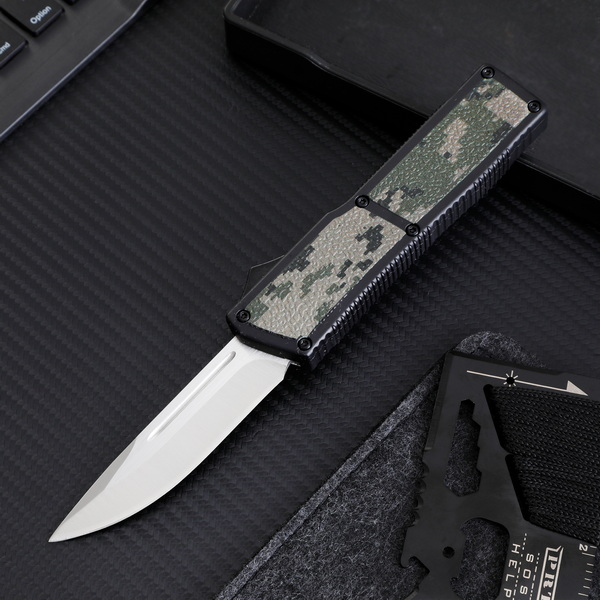
Stainless steels such as CPM-S30V, 440C, and M390 are widely considered the best for OTF pocket knife blades due to their blend of hardness, edge retention, and corrosion resistance.[14][13]
6061-T6 aluminum alloy is lightweight, strong, and corrosion-resistant, making it ideal for ergonomic handles that support the precise mechanisms of an OTF knife.[8][1]
Double-action OTF pocket knives allow both deployment and retraction using the same control, while single-action designs require manual blade retraction.[7]
Legal status varies by country and even by local jurisdiction. Always consult local regulations before purchasing or carrying an OTF pocket knife.[5]
Absolutely. OEM suppliers offer extensive custom options for blades, handles, finishes, branding, and packaging, allowing brands to create signature products tailored for their markets.[15]
[1](https://www.youtube.com/watch?v=EwG2oytZCl8)
[2](https://www.youtube.com/watch?v=jX9MPmNmYtY)
[3](https://takcom.com/the-precision-engineering-that-goes-into-a-premium-otf-knife/)
[4](https://www.youtube.com/watch?v=s0mx_j5ihJg)
[5](https://nobliecustomknives.com/what-is-an-otf-knife-and-how-does-an-otf-knife-work/)
[6](https://www.youtube.com/watch?v=lojT2LuLPxY)
[7](https://swordsswords.com/blog/the-ultimate-guide-to-otf-knife-deployment-methods/)
[8](https://cobratecknives.com/product/special-purpose/utility-knives/otf-utility-knife/)
[9](https://eknives.com/blog/reate-knives-manufacturing-process-in-depth-look)
[10](https://www.youtube.com/watch?v=krPPEd3X1sM)
[11](https://ravencresttactical.com/product-category/otf-knives/)
[12](https://bladeops.com/blog/the-advantages-and-disadvantages-of-otf-knives-in-tactical-settings/)
[13](https://www.58hrcknives.com/best-materials-for-otf-knife-blades-a-quick-guide.html)
[14](https://bladeops.com/blog/otf-knife-buyers-guide-what-to-look-for-in-your-next-otf-knife/)
[15](https://www.58hrcknives.com/top-automatic-otf-knife-manufacturers-and-suppliers-in-america.html)
[16](https://knife-depot.com/blogs/sharpened-values/otf-knives-explained-the-complete-guide)
[17](https://www.shieldon.net/product/shieldon-otf-pocket-knife-420-blade-aluminum-alloy-handle-jxhl-otf06/)


