
Views: 222 Author: Leah Publish Time: 2025-11-01 Origin: Site


Content Menu
● Double Action OTF Knives: Mechanism and Characteristics
>> Typical applications and user profiles
>> Material and build considerations for OEMs
● Single Action OTF Knives: Mechanism and Characteristics
>> Typical applications and user profiles
>> Material and build considerations for OEMs
● Comparative Guide for OEM Decision-Makers
>> Deployment speed and user experience
>> Reliability, maintenance, and longevity
>> Production costs and lead times
>> Ergonomics, balance, and handling
>> Compliance, safety, and certification
● Real-World OEM Case Studies and Guidance
>> Case Study A: Outdoor Brand Partner
>> Case Study B: Tactical Distributor
>> Lessons for New OEM Projects
● Design and Engineering Considerations
>> Safety and training documentation
● Production, QA, and Supply Chain
>> Sourcing and sustainability
● Marketing, Positioning, and After-Sales
>> Pricing, warranties, and support
>> Deciding between mechanisms
>> Intellectual property protection
● FAQ
>> 1) What is the main difference between double-action and single-action OTF knives?
>> 2) Which mechanism is more suitable for high-speed deployment?
>> 3) Are there significant cost differences between the two mechanisms?
>> 4) What maintenance considerations are there for each mechanism?
>> 5) How can an OEM partner ensure quality and regulatory compliance across markets?
Out-the-front (OTF) knives combine compact form with rapid deployment, making them essential tools for outdoor adventurers, tactical operators, and professional technicians. For brands, wholesalers, and manufacturers engaged in Custom OTF Knives, understanding the nuances between double-action (DA) and single-action (SA) mechanisms is critical for product positioning, cost management, and end-user satisfaction. This article provides a comprehensive, OEM-focused guide to choosing the right mechanism, with practical considerations for design, manufacturing, safety, and after-sales support.
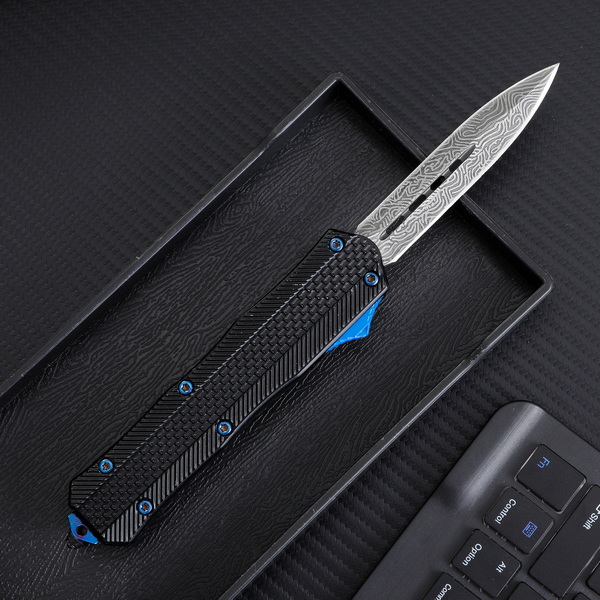
An OTF knife is a folding knife whose blade(s) extend or retract through the front of the handle via a built-in spring-loaded mechanism. The deployment is typically controlled by a thumb slide, button, or lever, while locking systems secure the blade in the extended or retracted position. In an OEM context, the choice of mechanism influences production tolerances, component sourcing, regulatory compliance, and downstream serviceability. The terms “double action” and “single action” describe how the knife handles deployment and retraction, and they map directly to user experience, maintenance needs, and market expectations. For Custom OTF Knives, aligning mechanism selection with target markets—military, law enforcement, outdoor enthusiasts, or industrial users—ensures better alignment with customer workflows and lifecycle costs.
In a typical DA-OTF, a single activation control initiates both deployment and retraction, using two synchronized actions within a compact internal system. Pressing the control moves the blade forward, and pulling or resetting the control triggers automatic retraction. The dual-action design often uses a robust spring assembly and a controlled locking mechanism that can tolerate repeated cycles in high-use environments.
- Faster access: deployment and retraction can be performed quickly with a single control, enabling rapid response in time-critical tasks.
- Sleek control footprint: a compact interface reduces hand clutter, beneficial for tactical gloves and outdoor use.
- Consistent behavior: standardized deployment and retraction feel across the life of the product, which some users prefer for predictability.
- Increased internal complexity: more moving parts and tighter tolerances can raise manufacturing challenges and initial cost.
- Maintenance considerations: more components mean more potential wear points; quality control and lubrication become more important.
- Weight and size: certain DA designs may add slight mass, which can matter for ultra-compact builds or pivot-center balance.
DA-OTFs are favored where speed and one-handed operation are paramount, such as emergency response scenarios, field utilities requiring rapid blade access, and duty gear for professionals who value quick cyclic deployment.
- Internals: high-grade springs, blade carriers, and locking components require precise machining and material compatibility to sustain repeated cycles.
- Coatings and finishes: corrosion resistance, wear resistance, and friction coefficients influence deployment smoothness and longevity.
- Handle design: the interface for activation must remain ergonomic under varied grip styles and environmental conditions.
SA-OTFs deploy automatically when activated, but retraction typically requires a manual reset. In many SA designs, after deployment, the blade remains extended and must be reset by a secondary action, such as pulling a retraction lever or pressing a reset button. This separation between deployment and retraction creates a predictable workflow that some users find preferable for controlled tasks.
- Simpler internal architecture: fewer interdependent components can ease manufacturing and reduce initial costs.
- Lower maintenance risk: fewer moving parts may translate to fewer potential failure modes and easier service intervals.
- Intuitive operation: some users appreciate the straightforward, stepwise use where deployment is automatic but retraction is deliberately controlled.
- Slower retraction workflow: manual retraction can take extra seconds, which may be critical in certain operations.
- Potential for user error: forgetting to reset or mismanaging the retraction step could lead to unexpected blade behavior.
- Market expectations: some buyers perceive SA mechanisms as older or less advanced, depending on the product segment.
SA-OTFs suit everyday utility tasks, camping and outdoor work, industrial or workshop environments, and users who prioritize simplicity and reliability over ultra-fast deployment.
- Reliability of reset mechanics: the retraction or reset mechanism should be robust enough to withstand frequent use without jamming.
- Interface design: the reset control should be clearly differentiated from deployment inputs to reduce accidental operation.
- Maintenance cadence: SA designs may require periodic inspection of reset springs and engaging components to maintain consistent performance.
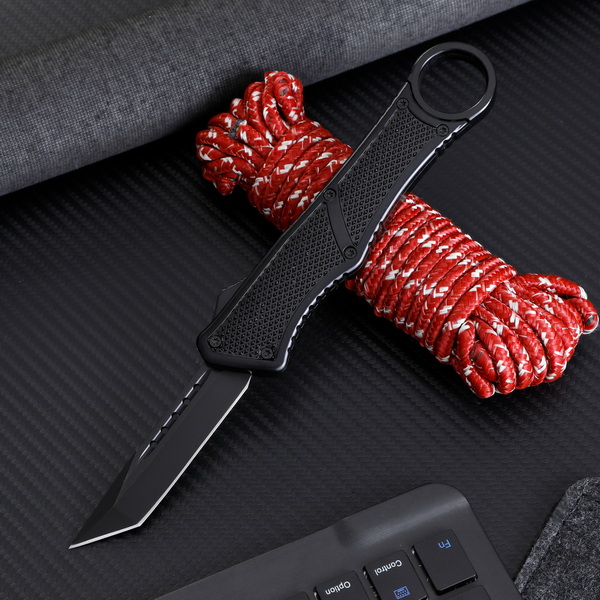
- DA-OTFs generally offer faster, more seamless deployment and retraction with a single control, which can translate into quicker access in critical tasks. SA-OTFs prioritize controlled action, with a clear separation between deployment and retraction. For OEMs, aligning with market needs and end-user workflows is essential.
- DA mechanisms may demand tighter tolerances and higher-quality components to sustain rapid cycles. SA designs can be more forgiving in some production environments but still require reliable reset operations and periodic lubrication.
- DA designs can incur higher tooling, specialized springs, and tighter manufacturing controls. SA designs may offer cost advantages through simpler assemblies and looser tolerances, which can reduce lead times.
- Activation control placement and required grip style influence perceived ergonomics. DA designs can favor quick, one-handed operation, while SA designs may emphasize a deliberate, measured action.
- Regulatory considerations differ by region, and both mechanisms require appropriate safety features, protective triggers, and user manuals. For OEMs, clarity on jurisdictional requirements, product labeling, and safety certifications is essential.
- An OEM collaboration focused on a DA mechanism for rugged outdoor use. Design decisions emphasized robust springs, corrosion-resistant coatings, and a balanced handle profile for one-handed operation. The project included supplier audits, prototyping cycles, and a strong QC framework to ensure deployment consistency across batches.
- A different OEM project centered on an SA mechanism with clear reset functionality. The emphasis was on straightforward maintenance, spare parts availability, and a flexible customization roadmap (logos, packaging, color options). Post-sale service agreements and regional distribution networks were established to support customers with timely replacements and maintenance guidance.
- Start with a clear target market and end-user workflow to guide mechanism choice.
- Implement a staged prototype and testing plan that simulates real-world use, including dust ingress, temperature cycling, and lubrication endurance.
- Establish a robust QC protocol covering blade deployment consistency, reset reliability (for SA), and spring stability (for DA).
- Build a scalable supply chain with vetted material suppliers, including back-up sources for critical components.
- Develop comprehensive after-sales support, including spare parts availability, repair capabilities, and user education materials.
- Deployment axis alignment, blade travel distance, and trigger/button travel require tight tolerances to ensure smooth operation and repeatable results across production lots.
- Spring force settings must balance deployment speed with safe retraction in all operating conditions.
- Steel grades for blades and carriers, along with handle materials, coatings, and surface treatments, determine durability, corrosion resistance, and tactile feel. PVD and hard-anodized finishes can improve wear resistance, but may add cost.
- Dust and moisture ingress protection is essential for field reliability. O-ring seals, gaskets, and refined lubrication strategies help maintain smooth operation in challenging environments.
- Preventive maintenance schedules should be defined for OEM customers, including lubrication intervals and replacement parts.
- Clear user manuals, safety warnings, and operational training resources help reduce misuse and liability. Multilingual documentation supports global markets and strengthens brand trust.
- A well-defined workflow from initial component machining to final assembly and function testing ensures consistent quality. Automation, when appropriate, can improve repeatability and throughput.
- QC checks should verify deployment and retraction reliability, locking integrity, blade alignment, and tolerance adherence. Documented test results build a traceable quality history for each batch.
- Ethical sourcing practices, supplier audits, and lifecycle thinking contribute to a resilient supply chain and align with global market expectations for responsible manufacturing.
- Offer a framework for Custom OTF Knives branding, including logo placement, packaging variants, and accessory options. A modular customization approach can help scale partner programs.
- Clear pricing tiers, volume discounts, and warranty terms build confidence for B2B partners. Provide accessible service channels and transparent part availability information.
After-sales service
- Regional service centers and a robust spare-parts program minimize downtime for end users. A proactive maintenance and recall management plan protects brand reputation.
- Use a decision framework anchored in target markets, typical use cases, maintenance expectations, and regulatory constraints.
- Compare deployment speed, retraction requirements, and lifecycle costs to determine the most suitable mechanism for each product family within Custom OTF Knives.
Collaborating on an OEM project
- Follow a structured process: requirements briefing, CAD/engineering handoff, rapid prototyping, functional testing, and a formal QA sign-off.
- Establish clear communication channels, documentation standards, and version control to prevent scope creep and ensure traceability.
- Adopt non-disclosure agreements (NDAs), patent considerations, and robust design-rights registrations when sharing concepts with overseas manufacturers. Maintain secure design repositories and clearly defined access controls.
Choosing between double-action and single-action OTF knives for OEM projects hinges on the end-user workflow, market expectations, and production feasibility. DA designs excel in rapid deployment and one-handed operation, appealing to tactical and fast-access applications, but demand tighter quality control and careful component selection. SA designs emphasize simplicity, ease of maintenance, and predictable behavior, often delivering lower manufacturing risk and cost, with a deliberate retraction step that some professionals prefer for controlled tasks. For brands pursuing long-term partnerships in Custom OTF Knives, the right approach aligns mechanism choice with target markets, lifecycle support, and scalable manufacturing capabilities. By combining rigorous design, meticulous QA, and a robust after-sales framework, OEM collaborators can deliver reliable, high-performance DA or SA knives that meet international standards and satisfy a diverse global customer base.
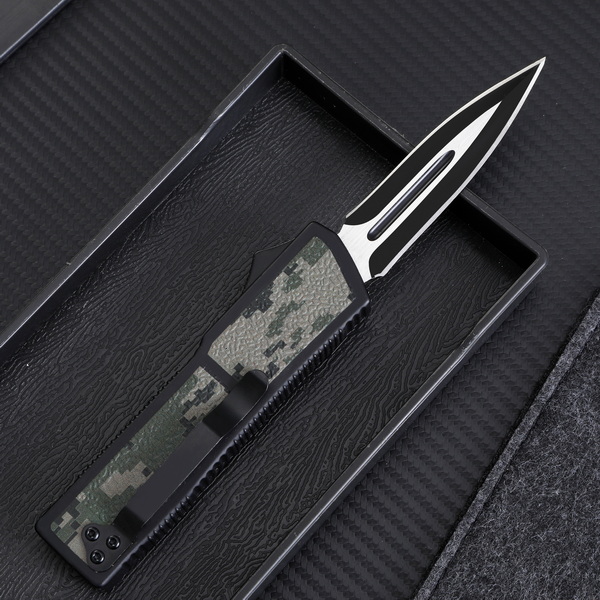
- Double-action (DA) permits deployment and retraction via a single control, enabling rapid operation; single-action (SA) typically deploys automatically but requires manual retraction or reset, offering a simpler mechanism.[2][3]
- Double-action designs generally provide faster access and retraction with a single control, making them more suitable for high-speed deployment in time-critical tasks.[1][2]
- Yes. DA mechanisms often require tighter tolerances and more complex components, potentially increasing production costs, while SA mechanisms can reduce complexity and initial tooling costs.[1][2]
- DA requires careful lubrication and periodic inspection of springs and locking components to maintain deployment speed and reliability; SA emphasizes reliable reset mechanisms and may require inspection of reset springs.[3][1]
- Implement structured QA protocols, thorough documentation, clear safety features, multilingual manuals, and adherence to regional certifications. Establish supplier audits and post-sale support networks to sustain compliance and reliability.[4][1]
[1](https://knife-depot.com/blogs/sharpened-values/otf-knives-explained-the-complete-guide)
[2](https://bladeops.com/blog/how-does-an-otf-knife-work/)
[3](https://nobliecustomknives.com/what-is-an-otf-knife-and-how-does-an-otf-knife-work/)
[4](https://uppercuttactical.com/blogs/news/how-does-an-otf-knife-work)
[5](https://www.youtube.com/watch?v=dkaA4wZeLdQ)
[6](https://en.wikipedia.org/wiki/Sliding_knife)
[7](https://takcom.com/different-locking-and-trigger-mechanisms-of-a-premium-otf-knife/)
[8](https://www.tacticalsportinggoods.com/blogs/news/understanding-otf-knives-a-comprehensive-guide-to-their-features-and-uses)
[9](https://tacknivesusa.com/what-is-an-otf-knife-and-how-is-it-different-from-other-switchblades/)
[10](https://cobratecknives.com/product/special-purpose/utility-knives/otf-utility-knife/)


