
Views: 222 Author: Leah Publish Time: 2025-11-07 Origin: Site


Content Menu
● Understanding Tactical OTF Knives
>> What Is a Tactical OTF Knife?
>> Key Benefits of Tactical OTF Knives
● Serrated Edge Tactical OTF Knives
>> Considerations and Drawbacks
● Straight Edge Tactical OTF Knives
>> Considerations and Drawbacks
● Combo Edge Tactical OTF Knives
● The Right Blade for the Right Situation
>> Matching Blade to Environment
>> Tactical and Self-Defense Considerations
● Evaluating Key Features in Tactical OTF Knives
>> Blade Material and Construction
>> Mechanism Reliability and Ergonomics
● Legal and Practical Carry Considerations
>> Everyday Carry and Concealment
● Common Myths About Tactical OTF Knives
>> Myth 1: OTF Knives Are Only for Combat
>> Myth 2: The Internal Mechanism Is Fragile
>> Myth 3: Serrated Edges Cannot Be Sharpened
● Blade Shapes and Tactical OTF Knife Selection
● FAQ
>> 1. Is a serrated blade more suitable for tactical OTF knives in emergency scenarios?
>> 2. Which edge is easier to maintain—serrated or straight?
>> 3. Are all Tactical OTF Knives legal for carry?
>> 4. What's the main difference in use between single-action and double-action OTF knives?
>> 5. Do Tactical OTF Knives require regular maintenance?
When selecting a Tactical OTF Knife—an essential tool for outdoor adventurers, professionals, and first responders—one of the most vital considerations is whether to opt for a serrated or straight edge blade. Out-the-front (OTF) knives offer rapid blade deployment and a sturdy design, making them especially suited for tactical and high-stress environments. This comprehensive guide dives deep into the unique mechanics, history, practical advantages, and real-world considerations of both serrated and straight edge Tactical OTF Knives, providing expanded insights for discerning users.[1][11]

A Tactical OTF Knife is a specialized cutting tool in which the blade deploys directly out of the front of the handle—rather than swinging out from the side or being fixed—thanks to a sophisticated automatic or assisted opening mechanism. This feature allows for lightning-fast, one-handed operation, often crucial in emergencies or tactical situations. The robust internal mechanism typically consists of a powerful spring, tracks, a locking apparatus, and a secure activation button or switch.[2][1]
The heart of a Tactical OTF Knife is its spring system—usually high-carbon steel—compressed when the blade is stowed. Once the user activates the mechanism, the energy is unleashed, extending the blade in a swift, controlled motion. Dual-action variants allow both opening and retraction with a single button or slider, while single-action models require manual retraction but generally offer increased reliability and reduced complexity.[5][2]
- Rapid Deployment: Immediate blade extension with a trigger or button[1]
- One-Handed Operation: Essential for multitasking or when one hand is incapacitated[4]
- Compact Design: Easy to carry, with integrated safety mechanisms for secure handling[2]
- Durable Build: Frequently crafted with premium stainless steels and reinforced handles[1]
Single-action OTF knives employ a spring to propel the blade outward but require a manual pull to retract the blade. These variants are often chosen for their simplicity, durability, and lower maintenance, making them a strong choice for those prioritizing reliability.[5][2]
Double-action OTF knives use the same spring system to both deploy and retract the blade, offering true one-handed operation for both actions. This makes them highly convenient for tactical, rescue, or EDC uses where speed and repeated opening and closing are valuable.[11][2]
Some knives feature sliding action for tactile feedback and easier thumb operation, or combine spring and gravity mechanisms for unique user experiences.[2]
A serrated blade is characterized by a row of tooth-like notches or "serrations," which augment its cutting action. Unlike a straight edge, the serrations create pressure points that penetrate tough or fibrous materials with less force.[12][13]
- Effortless Cutting of Tough Materials: Excels at sawing through ropes, straps, webbing, and other fibrous materials, making it extremely useful for rescue and outdoor tasks.[14][12]
- Edge Longevity: Serrations tend to stay sharp longer because the points take most of the wear, allowing the valleys to continue cutting efficiently even as the edge dulls.[12]
- Emergency Preparedness: Favored by first responders and survivalists for reliable performance in emergencies.
- Outdoor Adventure: Cutting rope, vines, and branches in wilderness settings
- Rescue Operations: Slicing seat belts or webbing in car accidents and emergencies
- Maritime Use: Efficiently cutting wet, synthetic lines
- Serrated edges are harder to sharpen than straight edges, often requiring specialized tools.[12]
- They produce rougher cuts, which may not be suitable for tasks needing clean slices (e.g., food prep).[13]
A straight edge blade features a continuous, unbroken cutting surface from handle to tip. This simple, traditional design is renowned for producing smooth, controlled, precise cuts.[12]
- Precision and Versatility: Ideal for everyday tasks that demand clean, accurate slicing, such as preparing food, skinning, or making controlled cuts.[13]
- Ease of Maintenance: Simple to sharpen with standard sharpening stones, allowing fast field maintenance.[15][12]
- Universal Utility: Suitable for a wide range of tasks, from urban EDC to wilderness survival.
- Everyday Carry: Opening packages, prepping food, or small DIY jobs
- Field Dressing: Skinning or butchering game for hunters or outdoorsmen
- Craft and Precision Work: Whittling, carving, or detailed slicing
- Less effective than serrated blades for tough, fibrous materials
- May require sharpening more frequently after heavy use[12]
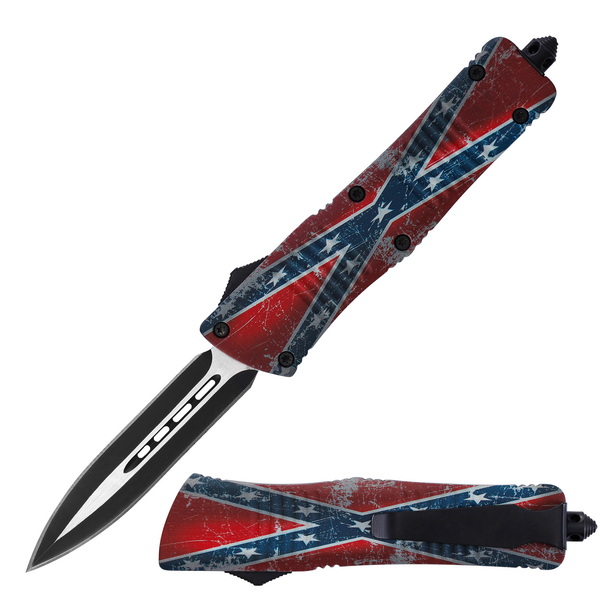
Combo edge blades offer both a serrated and a straight edge on a single blade—typically with a straight edge near the tip for precision slicing and serrations close to the base for sawing tasks. This design aims to maximize versatility at the expense of overall length dedicated to each edge type.[16][12]
The ideal choice between serrated and straight edge OTF knives depends heavily on the user's typical tasks and operational environment. For those working frequently with ropes, synthetic materials, or in high-stress rescue scenarios, serrated blades provide unmatched performance. In contrast, users demanding utmost precision, clean slicing, and straightforward maintenance will benefit from a straight edge.[14][13][12]
A key reason Tactical OTF Knives are popular among law enforcement and military professionals is their ability to be rapidly deployed with one hand, even while wearing gloves or operating complex equipment. For self-defense scenarios, the speed and reliability of OTF mechanisms combined with the edge type can be critical.[5][1]
- Serrated edges may provide a psychological deterrent and the ability to cut through restraints quickly.
- Straight edges typically offer finer control and the ability to use the blade for multiple daily needs beyond emergencies.
Premium OTF knives are made from high-grade steel like D2, CPM-S30V, or M390 for superior edge retention and corrosion resistance. Handles are often crafted from anodized aluminum, zinc alloy, or other robust, lightweight materials.[3]
A quality Tactical OTF Knife will include advanced locking mechanisms to keep the blade securely in place—critical for user safety and effective operation. Some models provide additional safety switches to prevent accidental deployment.[2]
Evaluate button/switch placement for comfort, ease of use (even with gloved hands), and ambidextrous operation. Reputable brands prioritize minimal blade play, solid lock-up, and smooth action for demanding tactical applications.[3][2]
Maintaining a serrated edge requires a specially shaped sharpener (often a tapered rod) to fit the scallops between the teeth. It's best to focus on sharpening the valleys and to use a ceramic or diamond sharpener for best results. Professional sharpening may occasionally be necessary, especially if a portion becomes chipped.[12]
Straight edges are easier to maintain—all that's needed is a standard sharpening stone or guided sharpening system, making it a practical choice for users without access to professional tools.[15]
OTF knives require periodic cleaning and lubrication of both the blade and internal springs/tracks to maintain reliable deployment and prevent grit or residue from impacting function.[1][2]
OTF knives are subject to varying local regulations regarding blade length, deployment mechanism (auto vs. manual), and public carry. It's important to review and adhere to regional laws before purchasing or carrying any Tactical OTF Knife.[7][3]
The slim profile and strong pocket clips of Tactical OTF Knives make them suitable for discreet everyday carry as long as it complies with local legislation. Many models include glass breakers, safety locks, and ergonomic grips to maximize utility and portability.[3]
While Tactical OTF Knives are favored in military and law enforcement contexts, their rapid deployment, rugged build, and versatility make them just as practical for campers, hunters, first responders, and EDC enthusiasts.[1]
Quality OTF knives use robust designs and materials, ensuring longevity and reliability when properly maintained. Cheaper models, however, may be more prone to failure.[3][1]
Serrated edges can be sharpened effectively with the right tools or a professional service, though the process is more involved than with straight edges.[12]
Tactical OTF Knives may feature various blade shapes including tanto, drop point, and dagger/dirk profiles. The choice influences piercing ability, slicing performance, and suitability for specific tactical uses.[5]
- Tanto Point: Strong tip, good for piercing and tactical thrusting.
- Drop Point: Versatile, excels at slicing and controlled cuts.
- Dagger/Double Edge: Balanced for self-defense and symmetrical cutting.
Consider how these formats combine with your preferred edge style to match your typical tasks and intended use.
Choosing between serrated and straight edge Tactical OTF Knives ultimately depends on the user's priorities, operational environment, and maintenance preferences. Serrated edges dominate in environments demanding the swift severing of rope, webbing, or tough synthetics, making them invaluable for rescue and heavy-duty outdoor use. Straight edges reign when clean, controlled cuts and easy at-home maintenance are paramount, lending themselves to versatile daily and precision-oriented tasks. Quality construction, a reliable OTF mechanism, and thoughtful ergonomics elevate both blade types, ensuring either is well-suited for tactical professionals, outdoor enthusiasts, or everyday carry. Make your choice with confidence, armed with an understanding of each option's strengths—and let your Tactical OTF Knife rise to every challenge you face.[11][13][2][1][12]
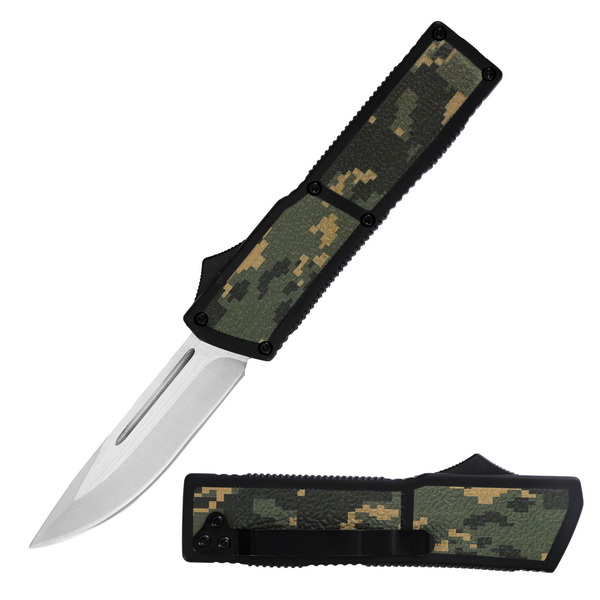
Yes, the aggressive teeth of serrated OTF blades excel at sawing through rope, straps, and webbing, making them an ideal choice for first responders and those prioritizing emergency preparedness.[17][14][12]
Straight edge blades are far easier to maintain and sharpen, often requiring only a basic sharpening stone. Serrated blades require special tools or professional care for thorough maintenance.[15][12]
No, laws vary widely by jurisdiction. Always check local and national regulations before purchasing or carrying a Tactical OTF Knife.[7][3]
Single-action knives rely on a spring for deployment but must be manually retracted, while double-action knives allow both blade extension and retraction with the same switch—making them faster and easier for repeated use.[2][5]
Yes, periodic cleaning and lubrication ensure smooth deployment and long-term reliability. This applies to both edge types and is essential for knife longevity.[1][2]
[1](https://www.tacticalsportinggoods.com/blogs/news/understanding-otf-knives-a-comprehensive-guide-to-their-features-and-uses)
[2](https://knife-depot.com/blogs/sharpened-values/otf-knives-explained-the-complete-guide)
[3](https://www.bladehq.com/blog/how-to-choose-an-otf-knife)
[4](https://bladeops.com/blog/otf-knife-buyers-guide/)
[5](https://crateclub.com/blogs/loadout/are-otf-knives-good-for-self-defense-a-comprehensive-analysis)
[6](https://uppercuttactical.com/blogs/news/how-does-an-otf-knife-work)
[7](https://hiconsumption.com/gear/best-otf-knives/)
[8](https://ravencresttactical.com/how-to-choose-the-perfect-tactical-knife-a-comprehensive-guide/)
[9](https://mtrdefense.com/knives/otf-/)
[10](https://www.youtube.com/watch?v=mk0jqi3VmUg)
[11](https://bladeops.com/blog/the-advantages-and-disadvantages-of-otf-knives-in-tactical-settings/)
[12](https://www.tektoknives.com/blogs/news/knife-anatomy-knife-edge-types-to-consider)
[13](https://knife-depot.com/pages/serrated-vs-plain-edge-knives)
[14](https://ravencresttactical.com/serrated-vs-plain-edge-otf-tactical-knives-for-sale-which-is-better/)
[15](https://www.reddit.com/r/Survival/comments/12k2azr/serrated_or_straight_edge/)
[16](https://uppercuttactical.com/blogs/news/otf-plain-vs-serrated-edge-guide)
[17](https://swordsswords.com/automatic-double-serrated-edge-combat-otf-knife-tactical-blade-with-glass-breaker-pocket-clip/)


