
Views: 222 Author: Leah Publish Time: 2025-10-18 Origin: Site


Content Menu
● What Are Heavy-Duty OTF Knives?
● Heavy-Duty OTF Knife Laws Worldwide
>> Germany
>> Spain
>> Poland
>> Australia
>> South Korea
>> China
● Reasons Behind Heavy Regulation of OTF Knives
>> Historical Criminal Associations
● Practical Guidance for Owners and Users
● FAQ
>> 1. Are heavy-duty OTF knives legal everywhere?
>> 2. Can I carry a heavy-duty OTF knife in public?
>> 3. What blade length restrictions apply?
>> 4. Are double-edged OTF knives more restricted?
>> 5. What should buyers check before purchasing a heavy-duty OTF knife?
Heavy-duty OTF (Out-The-Front) knives are a specialized type of automatic knife with blades that deploy rapidly from the front of the handle via a spring-loaded mechanism. They are valued for their quick blade deployment, making them popular among collectors, emergency responders, military personnel, and outdoor enthusiasts. However, due to their potential as weapons,heavy-duty OTF knives face strict and varying legal restrictions worldwide. This article provides a comprehensive global overview of the laws regulating these knives, highlighting country-specific regulations, the rationale behind these controls, and practical considerations for owners and users.
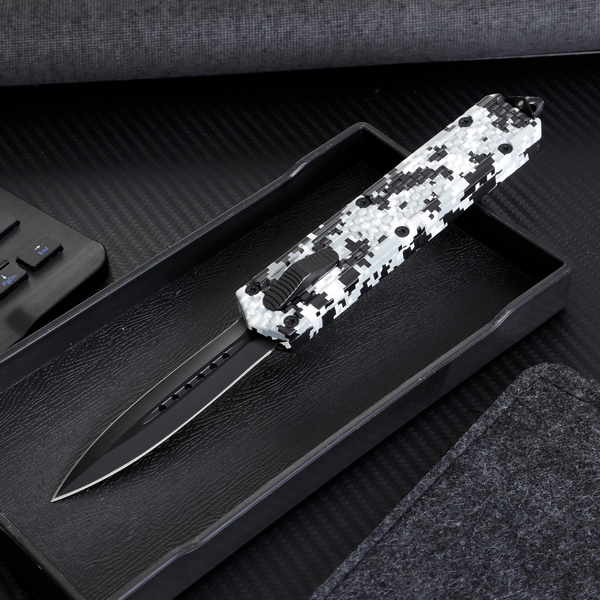
OTF knives are defined by a blade that extends and retracts straight out from the front of the handle using a button or slider. This distinguishes them from other automatic knives where the blade folds out from the side. They come in two main types: single-action OTF knives, where the blade automatically extends but requires manual retraction; and double-action OTF knives, which allow both extension and retraction via the same control. Heavy-duty OTF knives typically have longer blades and sturdier builds designed for more rigorous tasks.
Key characteristics include:
- Blade mechanism: Spring-loaded system enabling fast extension and retraction.
- Handle design: Usually long and slim to conceal the blade and accommodate the mechanism.
- Blade types: Available in single-edged or double-edged versions, with some models featuring serrations for versatility.
Their fast action and ease of concealment have made these knives subject to close scrutiny by lawmakers concerned about public safety.
In the US, OTF knife laws are diverse and governed mostly at the state level. The Federal Switchblade Act restricts import and interstate commerce but does not ban possession or carry outright. Key points include:
- Some states like Delaware and Hawaii prohibit switchblade ownership entirely.
- States such as California restrict blade length to under 2.5 inches for legality.
- Concealed carry of OTF knives can require permits or be outright banned.
- Many states allow possession but with varying carry restrictions tied to age or intent.
This patchwork requires users to be acutely aware of their local laws before acquiring or carrying an OTF knife.
Germany has some of the harshest restrictions on OTF knives. Under the German Weapons Act:
- Fully automatic OTF knives with blades longer than 8.5 cm or double-edged blades are prohibited.
- Single-edged blades below 8.5 cm may be legally possessed but are heavily restricted in public carry.
- Carrying OTF knives in public is mostly illegal unless justified by professional use, sports, or transport in locked containers.
- Violations can result in fines or imprisonment up to three years.
These restrictions arise from concerns over the rapid deployability of OTF knives and their association with violence and criminal activity.
The UK enforces a strong limitation on OTF knives and other automatic knives:
- Switchblades, butterfly knives, and disguised blades are prohibited.
- Public carry of any knife requires a “good reason,” typically excluding self-defense.
- Folding knives with blades under 3 inches (7.62 cm) are generally allowed.
The UK emphasizes restricting concealed and automatic knives for public safety.
Spain restricts knives based on blade length and opening method:
- Knives classified as weapons of war or with blades over 11 cm are banned.
- One-handed opening knives including OTF knives face severe restrictions.
- Penalties include imprisonment for illegal carrying or use causing harm.
This makes carrying heavy-duty OTF knives in public spaces highly restricted.
Poland bans switchblades outright and forbids knife possession if intended for weapon use or threatening safety.
- Carrying knives over 12 cm without permits is prohibited.
- Concealed carry of OTF knives is generally illegal without authorization.
Australian states have different laws, usually criminalizing public carry of automatic or OTF knives without lawful excuse.
- Possession bans or sale restrictions apply to certain knife types including gravity and flick knives.
- Penalties range from heavy fines to imprisonment.
Knives with blades over 10 cm, double-edged blades, and one-hand opening knives are forbidden.
- Carrying without legitimate purpose can lead to fines or up to three years imprisonment.
China maintains strict control over knives:
- Automatic knives, disguised blades, or blades over 20 cm are banned for possession, sale, or carry.
- Violations can lead to severe penalties including life imprisonment or death in extreme cases.
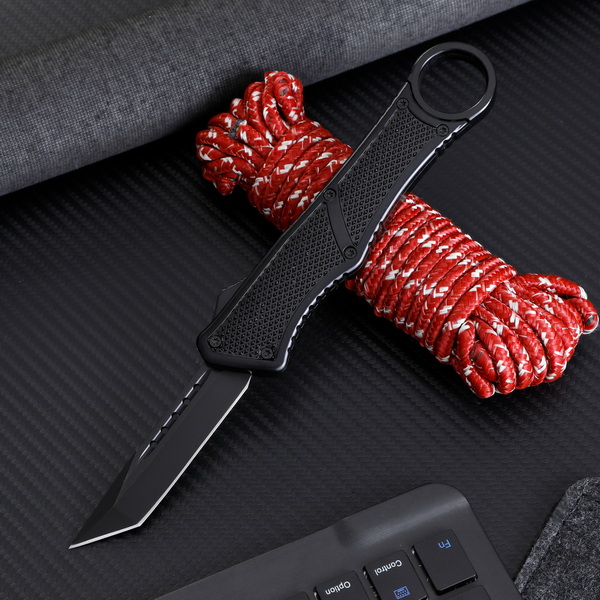
The spring-loaded mechanism allows OTF knives to be opened instantly, posing a risk in violent encounters by lowering the threshold for weapon use.
OTF and switchblade knives have long-held reputations as tools of gangs and criminals, especially popularized in mid-20th century media, influencing strict laws globally.
Their slim design masks the blade, enabling easy concealed carry and increasing the potential for misuse.
Laws aim to prevent violence and accidental injuries by restricting quick-access weapons in public spaces.
Unlike traditional folding knives or fixed blades used for utility, OTF knives are often perceived chiefly as weapons, leading to more stringent legal controls.
- Know Your Local Laws: Always check laws specific to your city, state, or country before acquiring or carrying an OTF knife.
- Legal Exceptions: Professional users like rescue workers, hunters, or sportspersons often have legal exemptions.
- Transport Safely: Carry knives in locked containers or cases when transporting to avoid violations.
- Blade Length & Type Compliance: Ensure OTF knives meet blade length and blade type requirements (e.g., single-edged) of your jurisdiction.
- Avoid Public Carry Without Permit: Carrying OTF knives in public without legitimate reasons or permits is widely illegal.
Heavy-duty OTF knives are innovative and practical tools prized for their rapid blade deployment and compactness. However, their potential lethality and ease of concealment have led to rigorous legal restrictions worldwide, with laws varying dramatically between countries and regions. Owners and users must prioritize legal compliance to avoid severe penalties and ensure responsible ownership. Understanding the complex and diverse legal landscape governing OTF knives is essential for lawful use, purchase, and transport, especially for global brands and distributors in the outdoor knife industry.
No, the legality is highly variable and depends on national and regional laws. Some countries prohibit them outright, while others allow possession with restrictions.[6][9]
Most countries restrict or prohibit public carry without a special reason or permit. Professional use or sporting activities often qualify as exceptions.[1][9]
Common legal limits include 8.5 cm in Germany, 11 cm in Spain, and 20 cm in China. Blade length is a major factor in legal status.[4][9][6]
Yes, double-edged blades face tighter legal controls due to increased perceived danger, especially in countries like Germany and South Korea.[9][6]
Buyers must verify local laws on possession, carry, blade length, and blade type compliance, and understand transport and usage restrictions.[10][9]
[1](https://bpsknives.com/knife-law-and-regulations-for-bushcraft-enthusiasts/)
[2](https://knife-blog.com/german-knife-law/)
[3](https://tacknivesusa.com/what-is-an-otf-knife-and-how-is-it-different-from-other-switchblades/)
[4](https://www.tektoknives.com/blogs/news/best-blade-length-for-your-otf-knife)
[5](https://bladeops.com/blog/pros-and-cons-of-otf-knives-for-tactical-operations/)
[6](https://bpsknives.com/knife-laws-around-the-world-what-you-need-to-know/)
[7](https://www.reddit.com/r/knifeclub/comments/97vroo/shipping_question_about_otf_knives_ny/)
[8](https://steelriverknives.com/world-wide-switchblade-laws/)
[9](https://knyfe.de/en/2024/10/26/otf-knife-everything-about-the-legal-situation-in-Germany/)
[10](https://ravencresttactical.com/otf-knife-laws/)


