
Views: 222 Author: Leah Publish Time: 2025-10-17 Origin: Site


Content Menu
● Understanding Heavy-Duty OTF Knives
● The Critical Role of Pocket Clip Designs
● Materials Matter: Titanium and Stainless Steel Clips
● Innovative Clip Shapes and Designs
● Placement and Angle Considerations
● Added Functionalities: Lanyard Holes and Ceramic Beads
● Popular Heavy-Duty OTF Knife Examples with Distinct Pocket Clips
● The Advantages of Thoughtful Pocket Clip Design
● FAQ
>> 1. What makes a pocket clip suitable for heavy-duty OTF knives?
>> 2. Can pocket clip design affect the safety of an OTF knife?
>> 3. Are titanium pocket clips better than stainless steel?
>> 4. How does pocket clip placement impact comfort?
>> 5. What additional features can pocket clips have?
Out-the-front (OTF) knives represent a unique and highly functional category of automatic knives. Designed with a blade that slides straight out from the front of the handle, OTF knives enable rapid blade deployment, making them favorites among tactical professionals, outdoor enthusiasts, and everyday users seeking convenience and reliability. Among these, heavy-duty OTF knives stand out for their reinforced construction, designed to endure rigorous use in demanding environments. A vital yet sometimes overlooked component influencing their practicality is the pocket clip design. This article delves deeply into what matters most in heavy-duty OTF knife pocket clip designs, unpacking their key features, benefits, and examples to guide manufacturers, brands, and users alike.
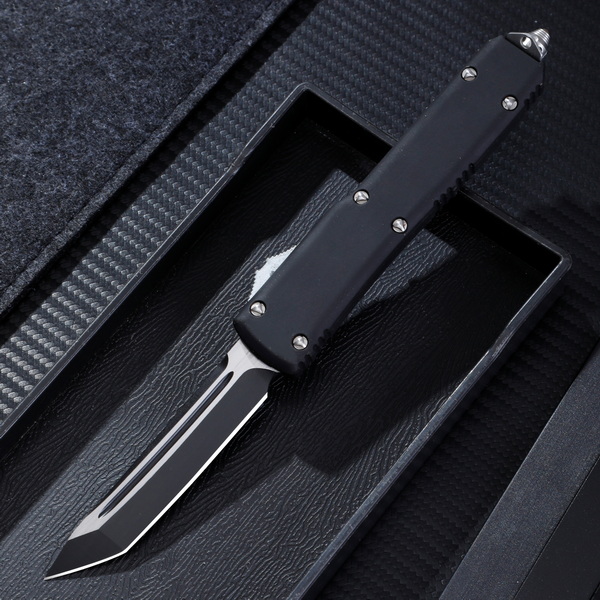
Heavy-duty OTF knives combine the fast action of automatic knives with enhanced materials and construction engineered for durability and reliability. They typically feature high-grade blade steels like CPM MagnaCut, Böhler M390MK, or other premium alloys known for edge retention, corrosion resistance, and toughness. Handles crafted from aircraft-grade aluminum, titanium, or reinforced polymers ensure structural integrity while maintaining portability.
These knives are essential tools in tactical operations, outdoor survival, and heavy utility work due to their one-handed deployment and robust build. However, even the strongest blade and handle can be compromised by poor carrying solutions. This is where pocket clip design assumes a pivotal role in the knife's function and user experience.
Pocket clips on heavy-duty OTF knives serve multiple essential functions beyond mere attachment. They secure the knife firmly to a pocket, belt, or gear, preventing loss or accidental drops. A well-designed pocket clip also provides a discreet, low-profile carry, reducing snagging and discomfort. Furthermore, it facilitates quick and smooth knife drawing, a matter of crucial importance in tactical or emergency scenarios.
A pocket clip must therefore address several important criteria:
- Retention Strength: The clip must hold the knife securely through vigorous movement without loosening.
- Ergonomic Positioning: Placement should avoid interference with grip zones or blade deployment mechanisms.
- Comfort and Accessibility: The clip should enable easy draw and return while minimizing pressure points or hotspots.
- Durability: Materials used must withstand corrosion and mechanical stress, matching the knife's overall resilience.
- Additional Functionalities: Some clips include features like lanyard holes or retention beads to enhance security and handling.
Each of these elements significantly shapes the overall practicality and safety of carrying a heavy-duty OTF knife.
Material choice in pocket clip design directly impacts longevity, weight, and resistance to wear. Titanium clips are favored in premium heavy-duty OTF knives because they offer a remarkable strength-to-weight ratio, excellent corrosion resistance, and flexibility that reduces breakage risk. Their ability to maintain tension ensures strong retention over time without deforming.
Stainless steel clips are common due to their affordability and good corrosion resistance, but they tend to be heavier and less flexible than titanium. Stainless clips may also lose tension more quickly, compromising the clip's ability to consistently hold a heavy-duty knife. Therefore, many manufacturers like Yangjiang Ruizhen Industry and Trade Co., Ltd. prioritize titanium clips for their OEM knife lines targeting international markets demanding high reliability.
Pocket clip shapes have evolved beyond simple flat designs to meet the complex needs of heavy-duty OTF knife users. The following shapes represent notable innovations:
- Y-Shaped Clips: These clips create multiple contact points with the fabric, enhancing grip security without increasing pressure on the knife handle or the pocket fabric.
- Hinged Clips: Hinged clips flex slightly when clipped on, adding shock absorption and adapting better to different pocket thicknesses.
- Deep-Carry Clips: Designed to insert the knife deeper into the pocket, these clips reduce the visible profile and offer enhanced concealment, which is particularly valued in tactical contexts.
- Offset or Tapered Clips: These avoid contact with blade deployment sliders or controls, protecting knife mechanisms and improving ergonomic grip comfort.
Such specialized designs underscore how pocket clips contribute to the function and user satisfaction of heavy-duty OTF knives.

Optimal pocket clip placement depends on balancing accessibility and comfort. Deep carry pockets with clips positioned towards the end of the handle enable concealment and retention but require precision to avoid impeding blade deployment. Angled clips can ensure the knife sits naturally in the pocket while allowing comfortable grip and draw motions.
Designers must also account for various grip styles, including reverse grips or tight holds used in tactical operations. A poorly placed clip can generate hotspots—pressure points causing hand fatigue and reducing control. Manufacturers that heed these ergonomic factors create knives that performers trust under demanding conditions.
To increase utility and security, many heavy-duty OTF knife pocket clips integrate additional features. Lanyard holes allow attachment of cords or tags, adding another layer of retention or personalized identification. Ceramic beads embedded near the clip act as friction points, improving grip on pocket fabric and preventing unexpected slippage during rapid movement or activity.
These enhancements exemplify how pocket clips combine durability with user-centric innovations that advance handling reliability.
Several top-tier manufacturer models illustrate best practices in pocket clip design:
- Microtech Combat Troodon Gen III: This knife uses a machined billet titanium clip housed within the handle, including a lanyard hole and ceramic bead. The design assures excellent retention, ease of draw, and smooth reinsertion without snagging.
- Hawk Knife Designs Deadlock Model C: Featuring a hinged titanium clip, this design enhances ergonomics during deployment and gripping, preventing blade play or clip shifting.
- Kershaw Livewire: Known for its mini pocket clip positioned to avoid grip zones, this clip provides a secure hold ideal for high-mobility activities like motorcycle riding.
- Heretic Knives Hydra V3: The Y-shaped clip balances secure retention with no compromise on comfort, mitigating hotspots while securely fastening even in active outdoor conditions.
These examples serve as models for OEM factories such as Yangjiang Ruizhen Industry and Trade Co., Ltd., incorporating advanced pocket clip engineering to meet global standards.
The main advantages derived from purpose-built pocket clips on heavy-duty OTF knives include the following:
- Enhanced Safety: Prevents accidental drops or unintended blade deployment due to secure attachment.
- Improved Accessibility: Smooth and quick draw capability in urgent situations enhances knife utility.
- Greater Comfort: Reduced hand fatigue and hotspots maximize user control and comfort over time.
- Aesthetic Appeal: Precision-engineered clips complement the premium look and feel of well-made OTF knives.
- Extended Durability: Material and design choices support long-term clip performance aligned with knife durability.
These advantages empower users to confidently carry and rely on their heavy-duty OTF knives across various professional and personal scenarios.
Pocket clip design is a critical yet sometimes underestimated aspect of heavy-duty OTF knives that greatly influences their everyday carry practicality, safety, and comfort. Thoughtful material selection, innovative clip shapes, ergonomic placement, and added functionalities collectively create an optimal pocket clip that complements the rugged reliability of quality OTF knives. For OEM manufacturers like Yangjiang Ruizhen Industry and Trade Co., Ltd., mastering these design elements ensures their heavy-duty OTF knives meet the nuanced demands of international brands and end users alike. When selecting or designing an OTF knife, giving due attention to the pocket clip ensures the full potential of this powerful tool is realized.

A suitable pocket clip must provide secure retention to prevent accidental loss, be made from durable, corrosion-resistant materials like titanium, and be ergonomically positioned to avoid interference with blade deployment or grip comfort.
Yes, a well-designed clip prevents accidental drops and unintended blade deployment, significantly improving carry safety.
Titanium clips offer superior strength-to-weight ratios and corrosion resistance, maintaining tension and durability better over time compared to stainless steel alternatives.
Proper placement avoids contact with sensitive grip areas or blade sliders, preventing hotspots and ensuring ease of knife draw and reinsertion without discomfort.
Lanyard holes allow attachments for extra security or retrieval, while ceramic beads add friction for a firmer grip on pocket fabric, enhancing clip retention.


