
Views: 222 Author: Leah Publish Time: 2025-11-24 Origin: Site


Content Menu
● What Defines an OTF Pocket Knife
● The Evolution of OTF Mechanisms
● Precision Engineering and Tolerances
● Materials Science in Blade Innovation
● Advanced Handle Materials and Construction
● Ergonomics and User-Centered Design
● Safety Enhancements and Reliability
● Customization and OEM Innovation
● Production Process and Quality Control
● Sustainability and Eco-Conscious Production
● Market Trends and User Demands
● Future Directions in OTF Pocket Knife Design
● FAQ
>> 1Q: What is the main advantage of an OTF Pocket Knife compared with a traditional folding knife?
>> 2Q: Are OTF Pocket Knives safe to carry and use every day?
>> 3Q: How should an OTF Pocket Knife be maintained?
>> 4Q: What should brands look for when choosing an OEM factory for OTF Pocket Knives?
>> 5Q: Are premium steels and materials worth the extra cost in an OTF Pocket Knife?
In the world of modern outdoor tools, innovation is the driving force that separates average gear from truly exceptional equipment. The OTF Pocket Knife has become one of the most striking examples of how design, engineering, and materials science can transform a simple cutting tool into a high-performance instrument. As global outdoor, EDC, and tactical markets grow, new OTF Pocket Knife designs are setting higher standards for speed, safety, durability, and customization.
For brands, wholesalers, and manufacturers working with professional OEM partners in China, this wave of innovation is not just a trend—it is a critical competitive advantage. Advanced engineering, flexible OEM solutions, and efficient mass production now allow more customized, reliable, and visually appealing OTF Pocket Knives than ever before.
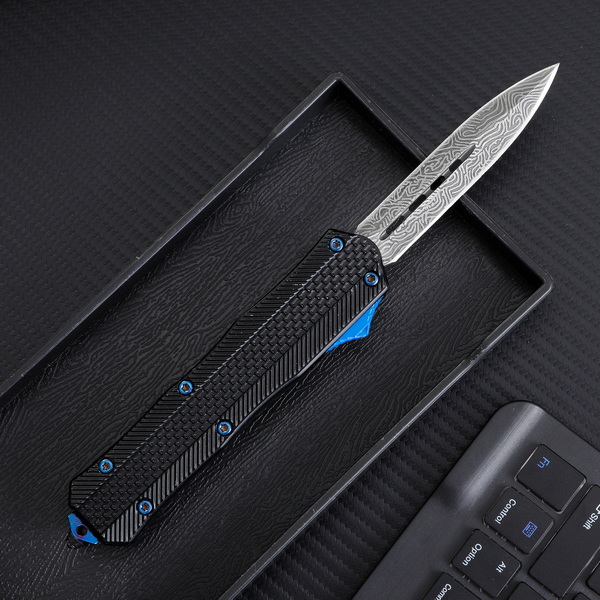
An OTF Pocket Knife—short for “Out-The-Front” pocket knife—is defined by how its blade deploys. Instead of folding out from the side like a traditional folding knife, the blade of an OTF Pocket Knife slides straight out of the front of the handle along a guided internal track. This linear deployment mechanism is driven by internal springs and sliders, often controlled by a thumb switch on the handle.
There are two main categories: single-action OTF Pocket Knives, which deploy automatically but must be manually retracted, and double-action OTF Pocket Knives, which both deploy and retract automatically using the same switch. For outdoor users and professionals, this ability to quickly extend and retract the blade with one hand makes the OTF Pocket Knife a highly attractive choice in demanding situations.
Early OTF Pocket Knife designs were relatively simple and often unreliable by modern standards. Springs were less consistent, internal tolerances were looser, and deployment could become sluggish or fail after heavy use. As user expectations increased, engineers focused on refining the internal mechanism to make the OTF Pocket Knife dependable enough for real-world tactical and outdoor applications.
Modern OTF Pocket Knives now incorporate:
- High-precision internal tracks that guide the blade in a straight, stable path.
- Stronger, more elastic springs designed for thousands of deployment cycles.
- Redesigned sliders and firing plates that improve switch feel and reduce wear.
- Internal lock systems that secure the blade firmly in both open and closed positions.
These improvements allow a properly engineered OTF Pocket Knife to fire smoothly and lock solidly, offering the kind of reliability that serious users require in the field or on duty.
One of the most important drivers of innovation in OTF Pocket Knife design is precision engineering. The mechanism inside an OTF Pocket Knife includes multiple moving parts—spring, slider, firing plate, blade, locks, and safety components—that must interact perfectly within very tight tolerances. Even a tiny deviation in machining can cause misfires, blade play, or premature wear.
High-end OTF Pocket Knife production depends on:
- CNC machining of handles and internal components to extremely fine tolerances.
- Accurate milling of blade tracks and stop points to ensure repeatable deployment.
- Careful deburring, tumbling, and finishing to remove sharp edges and friction points.
- Consistent inspection and quality control at each production stage.
For OEM factories, investing in advanced CNC equipment, professional engineers, and strict QC systems is essential. This is especially true when producing premium OTF Pocket Knives for international brands that demand consistent performance in every batch.
Innovation in materials science has transformed what an OTF Pocket Knife blade can deliver in terms of sharpness, toughness, and corrosion resistance. Traditional stainless steels are still widely used, but higher-end models now feature advanced steels such as D2, M390, and other powder metallurgy steels for superior edge retention and durability.
Key trends in OTF Pocket Knife blades include:
- Use of high-carbon and powder steels for longer-lasting sharp edges.
- Optimized heat treatment processes to balance hardness and toughness.
- Surface finishes like stonewash, satin, bead-blast, or DLC coatings for wear and corrosion resistance.
A modern OTF Pocket Knife blade can be customized in multiple ways—different grinds, edge geometries, and finishes—allowing OEM partners to design distinct product lines for outdoor, tactical, or EDC markets while still leveraging the same core manufacturing platform.
The handle of an OTF Pocket Knife is not just a shell—it is the structural body that houses and protects the complex internal mechanism. Handle design heavily influences ergonomics, durability, aesthetics, and total weight, all of which affect how the user experiences the knife.
Contemporary OTF Pocket Knife handles often use:
- 6061-T6 or 7075 aluminum for a strong yet lightweight chassis.
- Titanium for premium models that require strength, corrosion resistance, and a high-end feel.
- G10 and micarta for excellent grip and rugged outdoor performance.
- Carbon fiber or hybrid composites for a luxury appearance and low weight.
OEM factories can anodize, bead-blast, or coat aluminum handles in a wide variety of colors, textures, and patterns, allowing each OTF Pocket Knife series to have its own visual identity. This flexibility is especially valuable to international brands that want to differentiate themselves in crowded markets.
As the OTF Pocket Knife has evolved from a niche tactical item into a mainstream EDC tool, ergonomics have become more important. Innovation now focuses not only on mechanical performance but also on how the knife feels in the hand and how easily it can be used for real tasks.
User-centered OTF Pocket Knife design emphasizes:
- Contoured handle shapes that follow natural hand curves and reduce fatigue.
- Aggressive or subtle texturing to balance grip security with comfort.
- Ambidextrous switch placement or reversible pocket clips to serve left- and right-handed users.
- Thoughtful jimping and thumb ramps for controlled cutting and piercing.
A well-designed OTF Pocket Knife should lock securely in the user's grip, allow easy access to the switch, and support a range of grip styles—whether for precision cutting, emergency use, or heavy-duty outdoor work.
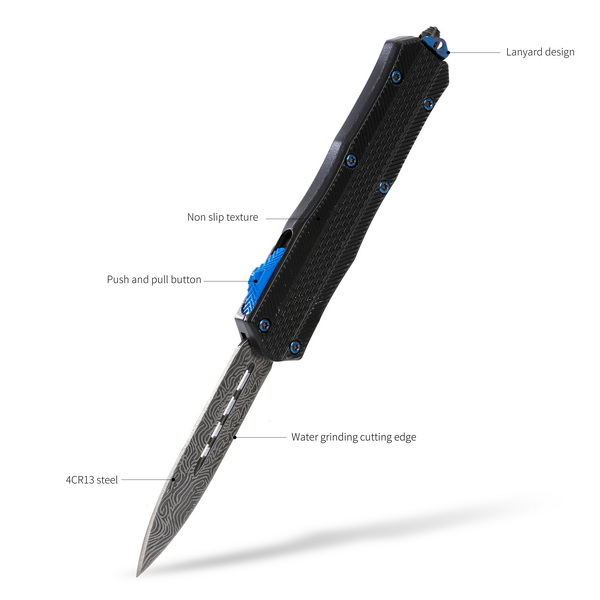
Safety is a crucial area where innovation continues to influence OTF Pocket Knife design. Because the blade deploys automatically, both the internal mechanics and external controls must be engineered to minimize accidental activation and ensure secure lockup.
Modern safety features in OTF Pocket Knives often include:
- Safety sliders or secondary locks that block the switch when the knife is carried.
- Mechanisms that prevent full lockup if the blade meets resistance during deployment, reducing damage or injury.
- Refined spring and track geometry designed to avoid misfires and reduce blade wobble.
- Internal failsafes to ensure that if the switch is not fully engaged, the blade cannot accidentally fire.
By combining advanced locks, tested mechanisms, and strict factory QC, OEM manufacturers can supply OTF Pocket Knives that earn the trust of professional users such as law enforcement, rescue personnel, and experienced outdoor enthusiasts.
One of the strongest competitive edges in the current OTF Pocket Knife market is customization. Global brands and wholesalers increasingly seek OEM partners capable of turning creative concepts into real products quickly and cost-effectively. An innovative OEM factory becomes a silent engine behind multiple brands' success.
OEM-driven innovation in OTF Pocket Knives typically covers:
- Custom blade shapes—such as drop point, tanto, spear point, or hybrid profiles.
- Personalized blade finishes, from stonewashed and two-tone to coated tactical surfaces.
- Unique handle geometries, weight distributions, and texture patterns.
- Logo engraving, laser markings, and customized packaging for brand identity.
By offering modular internal designs with customizable external aesthetics, an OEM factory can produce many distinct OTF Pocket Knife models from a common engineering base. This shortens development time, reduces tooling costs, and allows brands to launch complete product families in a shorter time frame.
Behind every successful OTF Pocket Knife is a carefully organized production workflow. From raw material selection to final assembly, each step influences the quality and performance of the finished knife. With the complexity of OTF Pocket Knife mechanisms, robust process control is especially important.
A typical OTF Pocket Knife manufacturing process involves:
1. Cutting and preparing blade steel and handle stock.
2. CNC machining of handles, internal tracks, and component pockets.
3. Blade profiling, milling, drilling, and heat treatment.
4. Surface finishing of blades and handles—tumbling, polishing, coating, or anodizing.
5. Precision machining or molding of internal parts such as sliders, springs, and locking tabs.
6. Hand-fitting, assembly, lubrication, and final tuning to ensure smooth deployment.
7. Thorough inspection of switch action, lockup, blade centering, and overall finish.
For OEM customers, a factory that runs this process under strict QA standards can consistently deliver OTF Pocket Knives that meet international expectations, whether the target market is high-end tactical, mid-range outdoor, or entry-level EDC.
Sustainability is becoming an important part of innovation in the knife industry. Forward-looking manufacturers are finding ways to reduce environmental impact without compromising the performance of the OTF Pocket Knife.
Practical steps include:
- Using recycled or responsibly sourced aluminum and steel where possible.
- Implementing efficient machining strategies to reduce material waste.
- Using water-based or low-VOC treatments instead of harsh chemical finishes.
- Recovering and recycling metal shavings and scrap materials from CNC operations.
For brands that promote eco-friendly values, partnering with an OEM factory that integrates sustainable practices into OTF Pocket Knife production can strengthen marketing messages and build long-term customer loyalty.
The global market for OTF Pocket Knives is shaped by several overlapping trends. Everyday carry culture has become more mainstream, and social media has made it easier for users to discover and share new designs. At the same time, professional markets such as law enforcement, rescue, and military continue to demand durable, high-performance automatic knives.
Key drivers in OTF Pocket Knife demand include:
- Growing EDC communities that appreciate compact, reliable, and stylish tools.
- Collectors who seek limited editions, premium materials, and unique designs.
- Practical users who rely on fast one-hand deployment in work or emergency situations.
- International buyers looking for high-quality OEM production at competitive prices.
To serve these diverse segments, innovation must continue across design, materials, safety, and branding. OEM factories that can quickly adapt to these changing demands—while maintaining consistent quality—will help their partners capture market share in both existing and emerging regions.
The future of OTF Pocket Knife design will likely integrate even more advanced technology and cross-industry ideas. As machining, coatings, and materials improve, designers will have greater freedom to push performance and aesthetics simultaneously.
Possible future innovations for OTF Pocket Knives include:
- New composite materials that combine metal strength with polymer flexibility.
- Smart surface treatments for enhanced corrosion resistance and reduced friction.
- Refined internal architectures that simplify assembly while improving reliability.
- Integrated design languages that harmonize blades, handles, and accessories into cohesive product ecosystems.
For OEM partners and international brands, staying close to factories that invest in R&D, new equipment, and experienced engineering teams will be vital to leading—not just following—these future trends.
Innovation is at the core of every successful OTF Pocket Knife on the market today. From precision internal mechanisms and advanced steels to ergonomic handles and sophisticated safety systems, each new generation of OTF Pocket Knives reflects thousands of hours of engineering and manufacturing experience. OEM factories that combine cutting-edge technology, strict quality control, and flexible customization are reshaping what brands can offer to outdoor, EDC, and tactical customers worldwide.
As global demand grows and user expectations rise, the OTF Pocket Knife will continue to evolve. Brands and wholesalers who align with innovative OEM partners will be best positioned to introduce new designs that are faster, safer, more durable, and more visually striking—meeting the needs of both professionals and enthusiasts in an increasingly competitive marketplace.

A: The primary advantage of an OTF Pocket Knife is its straight-line, out-the-front deployment, which allows rapid one-handed operation. This makes it highly useful in situations where speed and convenience are critical, such as outdoor activities, rescue tasks, or tactical scenarios.
A: High-quality OTF Pocket Knives are designed with safety features such as internal locks, safety switches, and mechanisms that prevent full lockup if the blade meets resistance during deployment. When carried according to local laws and used responsibly, an OTF Pocket Knife can be a safe and practical everyday carry tool.
A: Basic maintenance includes keeping the knife clean, lightly lubricating the internal mechanism, and avoiding heavy contamination with dust, sand, or mud. Compressed air or a soft brush can help remove debris from the handle opening and internal track, while a light oil will keep the springs and sliders operating smoothly.
A: Brands should prioritize OEM partners with advanced CNC equipment, experience in precision automatic mechanisms, strong quality control systems, and a proven track record in exporting OTF Pocket Knives. The ability to offer customization in blades, handles, finishes, and packaging is also very important for building a strong product line.
A: For serious users and enthusiasts, premium blade steels and advanced handle materials usually provide better edge retention, improved corrosion resistance, and a more refined feel in daily use. While they increase the cost of the OTF Pocket Knife, they can significantly enhance long-term performance and value, especially for demanding applications.
[1](https://www.youtube.com/watch?v=EwG2oytZCl8)
[2](https://www.youtube.com/watch?v=krPPEd3X1sM)
[3](https://takcom.com/the-precision-engineering-that-goes-into-a-premium-otf-knife/)
[4](https://www.youtube.com/watch?v=_TEVM4NAlxk)
[5](https://cobratecknives.com/product/special-purpose/utility-knives/otf-utility-knife/)
[6](https://www.youtube.com/watch?v=lojT2LuLPxY)
[7](https://nobliecustomknives.com/what-is-an-otf-knife-and-how-does-an-otf-knife-work/)
[8](https://eknives.com/blog/reate-knives-manufacturing-process-in-depth-look)
[9](https://www.youtube.com/watch?v=s0mx_j5ihJg)
[10](https://www.normandyknives.com/pages/otf-care-and-maintenance-king-1)


