
Views: 222 Author: Leah Publish Time: 2025-11-13 Origin: Site


Content Menu
● Core Differences: OEM vs. ODM for OTF Pocket Knives
>> OEM (Original Equipment Manufacturer)
>> ODM (Original Design Manufacturer)
● The OTF Pocket Knife Manufacturing Process
>> Design and Engineering Collaboration
>> Material Selection for Performance
>> Assembly and Quality Assurance
● Engineering Marvel: Internal Mechanism of OTF Pocket Knives
● Advantages of Custom OTF Pocket Knives via OEM/ODM
>> Unrivaled Brand Differentiation
>> Flexibility, Scalability, and Speed
>> Quality Assurance and Legal Compliance
● Use Cases for Custom OTF Pocket Knives
● Advanced Customization: The Engineering and Craftsmanship Process
● Innovations in Modern OTF Pocket Knives
● Sourcing Tips for Brands and Buyers
● The Global Impact of OEM and ODM on OTF Pocket Knives
● FAQ
>> 1. How do OEM and ODM services differ for OTF Pocket Knives?
>> 2. What materials are best for high-quality OTF Pocket Knives?
>> 3. Can OTF Pocket Knives be sold internationally?
>> 4. How long does it take to produce custom OTF Pocket Knives?
>> 5. What quality controls ensure reliability in OTF Pocket Knives?
OEM and ODM services have fundamentally transformed the customization landscape for OTF Pocket Knives, providing international brands, wholesalers, and manufacturers with unmatched opportunities for innovation, brand identity, and market responsiveness. These advanced manufacturing options let companies collaborate with expert factories to create unique knife designs, optimizing both function and aesthetics for the targeted user base. By understanding the mechanisms, processes, and strategic benefits behind OEM and ODM approaches, businesses can elevate their offerings and secure a distinct position in the global OTF pocket knife market.[11][12][13]
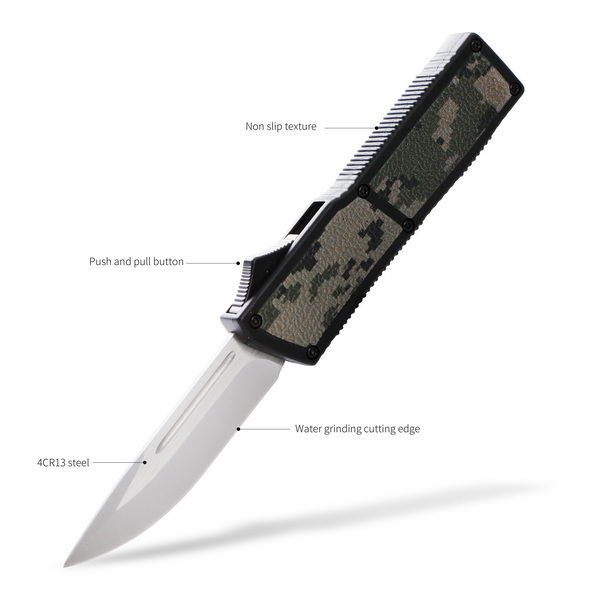
OTF (Out-The-Front) Pocket Knives are a special class of automatic knives in which the blade slides straight out of the front of the handle, propelled by an internal spring mechanism. Unlike traditional folding knives, OTF Pocket Knives provide rapid, one-handed operation, ideal for tactical, rescue, and everyday scenarios. Their design focuses on reliability, safety, and precision engineering, making them a preferred choice for consumers who demand high performance.[4][5]
OEM services allow companies to design and specify every detail of an OTF Pocket Knife, from blade shape and steel grade to handle materials, locking mechanisms, logos, and packaging. This approach is best for brands seeking high exclusivity, unique features, and total control over performance and aesthetics.[12][11]
- Complete customization (blade type, action, finish, color, and materials)
- Proprietary designs for exclusive brand lines
- Enhanced quality assurance and certification per customer request
- Options for small prototype batches and full-scale production[14][11][12]
ODM services offer rapid market entry by using manufacturer's pre-existing OTF Pocket Knife designs, allowing for moderate customization like color, logo placement, and packaging. Brands benefit from proven reliability while controlling some elements of product appearance.[11]
- Fast product launch with established designs
- Lower R&D and tooling costs
- Customization limited to branding elements and minor design tweaks[12][11]
OEM and ODM projects begin with intensive design discussions. Brands share sketches, CAD files, or feature lists, and factory engineers help translate ideas into manufacturable products. This process ensures that every OTF Pocket Knife meets both technical requirements and brand standards.[12]
Materials play a critical role in OTF Pocket Knife performance:
- Blade steels: D2, S35VN, M390, and other premium alloys are chosen for edge retention, corrosion resistance, and ease of sharpening.[1][7]
- Handle materials: Aluminum (6061-T6), titanium, G10, and carbon fiber offer optimal strength-to-weight ratios and attractive appearance.[7][1]
- Coating and finishing: Stonewashing, anodizing, DLC, and ceramic coatings create durable, visually distinct knives.[1]
The manufacturing phase involves high-tolerance CNC machining to create handle channels, blade tracks, and locking mechanisms. Axial tolerances as fine as 1/1000 of an inch ensure smooth, reliable OTF deployment. Handles and blades undergo laser cutting, EDM, and multi-step grinding for perfect fit and finish.[9][1]
Components are precisely assembled to ensure seamless action for both single-action and double-action OTF Pocket Knives. Each knife is tested for spring tension, lock reliability, safety, and overall performance. Rigorous inspection means every OTF Pocket Knife meets strict quality targets and legal requirements for key export markets.[5][6][11]
OEM and ODM services allow for a wide diversity in designs and finishing touches:
- Blade shapes: Drop-point, tanto, dagger, and other profiles can be tailored to consumer needs.[15]
- Trigger types: Slide switches, buttons, and textured triggers can be matched to buyer preference for comfort and usability.
- Color and engraving: Laser-etched logos, custom color accents, and commemorative artwork differentiate knives in the market.[15]
- Accessory integration: Belt clips, glass breakers, and special sheaths can be specified for tactical, utility, or everyday carry scenarios.
The heart of an OTF Pocket Knife is the spring system and precise track mechanism:
- Spring: Stores and releases energy for rapid blade activation; often made from high-carbon steel for optimal durability and recovery.[6][4]
- Blade carrier: Runs along machine-milled tracks that guide smooth blade movement.
- Locking systems: Ensure secure blade position with ball bearings, friction, or mechanical locks.[6]
- Activation systems: Buttons, sliders, or levers deploy and retract the blade—single-action knives require manual retraction, while double-action knives allow automatic retraction as well.[5]
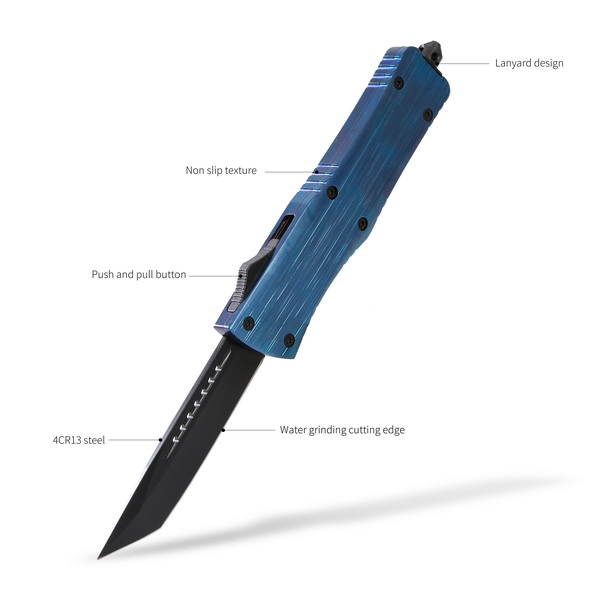
Through OEM, brands gain total creative control, making their OTF Pocket Knife lines instantly recognizable and tailored to specific consumer segments. This fosters brand loyalty and allows for premium pricing.[11][12]
ODM models provide efficiency and speed, enabling wholesalers and store brands to quickly react to market trends, test new styles, and respond to customer feedback with customized offerings.[11]
Factories specializing in OTF Pocket Knives maintain robust quality control procedures and offer certifications for international safety standards. This ensures that knives meet legal requirements and perform reliably in demanding environments.[12][11]
- Tactical gear suppliers requiring double-action mechanisms, non-slip titanium handles, and special blade shapes for military and law enforcement.[11]
- Gift and outdoor product companies focusing on laser-etched commemorative knives, custom colors, and collector's packaging.[15]
- Retailers and e-commerce brands responding to fashion and utility trends by offering seasonal colors, limited editions, or bundled accessories leveraging ODM production speed.
1. Handle Preparation: CNC milling shapes aluminum or titanium into ergonomic handles. Tolerances are checked at every step to guarantee flawless action and durability.[1]
2. Blade Formation: Steel sheets are cut, ground, and heat-treated. Blades receive hand-finished sharpening, special coatings, and laser engraving for brand distinction.[1]
3. Internal Mechanism Assembly: Stainless steel springs, triggers, and locking tabs are installed to ensure long-lasting, corrosion-resistant function.[6][1]
4. Final Testing and Packaging: OTF Pocket Knives are tested for deployment speed, lock strength, and safety before custom packaging completes the product.
- Upgraded steel alloys for blade longevity and edge retention
- Ergonomic handles that reduce fatigue during extended use
- Rapid-fire double-action triggers for tactical deployment scenarios
- Integrated glass breakers, belt cutters, and tactical clips
- Compliance with international export/import knife laws for safe and legal distribution[14][12][11]
- Vet factory credentials for R&D and quality control expertise
- Confirm compliance documentation for every market served
- Specify timelines, minimum orders, and aftersales support in OEM/ODM contracts
- Request prototype samples to verify design and function before committing to production[12][11]
OEM/ODM customization has catalyzed innovation and quality improvement across the OTF Pocket Knife market. Brands can rapidly evolve their product lines, offering distinctive, reliable knives that meet both practical needs and aesthetic preferences. This flexibility has fueled growth across tactical, outdoor, collector, and everyday carry markets worldwide.[11][12]
In today's competitive knife market, OEM and ODM services are indispensable for brands seeking to differentiate and excel with OTF Pocket Knives. These manufacturing models empower companies to design, produce, and launch products with unique features, sophisticated engineering, and robust quality control. Whether using a customized OEM approach or the speed of ODM adoption, businesses can achieve superior results and lasting market impact through strategic factory partnerships.[15][12][11]
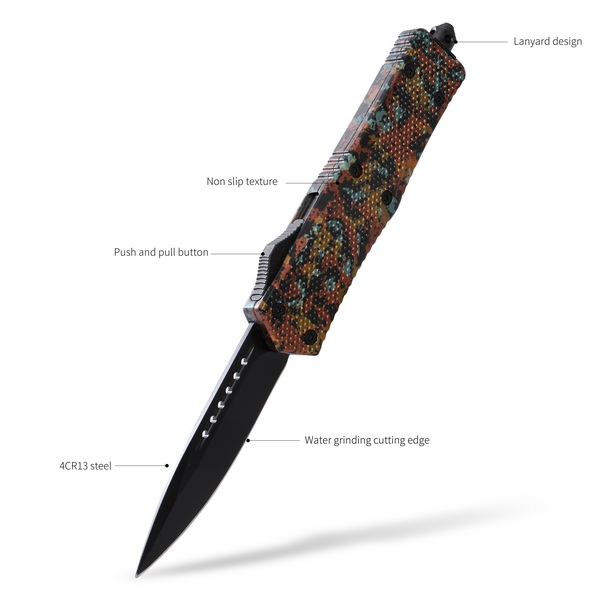
OEM provides full design control over features and looks, while ODM is ideal for launching proven knife models with moderate customization like logo and colors.[12][11]
Premium blade steels (D2, S35VN, M390), strong handles (aluminum, titanium, G10), and corrosion-resistant coatings deliver dependable performance.[6][12]
Yes. Factories follow legal and compliance requirements, but brands must verify laws in target regions regarding automatic knives to avoid restrictions.[14][11]
Typical lead times range from weeks (for ODM) to several months (for OEM), depending on complexity, batch size, and the degree of customization involved.[11][12]
Knife factories apply CNC tolerances, spring tension checks, lock strength testing, and material certification to safeguard product quality.[9][1]
[1](https://www.youtube.com/watch?v=EwG2oytZCl8)
[2](https://www.normandyknives.com/pages/otf-care-and-maintenance-king-1)
[3](https://www.youtube.com/watch?v=jX9MPmNmYtY)
[4](https://nobliecustomknives.com/what-is-an-otf-knife-and-how-does-an-otf-knife-work/)
[5](https://bladeops.com/blog/how-does-an-otf-knife-work/)
[6](https://knife-depot.com/blogs/sharpened-values/otf-knives-explained-the-complete-guide)
[7](https://www.youtube.com/watch?v=lojT2LuLPxY)
[8](http://chrisbathgate.blogspot.com/2019/01/incorporated-knife-tech-into-world-of.html)
[9](https://cobratecknives.com/product/special-purpose/utility-knives/otf-utility-knife/)
[10](https://eknives.com/blog/reate-knives-manufacturing-process-in-depth-look)
[11](https://www.58hrcknives.com/oem-vs-odm-what-you-should-know-when-sourcing-otf-knives.html)
[12](https://www.58hrcknives.com/top-10-automatic-otf-knife-manufacturers-in-china.html)
[13](https://ravencresttactical.com/otf-knife-custom-build-models/)
[14](https://www.58hrcknives.com/top-otf-knife-manufacturers-you-should-know-about.html)
[15](https://swordsswords.com/blog/otf-knives-modifications-and-customization/)


