
Views: 222 Author: Leah Publish Time: 2025-11-28 Origin: Site


Content Menu
● What Is an Automatic OTF Knife?
● OEM vs ODM: Definitions and Strategic Value
>> OEM: Original Equipment Manufacturer
>> ODM: Original Design Manufacturer
● The Manufacturing Process: From Design to Delivery
>> Step 1: Design & Engineering
>> Step 3: Machining and Assembly
>> Step 5: Packaging, Branding, and Export Compliance
● Customization: Unlocking Brand Identity and User Appeal
>> OEM Customization Opportunities
>> ODM Customization Limits and Benefits
● Legal and Market Considerations
>> Knife Regulations and Compliance
>> Intellectual Property and Warranty
● Case Study: OEM Success in the Automatic OTF Knife Market
● How to Choose a Reliable OEM/ODM Partner
● The Future of Automatic OTF Knife Production
● FAQ
>> 1. How does an Automatic OTF Knife operate?
>> 2. What are the main benefits of OEM for Automatic OTF Knives?
>> 3. What design elements can be customized in OEM projects?
>> 4. How do knife laws affect Automatic OTF Knife sourcing?
>> 5. What's the production timeline for OEM versus ODM?
The global outdoor knife industry is rapidly evolving as users seek high-performing, visually striking, and customizable products. Amidst this trend, the Automatic OTF Knife stands out for its swift blade deployment, ergonomic engineering, and advanced design. For overseas brands, wholesalers, and manufacturers, OEM (Original Equipment Manufacturer) and ODM (Original Design Manufacturer) services from a leading Chinese factory enable broad customization, reliable manufacturing, and scalability. This article explores, in depth, how OEM and ODM approaches empower businesses to develop distinctive Automatic OTF Knife models for international markets.[11][12]
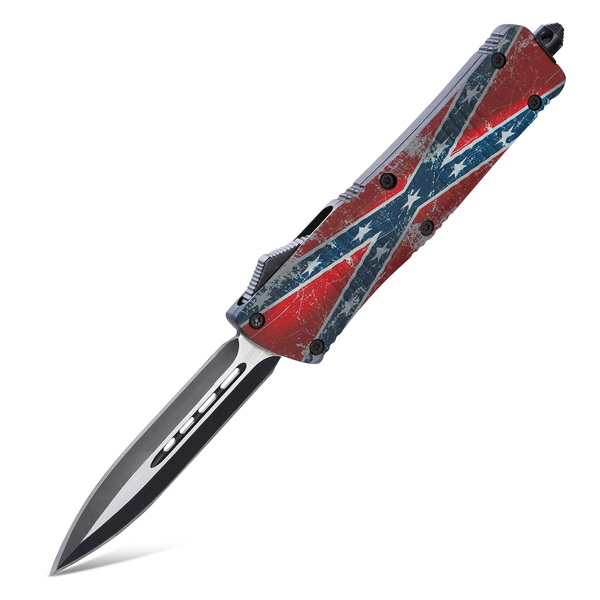
The Automatic OTF Knife—short for Out-The-Front knife—is a specialized folding knife where the blade ejects from the front of the handle via a spring-powered mechanism and retracts using the same system. With a push of a button or slide of a switch, users access a ready blade in milliseconds, which is ideal for tactical, emergency, and outdoor scenarios.[6][7][13][14]
- Blade mechanism: Single-action (automatic deployment with manual retraction) or double-action (automatically deploys and retracts).[6]
- Blade types: Drop-point, tanto, and spear-point among common options.
- Handle materials: Aluminum, titanium, G10, carbon fiber—offering durability, grip, and aesthetic appeal.
- Safety lock: Advanced locking systems to prevent accidental deployment.
- Clip and hardware choices: Including custom pocket clips, glass breakers, thumb slides, and anodized screws.
The highly engineered deployment system sets the Automatic OTF Knife apart from traditional folders, combining speed and security for demanding applications.[11][6]
OEM manufacturing means a factory builds knives strictly according to the client's designs, specifications, and branding requirements. Brands retain control over every detail—from blade geometry and mechanism to packaging and labeling. Intellectual property is protected, and the factory handles prototyping, testing, and mass production.[11]
- Exclusivity: Unique designs, logos, and finishes, with absolute confidentiality.
- Custom Engineering: Choose materials, mechanisms, and decorative features to match your brand's identity and market needs.
- Quality Assurance: Set rigorous inspection standards and testing protocols.
- Flexible Production: From small batches to high-volume runs.
ODM service enables buyers to adopt the manufacturer's existing knife designs, branded as their own. This dramatically shortens time-to-market, lowers upfront costs, and provides access to tested, mature knife models. Moderate customization (such as handle colors, logos, and minor features) is often possible.[12][11]
- Speed: Established designs mean immediate production after branding.
- Cost-Efficiency: Reduced R&D, tooling, and development expenses.
- Scalability: Accommodates small and high-volume orders.
- Simplicity: No need to manage complex engineering or testing unless customizing.
Precision, engineering, and craftsmanship underpin the Automatic OTF Knife manufacturing landscape. Whether OEM or ODM, producing high-quality knives requires several critical stages.[1][5]
For OEM projects, brands collaborate closely with factory engineers to develop unique designs. The process involves:
- 3D CAD modeling for structure and aesthetics
- Ergonomic studies for optimal grip and usability
- Custom branding integration, such as laser-etched logos and special finishes
ODM designs, meanwhile, are pre-developed by the factory's internal team but can be modified for branding and minor preferences.[11]
Key knife components are chosen for strength, corrosion resistance, and reliability:
- Blade steels: 440C, CPM-S35VN, D2
- Handles: aluminum, titanium, carbon fiber
- Springs: stainless steel or proprietary alloy blends
- Coating: DLC, stonewashed, anodized finishes for greater longevity.[6][11]
Highly automated CNC machines cut and mill blade blanks and handle frames with micron-level precision. Each handle undergoes:
- Deburring and prepping for smooth operation
- Milling for blade tracks and latch cutouts
- Tumbling for surface finishing and edge smoothing
Blade blanks are cut from steel sheets, ground to near-finish dimensions (~30 thousandths larger than final), and refined through rough and fine grinding. Surfaces are checked constantly for tolerance—deviations may condemn a whole batch.[1]
Critical steps include:
- Blade bevel grinding
- Surface treatments (stonewash, DLC coating)
- Deep laser engraving for branding
- Hand sharpening for optimal edge retention
Handle and blade assemblies are combined with internals—triggers, latches, springs, followers, stop pins—each checked for mechanical fit and operational smoothness. The complex mechanism allows seamless, single-hand operation and ensures longevity through repeated use.[7][1][6]
Rigorous multi-step testing covers mechanical fit, deployment speed, lock strength, and aesthetic integrity. Factories often use digital calipers and manual inspection alongside cycle testing to guarantee low failure rates and premium performance for every Automatic OTF Knife produced.[5][11]
The finished knives are packed with branded boxes, foam inserts, user manuals, and counterfeit-resistant labels. Compliance with local laws (such as blade length, locking mechanisms, and safety warnings) is paramount, especially for global export. Reliable OEM partners offer documented testing (ISO, CE, SGS) and ensure adherence to target market regulations.[15][11]
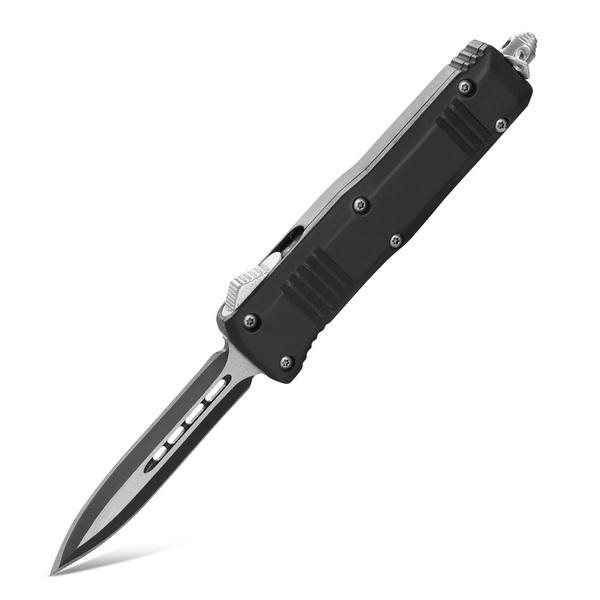
With OEM, brands can personalize virtually every knife attribute:
- Blade shape and grind
- Material blends (exclusive steels, composite handles)
- Color anodizing, textured surfaces
- Custom engraving (logos, serial numbers, collector marks)
- Hardware (clip color, screws, thumb slider)
- Packaging: cases, instruction booklets, retail displays
OEM projects enable differentiation and competitive value, letting brands build a loyal following around their distinct Automatic OTF Knife models.[16][11]
ODM buyers adopt proven formats, reducing technical risks. Customizations are typically limited to:
- Logo applications (laser/etching)
- Limited color choices
- Packaging graphics and labels
This balance between reliability and moderate branding ensures quick market entry, especially useful for newcomers or those seeking to test the market before committing to deep R&D investment.[12][11]
Automatic knives, especially OTF models, face various restrictions worldwide. Successful sourcing requires:
- Familiarity with local import/export laws (blade length, locking type, safety warnings)
- Ensuring product certifications for specific industries or markets
- Collaborating with factories well-versed in export documentation and compliance standards
Brands must provide guidance for legal usage and carry, as unauthorized use in some regions may lead to legal penalties or sales bans.[15][11]
OEM projects should be backed up with binding contracts that protect confidential designs and intellectual property—preventing leaks, duplication, or counterfeiting. Warranty policies on mechanical defects, wear-and-tear, and misoperation further contribute to consumer confidence and brand reputation.[11]
An international outdoor brand partnered with a top Chinese OEM knife factory to create a flagship Automatic OTF Knife. By integrating custom blade geometry, titanium handles with unique anodizing, precision springs, and laser-marked serial numbers, the brand achieved:
- Outstanding feedback for reliability, deployment speed, and visual appeal
- Rapid adoption among tactical professionals and outdoor enthusiasts
- Strong market differentiation, commanding premium retail pricing
The collaboration emphasized the value of strategic OEM partnership—combining engineering, branding, and quality control for global success.[11]
Selecting the ideal manufacturer is essential for product success and market longevity.
- Proven portfolio of Automatic OTF Knife projects
- Transparent production timelines and prototype support
- Responsiveness to customization and engineering changes
- Experience in export compliance for the buyer's target markets
- After-sales support, warranty management, and reputation for post-delivery service
Working with a factory in well-established knife manufacturing regions—such as Yangjiang, China—offers access to skilled labor, advanced machinery, and decades of knife engineering expertise.[11]
Technological progress, stricter compliance rules, and increased consumer demand for innovation are changing the market landscape. Brands now expect:
- Shorter design-to-market cycles via digital CAD integration and rapid prototyping
- Expanded material choices—exotic steels, carbon-titanium composites, and advanced coatings
- Enhanced functionality—multi-purpose blades, modular handles, and integrated emergency tools
A strong OEM or ODM partnership enables brands to stay ahead, accessing both innovation and scalability at competitive cost.
OEM and ODM knife manufacturing services have revolutionized the way brands develop, customize, and market the Automatic OTF Knife. OEM empowers companies with unprecedented control over design, branding, and engineering, delivering products with superior quality and exclusivity. ODM, meanwhile, offers efficiency and proven reliability for quick market penetration, ideal for brands seeking value with moderate customization. Both approaches provide scalable solutions, global compliance expertise, and a pathway to building distinctive, high-performing knife collections. As regulations tighten and design standards advance, leveraging a strategic partnership with a seasoned Chinese knife factory will be the cornerstone of success in the competitive Automatic OTF Knife industry.[5][16][12][11]
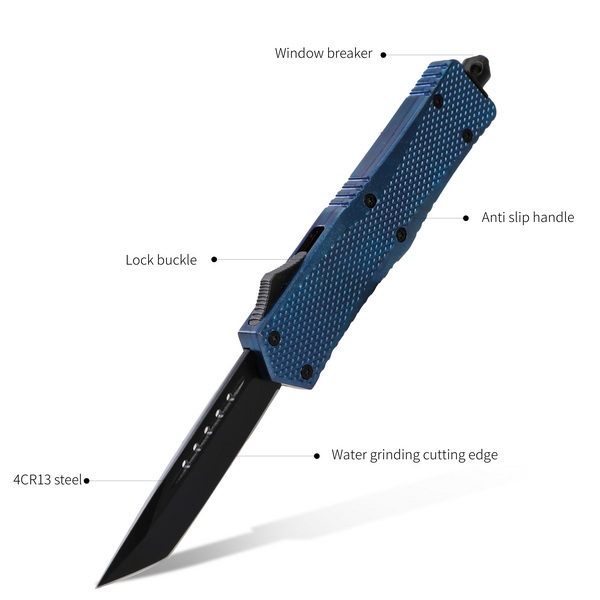
An Automatic OTF Knife features a spring-loaded mechanism that propels the blade out of the handle with the press of a button or slide. Double-action OTF models retract the blade with the same mechanism, while single-action models require manual retraction.[7][6]
OEM offers complete customization, exclusive branding, and full control over engineering and quality. Brands can produce unique models and protect intellectual property, setting themselves apart in the marketplace.[11]
With OEM services, brands can personalize blade shape, steel type, handle material, finishes, colors, engravings, hardware, and packaging—allowing creative freedom without technical compromise.[16][11]
Regulations vary globally and cover aspects like blade length, locking mechanism, and labeling. Working with factories experienced in compliance helps brands avoid legal issues and ensures products meet safety standards.[15][11]
OEM production typically takes 2–4 months, incorporating design, tooling, and prototyping. ODM production is much faster since the designs are pre-existing and only require branding and minor adjustments.[12][11]
[1](https://www.youtube.com/watch?v=EwG2oytZCl8)
[2](https://www.youtube.com/watch?v=krPPEd3X1sM)
[3](https://www.youtube.com/watch?v=WH-tXXd3pG8)
[4](https://www.youtube.com/watch?v=_TEVM4NAlxk)
[5](https://eknives.com/blog/microtech-knives-manufacturing-process/)
[6](https://nobliecustomknives.com/what-is-an-otf-knife-and-how-does-an-otf-knife-work/)
[7](https://tacknivesusa.com/how-does-an-otf-knife-work/)
[8](https://www.youtube.com/watch?v=pAYLfzSzWdw)
[9](https://knifedogs.com/threads/sr1-scale-release-automatic-build-tutorial.52152/)
[10](https://www.youtube.com/watch?v=s0mx_j5ihJg)
[11](https://www.58hrcknives.com/oem-vs-odm-what-you-should-know-when-sourcing-otf-knives.html)
[12](https://ravencresttactical.com/otf-knife-custom-build-models/)
[13](https://leeknives.com/what-is-an-otf-knife/)
[14](https://eknives.com/blog/the-benefits-of-buying-an-otf-knife/)
[15](https://www.shieldon.net/state-by-state-guide-to-otf-automatic-knife-laws-and-restrictions/)
[16](https://swordsswords.com/blog/otf-knives-modifications-and-customization/)


