
Views: 222 Author: Leah Publish Time: 2025-11-06 Origin: Site


Content Menu
● Introduction to Tactical OTF Knives
● The Evolution of Tactical OTF Knives
● Strategic Material Selection for Tactical Excellence
>> Blade Steels: M390, S35VN, Elmax
>> Handle Engineering: Titanium, Aluminum, Composite Advances
● Precision Manufacturing: The Art of Building OTF Knives
>> Handle Construction and Tolerance
>> Blade Fabrication and Finishing
>> Assembly of Internal Mechanisms
● Core Engineering: OTF Deployment Mechanisms
● Specialized Advantages of Tactical OTF Knives
>> Flash Deployment and One-Handed Operation
>> Compactness, Discreet Carry, and Ergonomics
● Field Applications of Tactical OTF Knives
>> Rescue and Emergency Response
>> Military and Law Enforcement Use
>> Outdoor Survival and General Utility
● Design Innovations & User Customization
● Maintenance, Durability, and Longevity
● The Future of Tactical OTF Knife Engineering
● FAQ
>> 1. What does OTF mean in Tactical OTF Knives?
>> 2. Which blade steels are best for Tactical OTF Knives?
>> 3. Are Tactical OTF Knives safe to use?
>> 4. How should a Tactical OTF Knife be maintained?
>> 5. Where are Tactical OTF Knives commonly used?
Tactical OTF Knives, or Out-The-Front knives, are at the pinnacle of innovation for high-performance, rapid-response tools used in military, law enforcement, and serious outdoor environments. Unlike conventional folding knives, OTF knives deploy their blades directly out of the front of the handle with the push of a button or switch, combining instantaneous readiness with extraordinary technical integrity. This unique mechanism, sleek design, and remarkable engineering make Tactical OTF Knives indispensable for professionals and enthusiasts who demand uncompromising standards in their gear.[6][11][12]
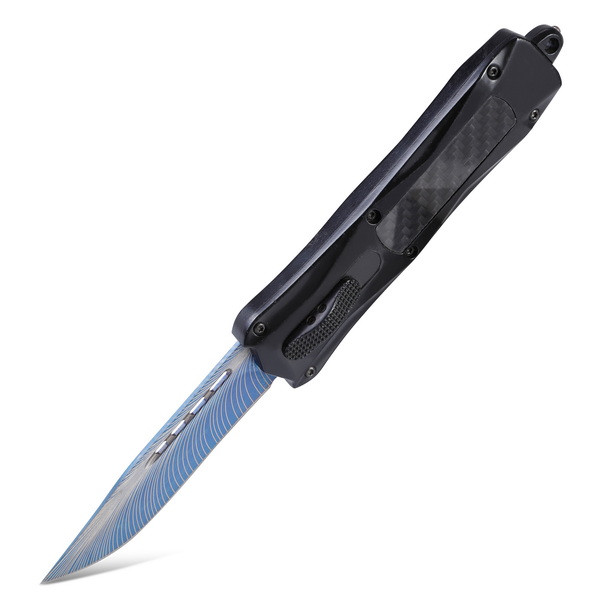
OTF knives originated within military contexts where immediate access to a reliable cutting instrument was vital. Over decades, these knives have transcended their origins, undergoing relentless refinement thanks to breakthroughs in metallurgy, ergonomic design, and high-precision manufacturing. Today's Tactical OTF Knives benefit from meticulous attention not only in their outward form but also in the microscopic tolerances of their inner mechanical assemblies. Innovations in blade and handle material—such as M390, S35VN, Elmax, titanium, and carbon fiber—significantly raised their power, reliability, and utility for diverse applications.[5][6]
The cutting edge of any Tactical OTF Knife is its blade, typically formed from top-tier steels. M390, S35VN, and Elmax steel alloys are preferred for their ability to retain sharpness through intense, prolonged use, their exceptional corrosion resistance, and formidable structural strength. Such high-alloy, powder-metallurgy steels are engineered for toughness, making them ideally suited to the strains of professional deployment.[5][6]
Handles of Tactical OTF Knives serve not only as structural housings but also as ergonomic interfaces for safe, confident control. Aircraft-grade aluminum (like 6061-T6), titanium, and non-metallic composites such as carbon fiber and G10 offer:[1][6]
- Lightness for agile carry and rapid deployment.
- High strength for durability and impact resistance.
- Customizable textures and finishes for tactile control.
Crafting a Tactical OTF Knife involves advanced manufacturing techniques, including CNC (Computer Numerical Control) machining, EDM (Electrical Discharge Machining), and hand finishing. Here's how the process unfolds:[1][5]
The process begins with a solid block of handle material, often 6061-T6 aluminum or titanium, cut and deburred before heading to CNC machines. Multiple machining passes create the intricate internal channels, tracks, and actuator slots critical to OTF operation. Tolerances are fiercely controlled—often to 1/1000 of an inch—to ensure smooth, reliable travel of mechanical components.[1]
Following CNC work, frames are tumbled to soften any sharp edges, enhancing comfort and safety during use. Rigorous quality checks verify that every dimension and slot is flawless, because even a tiny error can compromise the mechanism's integrity.[1]
Blades are lasered or waterjet-cut oversized from steel sheets, then ground, heat-treated, and further precision-ground to ultra-tight tolerances. Grinding and finishing establish the blade's bevel, tip, and polish. Some blades undergo DLC (Diamond-Like Carbon) coating or stonewashing for additional corrosion resistance and unique aesthetics.[5][1]
The heart of a Tactical OTF Knife is its internal mechanism. Key components include:
- The high-carbon coil spring (for deployment).
- Blade carrier.
- Locking tabs and firing plate.
- Safety switch.
- Tracks and followers that guide and lock the blade.[3][4]
Each piece, usually manufactured from corrosion-resistant stainless steel, must integrate perfectly with the others. Any deviation can lead to sluggish deployment, excessive blade play, or unreliable lockup.
Tactical OTF Knives function through ingeniously engineered deployment systems. There are two dominant designs:
- Single-Action OTF: Blade deploys automatically, retracted manually.
- Double-Action OTF: Both deployment and retraction are activated by the user's thumb on a single side switch for seamless, continuous operation.[11][12][3]
A coil spring stores energy when compressed. The actuation mechanism releases this energy, launching the blade outward through carefully milled internal tracks. In double-action models, the mechanism also controls the reverse process, drawing the blade safely back into the handle.[3]
Robust mechanical locks engage immediately as the blade reaches its open or closed position, securing it with absolute reliability against accidental closure. In many top-tier OTF knives, complex combinations of ball-bearing, friction, and mechanical locks work in unison for rock-solid safety and user confidence.[3]
The defining feature of a Tactical OTF Knife is its ability to spring to readiness at a moment's notice. This can be life-saving in environments where both hands are occupied or when rapid, defensive action is required. A simple motion with the thumb or index finger instantly unleashes the blade.[12][11]
Tactical OTF Knives are engineered for minimal bulk and effortless concealment. The slim, rectangular profile allows for deep-pocket carry or integration with tactical gear without catching or snagging—an essential trait in tense scenarios.[11][12]
High-traction handle finishes, finger grooves, and anti-slip textures enhance both security and comfort during intensive use.[13][6]
The importance of operator safety in Tactical OTF Knife design cannot be overstated. Innovations include:
- Safety switches to lock out accidental deployment.
- Mechanisms that prevent the blade from shooting out unless fully clear of obstructions.
- Spring tension and locking systems designed to withstand impacts and harsh environments.[3]
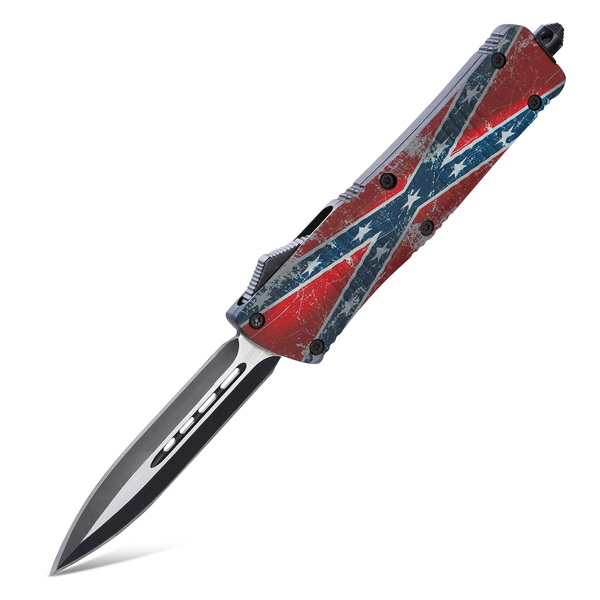
First responders depend on Tactical OTF Knives for tasks like slicing seatbelts, cutting ropes, and breaking glass in emergencies. Some models include integrated glass breakers or strap cutters as part of the design, multiplying their lifesaving utility.[11]
Military professionals and law enforcement officers need absolute dependability. The quick access, strong locking, and adaptability of Tactical OTF Knives make them staples for fieldwork, urban policing, and tactical teams worldwide.[7][6]
For outdoor professionals—whether hiking, camping, or engaging in bushcraft—the Tactical OTF Knife proves invaluable for anything from food prep to emergency shelter construction. Its resilience matches the rugged demands of the wilderness.[14][7]
High-end Tactical OTF Knives may offer modular handle scales, various blade profiles (tanto, straight, serrated), and specialty coatings for custom ergonomics or tactical application.[6]
Different blade geometries meet specific operational requirements. Tanto points deliver robust piercing capability, while drop-point or straight-edge designs maximize slicing and utility. Custom finishes—stonewashed, DLC, mirror-polished—combine performance with aesthetic appeal.[13][6]
Well-designed OTF knives incorporate mechanical interrupts that prevent the blade from firing if the opening is blocked, reducing accidental injury potential. Enhanced safety mechanisms likewise ensure that a dropped knife does not deploy unintentionally.[12]
Tactical OTF Knives are engineered for years of demanding use. Proper upkeep is essential:[3]
- Routinely clear out debris, dust, or pocket lint from internal channels.
- Lubricate moving parts with specialized oils to prevent corrosion and ensure smooth deployment.
- Inspect springs, tracks, and locks for wear and replace consumable parts as needed.
Reputable models are designed for straightforward disassembly and reassembly, with manufacturers often providing exploded diagrams or tutorial guides for at-home care.[3]
The tactical knife industry continues to push the boundaries of what is possible. Recent advancements include:
- Powder metallurgy for even greater steel performance.
- Ultra-lightweight composites integrated with in-handle electronics (such as emergency lights or GPS beacons).
- New lock technologies for virtually unbreakable blade retention.
Environmental and regulatory considerations are also reshaping designs, with more knives made for compliance in various markets without sacrificing capability.
Tactical OTF Knives represent the summit of precision engineering, advanced metallurgy, and user-centered design. Their development has been guided by real-world demands from the military, police, and emergency responders—groups for whom tool failure is not an option. Every material, tolerance, and mechanism is crafted with a single goal: to offer rapid, reliable, and safe performance under the harshest conditions. This relentless pursuit of innovation ensures that Tactical OTF Knives will remain the tool of choice for those who value excellence in every cut, deployment, and mission.[6][12][11]
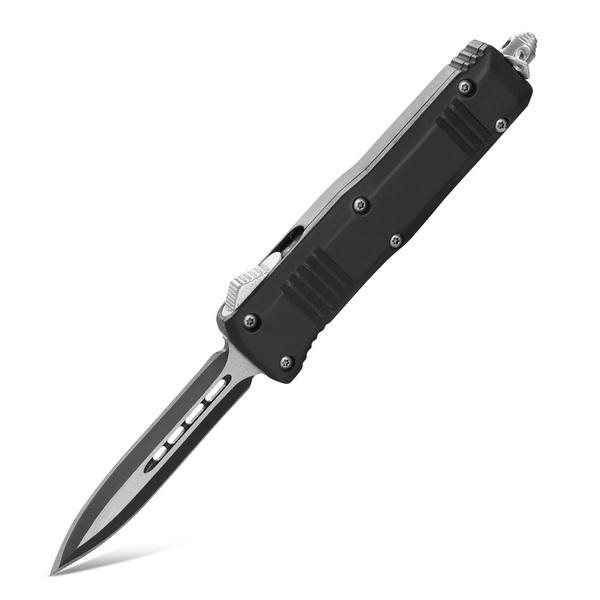
OTF stands for “Out-The-Front,” a reference to the linear blade deployment mechanism where the blade extends directly out of the handle.[6][3]
Premium steels such as M390, S35VN, and Elmax are preferred due to their edge retention, toughness, and resistance to corrosion, making them ideal for high-performance tasks.[5][6]
When engineered correctly, these knives are extremely safe thanks to advanced locking systems, safety switches, and fail-safe deployment mechanisms that prevent accidental activation or closure.[12][6][3]
Routine cleaning, lubricating moving parts, and periodic inspection of springs and tracks ensure continued performance. Always follow the manufacturer's guidance for proper disassembly and reassembly.[3]
They are indispensable in military, law enforcement, rescue, and outdoor survival tasks due to their quick deployment, reliability, and robust construction.[7][11][12][6]
[1](https://www.youtube.com/watch?v=EwG2oytZCl8)
[2](https://eknives.com/blog/reate-knives-manufacturing-process-in-depth-look)
[3](https://knife-depot.com/blogs/sharpened-values/otf-knives-explained-the-complete-guide)
[4](https://nobliecustomknives.com/what-is-an-otf-knife-and-how-does-an-otf-knife-work/)
[5](https://eknives.com/blog/microtech-knives-manufacturing-process/)
[6](https://bladeops.com/blog/the-history-of-otf-knives-from-military-tool-to-everyday-essential/)
[7](https://www.58hrcknives.com/how-tactical-otf-knives-enhance-outdoor-and-survival-performance.html)
[8](https://www.youtube.com/watch?v=lojT2LuLPxY)
[9](https://pvk.com/our-blog?p=the-shrike-otf-knife)
[10](https://www.youtube.com/watch?v=T2xd9RlRUQU)
[11](https://bladeops.com/blog/the-advantages-and-disadvantages-of-otf-knives-in-tactical-settings/)
[12](https://bladeops.com/blog/pros-and-cons-of-otf-knives-for-tactical-operations/)
[13](https://www.tosahwi.com/fr/blogs/what-is-an-otf-knife/)
[14](https://tacknivesusa.com/otf-knives-what-makes-it-a-must-have-for-anyone/)


