
Views: 222 Author: Leah Publish Time: 2025-11-10 Origin: Site


Content Menu
● Introduction: The Rising Role of OTF Pocket Knives in Outdoor Adventures
● Understanding OTF Pocket Knives
● Blade Considerations: Material, Shape, and Length
>> Blade Shape and Outdoor Utility
● Handle Construction: Comfort, Grip, and Materials
>> Materials
● Deployment Mechanisms and Locking Systems
● Key Features for Outdoor and Survival Use
● Outdoor Use Case Scenarios & Practical Applications
>> Survival and Tactical Situations
● Choosing the Right OTF Pocket Knife: A Practical Step-by-Step Method
● OTF Pocket Knife Model Examples and Their Outdoor Strengths
● Safety, Legality, and Responsible Use
● Maintenance: Keeping Your OTF Knife Ready
● FAQ
>> 1. What sets an OTF pocket knife apart from fixed and folding knives for outdoor use?
>> 2. How do I choose the best blade steel for wilderness survival?
>> 3. What features should I prioritize for camping or hiking with an OTF knife?
>> 4. How can I maximize the lifespan and safety of my OTF knife outdoors?
>> 5. Are OTF pocket knives always legal to carry in outdoor environments?
OTF Pocket Knives, or "out-the-front" knives, have become an essential tool for outdoor enthusiasts. Their growing popularity among hikers, campers, survivalists, and professionals is driven by their quick deployment, mechanical reliability, and adaptability to a variety of outdoor scenarios. Unlike traditional side-folding or fixed-blade knives, OTF knives enable the blade to move in a straight axis, sliding out from the front of the handle with the push of a switch. This unique action sets OTF pocket knives apart, offering rapid access and a robust, secure design ready for the demands of the wild.[1][2]
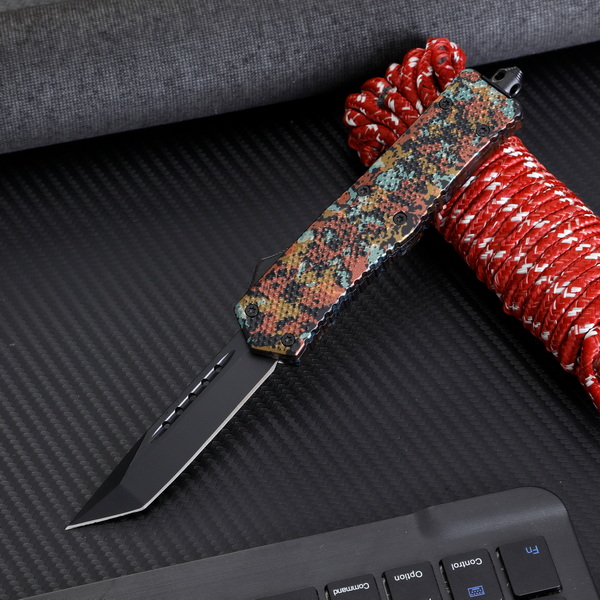
An OTF pocket knife is a special kind of automatic knife, distinguished by its direct-deployment blade mechanism. Once a user pushes the button or slider, the internal spring delivers a burst of energy, propelling the blade instantly out of the handle's front. This mechanism maximizes efficiency and safety, minimizing the risk of unintentional closure on the user's hand—a critical advantage for challenging environments where reliability is paramount.[2][6][1]
- Automatic Spring-Loaded Action: Harnesses a powerful coil spring, typically made from high-carbon steel, to store the energy needed for rapid blade deployment.[1]
- Linear Blade Path: The blade travels in a perfectly straight path, helping with accuracy in both deployment and retraction.[2][1]
- Robust Locking System: Upon full extension, the blade securely locks, enabling it to handle significant force without accidental retraction or wobbling during high-stress tasks.[1][2]
- Dual Mechanisms: OTF knives are available in single-action (automatic deployment, manual retraction) and double-action (automatic for both deployment and retraction) models. Double-action mechanisms are generally preferred for outdoor use due to their added speed and convenience.[5][6]
The blade material determines not only the sharpness and cutting ability of your OTF pocket knife but also its performance in different environments.
- Premium Steels (e.g., CPM-S35VN, M390, CPM-20CV, CTS-204P): Exceptional resistance to corrosion and edge retention, best suited for intensive outdoor activity and exposure to harsh elements.[2][1]
- Standard Steels (e.g., 154CM, AUS-8, 8Cr13MoV): Offer a balance of affordability, ease of sharpening, and reasonable edge stability, ideal for users who maintain their knives personally.[5][1]
- Entry-Level Steels (e.g., 440A, 440C): Suitable for lighter or less frequent use; they may dull quicker but can be resharpened with minimal effort.[3]
Proper steel selection extends the knife's life and ensures optimal performance whether you're cutting rope in the rain, processing firewood, or preparing food at the campsite.[5][1][2]
OTF pocket knives support a variety of blade shapes, each optimized for particular outdoor needs:
- Drop Point: Offers control and strength; suitable for carving, slicing, and precision work.
- Tanto: Provides impressive piercing capability with a reinforced tip, useful for cutting through tough synthetic or fibrous materials.
- Spear Point: Balances slicing and piercing; ideal for self-defense or detailed entries into tougher substances.
- Clip Point: Thin tip enhances precision, making it excellent for detail tasks such as trapping or fishing applications.[1][2]
Blade length is a deciding factor for legality, control, and application:
- Mini OTF Knives: Blades less than 2 inches, ideal for keychain carry and light tasks.
- Medium OTF Knives: 2–3 inches, suitable for everyday tasks; provide compactness without sacrificing utility.
- Large OTF Knives: Over 3 inches (often 3.5–4+ inches), perfect for heavy-duty outdoor, camping, and survival scenarios where leverage and reach are necessary.[4][3][2]
Most outdoor users find blades between 3.5 and 4.25 inches ideal, as they offer an excellent balance of power, versatility, and safe handling.[4][2][1]
A comfortable, durable handle enhances both performance and safety in the outdoors.
- Aluminum: Lightweight, corrosion-resistant, usually anodized for hardness and color variety.
- G-10 and Composite Materials: Fiberglass-reinforced, intensely grippy even when wet, providing year-round reliability.
- Stainless Steel: Heavier, more robust, but less comfortable for prolonged tasks.
- Textured Grips: Ensure a non-slip surface during rain, mud, or sweat.
- Contoured Shapes: Fit naturally into the palm, reducing fatigue during extended use.
- Integrated Safety Guards: Prevent hands from slipping forward during forceful cuts, further ensuring operator safety.[2][5][1]
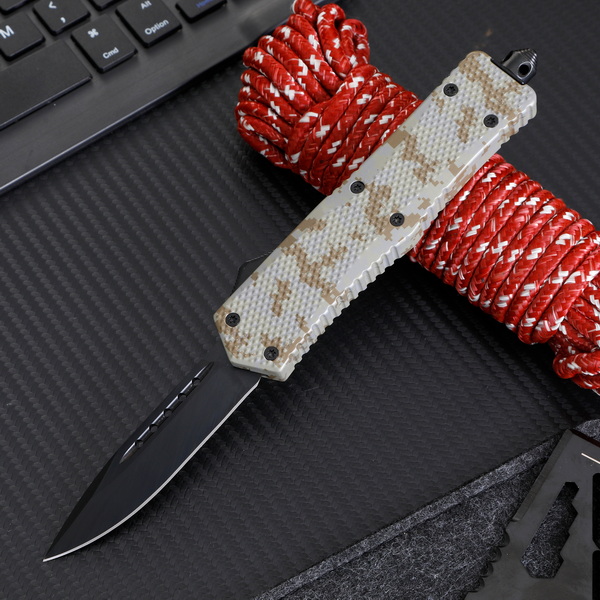
OTF pocket knives excel due to their mechanical interaction, offering a range of action choices for the user.
- Single-Action OTF: Blade automatically deploys via spring but requires manual retraction. Relied upon for ultimate reliability in challenging environments.
- Double-Action OTF: Blade can be extended or retracted with the same switch—offers unmatched speed and one-handed operation that's invaluable for multitasking and emergent situations.[6][5]
- Spring Tension Locks: Provide smooth action and fast response; suitable for fast deployment in unpredictable conditions.
- Plunge and Gate Locks: Designed for heavy loads, these locks can bear high cutting stresses, reducing risk of accidental closure during hard tasks.[6][2]
- Safety Switches: Dual locking mechanisms help prevent accidental deployment and are ideal for high-mobility or tactical applications.
Successful outdoor knives go beyond raw materials and mechanics. The best OTF pocket knives for nature come with enhancements designed for readiness and ruggedness.
- Glass Breakers: Built into the handle for emergencies requiring the breaking of car windows or tough barriers.
- Seatbelt Cutters: Useful for vehicular emergencies or rapid cutting of webbing and varieties of rope.
- Non-Reflective Blade Coatings: Offer stealth in tactical settings and extra rust resistance.
- Lanyard Holes and Pocket Clips: Facilitate easy, secure attachment to gear, keeping the knife accessible yet protected from the elements.[5][2]
Outdoor OTF pocket knives demand regular maintenance:
- Blade Cleaning: Wipe the blade after use, especially if exposed to moisture, sap, or acidic agents.
- Lubricate the Mechanism: Prevents buildup of grit, ensures smooth, reliable action, and extends spring life.
- Handle Care: Clean textured or grooved handles to prevent residue from reducing grip reliability.[1][2]
OTF pocket knives shine in varied outdoor environments:
- Preparing kindling, feather-sticking wood, and igniting fire starters.
- Food prep—cutting fruit, game, or portioning rations.
- Quick rope and webbing cuts for shelter and repairs.
- Lightweight models save pack weight.
- Rapid deployment assists in emergencies or swift camp setup.
- Instant deployment can be essential for wildlife encounters or self-defense.
- Integrated tools handle unexpected challenges, from breaking glass to slicing seatbelts or apparel in rescue scenarios.[2][5]
1. Identify Primary Use: Prioritize tasks—will you mainly cut wood, process food, affect repairs, or require a tool for self/protection?
2. Determine Blade Length: Check local regulations for carry legality and match the blade size to your needs.
3. Select Blade Steel: Opt for premium steel for sustained outdoor or harsh environment use.
4. Choose Action Type: If speed and one-handed use are critical, double action is generally superior.
5. Assess Handle Comfort: Hold several models if possible, favoring handles with non-slip, contoured designs.
6. Check Additional Features: Consider extra tools and carry options that will make your outdoor experiences safer and more convenient.
7. Set Budget: The most robust OTF pocket knives typically cost more—balance investment with the scope of your projects and expected knife lifespan.
- Microtech Ultratech: M390 blade, aluminum handle, double-action, combines EDC, tactical performance, and legendary reliability for outdoor use.[2]
- Benchmade Infidel: D2 steel, deep-carry clip, military-grade construction, and ambidextrous deployment, praised for professional-grade outdoor tasks.[2]
- Hogue Counterstrike: CPM S30V, ergonomic grip, double action, superior for those seeking premium capability without extreme cost.[2]
- Guardian Tactical RECON-035: CPM-154, double-action, aluminum with traction inlays, accessible yet highly capable in rugged scenarios.[2]
- Heretic Manticore-X: Elmax, substantial length and tough handle, engineered for the toughest outdoor demands.[2]
Check your country or state's legal requirements before carrying or deploying an OTF pocket knife. Blade length restrictions and automatic knife laws vary significantly. For outdoor professionals, always use the knife in compliance with local legislation for safety and ethical practice.[5][1]
Every outdoor knife user must commit to proper maintenance:
- Clean and dry the knife after each use—especially after exposure to moisture, dirt, or food acids.
- Lubricate the spring mechanism with a quality, knife-friendly lubricant.
- Periodically inspect for rust or debris that could hinder deployment or retraction.
- Sharpen according to the steel's requirements, using appropriate stones or sharpeners for your blade type.[1][5]
Choosing the perfect OTF pocket knife for outdoor use is an investment in reliability, efficiency, and safety. By assessing your specific needs, comparing the mechanical features, selecting optimal materials, and staying diligent on maintenance, your OTF pocket knife becomes a loyal companion for every adventure. Whether you're camping, hiking, preparing for emergencies, or seeking a versatile utility tool, the right OTF knife will enhance your confidence and capability in the wild.[5][1][2]
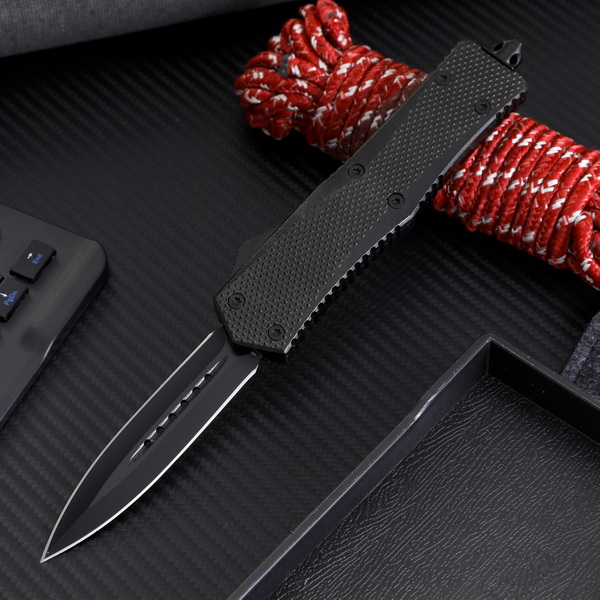
OTF knives provide instant, one-handed blade deployment and secure locking, making them fast, safe, and suitable for frequent access during outdoor activities.[1][2]
Select premium steels like CPM-S30V, M390, or D2 for excellent rust resistance, strength, and edge retention in demanding settings.[1][2]
Ensure your knife is lightweight, has a double-action deployment, a secure grip, a blade length around 3.5–4 inches, and corrosion-resistant coatings.[5][1][2]
Clean it after each outing, lubricate the internal mechanism, sharpen it responsibly, and protect the handle from dirt or moisture.
No. Blade length and automatic knife regulations vary by region, so always check local laws before choosing and carrying an OTF knife outdoors.[5][1]
[1](https://knife-depot.com/blogs/sharpened-values/otf-knives-explained-the-complete-guide)
[2](https://bladeops.com/blog/otf-knife-buyers-guide/)
[3](https://tacknivesusa.com/what-is-an-otf-knife-and-how-is-it-different-from-other-switchblades/)
[4](https://ravencresttactical.com/otf-knife-buyers-guide/)
[5](https://www.selfdefensesupply.com/otf-knives-guide)
[6](https://uppercuttactical.com/blogs/news/how-does-an-otf-knife-work)
[7](https://www.youtube.com/watch?v=WN8PDfEbZw4)
[8](https://www.tektoknives.com/blogs/news/a-buyers-guide-to-automatic-knives)
[9](https://swordsswords.com/blog/otf-knife-ultimate-buyers-guide-get-the-right-knife/)
[10](https://dnkknives.com/blog/what-you-need-to-know-about-otf-knives/)


