
Views: 222 Author: Leah Publish Time: 2025-10-11 Origin: Site


Content Menu
● What Is a Heavy-Duty OTF Knife?
● Understanding OTF Knife Mechanisms
● Blade Considerations for Heavy-Duty Use
>> Blade Shapes
● Handle Material and Ergonomics
● Deployment Mechanism and Locking
● Key Features to Look For in a Heavy-Duty OTF Knife
● Recommended Uses for Heavy-Duty OTF Knives
● Maintenance Tips for Longevity
● Additional Considerations: OEM and Customization
● FAQ
>> 1. What is the difference between single-action and double-action heavy-duty OTF knives?
>> 2. Which blade steel is best for heavy-duty OTF knives?
>> 3. How thick should the blade be for heavy-duty tasks?
>> 4. What handle materials are ideal for heavy-duty OTF knives?
>> 5. How do I maintain my heavy-duty OTF knife?
Heavy-Duty OTF knives (Out-The-Front knives) have become essential tools for professionals, outdoor enthusiasts, and anyone seeking a reliable, fast-deploying knife. Unlike traditional folding knives, OTF knives deploy the blade straight out from the handle with a quick push of a button or slider, offering one-handed operation and exceptional convenience. Choosing the right heavy-duty OTF knife means balancing factors such as blade type, blade steel, deployment mechanism, handle materials, ergonomics, and intended use. This comprehensive guide will explore these key considerations and help you select the perfect heavy-duty OTF knife tailored to your needs.
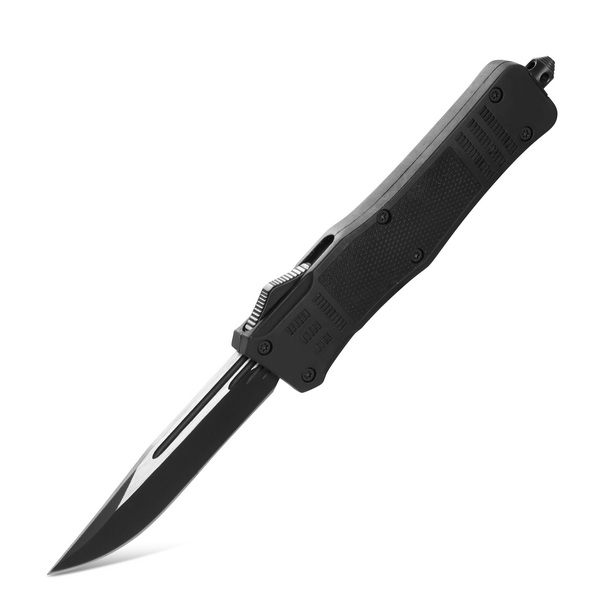
A Heavy-Duty OTF Knife is a specialized automatic or semi-automatic knife designed for rigorous use, featuring strong, thick blades and durable mechanisms for demanding cutting, piercing, or tactical tasks. These knives are built to withstand tough environments and frequent, forceful deployment, making them ideal for outdoor, tactical, or professional use.
The blade deploys automatically but must be manually retracted. These knives offer robust and often stronger mechanisms making them suitable for heavy-duty needs but require two-handed operation to retract. Their simpler mechanism is preferred for durability and strength, making them a favorite in tactical and heavy utility scenarios.
Both deployment and retraction happen automatically by the same button or slider, offering faster and more convenient operation. This type is ideal for quick access and everyday tasks. However, the mechanisms are slightly more complex, requiring regular maintenance to keep them functioning smoothly, especially under heavy use.
For heavy-duty applications, a blade length between 3 and 4 inches is common, offering an optimal balance between reach and control. Blade thickness is critical, with thicker blades (0.12 inches or more) providing greater strength and durability for tough cutting tasks. The thicker blade resists bending or breaking during thorough use.
- Tanto: Features a reinforced tip ideal for piercing and tactical tasks.
- Drop Point: Offers versatility for general utility tasks with a controllable tip.
- Dagger/Spear Point: Double-edged blades used for defense and precision piercing.
Choosing the right blade shape depends on the primary use of the knife. Tactical operations may favor tanto or dagger points, while outdoor and everyday use align well with drop points.
High-quality steels such as CPM-S30V, CPM-M390, and CPM MagnaCut are preferred for their excellent edge retention, corrosion resistance, and toughness under stress. These steels allow heavy-duty knives to maintain sharpness and resist wear during challenging use. The choice of steel significantly impacts the knife's durability and ease of maintenance.
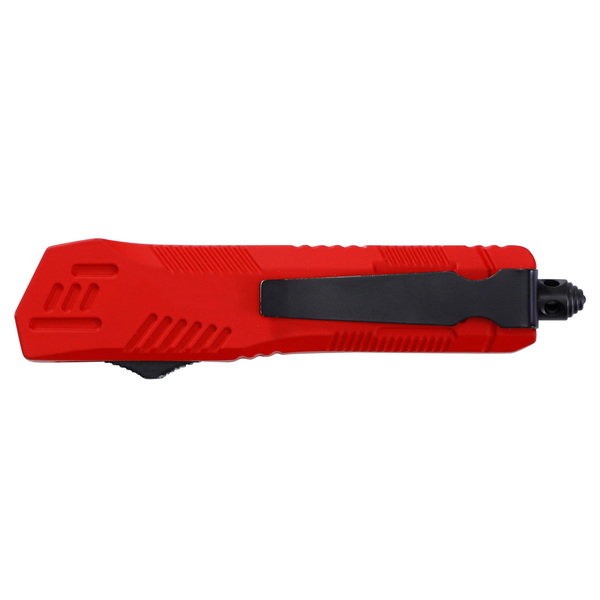
Heavy-duty OTF knives require strong, ergonomic handles for secure grip and control.
- Aluminum: Lightweight, durable, anodized for extra toughness.
- G-10: Textured laminate that provides exceptional grip even when wet.
- Carbon Fiber: Lightweight and premium but less impact-resistant.
- Titanium: Offers premium strength and lightweight properties for top-tier knives.
Handle ergonomics are essential; the grip should enable secure handling without discomfort during prolonged use. Features such as scalloping, texturing, or ridges can enhance grip security. Typically, heavy-duty knives have handles longer than the blade to provide leverage and hand comfort.
A robust and smooth spring deployment is vital for heavy-duty OTF knives. Strong springs ensure quick, reliable blade deployment without misfires. Reliable locking mechanisms, like plunge locks, ensure the blade stays firmly in place during use, preventing accidental closure that could lead to injury. Safety sliders or switches prevent accidental activation when the knife is carried.
Heavy-duty OTF knives naturally weigh more due to thicker blades and durable handles, typically between 4 to 6 ounces. While heavier than everyday pocket knives, they are designed to balance comfort and functionality without excessive bulk. A well-balanced knife reduces fatigue and enhances handling ease, which is crucial during extended use.
When selecting a heavy-duty OTF knife, consider the following features:
- Blade thickness of 0.12 inches or more to withstand tough cutting.
- High-end steel like CPM MagnaCut or M390 for superior edge retention.
- Deployment type (single-action for durability or double-action for quick operation).
- Handle made from textured aluminum or G-10 for stability and durability.
- Robust and secure locking mechanisms for safety.
- Convenient pocket clip for reliable carry.
- Easy maintenance for spring and blade mechanism longevity.
Heavy-duty OTF knives excel in various demanding applications:
- Tactical and military use for quick access and reliable performance under pressure.
- Outdoor activities such as camping, hiking, and survival, where dependable cutting tools are critical.
- Emergency rescue operations requiring fast blade deployment for cutting seatbelts or rope.
- Everyday carry (EDC) for professionals who need a durable, convenient knife for diverse tasks.
Understanding the primary usage scenario helps in making an informed choice regarding size, steel, and features.
Maintaining a heavy-duty OTF knife is essential for safe and smooth operation:
- Regularly clean the internal mechanism with compressed air and alcohol wipes to remove dust and dirt.
- Apply light lubrication with specialized knife oils to the blade track to ensure smooth deployment.
- Sharpen blades with whetstones or professional sharpening tools appropriate for the steel.
- Check and tighten any screws or springs periodically to maintain structural integrity.
- Store knives in dry environments to prevent rust and corrosion.
Proper maintenance prolongs the knife's life and guarantees optimum performance when needed.
For businesses or brands, working with OEM manufacturers like Yangjiang Ruizhen Industry and Trade Co., Ltd. offers advantageous customization options. OEM services allow for the production of heavy-duty OTF knives with tailored blade styles, handle materials, logos, and packaging to meet specific market demands or brand requirements. Partnering with a trusted OEM manufacturer ensures high-quality production at competitive prices and consistent delivery schedules.
Customization can enhance brand identity or allow for unique features, including specific mechanism strengths, handle textures, or blade finishes, differentiating products in a crowded marketplace.
Choosing the right heavy-duty OTF knife involves understanding the balance between blade steel, size, deployment type, handle material, and intended use. Whether for tactical, outdoor, or professional utility, investing in a quality knife that fits specific requirements ensures reliable performance and long-term satisfaction. Reputable manufacturers and proper maintenance further enhance the knife's durability and efficiency, making it a trusted tool for demanding environments. For brands seeking OEM manufacturing solutions, partnering with experienced companies guarantees high-quality heavy-duty OTF knives tailored to diverse needs.
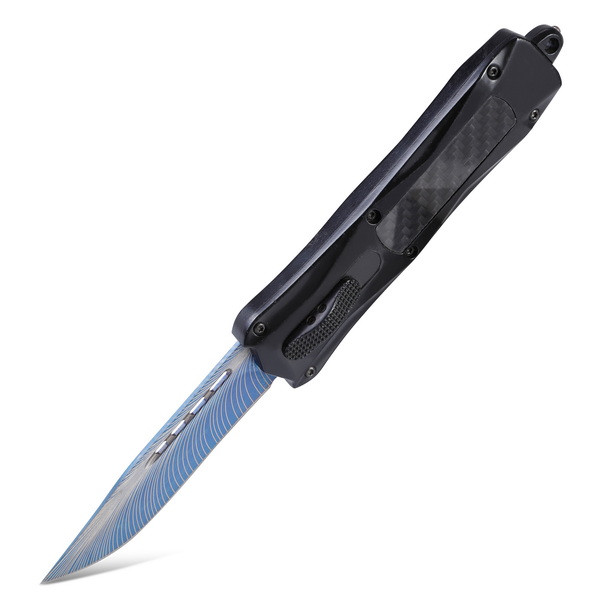
Single-action knives deploy the blade automatically but require manual retraction, offering a stronger mechanism suitable for heavy-duty use. Double-action knives both deploy and retract automatically, providing faster one-handed operation but with a more complex mechanism that requires maintenance.
Premium steels like CPM-S30V, CPM-M390, and CPM MagnaCut are best for heavy-duty use due to their superior edge retention, corrosion resistance, and toughness, enabling the knife to maintain performance under demanding conditions.
A blade thickness of 0.12 inches or more is recommended for heavy-duty cutting as it provides greater strength and durability to withstand tough materials and rigorous use.
Durable and ergonomic materials like aluminum and G-10 are preferred for heavy-duty knives since they offer good grip, impact resistance, and lightweight strength. Carbon fiber and titanium are premium choices with added benefits and higher cost.
Regular cleaning of the internal mechanism, light lubrication of the blade track, timely sharpening, and inspecting screws and springs are essential. Proper storage in dry conditions also prevents corrosion and prolongs knife life.


