
Views: 222 Author: Leah Publish Time: 2025-11-25 Origin: Site


Content Menu
● Understanding the OTF Pocket Knife
● OEM vs ODM: Choosing the Right Path
● Key Components of a Custom OTF Pocket Knife
>> Handle Design and Ergonomics
>> Internal Mechanism and Safety Features
● Manufacturing Process: From Concept to Completion
>> Material Selection and Preparation
>> Quality Control and Performance Testing
● Branding, Packaging, and Market Positioning
● Legal and Regulatory Considerations
● Working with a Chinese OTF Pocket Knife Factory
● Marketing and Distribution Strategies
● FAQ
>> 1. What is an OTF Pocket Knife?
>> 2. What is the difference between OEM and ODM for OTF Pocket Knives?
>> 3. How can I customize the design of my OTF Pocket Knife?
>> 4. Are OTF Pocket Knives legal to sell and carry?
>> 5. What is the usual OEM process for an OTF Pocket Knife?
The OTF Pocket Knife has become a staple in the world of tactical, outdoor, and everyday carry (EDC) tools. Its unique out-the-front deployment mechanism offers speed, reliability, and a sleek profile that appeals to both professionals and enthusiasts. For foreign brands, wholesalers, and distributors, partnering with a Chinese OEM or ODM knife factory presents a powerful opportunity to create a distinctive OTF Pocket Knife line tailored to specific market needs. This article explores the full spectrum of customization options, manufacturing processes, and strategic considerations for building a successful OTF Pocket Knife product series.

An OTF Pocket Knife (Out-The-Front Pocket Knife) is a specialized folding knife where the blade slides straight out of the front of the handle, rather than pivoting from the side like traditional folders. This mechanism allows for rapid, one-handed deployment, making OTF Pocket Knives popular for tactical, rescue, and outdoor applications. The design typically features a spring-driven system that propels the blade forward when a button or slider is activated. OTF Pocket Knives can be single-action (spring deploys the blade, manual retraction) or double-action (spring deploys and retracts the blade).
The appeal of the OTF Pocket Knife lies in its compactness, quick deployment, and ergonomic design. These knives are favored by law enforcement, military personnel, outdoor enthusiasts, and everyday users who value reliability and speed. The OTF Pocket Knife's unique mechanism sets it apart from other folding knives, offering a blend of functionality and style that resonates with a wide audience.
When considering customization for an OTF Pocket Knife, brands must decide between OEM (Original Equipment Manufacturer) and ODM (Original Design Manufacturer) options. OEM involves producing knives according to the client's specific design and specifications. This approach is ideal for brands with established designs or those seeking to maintain strict control over product details. The factory manufactures the OTF Pocket Knife exactly as specified, applying the client's branding and quality standards.
ODM, on the other hand, offers a more collaborative approach. The factory provides its own designs or works with the client to develop new ones, which the client can then brand as their own. This option is perfect for brands without in-house design capabilities or those looking to launch a product line quickly. ODM allows for rapid prototyping and customization, reducing development time and costs while still delivering a unique OTF Pocket Knife series.
Both OEM and ODM paths offer significant advantages. OEM ensures complete control over design and quality, while ODM provides flexibility and speed to market. The choice depends on the brand's resources, market strategy, and desired level of involvement in the product development process.
A high-quality OTF Pocket Knife is defined by several core components: blade, handle, internal mechanism, and surface finish. Each element plays a crucial role in the knife's performance, durability, and aesthetic appeal.
The blade is the heart of any OTF Pocket Knife. Customization options include blade steel, shape, length, and edge style. Common blade steels for OTF Pocket Knives include D2, 8Cr13MoV, S35VN, M390, and AUS-8. Each steel offers different characteristics in terms of edge retention, toughness, and corrosion resistance. Blade shapes can range from drop point and tanto to dagger, spear point, and clip point, each suited to specific cutting tasks and brand aesthetics.
Blade length and thickness can be tailored to meet regulatory requirements and user preferences. Edge styles include plain edge, partially serrated, or fully serrated, allowing brands to target different market segments. Surface treatments such as stonewash, satin, mirror polish, black coating, or two-tone finishes add visual distinction and enhance corrosion resistance.
The handle of an OTF Pocket Knife significantly influences grip comfort, control, and perceived quality. Materials commonly used include 6061 or 7075 aluminum alloy, stainless steel, titanium, and composite materials like G10. CNC-machined handles can feature textured patterns, inlays, finger grooves, and anti-slip surfaces to accommodate gloves or bare hands in various environments.
Customization extends to handle color schemes and coatings. Anodized aluminum offers a range of colors, while Cerakote-style coatings provide durable, multi-color finishes. Brands can specify left- or right-hand pocket clip positioning and lanyard hole designs for enhanced functionality. The handle's ergonomics are crucial for user satisfaction, ensuring the OTF Pocket Knife feels comfortable and secure during use.
The internal mechanism of an OTF Pocket Knife is a marvel of precision engineering. The spring-driven system must operate smoothly and reliably, with tight tolerances to ensure consistent deployment and retraction. Key components include the firing button, locking system, and safety switch. The locking mechanism is critical for both safety and user confidence, ensuring the blade remains securely in place during use.
Safety features such as ambidextrous firing buttons, blade locks, and safety switches are essential for preventing accidental deployment. The internal parts are typically made from stainless steel to resist corrosion and abrasion. The complexity of the OTF mechanism requires meticulous attention to detail during manufacturing, with each component precisely machined and assembled.
The production of a custom OTF Pocket Knife involves several stages, each requiring specialized skills and equipment. The process begins with design and engineering, followed by material selection, machining, assembly, and quality control.
The initial phase involves translating the client's vision into detailed technical drawings and 3D models. Engineers work closely with the client to optimize the design for manufacturability, considering factors such as material selection, tolerances, and assembly requirements. This stage is crucial for ensuring the OTF Pocket Knife meets both functional and aesthetic standards.
Choosing the right materials is essential for the performance and durability of the OTF Pocket Knife. Blade steel is selected based on desired characteristics, while handle materials are chosen for strength, weight, and appearance. Materials are inspected for quality before entering the production process.
CNC machining is used to create precise handle components and internal mechanisms. Handles are typically machined from aluminum or titanium bar stock, with each operation creating tracks, cutouts, and end stops for the blade mechanism. The machining process requires tight tolerances to ensure smooth operation and reliable locking.
Blades are cut from steel sheets, ground to the desired shape, and heat-treated for optimal hardness and toughness. After heat treatment, blades undergo bevel grinding and surface finishing. Internal components such as springs, firing buttons, and locking mechanisms are precision-machined from stainless steel.
Assembly involves fitting all components together, ensuring proper alignment and function. Each OTF Pocket Knife is tested for deployment, retraction, and locking before moving to the next stage.
Rigorous quality control procedures are implemented at every stage of production. Incoming materials are inspected, and in-process checks verify machining accuracy, heat treatment consistency, and surface finishing quality. Performance testing includes blade deployment cycles, lock strength checks, drop tests, corrosion tests, and cutting performance assessments.
This comprehensive approach ensures that every custom OTF Pocket Knife meets durability and safety expectations, providing users with a reliable tool for everyday carry or professional use.
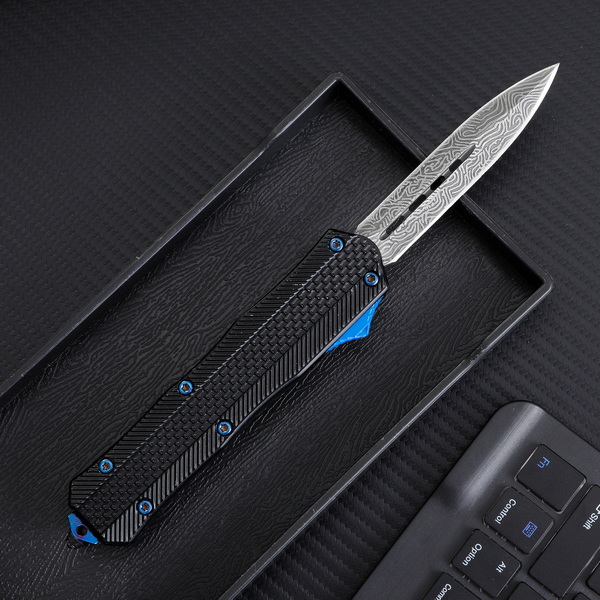
Customization extends beyond the physical product to include branding and packaging. Laser engraving or etching allows brands to apply logos to the blade, handle, and pocket clip. Custom packaging, such as branded boxes, pouches, and instruction leaflets, enhances the retail experience and builds brand recognition.
Market positioning is crucial for the success of a custom OTF Pocket Knife line. Brands must consider target demographics, price points, and competitive landscape. Effective marketing strategies include high-quality product photography, demo videos, and collaborations with influencers and reviewers. Storytelling can highlight the knife's unique features, reliability, and versatility, appealing to both enthusiasts and practical users.
Before launching a custom OTF Pocket Knife line, brands must understand local and international knife regulations. Laws regarding blade length, automatic deployment, concealed carry, and age restrictions vary by jurisdiction. Compliance is essential to avoid legal issues and ensure market access.
Brands should work closely with their manufacturing partner to ensure designs meet regulatory requirements. This may involve adjusting blade length, mechanism type, or other features to comply with specific market regulations. Staying informed about legal developments and consulting with legal counsel can help brands navigate complex regulatory landscapes.
Partnering with a Chinese OEM or ODM knife factory offers several advantages. Chinese manufacturers combine competitive pricing with advanced machining and finishing capabilities. Many factories operate in-house CNC machining, grinding, anodizing, assembly, and inspection processes, allowing close control over precision and quality.
Experienced factories are familiar with private-label projects for foreign brands, wholesalers, and distributors. They often provide support such as rapid prototyping, low minimum order quantities (MOQs) for trial orders, and flexible shipping solutions. Choosing a partner with strong export experience reduces communication risk and ensures smoother customs and logistics handling.
Effective marketing is essential for building a successful OTF Pocket Knife brand. Online retailers can highlight features such as fast deployment, robust locking, premium blade steels, and distinctive handle designs. High-quality product photography and short demo videos showing the knife in real use improve click-through and conversion rates.
Storytelling can position the OTF Pocket Knife as a reliable everyday tool, a tactical backup, or a stylish collectible. Collaboration with reviewers, influencers, and knife communities provides authentic feedback and social proof. Building a strong online presence through social media, forums, and review sites helps establish brand credibility and drive sales.
Customizing an OTF Pocket Knife through OEM and ODM options allows foreign brands, wholesalers, and distributors to create distinctive product lines without investing in their own factories. By carefully selecting blade steel, handle material, mechanism type, branding details, and packaging, brands can develop OTF Pocket Knife series that meet regulatory requirements and market preferences.
Partnering with an experienced Chinese OTF Pocket Knife manufacturer provides access to advanced machining, consistent quality control, and flexible order quantities. With a clear brief and strong cooperation, custom OTF Pocket Knives can become profitable, long-term products in the global outdoor and tactical market.
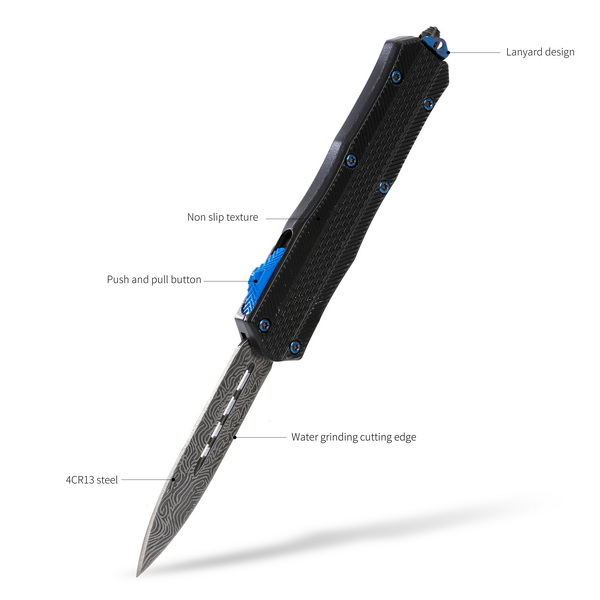
An OTF Pocket Knife is an out-the-front knife whose blade slides straight out of the front of the handle using a spring-driven or manual mechanism. Unlike side-opening folders, an OTF Pocket Knife offers linear deployment and is often designed for quick one-hand operation in EDC, rescue, or tactical scenarios.
OEM means the factory produces an OTF Pocket Knife strictly according to your own design, specifications, and brand guidelines. ODM means the factory supplies existing or newly developed OTF Pocket Knife designs that you can customize and brand as your own, saving development time and cost.
You can customize blade steel, blade shape, length, edge style, handle material, handle color, surface finish, pocket clip design, and logo placement on an OTF Pocket Knife. Many factories also offer customized packaging, accessories, and engraving options so your OTF Pocket Knife matches your brand image from product to box.
Legality depends on local and national laws, which may regulate blade length, automatic deployment, concealed carry, and interstate or cross-border transport of OTF Pocket Knives. Before launching an OTF Pocket Knife line, you should study your target market's knife regulations or consult legal counsel to ensure compliance.
The OEM process generally includes requirement collection, design or drawing review, quotation, prototype or sample production, testing and approval, then mass production and delivery of the OTF Pocket Knife. Throughout this process, communication between your team and the factory helps fine-tune specifications and control quality, especially for large or long-term OTF Pocket Knife projects.
[1](https://www.youtube.com/watch?v=EwG2oytZCl8)
[2](https://www.youtube.com/watch?v=krPPEd3X1sM)
[3](https://takcom.com/the-precision-engineering-that-goes-into-a-premium-otf-knife/)
[4](https://www.youtube.com/watch?v=lojT2LuLPxY)
[5](https://cobratecknives.com/product/special-purpose/utility-knives/otf-utility-knife/)
[6](https://nobliecustomknives.com/what-is-an-otf-knife-and-how-does-an-otf-knife-work/)
[7](https://eknives.com/blog/reate-knives-manufacturing-process-in-depth-look)
[8](https://www.youtube.com/watch?v=s0mx_j5ihJg)
[9](https://www.youtube.com/watch?v=_TEVM4NAlxk)
[10](https://tacknivesusa.com/how-does-an-otf-knife-work/)


