
Views: 222 Author: Loretta Publish Time: 2025-10-04 Origin: Site


Content Menu
● Why Proper Maintenance of Your OTF Knife is Crucial
● Essential Tools for Maintaining Your OTF Knife
● Step-by-Step Guide to Maintaining Your OTF Knife
>> Cleaning Your Blade and Mechanism
>> Lubricating the Sliding Mechanism
● How to Sharpen Your OTF Knife Like a Pro
>> Choosing the Right Sharpening Tools
>> Preparing and Securing the Knife
>> Correct Sharpening Technique
● Additional Tips for Pro-Level Knife Maintenance
>> Store Your OTF Knife Properly
>> Periodic Professional Servicing
● Safety Tips When Maintaining and Sharpening Your OTF Knife
>> 1. How often should I sharpen my OTF knife?
>> 2. Can I disassemble my OTF knife for cleaning?
>> 3. What type of lubricant is best for OTF knives?
>> 4. Is it safe to sharpen an OTF knife at home?
>> 5. Can I use regular sharpening tools for an OTF knife?
Outdoor enthusiasts, collectors, and professionals who rely on precision tools know the importance of maintaining an OTF knife. Whether you own an OTF (Out-The-Front) automatic knife from Yangjiang Ruizhen Industry and Trade Co., Ltd. or another trusted brand, keeping your blade sharp and in top condition extends its life and ensures peak performance. This comprehensive guide will walk you through the essentials of OTF knife care and the step-by-step sharpening process to maintain your blade like a professional.

An OTF knife is a type of automatic folding knife where the blade slides straight out of the front of the handle via a spring mechanism. Known for fast deployment and reliability, OTF knives are popular for tactical, outdoor, and everyday use. Because of their complex mechanisms, proper care and sharpening require a little more attention compared to traditional folding knives.
OTF knives come in two main types: single action and double action. Single-action OTF knives require manual retraction of the blade, while double-action knives deploy and retract using the same switch mechanism. Choosing the right type depends on your personal preference and intended use.
Regular maintenance ensures your OTF knife operates smoothly and remains safe to use. Neglecting care can lead to:
- Blade dullness and decreased effectiveness.
- Rust or corrosion on blade and components.
- Stiff or malfunctioning sliding mechanism.
- Increased wear and tear shortening lifespan.
- Potential safety hazards caused by blade deployment failure.
Because the blade retracts inside the handle, dirt, lint, and moisture can accumulate in the blade track. This buildup can severely affect the smooth operation and fast deployment OTF knives are known for. Regular cleaning and lubrication are critical to avoid such problems.
Before diving into maintenance and sharpening, gather the following tools:
- Soft microfiber cloth for cleaning.
- Silicone lubricant spray or specialized knife oil for lubrication.
- Small precision brushes or cotton swabs to clean hard-to-reach areas.
- Sharpening stones (diamond, ceramic, or whetstones) with varying grits.
- A honing rod or leather strop for polishing the blade edge.
- Safety gloves to protect your hands during sharpening and handling.
Having the right equipment ready ensures a smooth and effective maintenance process.
Cleaning your OTF knife regularly is the foundation of good maintenance. Follow these steps:
1. Fully retract the blade for safety.
2. Wipe the exposed parts of the blade and handle with a damp microfiber cloth to remove fingerprints, dirt, and sweat.
3. Use cotton swabs dipped in rubbing alcohol to carefully clean inside the blade track, removing accumulated dust or debris.
4. Avoid submerging the knife in water; moisture inside the mechanism can cause rust.
5. Dry the knife thoroughly before proceeding to lubrication.
Keeping the blade and mechanism clean prevents rust and ensures smooth deployment.
The sliding mechanism of an OTF knife relies on springs and tracks that need proper lubrication for optimal performance.
1. Apply a few drops of silicone lubricant to the blade track.
2. Extend and retract the blade several times to distribute the lubricant evenly.
3. Wipe off any excess to prevent attracting more dirt or dust.
Avoid petroleum-based oils, which can gum up the mechanism over time. Proper lubrication reduces wear and noise while ensuring that your OTF knife deploys quickly and reliably.
Frequent inspection allows you to catch minor issues before they become major problems.
- Check all screws and pins for tightness and secure fastening.
- Look for signs of rust on the blade and mechanism.
- Test blade deployment to ensure smooth, quick action without any sticking.
- Examine the blade edge for chips, cracks, or dullness.
- Inspect the handle and locking mechanism for wear or damage.
Performing these checks monthly is ideal for users who frequently use their knives in demanding environments.
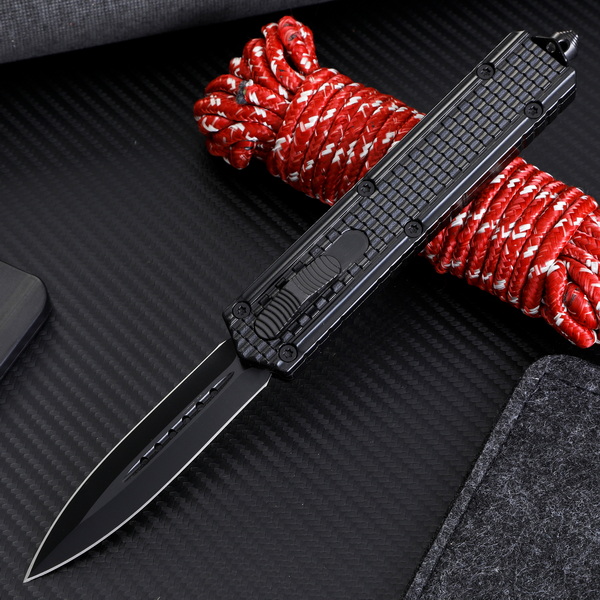
An OTF knife blade should always have a razor-sharp edge to maximize cutting precision and safety. Sharpening is slightly different from other knives due to the size and mechanism sensitivity.
Selecting the correct sharpening stones for your blade is essential. Here's a general guide:
- 300-600 grit stones for repairing chips or reshaping damaged edges.
- 1000-2000 grit stones for regular sharpening and edge touch-ups.
- 3000-6000 grit stones or ceramic rods for fine polishing and edge refinement.
Diamond stones are excellent for hard steel blades commonly used in OTF knives and provide faster sharpening results.
OTF knives are smaller and more delicate than fixed blades, so securing them correctly is important:
- Never sharpen with the blade fully extended while attached to the mechanism or handle.
- Gently remove or disengage the blade if possible (only if your knife's design allows) or carefully place the blade on a flat, stable surface.
- Alternatively, use a dedicated knife sharpening clamp or jig to hold the blade securely.
This preparation prevents damaging the mechanism or hurting yourself during the sharpening process.
Sharpening at the correct angle keeps the blade durable and sharp:
1. Hold your sharpening stone at a consistent 15-20 degree angle to the blade edge.
2. Using light to medium pressure, slide the blade across the stone from the base toward the tip in a smooth motion.
3. Perform 10-15 strokes on one side, then flip the blade to sharpen the other side evenly.
4. Keep the angle steady for a uniform edge bevel.
Uneven sharpening can cause the blade to cut poorly and may permanently damage the edge profile.
After sharpening, polishing the edge improves cutting performance and edge longevity.
- Use a leather strop or a fine honing rod to polish and remove any burrs.
- Stropping should be done with light, backward strokes along the blade edge.
- This final step creates a razor-sharp edge ideal for precise cutting tasks.
Proper storage is crucial to prevent damage or corrosion:
- Store the knife in a dry, cool place away from humidity.
- Keep the blade retracted when not in use.
- Avoid storing in leather sheaths long-term, as they can trap moisture and cause rust.
- Use your OTF knife only for its intended tasks such as cutting ropes, wood, or small game.
- Avoid prying, screwdriver tasks, or heavy chopping that might damage the delicate mechanism.
- Respect the knife's limits to prolong its lifespan.
If you are unsure about disassembling or deep cleaning your OTF knife, it's wise to seek expert help. Many manufacturers or authorized service centers offer professional maintenance and repairs, which can extend the knife's life considerably.
- Always wear safety gloves to prevent accidental cuts.
- Work in a well-lit area on a clean, stable surface.
- Keep children and pets away while handling knives.
- Avoid using excessive force to prevent blade or mechanism damage.
- Keep your fingers clear of the blade path during sharpening.
Maintaining and sharpening your OTF knife ensures it remains reliable, safe, and ready for any outdoor or tactical task. Regular cleaning, lubrication, inspection, and sharpening not only extend the life of your investment but also optimize your knife's performance. Following these expert tips will let you handle your OTF knife like a pro—whether for work, adventure, or collection. Commitment to proper care will give you a smooth, sharp blade that performs flawlessly for years.

Sharpen your OTF knife whenever you notice the blade is no longer slicing smoothly or if it shows signs of dullness, typically every few months with regular use.
Disassembly is possible but should be done carefully or by a professional to avoid damaging the complex spring mechanism.
Silicone-based lubricants or specialized knife oils are ideal as they do not attract dust or dirt and provide long-lasting smooth operation.
Yes, with the right tools, safety precautions, and technique, sharpening at home is safe and effective.
Yes, but use smaller, precise stones or diamond rods suitable for the blade size to avoid damage.


