
Views: 222 Author: Leah Publish Time: 2025-11-01 Origin: Site


Content Menu
● The fingerprint of quality: core indicators for premium status
>> Deployment mechanism and reliability
>> Blade material, finish, and geometry
>> Handle design and materials
>> Safety features and user protection
>> Manufacturing consistency and traceability
>> Surface finish, coatings, and corrosion resistance
>> Documentation, warranties, and after-sales support
● Customization and OEM potential: elevating the proposition
>> Customization as a strategic value proposition
>> The evolving OEM landscape in 2025
● Evaluating an OEM partner for Custom OTF Knives: a practical checklist
>> 1) Technical capability and facilities
>> 2) Material options and supply chain integrity
>> 3) Quality assurance and testing
>> 4) Compliance and safety certifications
>> 5) Intellectual property protection
>> 6) Collaboration model and after-sales support
● Practical guidance for brands and retailers
>> Start with a quality benchmark
>> Leverage samples and pilot runs
● Common misperceptions and how to avoid them
● End-user considerations and usage guidance
>> Brand storytelling through customization
● FAQ
>> 1) What defines a premium Custom OTF Knife?
>> 2) How can one verify an OEM partner's quality?
>> 3) Are Custom OTF Knives legal worldwide?
>> 4) What materials are commonly used in premium blades?
>> 5) Why is customization valuable in OEM projects?
In the world of Custom OTF Knives, the line between premium craftsmanship and an aggressively marketed knockoff is drawn not merely by price, but by engineering discipline, material science, and the integrity of the manufacturing process. For foreign brands, wholesalers, and production houses relying on OEM partnerships, distinguishing genuine premium quality from subpar imitators is essential for protecting brand reputation, minimizing after-sales costs, and ensuring customer satisfaction. The aim of this article is to arm readers with practical, evidence-based criteria for evaluating premium Custom OTF Knives, to outline the most critical attributes to look for in potential OEM partners, and to provide a framework for building durable, market-ready products that meet the highest standards of performance and safety.
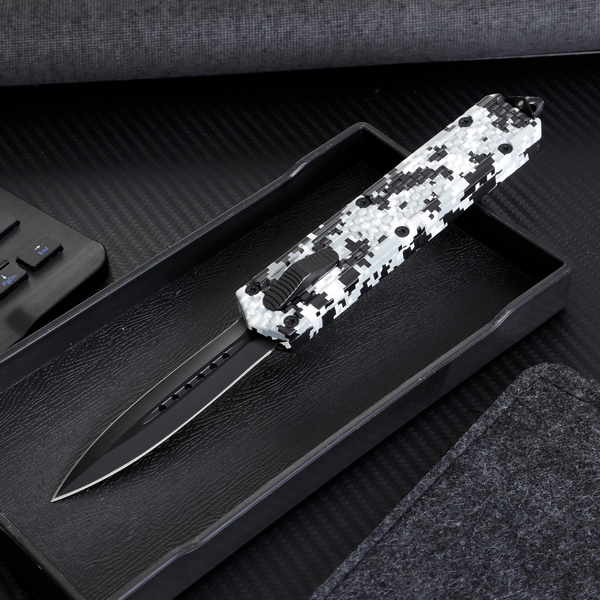
A premium Custom OTF Knife relies on a refined deployment system that delivers consistent blade travel, minimal blade play, and repeatable deployment force. When drawn from its resting position, the blade should extend with a confident, tactile snap, followed by a controlled retraction that resists unintended movement. Effective dampening inside the mechanism reduces vibration and wear, ensuring smooth operation across thousands of cycles. In professional contexts, deployment reliability translates directly into time-saving advantages, user safety, and mission readiness. By contrast, cheap knockoffs often exhibit noticeable blade play, inconsistent travel distances, and jerky action that varies between units. Such variability undermines precision and can increase the risk of accidental deployment or retraction during use. The deployment system should also incorporate a secure detent or locking feature that prevents accidental retraction while the knife is in use, protecting both the user and the blade edge. The presence of a well-tuned deployment mechanism is thus a primary hallmark of premium quality in Custom OTF Knives.
Premium knives typically rely on high-performance blade steels that balance wear resistance, toughness, and corrosion resistance. The choice of steel is coupled with a heat-treatment regime designed to maximize edge retention without sacrificing resilience. Finishes such as black oxide, stonewash, DLC (diamond-like carbon), or ceramic coatings are applied with controlled thickness and uniform coverage to resist wear and glare while preserving edge geometry. The geometry of the edge is tailored to the knife's intended tasks, and the grinding and honing processes produce a consistent bevel across the blade. Uniform finishing across the blade surface indicates meticulous process control and repeatable production quality. Conversely, cheaper knives may use lower-grade steels, inconsistent heat treatments, and generic coatings that wear unevenly or chip under stress. An uneven edge, micro-chips, or visible corrosion spots are red flags signaling potential reliability issues in the field.
Handle design contributes substantially to long-term usability and safety. Premium handles employ robust materials such as aircraft-grade aluminum alloys, high-strength polymers, micarta, G10, or carbon fiber composites. The internal structure—liners, standoffs, screws, and locking mechanisms—should be tightly integrated with minimal play and without compromising ergonomics. Texturing, contouring, and palm-fitting shapes help reduce fatigue during extended use, while heat management strategies prevent discomfort in hot environments. Safety considerations are integral: a secure blade stop, reliable detent engagement, and non-slip grip surfaces that remain functional under wet or oily conditions. Inexpensive handles may reveal thinner walls, inconsistent machining, visible tooling marks, or a grip texture that degrades quickly with use, all of which detract from the user experience and longevity.
Quality hinges on user safety during deployment and use. Premium designs emphasize dependable deployment stops, robust blade retention, and consistent detent engagement to prevent unintended extension or retraction. Additional safety features—such as integrated glass breakers, secure pocket clips, and reinforced carry positions—enhance field usability. The absence of comprehensive safety measures often characterizes lower-cost models, where detent tuning may be off, blade retention is weak, or critical components are undersized. For OEM projects, the safety architecture should be designed to meet or exceed the regulatory expectations of the target markets while maintaining ergonomic accessibility for everyday users.
For customers and brands, traceability is a non-negotiable attribute of premium manufacturing. OEM partners that supply premium Custom OTF Knives typically provide exhaustive documentation: material certificates, heat-treatment logs, dimensional tolerances, functional test results, and lot-level traceability. This data enables brands to validate performance claims, comply with regulatory requirements, and manage post-sale quality more effectively. When evaluating suppliers, request sample batch test reports, process capability indices (Cp/Cpk), and evidence of statistical process control (SPC) procedures. A partner that can demonstrate consistent tolerances across thousands of units is markedly more trustworthy than one that relies on trial-and-error production or lacks transparent QA records.
Coatings and surface finishes are more than cosmetic; they contribute to corrosion resistance, wear protection, and ease of cleaning in harsh environments. Premium finishes exhibit uniform thickness, consistent texture, and minimal edge wear after cycling tests. The coating should adhere well to the substrate and resist chipping or delamination under normal use. Surface imperfections—uneven color, inconsistent patterning, rough machining marks, or early signs of coating wear—are often indicators of lower-quality processes. In a manufacturing context, process controls for surface finishing are as critical as the mechanical tolerances of the deployment system.
A premium OEM partner provides clear warranty terms, straightforward replacement policies, and reliable after-sales support. End-user documentation should include care instructions, safety cautions, and maintenance procedures tailored to the specific materials and finishes used. The presence of responsive technical support and an established repair or replacement workflow strengthens brand trust and reduces lifecycle costs for the customer. In short, the ability to stand behind the product with practical post-purchase services differentiates premium offerings from transiently marketed items.
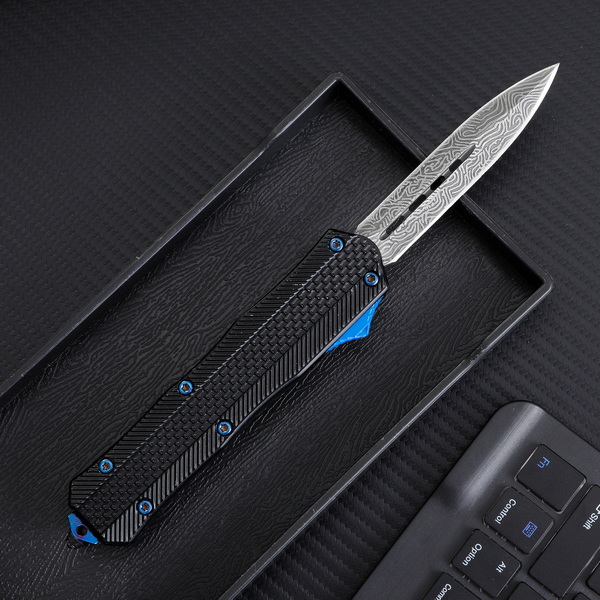
The most compelling aspect of premium Custom OTF Knives in an OEM context is the ability to tailor blade steel, handle material, finish, engravings, and accessory options to fit specific markets and brand stories. Customers respond to differentiated products with explicit performance claims and distinctive aesthetics. This customization extends beyond appearance; it includes performance tuning, such as edge geometry optimization for different tasks, deployment force calibration, and compatibility with regional cleaning and maintenance practices. For brands, customization translates into more powerful storytelling, allowing niche segments—outdoor professionals, law enforcement, adventurers, and field researchers—to see a direct alignment between a product's capabilities and its use case.
The global manufacturing ecosystem continues to favor partnerships that combine technical excellence with scalable production and robust compliance frameworks. In 2025, the market features a mature OEM network where credible manufacturers in China and other regions offer end-to-end services: design transfer, material sourcing, precision machining, heat treatment, finishing, assembly, QA, packaging, and logistics. The most successful collaborations emphasize transparency, traceability, and a shared commitment to regulatory compliance, environmental responsibility, and ethical manufacturing practices. For brands considering OEM partnerships, diligence, pilot runs, and performance verification across representative field tests are critical to ensuring the final product meets expectations of both performance and endurance.
- Confirm CNC machining capacity, heat-treatment capabilities, finishing lines, and final assembly. Request process flow diagrams, tolerance maps, and a selection of benchmark parts for comparison. Look for recognized quality-management certifications (for example, ISO 9001 or equivalent) and a track record of high-precision production in related tool categories.[7][11]
- Inquire about blade steels, coatings, handle materials, adhesives, and the availability of alternative materials for different market specs. Seek supplier audits, traceability records, and third-party test data to validate material performance claims.[12][7]
- Seek rigorous QA protocols, including deployment-cycle testing, drop testing, corrosion resistance testing, and dimensional inspections. Request access to QA data for representative batches and a clear non-conformance handling process.[3][13]
- Ensure alignment with regulatory standards across target markets, including consumer-safety directives, import/export controls, and any region-specific certifications. Confirm that documentation is ready for customs and distributors in each region.[1][11]
- For brands with unique blade geometries or engraving, discuss design-protection strategies, NDAs, and procedures for handling customization requests to avoid IP leakage or accidental sharing of confidential data.[13]
- Define contract terms, minimum order quantities, lead times, warranty coverage, return policies, and the process for replacements or repairs. Ensure a clear point of contact and escalation path for after-sales issues.[13]
- Define the intended use-case and performance criteria for your Custom OTF Knife lineup. Then evaluate supplier capabilities against these benchmarks, including deployment smoothness, edge retention, material performance, and finish consistency. A premium product should meet or exceed these standards consistently across production lots.[14][3]
- Request multiple sample units representing different production lots to assess deployment feel, edge geometry, and overall build quality under realistic field conditions. A pilot run allows early detection of manufacturing friction points and supports design-for-manufacture improvements.[7][14]
- The total cost of ownership matters: repairability, warranty coverage, and post-sale support influence customer satisfaction and brand loyalty as much as upfront pricing. A higher initial cost that delivers lower defect rates and stronger after-sales support often yields lower total costs over time.[11][13]
- A low upfront price may hide a higher cost of ownership later: inconsistent performance, higher return rates, and frustrated customers. Premium Custom OTF Knives deliver predictable performance and durability that reduce lifecycle costs and protect brand integrity.[3][14]
- The quality spectrum among OEMs varies widely in capabilities, QA rigor, and responsiveness. Thorough due diligence, audits, and pilot testing reveal the true capabilities beyond marketing promises.[11][13]
- Always follow manufacturer care instructions for deployment, lubrication, and storage. Proper handling reduces injury risk and extends blade life. In field environments, training materials and explicit safety warnings help users maximize performance while minimizing risks.[4][14]
- Regular inspection of deployment mechanisms, springs, and edge geometry preserves performance. Use manufacturer-approved lubricants and cleaning routines tailored to the blade steel and coating used. Documented maintenance practices support consistent performance across units.[1][14]
- For brands, articulating the story behind material choices, engineering decisions, and manufacturing discipline enhances perceived value. This storytelling, when connected to product realities like deployment reliability and edge performance, strengthens consumer trust and differentiates premium offerings in a crowded market.[15][14]
Premium Custom OTF Knives epitomize the convergence of engineering precision, material excellence, and disciplined production. For international brands, wholesalers, and OEM collaborators, choosing a supplier that demonstrates tight tolerances, superior blade materials and finishes, ergonomic and safe handle design, robust deployment mechanisms, and transparent quality assurance is crucial. The differentiators—deployment reliability, material and coating integrity, safety architecture, comprehensive documentation, and responsive after-sales support—form the foundation of durable, reliable tools that perform under demanding conditions and inspire confidence in end users. By emphasizing rigorous QA, traceability, and a clear customization framework, brands can deliver truly premium products that command trust, command value, and build lasting customer relationships in a competitive market.
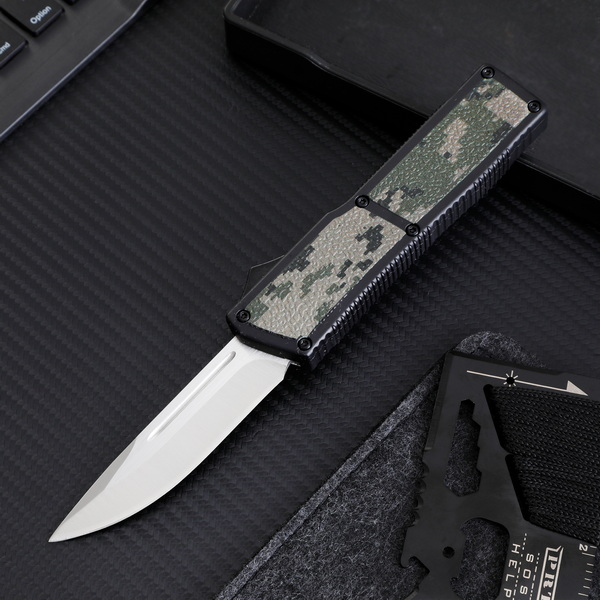
- A premium Custom OTF Knife features precise deployment, high-grade blade steel with durable finishes, ergonomic handles, reliable safety mechanisms, and strong QA documentation.[14]
- Review material certificates, testing data, process controls, and references; request pilot orders or samples to assess deployment feel, edge retention, and build quality.[11][13]
- Legal status varies by jurisdiction; confirm compliance for each target market and understand import/export restrictions related to automatic knives.[1][13]
- High-performance steels with proven wear resistance and toughness, plus protective finishes that resist corrosion and wear over time.[14]
- Customization enables brands to tailor blade steel, finishes, engraving, and accessories to market needs, creating differentiation and stronger value propositions.[15]
[1](https://www.youtube.com/watch?v=EwG2oytZCl8)
[2](https://eknives.com/blog/microtech-knives-manufacturing-process/)
[3](https://takcom.com/the-precision-engineering-that-goes-into-a-premium-otf-knife/)
[4](https://www.youtube.com/watch?v=WH-tXXd3pG8)
[5](https://nobliecustomknives.com/what-is-an-otf-knife-and-how-does-an-otf-knife-work/)
[6](https://www.youtube.com/watch?v=jX9MPmNmYtY)
[7](https://tacknivesusa.com/custom-otf-knives-the-distinctive-collections-features/)
[8](https://bladeops.com/blog/how-does-an-otf-knife-work/)
[9](https://tacknivesusa.com/how-does-an-otf-knife-work/)
[10](https://www.shieldon.net/wp-content/uploads/2021/11/JXHL-OTF02.pdf)
[11](https://oem-knife.com/oem-knife/)
[12](https://leeknives.com/oem-knife-manufacturers/)
[13](https://www.58hrcknives.com/top-custom-otf-knife-manufacturers-you-should-know-in-2025.html)
[14](https://www.58hrcknives.com/what-sets-a-premium-otf-knife-apart-from-the-rest.html)
[15](https://ravencresttactical.com/custom-otf-tactical-knives/)


