
Views: 222 Author: Loretta Publish Time: 2025-10-04 Origin: Site


Content Menu
● Understanding the OTF Knife Mechanism
● Essential OTF Knife Safety Tips
>> Familiarize Yourself with Your OTF Knife
>> Always Point the Blade Away from Your Body
>> Use a Firm, Stable Grip When Operating
>> Keep the Blade Clean and Well Lubricated
>> Use Your OTF Knife Only for Intended Purposes
>> Secure Storage When Not in Use
● Additional Safety Considerations for OTF Knife Users
>> Avoid Using the Knife When Distracted or Rushed
>> Test the Locking Mechanism Regularly
>> Transport Your OTF Knife Responsibly
>> Be Mindful of Environment and Conditions
● Maintenance Tips for Your OTF Knife
>> Cleaning
>> Lubricating
>> Inspection
● Practical Uses of OTF Knives and Corresponding Safety Notes
● Training and Skill Development
>> Attend Safety Workshops or Watch Video Tutorials
● Protective Gear Recommendations
● Troubleshooting Common Issues and Solutions
>> What to Do If the Blade Gets Stuck
● FAQ
>> 1. What makes OTF knives different from regular folding knives?
>> 2. Are OTF knives legal to carry everywhere?
>> 3. How do I clean my OTF knife safely?
>> 4. Can I sharpen an OTF knife blade myself?
>> 5. What should I do if my OTF knife fails to deploy?
Owning an OTF knife offers convenience, speed, and style, but it also requires knowledge of proper safety to prevent accidents. This comprehensive guide will walk you through essential safety tips for every OTF knife owner, helping you enjoy your knife responsibly and securely.
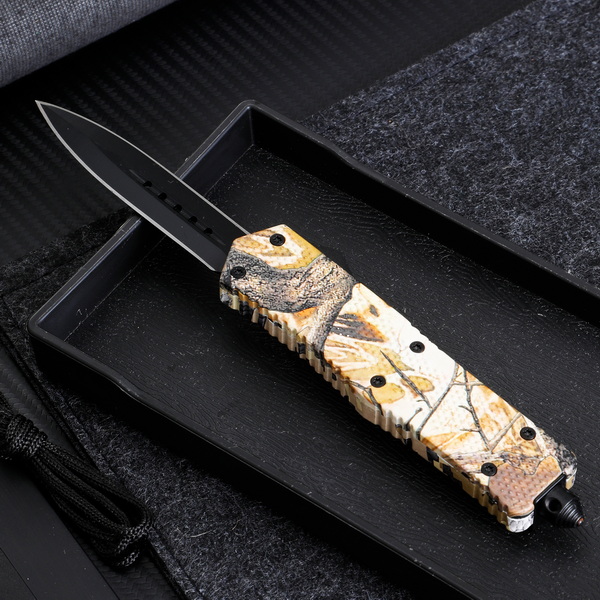
An OTF (Out-The-Front) knife is a type of folding knife where the blade slides out and retracts through an opening in the front of the handle, usually by pushing or sliding a thumb switch. Known for their swift deployment and sleek design, OTF knives are popular among collectors, outdoor enthusiasts, and professionals.
The unique mechanism presents special safety considerations. Unlike traditional folding knives where the blade folds sideways into the handle, the blade on an OTF knife moves in a straight line, requiring distinct handling practices to ensure the user's safety.
OTF knives operate with a spring-loaded mechanism that propels the blade out through a front slot when a slider or button is engaged. Some models include a safety lock to prevent accidental deployment, while others rely purely on the user's control.
When the blade is extended, the mechanism locks to keep the blade securely in place during use. Retraction usually involves releasing a catch or sliding the mechanism back manually.
Knowing the specifics of your OTF knife's mechanism is key to confident and safe operation, as improper usage can lead to blade jams or accidental injury.
Before using your OTF knife, take the time to:
- Read the manufacturer's safety manual thoroughly.
- Understand the blade deployment and locking system.
- Practice deploying and retracting the blade multiple times with the blade closed and pointed away from your body.
Being well-informed about how your knife functions reduces the risk of accidental openings or failure.
Because OTF knives deploy their blades straight out from the front, it's critical to always keep the blade pointed away from yourself and others during operation.
This means:
- Never aim the blade toward any part of your body.
- Keep your fingers and hands clear of the blade's path.
- Avoid deploying the blade when people are nearby.
This simple precaution prevents most deployment injuries.
A steady grip ensures control while deploying or retracting the blade.
Tips for a secure grip include:
- Holding the handle firmly but comfortably.
- Keeping your hands clean and dry to prevent slipping.
- Avoiding excessive force during blade deployment or retraction.
A stable grip helps you act deliberately and safely.
The internal mechanism of an OTF knife relies on smooth sliding action.
To maintain this:
- Regularly wipe down the blade and mechanism to remove dirt, dust, and debris.
- Use recommended lubricants to keep moving parts sliding smoothly.
- Inspect the blade and mechanism for corrosion, rust spots, or any damage.
Poor maintenance can cause the mechanism to jam or malfunction, creating safety hazards.
An OTF knife is designed primarily for cutting tasks. Using it for prying, hammering, or screw-driving can compromise the blade and mechanism.
Improper use risks sudden blade breakage or mechanism failure, which can cause injury.
Always store your OTF knife safely to prevent accidental injuries or unauthorized use:
- Engage the safety lock to keep the blade retracted.
- Store the knife in a sheath or protective case.
- Keep it out of reach of children and anyone unfamiliar with its operation.
Good storage practices protect both the knife and those around it.

Using an OTF knife requires attention and care.
- Ensure you are fully focused when deploying or using the blade.
- Avoid operating the knife if you are tired, impaired, or in a hurry.
Mistakes made during distracted use often lead to accidents.
The locking system prevents the blade from accidentally sliding back during use.
- Routinely test the lock to confirm it engages securely.
- If the lock is loose or inconsistent, have the knife serviced or replaced.
- Never use the knife if the lock fails, as the blade could slip unexpectedly.
While carrying your OTF knife for everyday use or travel:
- Comply with all local laws and regulations regarding automatic or assisted knives.
- Keep the blade fully retracted during transport.
- Use a protective sheath or case to avoid accidental deployment.
Environmental factors such as temperature and moisture can affect your knife's performance.
- Avoid exposing your OTF knife to excessive moisture, which can promote rust.
- If used in wet or muddy conditions, clean and dry the knife promptly.
- Extreme cold may affect the spring mechanism; exercise extra caution during use.
- Use a soft cloth or brush to clear dirt from the handle, slider, and blade surfaces.
- Avoid soaking the knife in water.
- Remove any stubborn grime with mild detergent, then dry thoroughly.
- Apply a light oil or lubricant recommended by the manufacturer to the blade track and moving parts.
- Avoid over-lubricating, as excess oil can attract dust and cause buildup.
- Check for any dents, chips, or cracks on the blade edge.
- Test deployment speed and smoothness.
- Inspect the locking mechanism for firmness.
Proper maintenance not only improves safety but also extends the knife's service life.
OTF knives are popular in many applications including outdoor activities, professional settings, and daily carry.
For camping, hiking, or fishing:
- Use the OTF knife for cutting rope, food preparation, or light wood shaping.
- Avoid exposing the knife to extreme environment stress.
- Make sure to retract the blade when not actively cutting.
Military and tactical personnel often value OTF knives for rapid blade access.
- Train extensively to deploy and retract the blade safely even under stress.
- Follow all workplace safety protocols.
- Regularly maintain the knife for flawless function.
OTF knives offer quick access for daily tasks:
- Always carry the knife with the blade safely retracted.
- Use discretion and awareness of your surroundings to avoid alarming others.
- Respect laws pertaining to concealed or automatic blades.
Even experienced blade users should practice deploying, retracting, and handling their OTF knives regularly in a safe environment.
- This builds muscle memory.
- Reduces the risk of mistakes during actual use.
- Increases confidence and speed.
Reliable resources can teach proper techniques and highlight common mistakes.
- Many manufacturers provide online safety videos.
- Professional knife-handling courses can improve your overall skill.
While most OTF knife users handle their blades safely, some situations require extra protection:
- Wear cut-resistant gloves when performing demanding tasks.
- Use eye protection if cutting materials that could splinter or create flying debris.
- Do not force the mechanism.
- Clean the track and lubricate.
- Check that no debris is blocking the blade.
- If unresolved, consult a professional or the manufacturer.
- Stop using the knife immediately.
- Avoid compromising the blade's position manually.
- Service or replace the locking system before further use.
Proper safety knowledge is vital for every OTF knife owner. Respect the unique deployment mechanism, maintain your knife diligently, and use it only for its intended purposes. Following these safety tips minimizes accidents and extends the life of your OTF knife. By becoming a responsible and well-informed owner, you can confidently enjoy the many benefits an OTF knife offers.
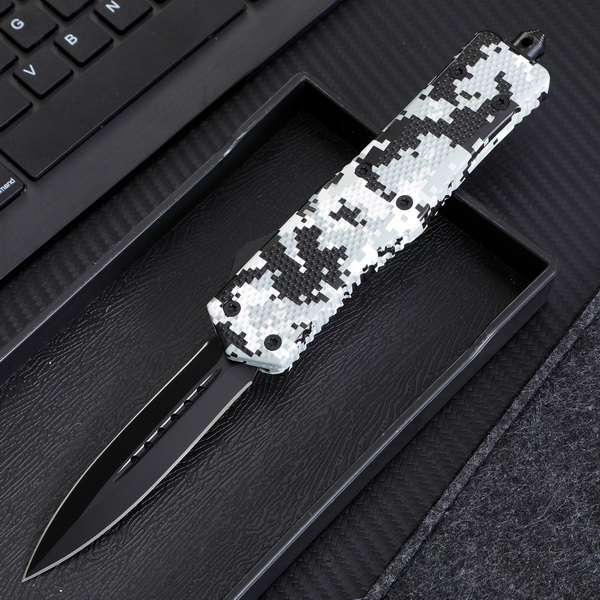
OTF knives deploy their blades through a front opening using a sliding mechanism, allowing faster one-handed deployment compared to typical folding knives, which fold sideways into the handle.
Legality varies widely by country, state, and municipality. Some areas restrict or ban automatic or OTF knives. Always check local regulations before carrying or traveling with your OTF knife.
Retract the blade fully, wipe down with a soft cloth or brush to remove dirt, and apply lubricant to the sliding mechanism. Avoid immersing the knife in water or harsh chemicals that can damage internal parts.
Yes, but be cautious and use the proper sharpeners and angles recommended for your blade. If unsure, seek professional sharpening services to avoid damage.
Stop using the knife immediately, check for and remove any debris or dirt, lubricate the mechanism, and if the problem persists, contact the manufacturer or a professional for repair.


