
Views: 222 Author: Loretta Publish Time: 2025-10-04 Origin: Site


Content Menu
>> Single-Action vs Double-Action OTF Knives
● What Is a Spring-Assisted Knife?
● Key Differences in Blade Deployment
● Mechanism Complexity and Maintenance
● Speed and Efficiency Comparison
● Legal Considerations: What You Need to Know
● Usage Scenarios: Finding Your Ideal Knife
>> Tactical and Emergency Services
>> Everyday Carry & Outdoor Enthusiasts
● FAQ
>> 1. What does "OTF" stand for in knives?
>> 2. Are OTF knives legal to carry?
>> 3. How fast does an OTF knife deploy compared to a spring-assisted knife?
>> 4. Can spring-assisted knives be used for self-defense?
>> 5. How should I maintain an OTF knife?
In the realm of sharp, reliable outdoor and tactical tools, choosing the right knife is essential for those who depend on readiness and quick response. Among the most admired knives are the OTF (Out-The-Front) knife and the spring-assisted knife. Though both serve the purpose of fast blade access, their mechanisms, applications, and legal statuses differ significantly. This article offers an in-depth exploration of these two knife types, shedding light on their key differences and helping you select the best blade for your needs, whether for everyday carry, outdoor adventure, or OEM partnerships.
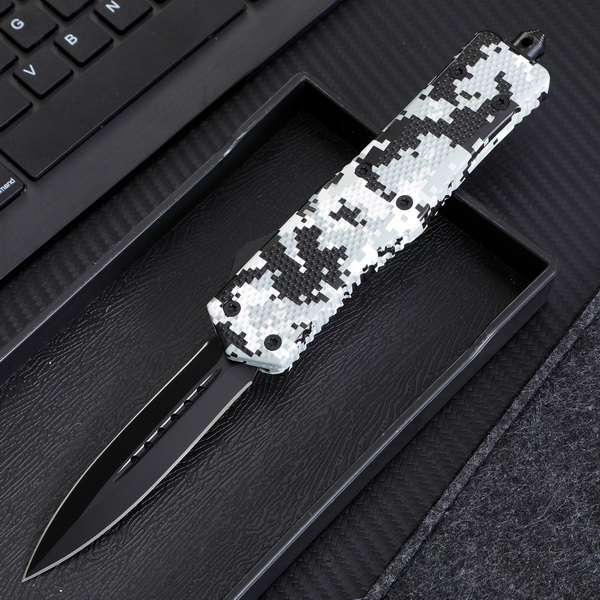
The OTF knife is a specialized type of automatic knife known for its unique blade deployment. Unlike traditional folding knives where the blade swings out from the side, the OTF blade slides linearly out the front of the handle. This action is powered by a spring mechanism activated by a button or switch, allowing for swift one-handed deployment.
- Single-Action OTF: The blade deploys automatically with a button, but the retraction must be done manually by sliding the blade back into the handle. This model has fewer moving parts, making it more durable and cost-effective.
- Double-Action OTF: The blade both deploys and retracts automatically by sliding the same button or switch in opposite directions. This allows for full one-handed operation but involves a more complex mechanism and usually comes at a higher price.
The convenience of swift blade deployment, especially the double-action OTF, has made these knives highly desirable in tactical, law enforcement, and emergency response communities.
Spring-assisted knives differ fundamentally from OTF knives in their deployment mechanism. These knives require the user to manually initiate the blade's opening by pushing the blade out from the handle. Once the blade reaches a certain point, an internal spring mechanism propels it the rest of the way open.
This semi-automatic feature combines the reliability of manual knives with the convenience of faster access. Spring-assisted knives typically have a locking mechanism to secure the blade open and are often designed to comply with regional laws that restrict automatic knife ownership.
The most apparent difference between these knife types lies in how their blades are deployed and retracted:
- OTF Knife:
- Deploys with the press of a button, releasing the spring to shoot the blade out straight.
- Double-action models allow for both deployment and retraction via the button.
- Offers instantaneous blade access without manual blade movement.
- Spring-Assisted Knife:
- Requires manual effort to start blade deployment by pushing the blade out.
- The spring mechanism takes over mid-way to finish opening the blade rapidly.
- Manual retraction is necessary to close the blade.
This distinction impacts not just speed but also legality, maintenance, and practical usability.
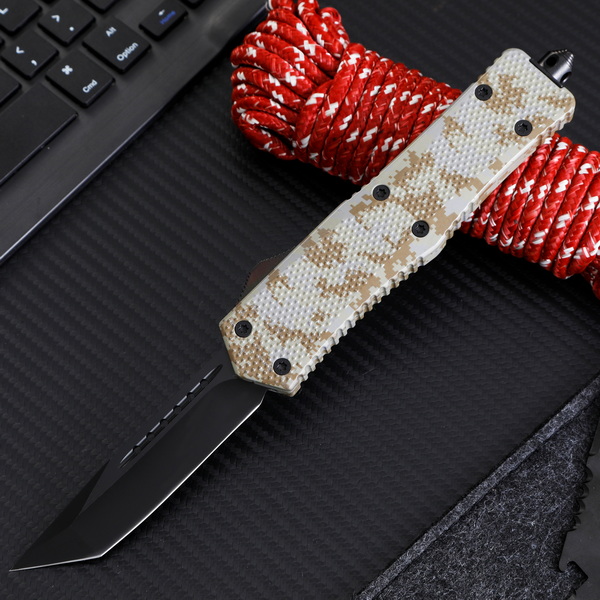
OTF knives are engineering marvels with intricate internal mechanisms. The springs, firing plates, and locking systems demand regular cleaning and lubrication to maintain performance. Due to their complexity, OTF knives may be more prone to mechanical wear and require skilled maintenance.
Spring-assisted knives have simpler mechanics compared to OTF knives but still require maintenance to ensure the spring functions smoothly and the blade locks securely. Their less complicated design makes them easier to service.
Both knife types benefit from regular inspection of the blade sharpness, cleaning to remove debris, and lubrication of moving parts to minimize friction and wear.
When comparing speed, the OTF knife outpaces the spring-assisted knife with its instantaneous blade deployment. The difference might be a fraction of a second, but in tactical or emergency situations, every millisecond counts.
Spring-assisted knives offer quick access but lag slightly due to the initial manual blade push required. Nevertheless, they are often considered sufficiently fast for everyday carry needs, outdoor, and utility uses.
Legal regulations are a critical factor in selecting a knife type:
- OTF Knives: Categorized as switchblades in many jurisdictions, OTF knives face restrictions or outright bans. They are often illegal to carry, sell, or import in numerous states and countries. Double-action OTF knives especially attract legal scrutiny.
- Spring-Assisted Knives: Generally fall under less restrictive classifications because they require manual initiation to open. They are legal in more jurisdictions, including many areas that prohibit fully automatic blades.
To avoid legal challenges:
- Research and comply with federal, state, and local laws before purchasing or carrying these knives.
- Be aware of travel restrictions across state or national borders.
- Adhere to workplace or public venue rules regarding blade possession.
OTF knives take precedence due to their unmatched speed, compactness, and ease of one-handed use. They excel at quick cutting tasks like freeing someone from restraints or responding rapidly to unexpected situations. Their design allows for full grip retention during deployment, enhancing safety and control.
Spring-assisted knives are preferred for their legal access, practical deployment speed, and variety of blade and handle designs. They are suited to hikers, campers, and general users who need a reliable tool for routine cutting tasks or self-defense.
High-end OTF knives often feature premium materials such as stainless steel or titanium for blades and handles, offering durability and corrosion resistance. Spring-assisted knives vary broadly, from affordable models with synthetic handles to luxury blades with exotic materials, catering to a broad spectrum of users.
Safety is paramount in knife design for both types:
- OTF Knives: Typically feature safety switches to prevent accidental deployment, guarding against unintended exposure of the blade.
- Spring-Assisted Knives: Equipped with lock mechanisms like liner locks or frame locks to secure the blade during use and storage.
Using knives with proven safety features significantly reduces the risk of injury during handling.
When deciding between an OTF knife and a spring-assisted knife, your choice hinges on intended use, legal considerations, and personal preference. OTF knives provide unmatched speed and one-handed deployment, ideal for tactical and emergency use but require greater upkeep and legal awareness. Spring-assisted knives offer a balanced compromise of rapid deployment, legality across more areas, and versatility in everyday and outdoor settings. Both types represent advances in cutting tool technology and hold unique places in the knife community.
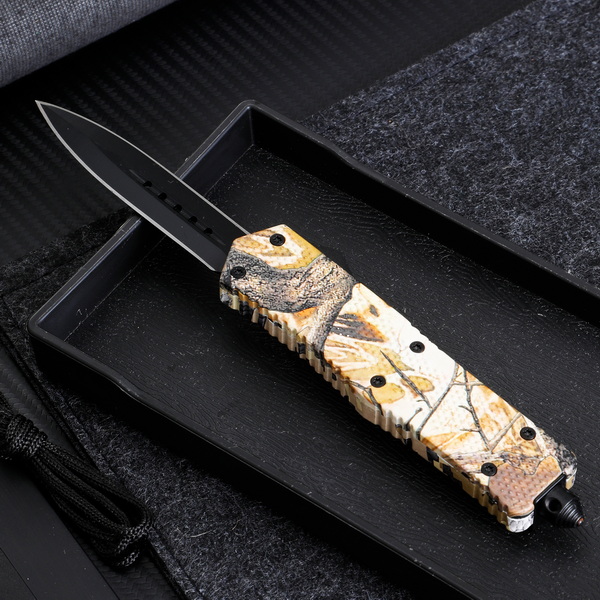
"OTF" stands for "Out-The-Front," describing knives where the blade extends straight out from the handle's front, rather than folding out from the side.[1]
OTF knives are often regulated as switchblades and may be illegal to own or carry in many regions. Always check your local laws before acquisition.[2][1]
An OTF knife deploys almost instantaneously with a button press. In comparison, spring-assisted knives require a manual start, making them slightly slower.[5][1]
Yes, spring-assisted knives are well-suited for self-defense and are generally legal in more places than OTF knives.[1]
Regular cleaning of internal mechanisms, lubrication of springs and moving parts, and checking blade stability and locking systems will keep an OTF knife in peak condition.[11][1]
[1](https://www.58hrcknives.com/otf-knife-vs-spring-assisted-knife-which-is-better.html)
[2](https://tacknivesusa.com/what-is-an-otf-knife-and-how-is-it-different-from-other-switchblades/)
[3](https://www.youtube.com/watch?v=fjHUrk9RnVg)
[4](https://hiconsumption.com/gear/best-otf-knives/)
[5](https://artisancutlery.net/blogs/knife-knowledge/spring-assisted-vs-automatic-knife-speed)
[6](https://www.youtube.com/watch?v=FFln79efYWI)
[7](https://knife-depot.com/pages/switchblade-vs-assisted-opening-knives)
[8](https://www.vipertecknives.com/blogs/all-tactical/switchblade-vs-spring-assist-knife-key-differences-and-which-is-right-for-you)
[9](https://www.bladeforums.com/threads/automatic-vs-assisted-opening.1361990/)
[10](https://colonelblades.com/blog/automatic-knife-vs-spring-assisted-vs-button-lock/)
[11](https://uppercuttactical.com/blogs/news/how-does-an-otf-knife-work)


