
Views: 222 Author: Leah Publish Time: 2025-11-12 Origin: Site


Content Menu
● Understanding the OTF Pocket Knife Mechanism
● Why Safety Matters with OTF Pocket Knives
● Essential OTF Pocket Knife Safety Tips
>> 1. Familiarize Yourself with Your OTF Knife
>> 2. Always Point the Blade Away from Your Body
>> 4. Keep Your OTF Knife Clean and Well-Lubricated
>> 5. Use Your OTF Knife Only for Intended Purposes
>> 6. Secure Storage When Not in Use
>> 7. Practice Safe Carry Methods
>> 8. Test and Maintain the Locking Mechanism
>> 9. Be Mindful of Environment and Conditions
>> 10. Transport Your OTF Knife Responsibly
● Maintenance Tips for Your OTF Knife
>> Cleaning
>> Lubricating
>> Inspection
● Additional Safety Considerations
>> Avoid Using When Distracted
>> Protective Gear for Demanding Tasks
>> Training and Skill Development
● Practical Uses of OTF Knives
● Troubleshooting Common Issues
● Frequently Asked Questions (FAQ)
>> 1. What makes OTF knives different from regular folding knives?
>> 2. Are OTF knives legal to carry everywhere?
>> 3. How do I clean my OTF knife safely?
>> 4. Can I sharpen an OTF knife blade myself?
>> 5. What should I do if my OTF knife fails to deploy?
Explore essential safety tips for the OTF pocket knife, a unique automatic blade known for fast deployment and compact design. Learn about proper handling, maintenance, legal considerations, and usage best practices so every user can operate their OTF knife safely and confidently.
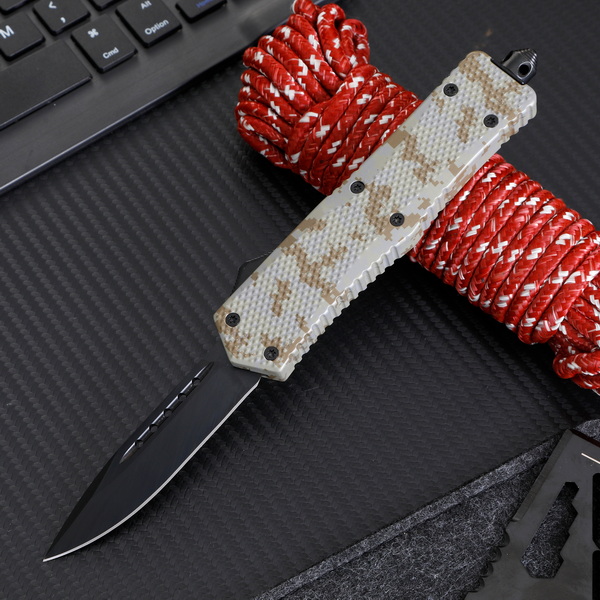
An OTF pocket knife, or “out-the-front” knife, is renowned for its fast, one-handed blade deployment and convenient carry. With its often rugged yet elegant construction, it's trusted by outdoor enthusiasts, collectors, and professionals. Yet, its spring-loaded action and powerful mechanism demand exceptional care, discipline, and adherence to safety practices. This guide offers a comprehensive, practical approach to maximizing safe OTF pocket knife use—empowering both new and seasoned owners to avoid common hazards while reaping the benefits of this versatile tool.[1][5]
The defining characteristic of an OTF pocket knife is its blade deployment system. Unlike the typical folding knife, which swings its blade sideways into the handle, the OTF knife ejects its blade through a slot at the handle's tip, powered by a spring and actuator button or slider. Many OTF knives feature single-action or double-action mechanisms:
- Single-action: Fires the blade out; manual retraction is required.
- Double-action: Allows both blade deployment and automatic retraction via the same button.
This sophisticated mechanism minimizes deployment time, making OTF knives popular for emergency, tactical, and everyday use. However, improper use or lack of familiarity can lead to accidental openings, jams, or injuries.[5][1]
The spring-loaded blade of the OTF pocket knife introduces several risks distinct from other knife forms:
- Accidental Deployment: Sensitive switches may trigger unintentionally, causing the blade to eject with force.
- Direct Blade Path: Unlike folders, the blade shoots straight, requiring vigilant hand placement at all times.
- Complex Mechanism: Malfunctions may lock the blade open or closed, leading to unsafe attempts to force the knife.
Recognizing these risks is vital to responsible ownership and safe operation.[4][1][5]
Before carrying or using your OTF knife:
- Read the manufacturer's instructions and safety guidelines thoroughly.
- Practice deploying and retracting the blade in a controlled environment with the knife pointed away from your body.
- Test the sensitivity and placement of the release switch or button.[1][5]
Understanding your knife's action ensures confident, mistake-free usage.
The straight-out deployment of an OTF knife means:
- Never aim the blade toward yourself or anyone nearby.
- Keep your fingers clear of the blade's path—especially during operation or testing.
- Practice deployment with the handle firmly gripped and your hand below the end of the handle for maximum safety.[5][1]
- Maintain a secure hold on the knife throughout usage.
- Keep your hands dry and avoid excessive force during blade operations.
- Train your muscle memory for safe, deliberate deployment and retraction.[4][1][5]
- Regularly wipe the blade and inner mechanism to remove dirt, dust, and debris.
- Use the lubricants recommended by the manufacturer for smooth sliding function.
- Inspect your knife for rust, corrosion, and signs of wear.[2][5]
A well-maintained knife operates reliably and reduces malfunction risks.
Avoid prying, hammering, or tasks outside the knife's design:[6][5]
- Stick to cutting, slicing, and similar appropriate tasks.
- Misuse can damage the mechanism or blade, potentially causing sudden breakage or injury.
- Always retract the blade and, if available, engage the safety lock.
- Store your knife in a dedicated protective case.
- Keep your OTF knife out of reach of children or anyone unfamiliar with its operation.[1][5]
- Carry your knife retracted and locked, especially if the switch is sensitive or exposed.
- Use dedicated pockets or sheaths for enhanced security.
- Never keep an OTF knife loose among other items, reducing risk of accidental activation.[1]
- Routinely check the lock for proper engagement.
- If you notice looseness or inconsistency, have the knife serviced or replaced.
- Never use a malfunctioning knife, as the blade may retract or eject unexpectedly.[5][1]
- Avoid operating your knife when distracted, tired, or hurried.
- Do not deploy or retract your knife around crowds or in confined, unstable environments.
- Always cut away from your body and keep your awareness high.[4][5]
- Understand local laws and regulations regarding automatic and OTF knives—these can vary by country, state, and municipality.[8][5]
- Always transport the knife fully retracted and locked in a secure case.
- If traveling, research knife legality in your destination beforehand.[8]
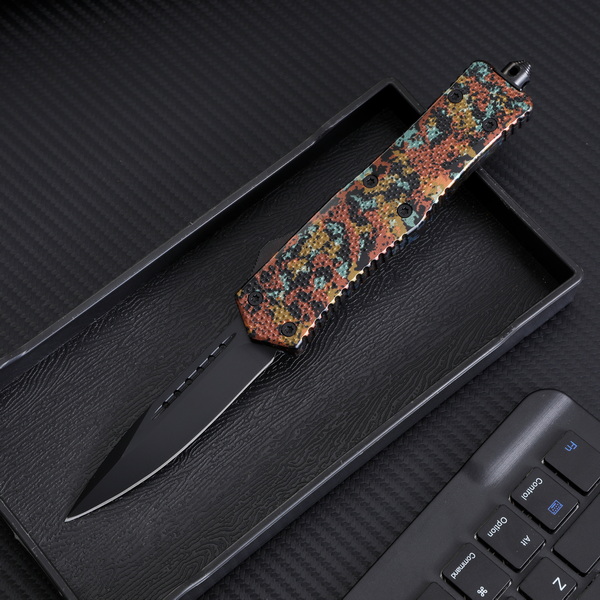
Proper maintenance is the foundation of safe and reliable OTF knife ownership. Follow these best practices:
- Retract the blade fully before cleaning.
- Wipe blade and handle with a soft cloth or brush.
- Avoid water immersion or harsh chemicals, which may damage the mechanism.[7][5]
- Periodically apply small amounts of approved lubricant to the moving parts and rails.
- Wipe off extra lubricant and check for smooth sliding action.
- Check for debris, dust, or obstructions in the blade slot and rails.
- Look for signs of band wear, rust, and mechanism defects.
- If you find persistent issues, consult the manufacturer or a professional repair service.[7][5]
- Focus entirely on the blade and mechanism during all use.
- Avoid multitasking or using your knife when tired or impaired—most accidents occur in such scenarios.[4]
- For tough cutting jobs, consider wearing cut-resistant gloves and eye protection.
- Always respect the knife's power and sudden deployment potential.
- Practice regularly in a safe environment to perfect your deployment and retraction technique.
- Consider online safety tutorials or hands-on workshops for expert tips and confidence building.[5]
OTF knives excel in many fields, including:
- Outdoor adventures: Camping, hiking, and fishing, where fast, one-handed access is crucial.
- Self-defense: Rapid deployment may offer tactical advantages, but proper training and legal awareness are mandatory.[10]
- Utility work: Precise cutting of packaging, cord, or everyday materials.
Always observe safety and discretion when using your knife, especially around others.
Blade gets stuck:
- Stop use immediately; inspect for debris and clean out any obstructions.[5]
- Lubricate the mechanism per manufacturer recommendation.
- If issues persist, seek professional repair—never force the blade manually.
Lock fails to engage:
- Cease operation, secure the blade, and have the lock serviced or replaced.
- Never use a failed locking knife, as injury risk escalates dramatically.
Mastering OTF pocket knife safety means respecting the unique front-blade deployment, maintaining a high standard of care, and observing responsible ownership. By practicing the tips outlined above—including regular maintenance, secure carrying, environmental awareness, and proper training—any owner can unlock the full utility of an OTF knife while mitigating risk. Safety sustains both your knife's longevity and your well-being.
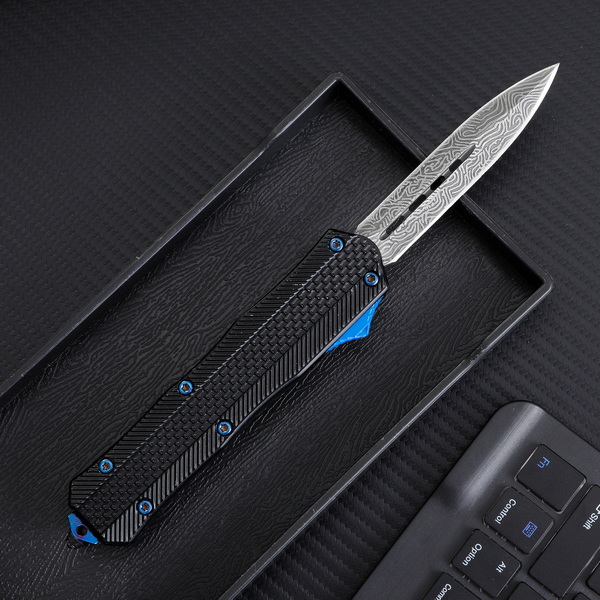
OTF knives deploy their blades straight through the handle's front using a sliding mechanism, while folding knives pivot sideways into the handle.[5]
No. Laws vary significantly by region, with some areas restricting or banning automatic or OTF knives. Always check local regulations before carrying or traveling.[8][5]
Retract the blade, wipe down with a soft cloth or brush, and apply a small amount of approved lubricant. Avoid water immersion and harsh chemicals to protect the internal mechanism.[7][5]
Yes, but use proper sharpening tools and recommended angles. For best results or if unsure, consider professional sharpening services to avoid blade damage.[5]
Cease use, check for and remove debris, lubricate the mechanism, and consult the manufacturer or professional repair services if the issue persists.[5]
[1](https://tacknivesusa.com/your-tactical-knife-in-action-how-to-carry-and-handle-your-otf-knife/)
[2](https://knife-depot.com/blogs/sharpened-values/otf-knives-explained-the-complete-guide)
[3](https://www.tacticalsportinggoods.com/blogs/news/understanding-otf-knives-a-comprehensive-guide-to-their-features-and-uses)
[4](https://www.tektoknives.com/blogs/news/knife-handling-safety-guideline)
[5](https://www.58hrcknives.com/otf-knife-safety-tips-every-owner-should-know.html)
[6](https://www.budk.com/blog-Pocket-Knife-Safety.html)
[7](https://bladeops.com/blog/otf-knife-care-101-maximize-the-life-of-your-knife/)
[8](https://kollielaw.com/the-oregon-knife-law-guide/)
[9](https://swordsswords.com/blog/a-comprehensive-guide-to-automatic-knife-use/)
[10](https://crateclub.com/blogs/loadout/are-otf-knives-good-for-self-defense-a-comprehensive-analysis)


