
Views: 222 Author: Leah Publish Time: 2025-11-11 Origin: Site


Content Menu
● The Mechanics: How OTF Pocket Knives and Switchblades Work
● Comparative Features: OTF Pocket Knife vs Switchblade
>> Action Types
● Material, Blade, and Build Quality
>> Switchblades
● Everyday and Tactical Applications
>> Tactical Use
● Safety, Longevity, and Maintenance
● Legal Status and Regulations
● Design Innovations and Industry Trends
>> Advances in OTF Knife Mechanisms
● Choosing the Best Knife for Your Needs
>> Questions to Consider Before Purchasing
● Summary
● FAQ
>> 1. What is the main difference between an OTF pocket knife and a switchblade?
>> 2. Are OTF pocket knives a type of switchblade?
>> 3. Is it safe to use an OTF pocket knife for everyday carry?
>> 4. Why do some professionals prefer OTF knives over switchblades?
>> 5. What legal restrictions apply to these knives?
In the world of modern knives, few tools blend utility, speed, and innovation as impressively as the OTF pocket knife and the switchblade. As automatic knives, they promise rapid deployment and one-handed operation, making them prized by outdoor professionals, tactical users, everyday carry enthusiasts, and collectors. This comprehensive guide expands upon both knife types, clarifying distinctions in design, mechanism, use cases, legal landscape, and long-term maintenance, and is tailored for OEM clients, brands, and connoisseurs seeking in-depth knowledge.
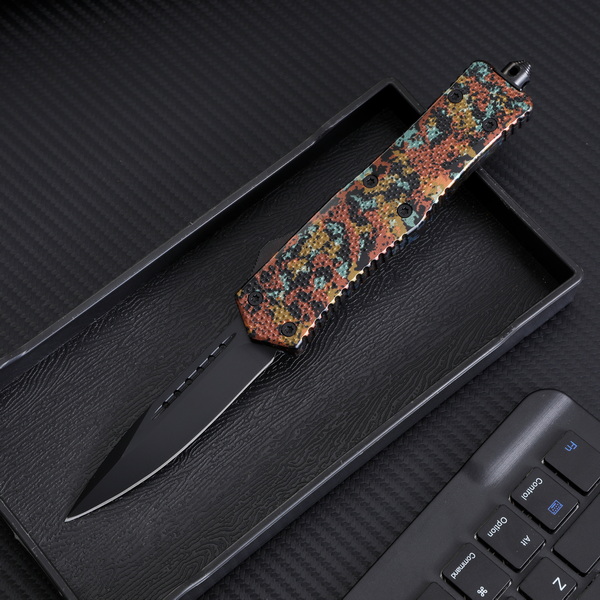
An OTF (Out The Front) pocket knife is distinguished by a blade that deploys in a straight line from the front of the handle. The action is generally powered by an internal spring that is triggered using a sliding button or switch on the handle. OTF knives fall into two categories:[1][2][4]
- Single-action: A one-handed spring operation for opening, but manual retraction.
- Double-action: Both deploying and retracting the blade are controlled by the same switch, yielding total one-handed convenience.
The "out-the-front" deployment maximizes speed and keeps your full grip on the handle, making OTF pocket knives natural for tactical and emergency use.[2][4]
A switchblade, also called an automatic knife or flick knife, features a spring-loaded blade that pivots out from the side of the handle when a button or lever is pressed. While classic switchblades open laterally, some modern designs include OTF-style mechanisms.[4][6]
Core operating features:
- Side-opening design: Blade pivots outward like a folding knife but with spring-assisted speed.[5][1]
- Blade locked until release: The spring is compressed and locks the blade closed until the release button activates the spring, propelling the blade out.
Switchblades are renowned for their convenience and classic style, retaining strong appeal for collectors and EDC users.[6][9]
- OTF Pocket Knife: Blade ejects directly forward. Secure, fast, and highly intuitive for emergencies or tactical use.[2][4]
- Switchblade: Blade opens from the side. The deployment feels more like a traditional folding knife but is enhanced by spring automation.[1][5]
- OTF: Single- and double-action for deployment and retraction; double-action types provide seamless operation and safety.[4][2]
- Switchblade: Most are single-action (one-handed opening), though dual-action side-opening types exist for enhanced versatility.[5][6]
- OTF Pocket Knife: Keeps your grip steady throughout operation, reducing the risk of slippage and enhancing control.
- Switchblade: May require grip adjustment during deployment, especially for larger blades or heavy-duty tasks.[4][5]
Both knives are designed for fast, one-handed opening. Double-action OTF knives excel in speed and user-friendly design, while switchblades offer the traditional quick “flick” action.[6][2][5]
Manufacturers of OTF pocket knives utilize materials like hardened steel, titanium, and aircraft-grade aluminum to balance weight, strength, and performance. The complexity of the mechanism means high-quality models often command a premium price and require careful attention to assembly standards.
Classic switchblades often rely on durable stainless steel blades and sturdy handle materials. Their simpler hinge-based construction can yield longer lifespans under routine use, and they are usually easier to service compared to their OTF counterparts.[1][4]
- OTF knives are prioritized in military, law enforcement, and public safety settings for ultra-fast one-handed access and the ability to deploy the blade without adjusting grip.[2][4]
- Switchblades are also present in tactical environments, but their primary appeal is their reliability and the strength of side-opening mechanisms.
Both knife types are popular in camping, hiking, and hunting, where speed, compactness, and versatility matter. OTF knives can offer dual-sided blades for varying cutting needs, while larger switchblades might provide more leverage for demanding cutting tasks.
EDC (everyday carry) enthusiasts appreciate OTF pocket knives for their cutting-edge appeal and smooth deployment. Switchblades are valued for their understated, traditional design and the feeling of classic utility.[5][2]
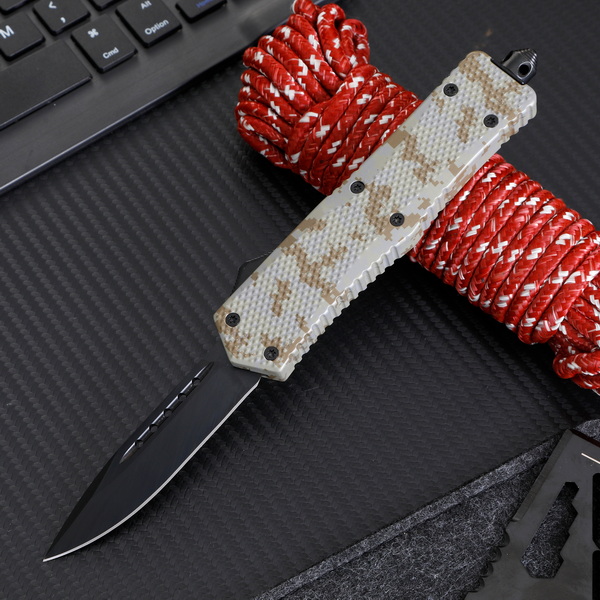
- OTF Pocket Knives: Most models feature robust locks and retraction controls that prevent accidental deployment. The secure blade-housing minimizes risk when not in use.[10][2]
- Switchblades: Locking mechanisms vary by design. Side-opening models, while mechanically simpler, must be handled with care to avoid inadvertent activation.
- OTF Knives: Require regular cleaning and lubrication due to their intricate internal mechanisms. Springs and slides should be inspected periodically, especially when used in demanding environments.
- Switchblades: Simpler structure means less frequent upkeep. Blade sharpening and hinge lubrication keep these knives in optimal shape for years.
- OTF Knives: Mechanism may attract debris, which can compromise performance and reliability if unaddressed over time.[2]
- Switchblades: Fewer mechanical parts result in less frequent maintenance, though hinge wear is a concern with frequent use.
Both OTF pocket knives and switchblades are heavily regulated or outright banned in various regions due to their automatic action. In many areas, possession is limited by age, intent, and purpose.
- United States: Federal laws place restrictions on interstate sale and transport. Local and state laws vary widely, so buyers should check regulations before purchasing or carrying either type of knife.[6]
- International Markets: Laws differ significantly around the globe. OEM manufacturers need to communicate local requirements to brand partners and end users.
- Travel and Carry: Knives of all types should not be carried into restricted zones such as government buildings, airports, or schools.
Failure to comply with knife regulations can result in fines, confiscation, and even criminal charges. Always consult updated legal resources before buying, carrying, or importing OTF pocket knives or switchblades.
Newer OTF models incorporate carbon fiber, ceramic ball bearings, and ultra-lightweight alloys to improve performance, durability, and comfort. Some designs even feature quick-change blades for specialized cutting tasks.
Modern switchblades offer reinforced pivots and advanced lock systems, increasing safety and blade reliability. Customization is increasingly popular, with OEM providers offering brandable handle shapes, logo etching, and materials to suit any market niche.
- Tactical professionals and advanced outdoor users increasingly choose double-action OTF pocket knives for safety and flexibility.
- Collectors and classic EDC fans continue to favor the aesthetic tradition and simplicity of side-opening switchblades.
- Intended Use: Will the knife serve primarily as a tactical tool, EDC item, or part of a collection?
- Blade Style and Material: Is durability or rapid deployment your primary goal?
- Local Laws: Does your region permit ownership and carry of automatic knives?
- Maintenance Comfort: Are you willing to clean and maintain a more complex knife, or do you prefer mechanical simplicity?
- Ergonomics: Does grip comfort and safety during deployment matter most for your application?
For those seeking rapid one-handed deployment and an advanced look, an OTF pocket knife is an excellent choice, with double-action models providing premium performance. Switchblades offer a reliable, classic alternative that is easy to maintain and ideal for environments where longer blades and simplicity are required.[1][4][5][6][2]
OTF pocket knives and switchblades both embody the modern evolution of automatic knife technology. Their distinct mechanisms, speed, safety features, and material choices cater to different needs—professional tactical use, outdoor survival, or stylish everyday carry. Understanding their structural differences, legal status, and user applications is essential before selecting the optimal knife. Manufacturers and brand partners should prioritize user preference in design, local regulations, and long-term durability.
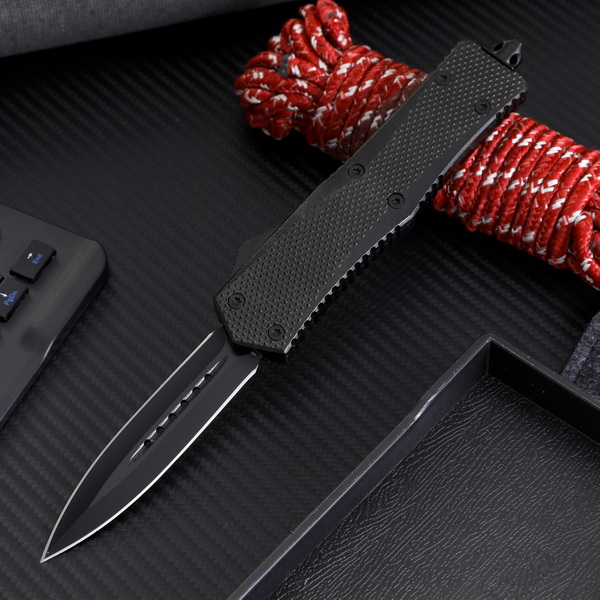
OTF pocket knives deploy the blade straight out of the handle front, while classic switchblades open from the side. This influences their speed and ergonomics, with OTF knives generally offering faster, more intuitive deployment.[4][1][2]
Yes. OTF pocket knives technically fall under the category of switchblades, as both are automatic knives. However, "switchblade" most commonly refers to side-opening models, while "OTF" specifies the out-the-front deployment style.[5][6][4]
Yes, provided you follow proper safety and maintenance practices. Double-action OTF knives with reliable locking mechanisms minimize the risk of accidental deployment. Regular cleaning and inspection will extend performance.[10][2]
OTF knives allow for instantaneous deployment and consistent grip, making them ideal for tactical, emergency, or multitasking scenarios. Their design is especially valued by law enforcement, military, and rescue personnel.[2][4]
Both OTF pocket knives and switchblades are subject to strict regulations; in many places, their possession and carrying are illegal or limited to certain professions or circumstances. Always verify your local laws to avoid penalties or confiscation.[6][1][4][5][2]
[1](https://www.vipertecknives.com/blogs/news/switchblade-vs-otf-knives-key-differences-and-which-to-choose)
[2](https://tacknivesusa.com/what-is-an-otf-knife-and-how-is-it-different-from-other-switchblades/)
[3](https://www.youtube.com/watch?v=-yOd5kC3Mak)
[4](https://www.tektoknives.com/blogs/news/understanding-different-types-of-switchblades)
[5](https://bladeops.com/blog/switchblade-vs-folding-knife-which-one-is-right-for-you/)
[6](https://knife-depot.com/pages/switchblade-vs-assisted-opening-knives)
[7](https://www.reddit.com/r/knives/comments/122n27w/honest_question_why_carry_an_auto_when_other/)
[8](https://www.youtube.com/shorts/-GNDY0764IU)
[9](https://en.wikipedia.org/wiki/Switchblade)
[10](https://swordsswords.com/blog/how-does-a-switchblade-knife-work/)


