
Views: 222 Author: Leah Publish Time: 2025-11-10 Origin: Site


Content Menu
● Understanding OTF Pocket Knives
>> What Defines an OTF Pocket Knife?
>>> OTF Mechanisms: Single vs Double Action
>> Key Characteristics and Use Cases
● Understanding Traditional Folding Knives
>> What Is a Traditional Folding Knife?
>> Iconic Designs and Patterns
>> Core Features and Usability
● Deployment: Speed and Accessibility
● Portability and Everyday Carry (EDC)
● Suitability for Specialized Use
● Collecting, Customization, and Aesthetics
● Choosing the Right Knife for You
● FAQ
>> 1. What is the primary advantage of an OTF Pocket Knife over a Traditional Folding Knife?
>> 2. Are OTF Pocket Knives legal everywhere?
>> 3. Which knife is easier to maintain?
>> 4. Do OTF knives have more risk of mechanical failure?
>> 5. Are traditional folding knives suitable for self-defense?
Choosing the ideal everyday carry knife or outdoor tool is a major decision, especially with so many innovative options available. Among the most debated choices are the OTF Pocket Knife (Out-The-Front) and the Traditional Folding Knife. Each offers distinct features, purposes, advantages, and drawbacks. This extended guide delivers a comprehensive head-to-head comparison, rich industry insights, and practical advice for enthusiasts, professionals, and anyone seeking the perfect blade for their needs.
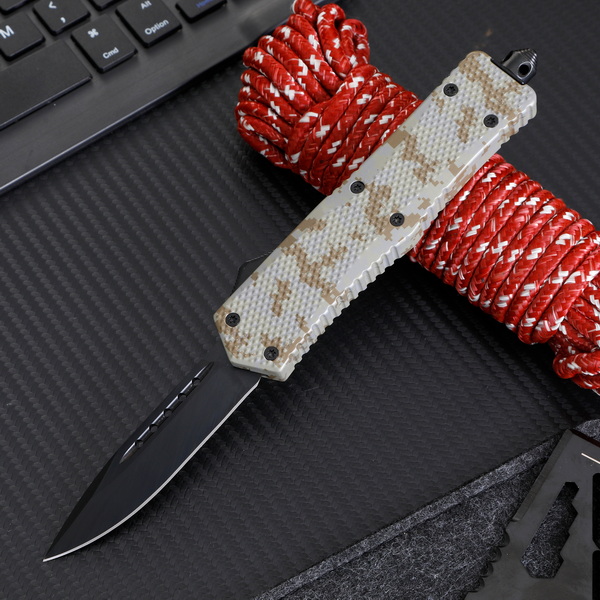
An OTF Pocket Knife is a modern automatic knife featuring a blade that deploys straight out the front of the handle via a button or switch. Unlike side-folding knives, the OTF's design specializes in quick, one-handed access, which has made it popular with tactical professionals, emergency responders, and knife enthusiasts alike.[3][9][10]
- Single-action OTFs: Deploy with a spring mechanism and must be manually reset.
- Double-action OTFs: Both deploy and retract at the push or slide of the same button, offering unparalleled convenience.[10][11]
- Instant deployment: The blade springs forward swiftly, ready for use in emergencies.
- One-handed operation: Useful in scenarios where only one hand is free.
- Secure lockup: Blade locks automatically for safety when open or closed.
- Streamlined build: Slim, modern profile suited to discreet everyday carry.
- Tactical readiness: Emphasized in law enforcement, rescue, or military applications due to speed and accessibility.[6][11][3]
A Traditional Folding Knife, often referred to as a pocket knife, features a blade or multiple blades that pivot out from the side of the handle, then lock (or not) in the open position. This time-tested tool has been a favorite for centuries, treasured for reliability and versatility.[12][13][14]
- Stockman: Recognized for its three-blade setup, valued for versatility.
- Trapper: Sported by outdoorsmen, typically features two different blades for variety.
- Barlow, Canoe, Congress: Each with a distinct silhouette and multi-use option.[14][15]
- Manual opening: Some use nail nicks or thumb studs. Others rely on modern one-handed opening mechanisms.
- Multiple blades: A single handle can house several blade shapes, multiplying potential uses.
- Classic construction: Natural handle materials (bone, wood) reflect history and craftsmanship.
- Everyday utility: Ideal for daily tasks, from opening boxes to whittling and food preparation.[13][15][14]
- Deployment action: Blade shoots out with a button press—faster than folding knives.[1][11][3]
- Grip retention: Maintains the same hold from closed to open, aiding rapid, controlled use.
- Tactical significance: Immediate readiness can mean the difference in stressful, urgent moments.
- Deployment action: Either requires two hands (classic slip joint) or, with more modern designs, one-handed opening via thumb stud or hole.[12][14]
- Grip transition: Typically requires minor adjustment upon opening, which may slightly delay readiness.
- Consistency: With practice, deployment can be swift, but usually not as quick as an OTF.
- Internal mechanisms: Springs and sliders can attract dirt, dust, and debris; regular cleaning is crucial for proper function.[7][1][3]
- Parts and wear: The sophisticated design means more moving parts subject to potential failure.
- Material innovation: Many OTFs are crafted from high-end steels, aluminum, or even carbon-reinforced components for longevity and toughness.[5]
- Simplicity: Fewer moving parts mean less can go wrong, and less maintenance is required.
- Wear points: The main source of degradation is pivot loosening or blade play over time.
- Restoration-friendly: Vintage folders are easier to restore or repair due to long-established part standards.
- Safety features: Blade locks in both open and closed positions, minimizing accidental opening.[1][3]
- Potential failures: Automatic mechanism can jam if dirty; careless operation can risk unintentional deployment, causing injury.[8][7]
- User discipline: Proper handling and regular maintenance mitigate risks.
- Locking options: Many offer a lock-back or liner-lock system, securing the blade during use.
- Beginner-friendly: Lower risk of accidental deployment makes these safer for new users.[3]
- Long-term security: Simple designs mean less unpredictability, contributing to consistent reliability.
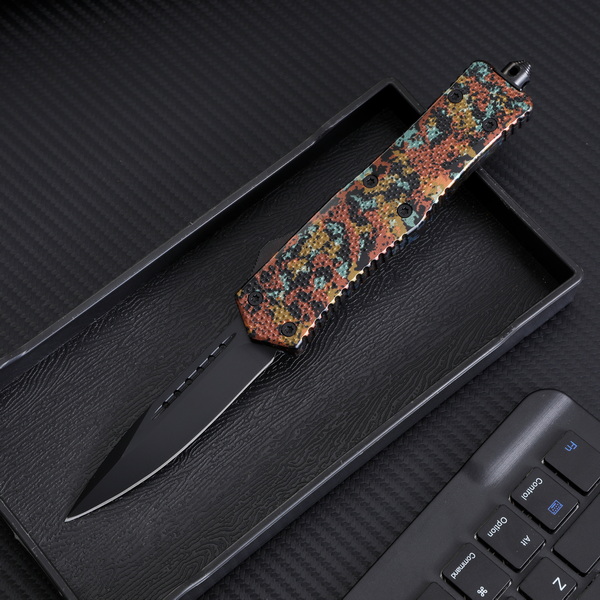
- Size and weight: Generally slim for easy carry, but slightly heavier than minimalist folding knives.
- Clip options: Typically include pocket clips for secure retention.
- Legal caution: In some regions, the very mechanism that makes an OTF desirable also leads to restrictions or outright bans—always check local regulations before carrying one.[16][3]
- Compact folding: Blades nest fully inside the handle, maximizing space efficiency.
- Wide assortment: Compact and ultra-light designs are available, as well as more substantial, multi-blade options.
- Wider acceptance: Legal in more jurisdictions, often exempt from automatic knife bans.
- OTF Pocket Knife: Higher purchase price attributed to complex engineering, robust spring mechanisms, and premium materials.[16][3]
- Traditional Folding Knife: Typically much more affordable; broad selection ranges from basic utility to collectible heirlooms.[14][3]
- OTF Pocket Knife: Favored among law enforcement, first responders, and military due to speed, ease of single-handed use, and secure blade lockup.[17][10]
- Traditional Folding Knife: Less suitable for immediate-response situations, but reliable for general field tasks and bushcraft.
- OTF Pocket Knife: Tough models can withstand rugged use, though internal mechanisms are less forgiving of mud, grit, or moisture.
- Traditional Folding Knife: Time-tested in outdoor settings, with proven durability and utility in hunting, fishing, and campcraft.[18][12][14]
- OTF Pocket Knife: Best for users desiring speed, modern design, and who are able to stay on top of simple maintenance.[10][3]
- Traditional Folding Knife: Optimal for those seeking an all-around performer for light to moderate daily needs, with minimal upkeep.[19][3]
- Collector's appeal: High-tech, innovative, and limited-edition runs attract modern knife collectors.[20][3]
- Customization: Many brands offer unique finishes, handle textures, and blade grinds for personalization.
- Heirloom status: Collectors cherish classic brands and models handed down through generations.
- Variety: Handle materials, bolster designs, and personalized engraving options abound, making each folder unique.
Selecting between an OTF Pocket Knife and a Traditional Folding Knife hinges on several key considerations:
- Purpose: Do you need rapid deployment for tactical/defensive situations, or a versatile tool for daily and outdoor use?
- Legal reality: Are there restrictions on automatic or OTF knives in your locality?
- Maintenance habits: Are you willing to maintain a more intricate mechanism, or do you prefer simplicity and basic care?
- Budget: Does your budget align with the premium price tag of quality OTF models, or the affordability of classic folders?
- Personal taste: Do you favor modern innovation and engineering, or time-honored tradition and history?
Both OTF Pocket Knives and Traditional Folding Knives present unique strengths and can serve as invaluable tools in their respective domains. The OTF Pocket Knife leads with its lightning-fast deployment and tactical sophistication, ideally suited for high-stakes situations where every second counts. The Traditional Folding Knife offers unmatched reliability, ease of maintenance, and timeless utility, earning its place as the trusted companion for countless outdoor enthusiasts and professionals. Ultimately, your choice will reflect your individual needs, style preferences, and the specific tasks at hand. Whichever you choose, a quality knife—matched to your requirements—will provide years of service and satisfaction.[2][5][6][7][1][3][10]
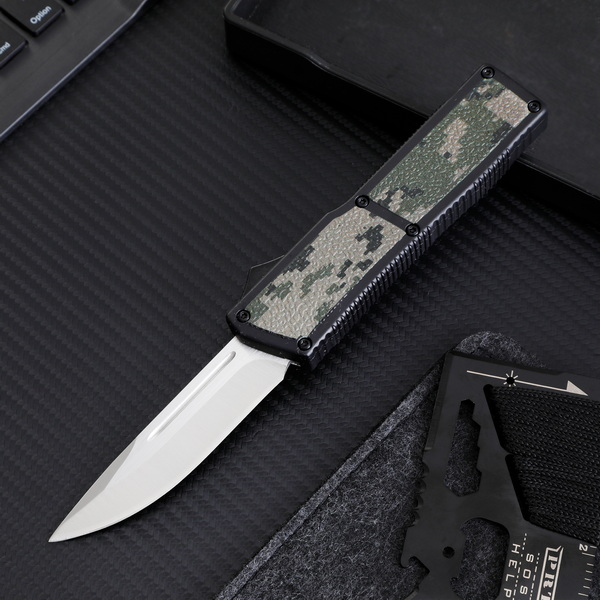
The OTF Pocket Knife offers ultra-fast, one-handed blade deployment with the push of a button, making it ideal for situations demanding speed and efficiency.[9][11][3]
No. OTF Pocket Knives face legal restrictions in many regions due to their automatic opening mechanism. Always check local knife laws before purchasing or carrying one.[3][16]
Traditional Folding Knives generally require less maintenance because they have simpler designs with fewer moving parts, while OTF knives need regular cleaning to keep their mechanism functioning smoothly.[7][8][1][3]
Yes. Their internal springs and sliders increase points of failure compared to the straightforward pivot design of most traditional folders.[8][7][3]
While some can be used for self-defense, their slower deployment makes them less optimal than OTF knives for quick-response scenarios. They excel, however, in day-to-day chores and outdoor tasks.[18][19][12][14][3]
[1](https://artisancutlery.net/blogs/knife-knowledge/otf-vs-folding-knives-comparison-guide)
[2](https://www.guns.com/news/otf-vs-folding-knives-for-daily-carry)
[3](https://louismartincustomknives.com/otf-knives-vs-folding-knives/)
[4](https://bladeops.com/blog/automatic-knife-vs-manual-folding-knife-which-is-right-for-you/)
[5](https://otfknivesoverview.weebly.com/blog/the-difference-between-otf-knives-and-folding-knives)
[6](https://tacknivesusa.com/otf-knives-vs-standard-pocket-knives-which-is-better/)
[7](https://www.reddit.com/r/knives/comments/12oftl8/people_who_edc_an_otf_why_people_who_dont_why_not/)
[8](https://www.bladeforums.com/threads/otf-auto-vs-manual-flipper-for-edc.1895899/)
[9](https://swordsswords.com/blog/otf-knives-how-they-work-and-why-theyre-so-popular/)
[10](https://bladeops.com/blog/the-advantages-and-disadvantages-of-otf-knives-in-tactical-settings/)
[11](https://www.youtube.com/watch?v=dkaA4wZeLdQ)
[12](https://www.bladehq.com/blog/traditional-knives-everything-you-need-to-know)
[13](https://www.bcknife.com/cutlery/folding/traditional/)
[14](https://smkw.com/knife-101-top-ten-traditional-folding-knives)
[15](https://www.knafs.com/pages/common-traditional-knife-patterns)
[16](https://bladeops.com/knives/out-the-front/)
[17](https://nobliecustomknives.com/what-is-an-otf-knife-and-how-does-an-otf-knife-work/)
[18](https://www.knivesillustrated.com/folding-knives-just-like-grandpa-carried/)
[19](https://www.youtube.com/watch?v=H1_WO9PGbJ0)
[20](https://ravencresttactical.com)


