
Views: 222 Author: Leah Publish Time: 2025-11-02 Origin: Site


Content Menu
● Knife Fundamentals for Outdoor Survival
>> Core knife roles in the field
>> OTF knife basics (with emphasis on Tactical OTF Knives)
● Real-World Performance Scenarios
>> Shelter construction and fire prep
>> Water collection, trail maintenance, and debris handling
>> Rescue, signaling, and emergency use
>> Maintenance, reliability, and field endurance
● Ergonomics, Weight, and Portability
● Materials, Build Quality, and Longevity
>> Blade steels and heat treatment
>> Legal landscape for blade ownership and carrying
● OEM Opportunities and Market Positioning
>> Why Tactical OTF Knives deserve a place in outdoor survival lines
>> Product strategy for overseas brands
>> Quality assurance and supply chain considerations
● Buying Guide for Buyers and Brand Partners
>> How to choose between Tactical OTF Knives and fixed blades for outdoor survival kits
● Care, Maintenance, and Field Repair
>> Cleaning and lubrication basics
>> Sharpening and edge maintenance
● FAQ
>> 1) What are the primary differences between Tactical OTF Knives and fixed blades?
>> 2) Which type of knife is more durable in rugged outdoor use?
>> 3) Are OTF knives legal to carry everywhere?
>> 4) What are the advantages of OTF knives in tactical situations?
>> 5) Can tactical knives be used for everyday carry?
Outdoor survival demands reliable, efficient tools capable of handling a broad spectrum of tasks—from shelter building and fire prep to rescue operations and field repairs. Among the most debated categories are Tactical OTF Knives and fixed blade knives. Each category offers distinct strengths, trade-offs, and ideal use cases. This article delves into how Tactical OTF Knives compare to fixed blades in real-world outdoor scenarios, with practical guidance for brand partners, wholesalers, and manufacturers pursuing OEM collaborations for overseas markets. The discussion emphasizes how Tactical OTF Knives can fit into a comprehensive survival toolkit, while still acknowledging the enduring value of well-designed fixed blades.
- Cutting, slicing, and baton work
- Prying, notch creation, and cordage work
- Carving, feathering, and shelter construction
- Strength and stability from full tang construction
- Simpler maintenance with fewer moving parts
- Broad blade geometries suitable for heavy-duty tasks
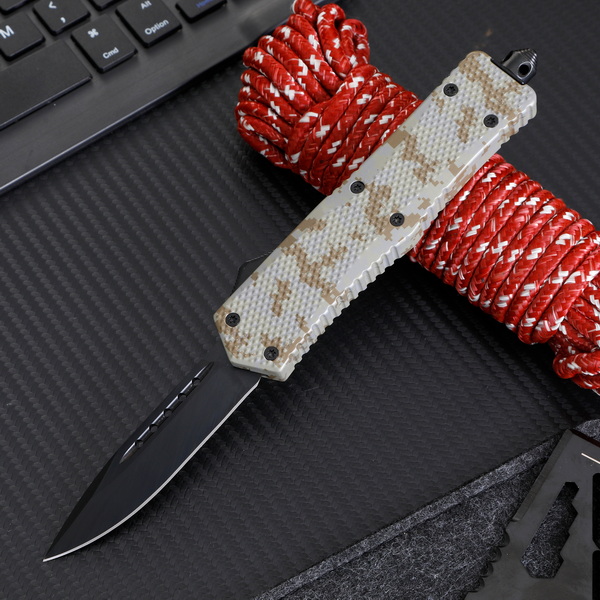
- Out-the-front deployment enables rapid single-handed blade extension
- Compact form factor and quick access for emergency cuts
- Key considerations: mechanism reliability, contamination resistance, edge geometry, and maintenance cadence
- In rugged field use, fixed blades often excel at heavy-duty tasks requiring strength, while Tactical OTF Knives shine in rapid deployment and constrained environments. The most versatile field kits blend both types strategically.
- Fixed blades typically excel at heavy-duty tasks such as batoning wood, notch creation, and lagging fire boards due to toughness and consistent edge geometry. A well-designed fixed blade with a robust steel and full tang can sustain extended use without overheating or deformation.
- Tactical OTF Knives contribute rapid cutting actions for kindling prep and quick material removal in tight spaces, especially when paired with a robust sheath and ergonomic guard design.
- The fixed blade's durability supports sustained leverage and prying actions.
- OTF options offer rapid edge access for trimming, rope work, or clearing light obstructions in time-sensitive moments.
- Certain fixed blades include serrations or specialized tip profiles useful for rescue tasks or rope work.
- Tactical OTF Knives enable one-handed deployment in evacuations or rescue tasks where speed matters; for complex tool work, however, a fixed blade often remains the backbone.
- Fixed blades present a mechanically simple design with fewer failure points, translating to high reliability in harsh environments.
- OTF mechanisms introduce moving parts that may be susceptible to dirt, sand, or moisture. Selecting proven models with robust sealing, reliable actuation, and cleanability is essential for field longevity.
- Fixed blades generally offer larger handle surfaces and full-tang rigidity, enabling powerful cuts with reduced hand fatigue.
- OTF knives emphasize compactness and one-handed operation, with handle scales that balance grip security and deployment ease.
- Heavy-duty fixed blades add mass but gain inertia for demanding tasks; lighter fixed blades trade some durability for portability.
- OTF knives are typically lighter for a given blade length, aiding carry comfort on long treks or strict weight budgets.
- Fixed blades commonly use sheath systems attached to belts, packs, or modular platforms.
- OTF blades benefit from clips or neck-knife configurations but require attention to blade length, lock protection, and safe storage to prevent accidental deployment.
- The choice of blade steel influences edge life, corrosion resistance, and maintenance cadence. For Tactical OTF Knives, steel selection should align with reliable deployment, edge retention, and field sharpening practicality.
- Fixed blades frequently use G-10, Micarta, or textured metals to ensure grip stability in wet or sweaty conditions.
- OTF knives require ergonomic handling around the deployment mechanism, with attention to finger guards, balance, and actuation comfort.
- Durable coatings reduce corrosion and friction, extending service life in outdoor environments.
- Maintenance routines—cleaning, lubrication, inspection—are essential for both categories, though OTF mechanisms demand extra attention to the deployment track and locking mechanism.
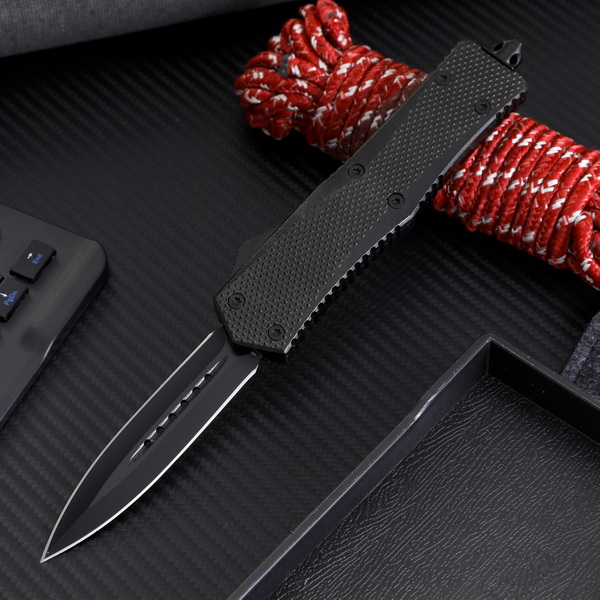
- Laws governing blade length, open versus concealed carry, and automatic/assisted-opening mechanisms vary by jurisdiction. OEM partners should supply compliance guidance for distributors in target markets.
- Publishing safe-handling guidelines and user education materials protects brands and reduces risk.
- Emphasize safety-first design, reliability, and responsible marketing that avoids sensational claims about self-defense capabilities.
- Rapid deployment and compact form factors appeal to urban hikers, emergency responders, and field operatives who require quick blade access.
- Fixed blades remain essential for rugged field use, helping establish a durability-focused reputation.
- Implement a tiered lineup: entry-level fixed-blade models for broad markets and premium OTF knives for specialized segments.
- Prioritize materials, finish quality, and after-sales support to differentiate in competitive markets.
- Consistent blade geometry, heat treatment, and tolerances are critical to brand reputation.
- Documentation for OEM partners should include material certifications, testing protocols, and warranty coverage details.
- Define mission profiles: rescue-focused tasks versus heavy-duty fieldwork
- Consider environment: desert, rainforest, alpine, or urban edge
- Prioritize reliability, ease of maintenance, and deployment speed
- Feature spotlight recommendations
- For Tactical OTF Knives: blade steel, deployment speed, lock strength, sealing, and blade geometry versatility
- For fixed blades: tang integrity, blade geometry, sheath security, and ergonomics
- A well-rounded outdoor survival kit often blends both knife types, leveraging each category's strengths to cover a broad field-task spectrum.
- For Fixed Blades: regular tang inspection, pivot cleaning if applicable, and rust prevention
- For OTF Knives: safe disassembly where allowed, cleaning the track, lubrication of moving parts, and inspection of the locking mechanism
- Establish a sharpening routine aligned with blade steel and grind type
- Maintain edge retention through proper bevel angles and consistent honing
The choice between Tactical OTF Knives and fixed blade knives for outdoor survival should not be viewed as a binary decision. Each category brings complementary strengths that, when combined thoughtfully, yield a versatile survival toolkit. For brand partners and OEM buyers, a balanced lineup that leverages Tactical OTF Knives for rapid deployment and fixed blades for rugged, heavy-duty work can unlock broader market appeal and satisfy diverse customer needs. By prioritizing robust materials, proven mechanisms, responsible marketing, and compliant manufacturing practices, a knife portfolio can serve overseas brands and wholesalers with confidence, durability, and outstanding value.
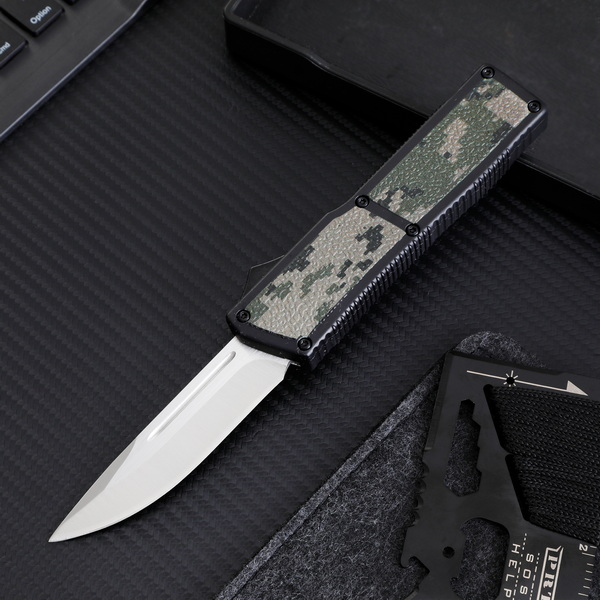
- Tactical OTF Knives deploy the blade automatically from the handle with a push of a button, enabling rapid one-handed use, while fixed blades are solid, non-folding tools known for durability and strength.[4][5]
- Fixed blades typically offer greater structural rigidity and fewer moving parts, contributing to long-term durability under heavy-duty tasks. OTF knives depend on the quality of the mechanism and seal, and durability can vary by model.[1][5]
- Legal restrictions vary by jurisdiction, with some places regulating automatic-opening or assisted-opening mechanisms and blade length. Always verify local laws before distribution or sale.[2][1]
- Quick deployment, compact form factor, and one-handed operation can be crucial in fast-moving or constrained environments, providing rapid edge access when time is critical.[7][1]
- Yes, many tactical knives are designed with features suitable for everyday carry, but considerations include size, weight, and legal compliance in the user's region.[3][6]
[1](https://bladeops.com/blog/pros-and-cons-of-otf-knives-for-tactical-operations/)
[2](https://www.58hrcknives.com/otf-knife-vs-fixed-blade-which-one-fits-your-lifestyle-better.html)
[3](https://www.58hrcknives.com/how-a-heavy-duty-otf-knife-compares-to-a-fixed-blade-knife.html)
[4](https://ravencresttactical.com/tactical-knives-vs-fixed-blade-knives-a-comprehensive-comparison/)
[5](https://ravencresttactical.com/fixed-blade-vs-out-the-front-tactical-knives/)
[6](https://www.svegaoutdoor.com/fixed-blades-vs-automatic-knives-which-offers-more-control.html)
[7](https://www.youtube.com/watch?v=rYCxMqrgSrc)
[8](https://artisancutlery.net/blogs/knife-knowledge/otf-vs-folding-knives-comparison-guide)
[9](https://www.reddit.com/r/knives/comments/122n27w/honest_question_why_carry_an_auto_when_other/)


