
Views: 222 Author: Leah Publish Time: 2025-11-11 Origin: Site


Content Menu
● Introduction: OTF Pocket Knives at a Glance
● Technical Engineering: Blade Carrier and Track System
● Handle Construction and Ergonomics
● Pocket Clip, Concealment, and Portability
● Action Types: Single vs. Double-Action OTF Knives
● Size and Blade Length Considerations
● OEM and Customization for the Global Market
● Applications: Tactical, EDC, Outdoor Survival
● Maintenance and Care Recommendations
● Choosing the Right OTF Pocket Knife
● Legal and Export Considerations
● Summary
● FAQ
>> 1. What is the difference between single-action and double-action OTF knives?
>> 2. Which blade steel is best for OTF pocket knives?
>> 3. How should I maintain my OTF pocket knife?
>> 4. Can OTF pocket knives be customized for OEM branding?
>> 5. Are OTF pocket knives legal worldwide?
OTF (Out-The-Front) pocket knives are distinctive for their blade deployment system, offering users fast, one-handed access with a sleek, tactical aesthetic. For overseas brands, wholesalers, and manufacturers interested in top-tier OEM services, understanding the anatomy and advantages of quality OTF pocket knives is crucial for success. This comprehensive guide explores critical features, technical details, and buyer considerations—ensuring you select or produce only the best OTF pocket knives for your business or market.
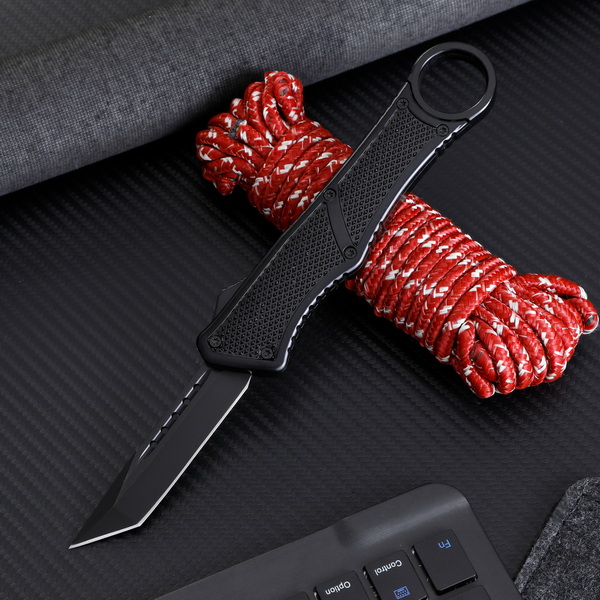
OTF pocket knives are automatic knives whose blades extend outward from the front of the handle using a spring-loaded mechanism, as opposed to folding or side-opening knives. This innovative design allows for rapid deployment with a button or slider, streamlining everyday, tactical, and emergency scenarios.
A quality OTF pocket knife's value begins with its blade deployment, which relies on a carefully calibrated spring system. High-carbon steel springs are favored for their durability and optimal tension, ensuring reliable, powerful deployment across thousands of cycles. When the user presses the activation button or slide, the spring releases and propels the blade out of the handle.
For double-action OTF knives, a single actuator both deploys and retracts the blade, offering unmatched convenience for frequent use. Single-action variants automatically deploy with the button but require manual resetting for closure, resulting in a simpler, often more robust mechanism.[4][5][6]
Precision engineering defines premium OTF pocket knives. The blade travels on a carrier attached to precisely machined tracks or channels inside the handle. This internal system prevents friction, binding, or blade misalignment—ensuring smooth, secure operation even in tactical environments.
Locking mechanisms vary:
- Ball-bearing locks engage the blade carrier using spring-loaded steel balls.
- Mechanical locks rely on interlocking machined parts, offering strong and reliable blade security.
- Friction locks use surface friction to hold the blade but are more common in simpler models.[1]
Blade quality sets elite OTF knives apart. Renowned steels such as CPM-S30V, M390, D2, VG-10, and 8Cr13MoV are favored for edge retention, corrosion resistance, and exceptional performance. Premium offerings may include Damascus, S35VN, or CTS-204P for collector-grade knives.[1]
Blade profile affects cutting capability and intended use:
- Drop Point: General utility and tip strength for everyday cutting.
- Tanto: Angular tip, strong for piercing and tactical situations.
- Dagger/Spear Point: Double-edged and symmetrical, designed for penetration—often facing stricter legal regulation.
- Straight, Serrated, or Partially Serrated Edges: Choose according to need—clean slicing, rope work, or mixed cutting tasks.[2][1]
Handle material determines grip security, weight, and aesthetics.
- Aluminum: Lightweight, durable, corrosion-resistant, available in diverse finishes.
- Carbon Fiber: Ultra-light and visually unique; may lack grip security when wet.
- G10/Composites: Tough, textured materials for superior grip, popular in tactical knives.
- Steel: Substantial, extremely durable, but heavier for EDC.[1]
Ergonomics matter—choose a handle that fits comfortably in hand, with strategic texturing and non-slip surfaces for challenging environments. Size selection (mini, medium, or large) influences portability and suitability for daily, tactical, or heavy-duty jobs.[2]
A dependable pocket clip allows for discreet, secure carry. Low-profile, reversible designs accommodate left- or right-handed users, while specialized clips enhance comfort and retention during movement. For EDC, mini and medium OTF pocket knives offer balanced function and concealability, with blade lengths between 2 and 3.5 inches recommended for legality and practical use.[2][1]
Excellent OTF pocket knives integrate robust safety features. Blade locks prevent misfires and accidental deployment. Glass breakers may be included for emergency use. Modern designs feature spring-tension safety switches and blade stops that require a manual reset if obstructed—bolstering reliability and user safety under pressure.[7]
- Single-action: Deploy the blade automatically but require manual closure. Mechanically simpler and often more robust for challenging conditions.
- Double-action: Deploy and retract the blade automatically with a single slide—ideal for rapid, one-handed operation and professional use.[3][4]
Choose based on intended function, frequency of use, and legal or cost considerations.
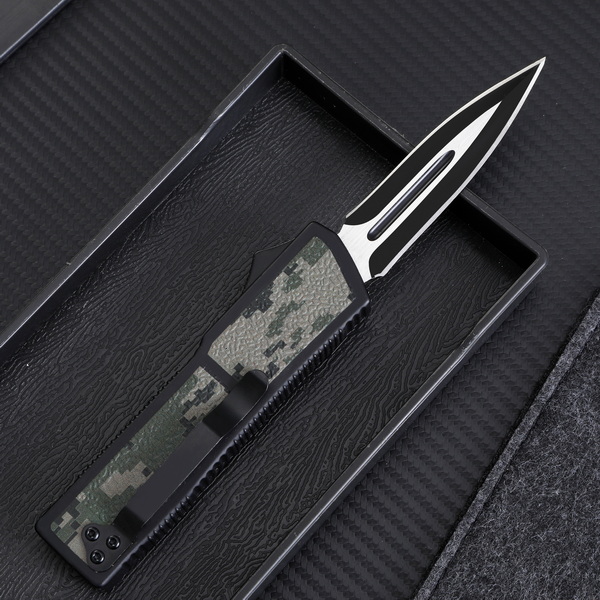
Blade length impacts use and legal compliance.
- 3–3.5 inch blades: Balance utility and legal carry—effective for most cutting tasks.[1]
- 3.5–4 inch blades: Suitable for demanding professional, tactical, or heavy-duty roles—may face restrictions in some regions.
- Over 4 inches: Reserved for collectors or specialized users; face practical and legal limitations.[2][1]
Chinese OTF pocket knife factories, notably in Yangjiang, excel at OEM and custom manufacturing. These advanced facilities offer:
- CNC precision machining for tight tolerances
- Steel and handle customization (D2, Damascus, G10, titanium, aluminum)
- Branding, coating, packaging, and engraving options
- Low minimum order quantities, rapid production, and international certifications
- Comprehensive logistic support for global brands and wholesalers
This flexibility enables overseas clients to tailor products for specific market segments while maintaining competitive pricing and quality.[11]
- Tactical/Professional: Reliable deployment, blade strength, and secure lockup for law enforcement, emergency, and military personnel.
- EDC (Everyday Carry): Compact, lightweight models suit daily use—opening packages, quick repairs, and emergency scenarios.
- Outdoor/Survival: Rugged construction, high-grade steel, and secure grip for demanding situations such as camping, hiking, or rescue missions.
Proper maintenance preserves performance and safety:
1. Regular Cleaning: Use a mild detergent and soft brush for blade and handle.
2. Lubrication: Apply knife oil to deployment mechanisms and moving parts.
3. Inspection: Check blade lockup and safety features. Replace worn or damaged components.
4. Sharpening: Match sharpening tool to blade material and edge profile.
Following these steps ensures consistent performance and longevity for any OTF pocket knife.[1]
Consider the following checklist when buying or specifying an OTF knife:
- Top-grade blade steel and suitable edge type
- Ergonomic and non-slip handle material
- Reliable deployment and secure lockup
- Action type preference (single or double)
- Appropriate blade length for your region/use
- OEM customization capabilities for branding and design
- Strong warranty and manufacturer reputation
Proactively matching these criteria to client needs, target markets, and regulatory environments sets your OEM offerings apart and fosters long-term success.
Laws about automatic knives and blade length vary widely, both internationally and regionally. Always verify regulations before purchasing or importing OTF pocket knives, as some markets impose restrictions based on blade length, mechanism type, or intended use.[4][2]
OTF pocket knives represent a fusion of engineering, convenience, and tactical utility. Superior models combine premium blade materials, robust handle construction, smooth deployment, and strict safety features for an exceptional user experience. Chinese manufacturers provide extensive OEM options, allowing overseas partners to create market-specific products with speed and reliability. Attention to technical detail and buyer needs ensures every OTF pocket knife stands up to demanding standards as both a practical tool and collectible item.
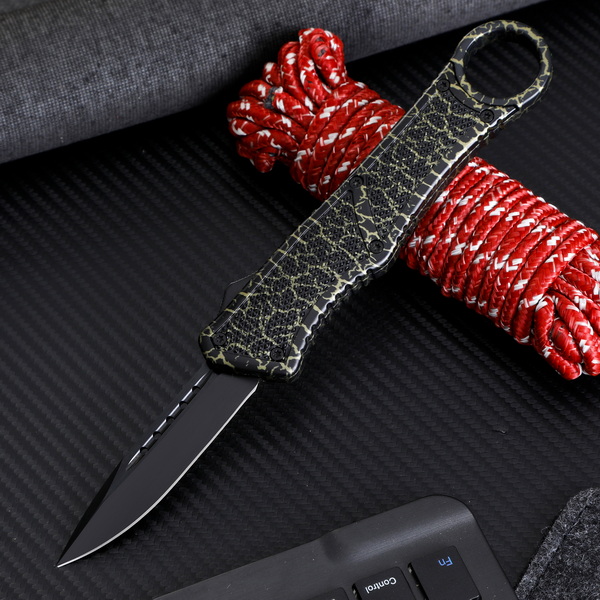
Single-action OTF knives deploy blades automatically but require manual retraction, whereas double-action knives deploy and retract with a single slide—offering faster, one-handed operation.[3][4]
Premium steels (M390, CPM-S30V, S35VN, D2) offer the best edge retention, corrosion resistance, and overall durability—though standard steels like 8Cr13MoV remain cost-effective.[1]
Regularly clean, lubricate moving parts, sharpen the blade according to steel type, and inspect safety features to ensure reliable performance.[1]
Yes—leading factories offer full customization, including blade material, handle options, coatings, branding, and packaging for specific client needs.[11]
Legal status varies by region; always check local laws for automatic knives and blade lengths before purchasing or importing.[4][2]
[1](https://knife-depot.com/blogs/sharpened-values/otf-knives-explained-the-complete-guide)
[2](https://tacknivesusa.com/what-is-an-otf-knife-and-how-is-it-different-from-other-switchblades/)
[3](https://bladeops.com/blog/otf-knife-buyers-guide/)
[4](https://www.selfdefensesupply.com/otf-knives-guide)
[5](https://nobliecustomknives.com/what-is-an-otf-knife-and-how-does-an-otf-knife-work/)
[6](https://uppercuttactical.com/blogs/news/how-does-an-otf-knife-work)
[7](https://ravencresttactical.com/otf-knife-buyers-guide/)
[8](https://www.tektoknives.com/blogs/news/a-buyers-guide-to-automatic-knives)
[9](https://www.stunster.com/blog/the-ultimate-guide-to-otf-out-the-front-knives/)
[10](https://www.youtube.com/watch?v=WN8PDfEbZw4)
[11](https://www.58hrcknives.com/top-10-custom-otf-knives-manufacturers-in-china.html)


