
Views: 222 Author: Leah Publish Time: 2025-10-27 Origin: Site


Content Menu
● Heavy-Duty OTF Knives: An Overview
● Japanese Knife Manufacturing Heritage
>> The Roots of Japanese Blade-Making
● Japanese Knife Manufacturing Techniques
>> Forging, Quenching, and Layering
● Heavy-Duty OTF Knife Manufacturers and Suppliers in Japan
● What Sets Japanese OTF Knife Makers Apart
● OEM and Customization Opportunities
>> Services for Overseas Clients
● Materials and Quality Control
>> Steel Blends, Handles, and Mechanisms
● Popular Knife Styles and Applications
● Collaboration and Partnership: International Brand Success Stories
● FAQ
>> Q1. What is a heavy-duty OTF knife and what makes it unique?
>> Q2. How do Japanese manufacturers ensure the quality of heavy-duty OTF knives?
>> Q3. What kind of customization is available from Japanese OEM suppliers?
>> Q4. How do Japanese OTF knives compare to Western brands?
>> Q5. What types of buyers and industries typically source heavy-duty OTF knives from Japan?
Japan stands as a premier hub in the world of knife manufacturing, renowned for its mastery in blending advanced metallurgy, centuries-old smithing traditions, and modern automation. In recent years, Japanese makers have moved from classical kitchen cutlery into tactical arenas, designing and producing sophisticated heavy-duty OTF (out-the-front) knives for law enforcement, outdoor adventurers, emergency responders, and international OEM clients. Brands, wholesalers, and producers across the globe seek Japanese Heavy-Duty OTF Knife Manufacturers and Suppliers for their ability to deliver high-performance knives with unrivaled quality, precision, and customizability.[19]
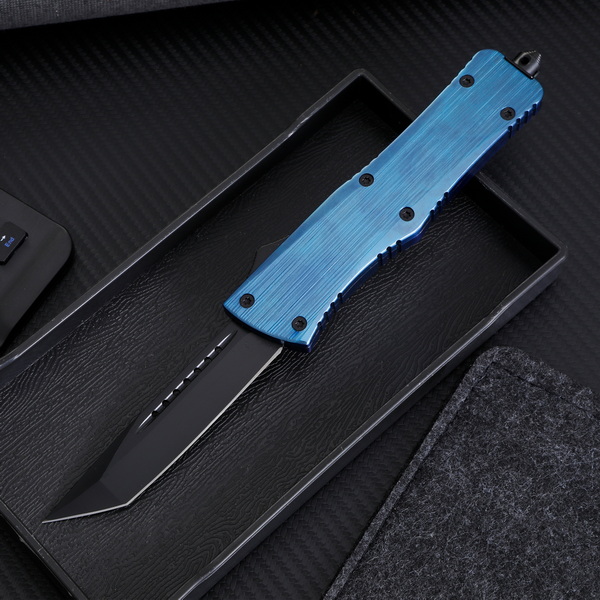
Heavy-duty OTF knives are characterized by blades that deploy straight out of the handle via a spring-driven mechanism activated by a button or lever. This allows for rapid one-handed access—an essential feature in critical, high-pressure situations. Unlike folding knives, OTF knives offer fast deployment and secure blade locking, making them popular in tactical, rescue, and demanding outdoor applications. Japanese brands prioritize blade precision, mechanical reliability, safety features, and structural integrity in these knives, making them a hallmark of robust design and engineering.[19]
Japan's reputation for knife-making excellence traces back hundreds of years to the sword-smithing houses of Seki, Sakai, and Tsubame Sanjo. Techniques handed down from samurai sword makers have influenced modern knife production, ensuring a soul of artistry remains even as robotic and CNC technologies enter the factories. Hallmarks of Japanese knife companies include:
- Elite metallurgy and multi-layer steel forging
- Detail-oriented quality inspection and hand-finishing
- Cross-disciplinary innovation integrating tradition and modern engineering[20][19]
Japanese knives are produced using methods perfected over centuries, with artisans employing both traditional and innovative techniques:
- Forge welding: Carbon steel for the edge is combined with dead soft iron, yielding a blade with exceptional hardness and flexibility.[1][7]
- Heat treatment: After forming, blades are heated to over 1000°C, then quenched in water and tempered for a fine balance of tenacity and hardness. Pine charcoal is tradition in this process.[7][1]
- Layered steel: Multi-layer blades (e.g., Damascus steel) merge ornamental beauty with enhanced cutting performance. Core molding and hammering ensure even layers and core strength.[3]
The result is a knife that is sharp, resilient, and imbued with the signature purity and performance demanded by professionals.
Takahashikusu is renowned for seamlessly merging Western and Japanese knife traditions. Their facility in Sakai not only produces premium kitchen knives but also specializes in modern OTF knives available for OEM partnerships. Advanced CNC automation works alongside skilled hand-finishing to create blades that meet extensive custom specifications, delivering fully tailored OTF knives to global buyers.[19]
An iconic enterprise rooted in over 600 years of blade art, Sakai Takayuki manufactures a vast array of knives, from kitchen to tactical. They are recognized for studio-finished Damascus steel models and for offering collaborative development processes for clients seeking unique OTF knives. OEM projects are welcome, and the company participates in design co-creation for wholesalers and brands worldwide.[20]
Kanetsune, based in Seki City, is celebrated for its hand-forged blades and mastery in combining classic Japanese profiles with modern ergonomics. Their heavy-duty OTF lineup benefits from robust spring systems and versatile blade designs tailored to international standards. OEM flexibility is a prime selling point, with options for blade geometry, steel choice, and handle finishes to suit brand needs.[21]
Specializing in hammer-forged blades, Toyokuni offers authenticity and customization for clients desiring the essence of Japanese craftsmanship in tactical knives. With OEM programs, buyers can choose among a variety of handle materials, blade forms, and personalized engravings to create a product that speaks to their market's demands.
Seki Kanetsugu is famous for its innovative VG10 Damascus steel knives, holding a reputation for producing blades that excel in professional settings. Their OEM services allow brands to select from layered steel options, cutting-edge geometries, and sophisticated finishes, making them a preferred partner for international buyers seeking precision-made heavy-duty OTF knives.[22]
Japanese OTF knife manufacturers distinguish themselves in several key areas:
- Sharpness and edge retention: Proprietary steel blends (VG-10, AUS-8, Damascus) ensure lasting performance and easy maintenance.[19]
- Elegant and ergonomic design: The fusion of traditional minimalist forms with modern utility yields knives that are both visually appealing and highly functional.
- Meticulous craftsmanship: Attention to every detail—from grind to pivot assembly to spring calibration—translates into knives that inspire confidence under any condition.
In contrast, leading global OTF makers like Microtech or Benchmade typically emphasize aggressive tactical styling, mass production, and mechanical innovation. Japanese manufacturers stand out by delivering a refined balance of artistry, sharpness, and reliability.
Japanese knife companies offer robust OEM/ODM services tailored for international wholesalers and brands:
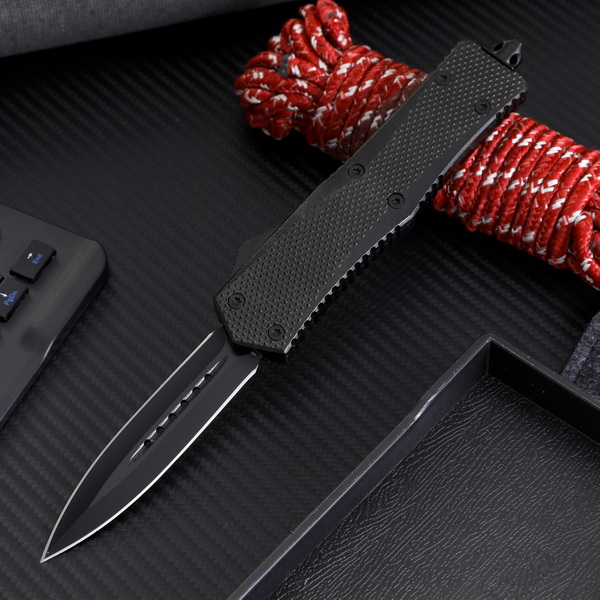
- Custom blade profiles: tanto, drop-point, spear-point, and more
- Material selection: premium steels, titanium, G10 composite, carbon fiber
- Branding: laser-engraved logos, personalized packaging, exclusive designs
- Production scaling: flexible batch sizes, prototype development, rigorous reliability testing
Brands seeking unique, high-performance heavy-duty OTF knives can collaborate with Japanese manufacturers to achieve distinctive solutions supported by Japan's hallmark quality control and innovative spirit.[19]
Japanese heavy-duty OTF knives incorporate:
- VG10 Stainless Steel: Chosen for its high hardness, edge retention, and corrosion resistance
- AUS-8 Steel: Noted for affordability, sharpness, and ease of maintenance
- Damascus Steel: Valued for its aesthetic charm and layered durability
Handles feature aluminum, titanium for strength, and G10 for maximum grip in adverse conditions. Every knife faces detailed inspections covering blade deployment, lock integrity, and ergonomic comfort.
OTF knives from Japanese suppliers feature:
- Tanto blades: Precision for piercing, reinforced points
- Drop-point blades: All-purpose use—slicing and cutting versatility
- Spear-point blades: Balanced shape for tactical users
Handles often include knurled aluminum for grip, stonewashed titanium for elegance, and G10 overlays for safety.
Key users include:
- Military and police: Demanding resilience and quick deployment
- Outdoor enthusiasts: Camping, hiking, rescue scenarios
- Tradespersons: Emergency and utility applications
- Everyday carry: Compact, reliable self-defense and survival tools[19]
Japanese manufacturers regularly cooperate with international brands—offering everything from design consulting and material selection to small-scale prototype batches and scalable full production. Success hinges on open communication, respect for Japanese craftsmanship, and the ability to match local market preferences with authentic Japanese quality.
Brands and wholesalers interested in new product lines benefit from direct technical support, samples, process transparency, and ready access to premium Japanese materials. Every step—from sketch to finished sample—can be tailored, making Japanese companies some of the most sought-after OEM knife suppliers in the world.
Japan's heavy-duty OTF knife manufacturers and suppliers stand at the intersection of tradition, innovation, and excellence. For overseas partners, choosing a Japanese OEM means securing blades that combine remarkable steel quality, safety, and beauty with reliable, precision engineering. Whether destined for tactical, outdoor, or professional use, Japanese OTF knives provide an enduring edge—literally and figuratively. Their blend of artistry, technological innovation, and dedicated customer support ensures a level of service and product that few global competitors can match.[19]
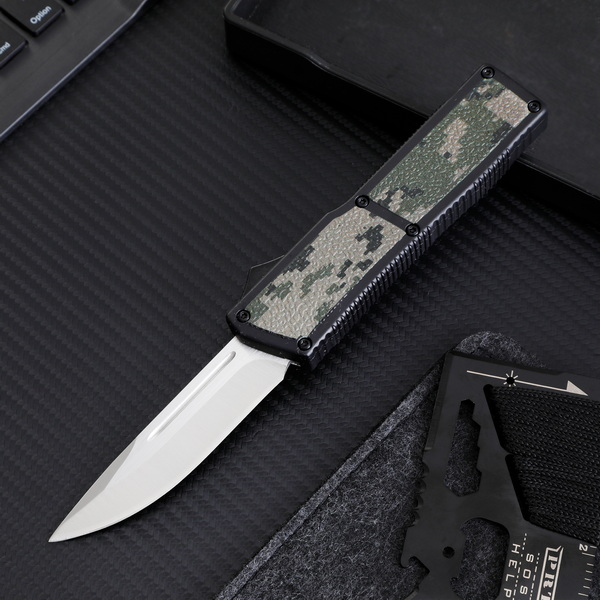
A heavy-duty OTF knife features rapid blade deployment via a spring mechanism for instant access, making it essential for tactical, survival, and professional use.[19]
Japanese knife makers rely on high-grade steels (like VG10, AUS-8) and rigorous craftsmanship and testing, blending centuries-old traditions with modern engineering to achieve durable, reliable knives.
Clients can select blade profiles, steels, handle materials, and receive laser engraved branding. Packages, colors, and deployment mechanisms are all customizable based on brand needs.
While global knives focus on tactical styling and mass production, Japanese OTF knives distinguish themselves by balancing reliability, artistic design, and elite steel performance.
Military, law enforcement, outdoor sports companies, survival gear brands, and professional trades source blades from Japan due to unmatched sharpness, strength, and service.
[1](https://takahashikusu.co.jp/en/sakai-knife-process/)
[2](https://www.youtube.com/watch?v=tbbky_RwFyc)
[3](https://www.koiknives.com/blogs/japanese-knives/japanese-layered-steel-and-other-knife-making-techniques)
[4](https://japan-knives.com/blogs/steel-life/construction-of-japanese-blades)
[5](https://www.echefknife.com/blogs/blog/the-japanese-knife-making-process)
[6](https://www.cnblogs.com/apachecn/p/18367456)
[7](https://oishya.com/journal/how-to-take-care-of-your-japanese-kitchen-knives-what-to-do-to-avoid-rust/)
[8](https://aclanthology.org/2019.rocling-1.pdf)
[9](https://global.ichimonji.co.jp/it/blogs/a-craftsmans-eyes-view/how-japanese-knives-are-made)
[10](https://bis.zju.edu.cn/binfo/textbook/supply/%E8%AF%BE%E7%A8%8B%E5%AD%A6%E4%B9%A0%E7%AC%94%E8%AE%B0%E7%AC%AC%E5%9B%9B%E7%89%88.pdf)
[11](https://knifewear.com/en-us/blogs/articles/knife-knowledge-basics-layered-steel)
[12](https://blog.csdn.net/weixin_45406712/article/details/123973340)
[13](https://elementknife.com/pages/forging-techniques-and-processes)
[14](https://dl.icdst.org/pdfs/files3/65dbb6c7e514faa57970de225f463355.pdf)
[15](https://www.processon.com/view/66652ddb58a2f04e369a721b)
[16](https://www.jyvtc.edu.cn/sxzx/1013395/1013404/1014383/2025070411263345874.pdf)
[17](https://hzaubionlp.com/wp-content/uploads/2021/12/book_dmbinding2021.pdf)
[18](https://www.scribd.com/document/890864714/%E7%BB%99%E4%BA%A7%E5%93%81%E7%BB%8F%E7%90%86%E8%AE%B2%E6%8A%80%E6%9C%AF)
[19](https://www.58hrcknives.com/top-automatic-otf-knife-manufacturers-and-suppliers-in-japan.html)
[20](https://www.58hrcknives.com/top-blades-manufacturers-and-suppliers-in-japan.html)
[21](https://www.kanetsune.com)
[22](https://japanese-knife-store.com/brands/makers.html)


