
Views: 222 Author: Leah Publish Time: 2025-11-22 Origin: Site


Content Menu
● What Is a Tactical OTF Knife?
● A Brief History of OTF Knives in Europe
● Why Tactical OTF Knives Are So Popular
● Core Engineering of Tactical OTF Knives
>> Precision Materials and Blades
>> Manufacturing Process and Tolerances
● Leading Tactical OTF Knives Manufacturers and Suppliers in Europe
>> Italian and Central European Makers
● OEM and Customization Options in Europe
● Cooperation Between European Brands and Chinese OEM Factories
>> Advantages of Chinese OEM Production
● Legal and Compliance Considerations in Europe
● How to Choose a Tactical OTF Knives Supplier
● Best Practices for Overseas Brands and Wholesalers
● FAQ
>> 1. What makes a Tactical OTF knife different from a regular folding knife?
>> 2. Are Tactical OTF knives legal to sell and own in Europe?
>> 3. Why do high-end OTF knives use steels like D2, M390, or S35VN?
>> 4. How do European brands work with Chinese OEM factories on OTF knives?
>> 5. What should an overseas brand check before choosing an OTF knife supplier?
Tactical OTF (Out The Front) knives have become essential tools for military personnel, law enforcement officers, outdoor professionals, and serious knife collectors in Europe and around the world. These compact, fast-deploying knives combine precision engineering, durable materials, and advanced mechanisms that allow the blade to extend and retract straight out of the handle for rapid, one-handed use.[4][5]
This article explores key tactical OTF knives manufacturers and suppliers in Europe, how they engineer their products, and how overseas brands and wholesalers can cooperate with both European and Chinese OEM factories to build highly competitive tactical knife lines. It also offers practical guidance for importers and private-label brands looking for reliable partners in the global tactical knife supply chain.[5]
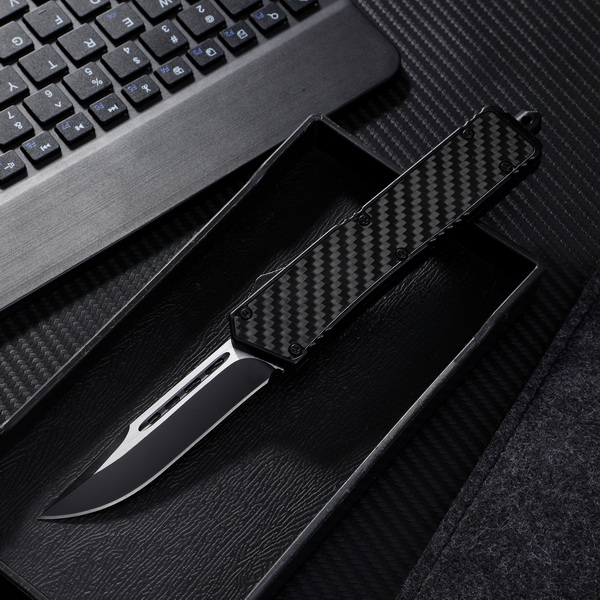
A Tactical OTF knife is an automatic knife in which the blade travels linearly along an internal track and exits through an opening at the front of the handle. Unlike side-opening folders, OTF knives rely on an internal mechanism—typically a spring-loaded slider or button—that both deploys and, in double-action designs, retracts the blade.[5]
Common tactical OTF configurations include:
- Single-action OTF: Blade deploys automatically by activating the trigger, but must be manually retracted after use.[5]
- Double-action OTF: The same control deploys and retracts the blade, enabling extremely fast, repeatable operation favored in tactical and rescue settings.[5]
High-end Tactical OTF Knives Manufacturers and Suppliers focus on tight tolerances in the blade channel, firing spring, and lock interface to ensure smooth deployment with minimal blade play.[5]
Europe played a crucial role in the early development of automatic and OTF-style knives. German craftsmen in Solingen produced some of the earliest precision automatic knives, including gravity-operated tools for paratroopers that could be used one-handed in emergencies.[4]
Italy also contributed heavily through stiletto-style automatic knives, many of which inspired modern OTF profiles. Over time, these traditions evolved into today's Tactical OTF Knives Manufacturers and Suppliers, who now combine heritage forging skills with CNC machining, powder metallurgy, and advanced coatings.[4][5]
Modern tactical users demand tools that are compact, fast, and reliable under stress, which is exactly where OTF knives excel. European and global buyers gravitate toward tactical OTF knives for several reasons:[5]
- Rapid one-handed access: The front-deploying blade is ideal when one hand is occupied with gear, ropes, or firearms.[5]
- Compact form factor: OTF knives fit easily into pockets, MOLLE pouches, or vests while keeping overall length manageable.[7]
- Professional-grade materials: Premium steels and high-strength handles provide dependable performance in harsh conditions.[5]
As a result, Tactical OTF Knives Manufacturers and Suppliers serve a wide spectrum of users, from police units and security contractors to rescue teams, hikers, and collectors.[5]
Top Tactical OTF Knives Manufacturers and Suppliers typically choose high-performance steels such as D2, Bohler M390, CPM S35VN, and similar alloy systems for their blades. These steels balance hardness, edge retention, corrosion resistance, and toughness—critical attributes for tactical and outdoor use.[5]
Handle materials are equally important. Leading suppliers use:
- Aircraft-grade aluminum for light weight and strength
- Titanium for premium, corrosion-resistant builds
- Stainless steel and G10 for rugged, cost-effective frames
- Carbon fiber on higher-end or collector models[5]
This combination allows manufacturers to tailor knives to different price segments and usage profiles.[5]
Producing a reliable OTF knife is significantly more complex than making a simple folding knife, because the internal channel, springs, and lock geometry must all work flawlessly together. Common steps in a high-end OTF production line include:[5]
1. Material preparation: Cutting premium blade steel and bar stocks for handles, followed by deburring and surface inspection.[5]
2. CNC machining: Multi-axis CNC mills create the internal blade tracks, spring cavities, and guide features in the handle, often holding tolerances around 0.001 inch.[5]
3. Heat treatment: Blades are heat-treated and tempered to specific hardness targets, then precision ground and finished to achieve a stable, sharp edge.[3][5]
4. Component finishing: Handles are deburred, anodized, coated, or textured, while internal parts such as firing springs and sliders are produced from corrosion-resistant alloys.[5]
5. Assembly and testing: Each knife is assembled, tested for deployment speed, lock-up, blade play, and safety, often with multiple inspection stages before packaging.[7][5]
This level of detail is one of the reasons why Tactical OTF Knives Manufacturers and Suppliers in Europe enjoy strong reputations among enthusiasts and professionals.[5]
Germany—especially the Solingen region—has a centuries-long legacy of knife and blade production. Today, German Tactical OTF Knives Manufacturers and Suppliers combine that tradition with modern CNC systems, surface treatments, and advanced steels.[5]
Key characteristics of German OTF makers include:
- Extensive use of D2, M390, and S35VN steels for high hardness and edge life
- Aircraft-grade aluminum and titanium handles
- Strict, multi-stage quality control for fit, finish, and deployment reliability[5]
German suppliers often specialize in:
- Tactical and law-enforcement-focused OTF models
- Limited runs and collector variants
- OEM branding, including logo engraving, color schemes, and packaging for overseas partners[5]
Italy, particularly the Maniago region, remains another major hub for innovative tactical designs, including OTF knives with strong aesthetic appeal. Italian manufacturers often blend slim, aggressive profiles with modern blade steels and ergonomic handles to target both professional and enthusiast markets.[4]
Central European brands, such as those in the Czech Republic, are gaining recognition for minimalist, functional tactical OTF designs that emphasize weight reduction and clean lines. These suppliers typically focus on European distribution but are increasingly open to OEM collaboration and export.[5]
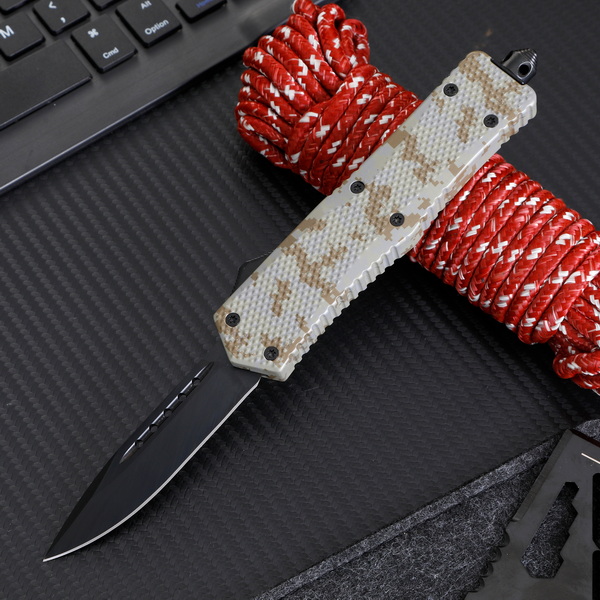
Many Tactical OTF Knives Manufacturers and Suppliers in Europe support robust OEM and private-label services for overseas brands, wholesalers, and importers. Typical customization capabilities include:[5]
- Blade customization: Unique profiles, partial serrations, or special finishes (stonewash, satin, DLC, etc.).[5]
- Handle innovation: Custom handle materials, grip textures, milling patterns, and anodized colors.[5]
- Branding and packaging: Laser-engraved logos, serialized editions, branded boxes, and documentation tuned to the client's market.[5]
- Compliance-oriented variants: Blade length or mechanism adjustments tailored to specific national regulations.[5]
These OEM services are especially valuable for foreign brands that want the prestige of European engineering combined with a unique visual identity.[5]
To balance cost, scale, and design, many Tactical OTF Knives Manufacturers and Suppliers in Europe cooperate with specialized Chinese OEM factories. Chinese manufacturing centers, including well-known knife clusters, offer advanced CNC machining, automated polishing, and efficient assembly lines that can support large production volumes.[3][5]
European brands and trading companies that work with Chinese OEM partners often benefit from:
- Cost-effective volume production while maintaining strict specifications supplied by European designers.[5]
- Rapid prototyping cycles using modern EDM, CNC, and laser equipment.[3][5]
- Flexible MOQs that serve both large wholesalers and growing niche brands.
- Integrated logistics and export services aligned with European compliance and documentation needs.[5]
In practice, many successful product lines are developed through a hybrid model: design and positioning by European Tactical OTF Knives Manufacturers and Suppliers, plus scaling and partial component manufacturing via Chinese OEM factories.[5]
Automatic and OTF knives are subject to varying legal frameworks across European countries. In some nations, OTF knives are restricted to military, police, or licensed users, while in others they are allowed for collection or professional use but may be prohibited from everyday carry.[5]
Responsible Tactical OTF Knives Manufacturers and Suppliers support buyers by:
- Providing documentation on steel composition, mechanism type, and blade length
- Offering “compliance-tuned” models with specific blade lengths or deployment systems
- Emphasizing export to markets where OTF knives are legal, particularly for tactical, rescue, and collection purposes[5]
Importers should always confirm local laws and, if necessary, cooperate with legal advisors before introducing OTF models into a new market.[5]
Selecting the right Tactical OTF Knives Manufacturers and Suppliers is critical for building a reliable, profitable product line. When evaluating potential partners, consider the following criteria:[5]
1. Engineering capability
- Ask about CNC machinery, tolerances, heat-treatment processes, and QA systems.[5]
- Confirm experience specifically with OTF mechanisms, not just standard folders.[5]
2. Material transparency
- Request detailed specifications for blade steels and handle materials.
- Look for suppliers that regularly use high-performance alloys such as D2, M390, or S35VN.[5]
3. Quality control and testing
- Inquire about deployment-cycle testing, corrosion tests, and final inspection protocols.[7][5]
- Check whether the supplier can support third-party audits or factory visits.
4. OEM/ODM flexibility
- Evaluate whether the manufacturer can implement custom designs, unique colorways, or special packaging for your brand.[5]
- Review sample projects or references from previous OEM clients.
5. Communication and lead times
- Reliable suppliers provide clear lead-time estimates, responsive communication, and structured after-sales support.[5]
A strong supplier relationship is built on clear technical specifications, realistic timelines, and mutual commitment to long-term cooperation.[5]
For foreign brands working with Tactical OTF Knives Manufacturers and Suppliers in Europe and China, several best practices help minimize risk and maximize quality.[5]
- Start with engineering samples: Evaluate fit, finish, deployment, and edge performance before confirming mass production.
- Define clear specifications: Provide detailed drawings, material requirements, tolerance ranges, and functional goals.
- Plan for regulatory compliance: Align blade dimensions and features with target-market laws and document everything clearly.[5]
- Use staged orders: Begin with smaller batches to validate demand and production consistency, then scale up.
- Focus on differentiation: Combine distinctive aesthetics, branding, and value-added packaging to stand out in a competitive market.[5]
By combining European design leadership with efficient OEM production, overseas brands can build strong tactical OTF portfolios that appeal to professionals and enthusiasts alike.[5]
Tactical OTF knives occupy a highly specialized but rapidly growing niche in the global knife industry, especially in Europe, where historical craftsmanship meets cutting-edge engineering. Leading Tactical OTF Knives Manufacturers and Suppliers leverage premium steels, precision CNC machining, and rigorous quality control to produce reliable, fast-deploying tools for tactical, rescue, and outdoor applications.[7][4][5]
At the same time, strategic collaboration with Chinese OEM factories allows European and overseas brands to scale production, access modern manufacturing technologies, and maintain competitive pricing without sacrificing performance. For foreign brands, wholesalers, and OEM clients, success in this sector depends on selecting capable partners, defining clear specifications, and paying close attention to legal frameworks and end-user needs.[3][5]
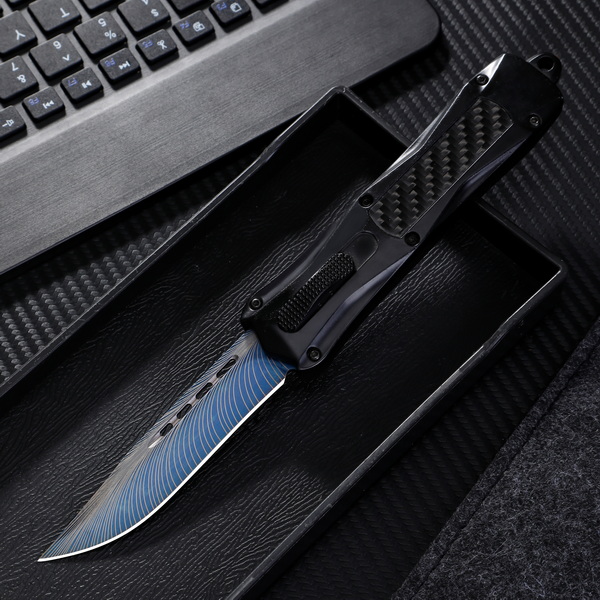
A Tactical OTF knife deploys its blade straight out through the front of the handle using a spring-assisted or automatic mechanism, while a regular folder pivots the blade out from the side. OTF designs are optimized for one-handed, rapid access in tactical or emergency situations.[5]
Laws vary by country, with some jurisdictions heavily restricting automatic and OTF knives, especially for everyday carry in public. Many European manufacturers focus on export markets and collection or professional use, and they often offer compliance-tuned versions to meet specific national rules.[5]
These steels offer an excellent balance of hardness, edge retention, and corrosion resistance, which is essential for tactical and outdoor use. Tactical OTF Knives Manufacturers and Suppliers rely on such alloys to ensure blades remain sharp and durable even under demanding conditions.[5]
Typically, European or overseas brands provide designs, specifications, and quality standards, while specialized Chinese OEM factories handle CNC machining, component production, and large-scale assembly. Finished knives are then inspected and branded to match the client's requirements and target-market regulations.[3][5]
Key factors include the supplier's experience with OTF mechanisms, material transparency, quality-control systems, OEM customization capabilities, and understanding of export and legal requirements. Requesting engineering samples and conducting factory audits are effective ways to verify that Tactical OTF Knives Manufacturers and Suppliers can meet long-term expectations.[5]
[1](https://www.58hrcknives.com/how-tactical-otf-knives-are-engineered-for-high-performance-tasks.html)
[2](https://www.youtube.com/watch?v=EwG2oytZCl8)
[3](https://eknives.com/blog/reate-knives-manufacturing-process-in-depth-look)
[4](https://bladeops.com/blog/the-history-of-otf-knives-from-military-tool-to-everyday-essential/)
[5](https://www.58hrcknives.com/top-otf-knife-manufacturers-and-suppliers-in-germany.html)
[6](https://wusthof.com/pages/production)
[7](https://www.knifestock.eu/microtech-tactical-otf-knives-made-of-the-best-materials-a85)
[8](https://www.shieldon.net/pt/the-production-process-of-a-folding-knife/)
[9](https://www.youtube.com/watch?v=T2xd9RlRUQU)
[10](https://www.tacticalsportinggoods.com/blogs/news/why-venom-usa-otf-knives-are-dominating-the-market-a-closer-look-at-their-popularity)


