
Views: 222 Author: Leah Publish Time: 2025-11-23 Origin: Site


Content Menu
● What Are Tactical OTF Knives?
● Why OTF Knives Are Popular in Russia
● Overview of Russian Tactical Knife Brands
● The Role of Chinese OEM Factories in the Russian Market
● Key Features of High‑Quality Tactical OTF Knives
>> Blade Materials and Geometry
>> Handle Construction and Ergonomics
>> Deployment Mechanism and Safety
● Typical OEM Cooperation Process for Tactical OTF Knives
● Quality Control in Tactical OTF Knife Production
● Legal and Regulatory Considerations in Russia
● How Russian Brands Can Position Their OTF Knife Lines
● How to Evaluate and Choose a Tactical OTF OEM Partner
● Trends Shaping the Tactical OTF Knife Market
● Building Long‑Term Cooperation Between Russia and Overseas OEMs
● FAQ
>> 1. What makes a tactical OTF knife different from a regular folding knife?
>> 2. Are tactical OTF knives suitable for outdoor and survival use in Russia?
>> 5. How can a brand ensure consistent quality across large orders of tactical OTF knives?
Tactical OTF (Out The Front) knives have become a core product category for many military, outdoor, and everyday carry brands in Russia. For international buyers, wholesalers, and private label brands, understanding the ecosystem of tactical OTF knives manufacturers and suppliers is essential to building profitable, long-term business lines in this niche.
The following in-depth guide explains how the Russian tactical knife market works, how overseas OEM factories (especially in China) support Russian brands, what makes a premium tactical OTF knife, and how to select the right manufacturing partner.
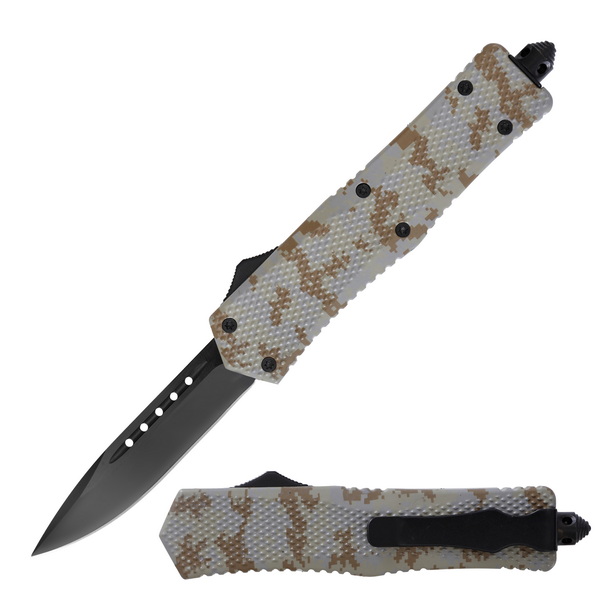
Tactical OTF knives are automatic knives in which the blade slides straight out of the front of the handle instead of folding out from the side. This linear deployment is typically powered by a spring mechanism and controlled by a thumb slide or button, allowing quick, one‑handed operation in stressful or emergency situations.
Unlike simple utility knives, tactical OTF knives are engineered to perform in harsh conditions. They are used for:
- Military and law enforcement operations
- Survival and bushcraft tasks
- Rescue, first-aid, and emergency response
- Everyday carry (EDC) for users who demand fast deployment and reliability
Because of these demanding applications, Tactical OTF Knives Manufacturers and Suppliers must pay close attention to engineering tolerance, steel performance, safety mechanisms, and overall ergonomic design.
Russia has a long tradition of hunting, outdoor sports, and military culture, which naturally supports strong demand for high‑performance blades. A growing number of Russian brands and retailers have started to expand their tactical product lines with modern OTF models.
Key reasons for the popularity of tactical OTF knives in the Russian market include:
- Vast outdoor environment: Russia's forests, mountains, and remote regions require dependable tools for survival, hunting, and camping.
- Military and security use: Armed forces and private security personnel value OTF knives for quick deployment and compact size.
- Rise of EDC culture: Urban and suburban users appreciate compact tactical tools that are both functional and stylish.
- Specialized collectors' market: Limited‑edition tactical OTF knives with unique finishes and engravings appeal to collectors.
As a result, Russian importers actively seek experienced Tactical OTF Knives Manufacturers and Suppliers who can offer OEM and ODM services at scale.
Although much of the volume production is done abroad, Russia does have its own respected tactical and outdoor knife brands. These companies often design their knives domestically, then collaborate with overseas Tactical OTF Knives Manufacturers and Suppliers for OEM production, or mix local and imported components.
Examples of well‑known Russian knife brands and producers include:
- Kizlyar Supreme – Known for robust outdoor and tactical knives that combine modern materials with traditional Russian styling.
- N.C. Custom – Focuses on contemporary, urban, and tactical designs, often experimenting with new forms and materials.
- Melita‑K – Supplies knives and tools aimed at professional and defense users, with an emphasis on durability.
- Zlatoust producers – The Zlatoust region is historically associated with metallurgy and blade craftsmanship; many companies there produce both collector and working knives.
These brands and workshops help shape consumer expectations in Russia and are potential customers or partners for global Tactical OTF Knives Manufacturers and Suppliers who offer OEM services.
China has become a world center for the production of knives, including tactical OTF models. Advanced machine tools, experienced engineers, and efficient labor costs allow Chinese factories to support foreign brands with competitive pricing and stable quality.
For Russian brands, distributors, and wholesalers, partnering with a Chinese OEM factory offers several advantages:
- Cost‑effective mass production: Large‑scale manufacturing reduces per‑unit costs while maintaining consistent quality.
- Flexible customization: Customers can specify blade shape, steel type, handle material, surface finish, logo, and packaging.
- Stable supply chains: Mature logistics networks handle regular shipments to Russia and other markets.
- Technical support: Many Tactical OTF Knives Manufacturers and Suppliers have in‑house R&D teams to help optimize designs for function and manufacturability.
- Brand privacy: OEM agreements allow Russian companies to sell products under their own brand with exclusive specifications.
For a Chinese tactical knife factory that targets OEM business, Russia is an attractive market with strong demand for high‑quality, mid‑to‑high‑end tactical OTF knives.
To stand out in the marketplace, Tactical OTF Knives Manufacturers and Suppliers must focus on the functional and aesthetic elements that define a premium product. When designing or sourcing tactical OTF knives for Russian buyers, these features matter most:
The blade is the heart of any tactical knife. Typical steels used by reputable manufacturers include:
- D2 tool steel – High wear resistance and good edge retention, popular for tactical applications.
- 440C stainless steel – Cost‑effective and corrosion‑resistant, suitable for general outdoor use.
- CPM series and other powder steels – Higher‑end steels like S35VN, M390, or similar grades (depending on supplier capabilities) can be offered for premium models.
In addition to the steel grade, edge geometry and grind type affect cutting performance:
- Flat or hollow grinds for sharp slicing performance.
- Saber or convex grinds for durability and impact resistance in survival conditions.
- Tanto or drop‑point profiles tailored for piercing vs. general use.
A serious Tactical OTF Knives Manufacturer and Supplier will work closely with the client to match steel and grind to the target user group.
The handle must be both strong and comfortable, especially for extended use in cold or wet environments, which are common in Russia. Popular materials include:
- 6061‑T6 or 7075 aluminum – Lightweight, strong, and easily anodized in various colors.
- G10 fiberglass laminate – Excellent grip, weather resistance, and impact strength.
- Titanium or steel – Used for high‑end or specialized models.
Design details that add value:
- Textured or knurled surfaces for better grip with gloves.
- Finger grooves and ergonomic profiles to prevent slippage.
- Lanyard holes, glass breakers, and clips for tactical or rescue use.
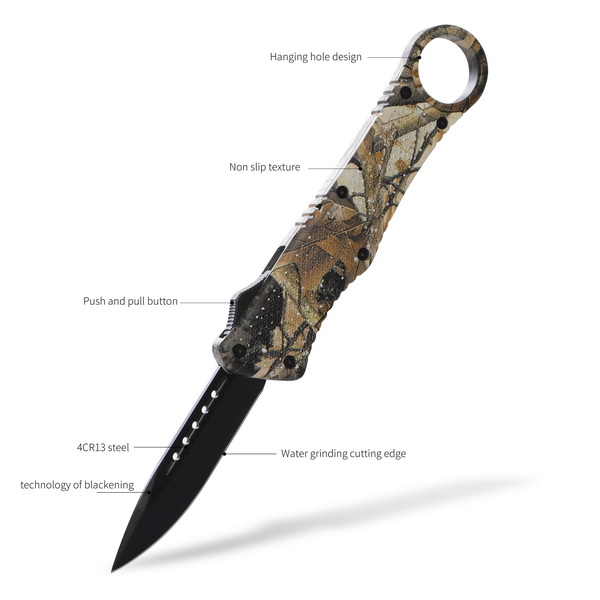
The defining feature of an OTF knife is the spring‑driven deployment system. There are two main types:
- Single‑action OTF – The spring deploys the blade; the user manually retracts it.
- Double‑action OTF – The same control (slide or button) deploys and retracts the blade using internal spring mechanisms.
Quality Tactical OTF Knives Manufacturers and Suppliers pay close attention to:
- Precision of internal tracks and components.
- Reliability of springs over thousands of cycles.
- Safety locks that prevent accidental deployment in pockets or during carry.
Small errors in machining tolerances can cause misfires, blade play, or failure to lock properly, which is why reliable manufacturing partners invest in advanced CNC equipment and multiple inspection stages.
For Russian brands or importers collaborating with a Chinese tactical knife factory, the OEM process usually follows a clear, step‑by‑step path:
1. Inquiry and Requirements
The customer shares intended use, target market (e.g., military, EDC, collectors), desired quantity, budget range, and any reference products.
2. Design and Technical Confirmation
- The client provides sketches, 3D files, or sample knives.
- The Tactical OTF Knives Manufacturer and Supplier proposes blade steel, hardness, handle material, and mechanism type.
- Safety, legal length limits, and branding positions are discussed.
3. Quotation and Contract
After confirming specifications, the factory offers a price, minimum order quantity (MOQ), tooling costs if any, and a production lead time. OEM agreements often include terms on confidentiality and intellectual property.
4. Prototyping
Sample knives are produced to validate appearance, ergonomics, deployment speed, lock stability, and finish. At this stage, small adjustments can be made to dimensions, springs, or grip texture.
5. Mass Production
Once the prototype is approved, the factory starts batch production. This typically involves:
- CNC machining of blades and handles
- Heat treatment and hardness testing
- Surface finishing (stonewash, satin, coating, anodizing, etc.)
- Assembly and functional testing
6. Quality Control and Packaging
Each batch is checked for:
- Deployment and retraction reliability
- Blade centering and lockup
- Overall fit and finish
Knives are then packed in custom boxes, pouches, or gift packaging with the client's logo.
7. Shipping and After‑Sales Support
The factory helps arrange freight forwarding, and reputable suppliers provide after‑sales solutions for defects, warranty issues, or repeat orders.
Because tactical OTF knives contain many moving parts, strict quality control is essential. Professional Tactical OTF Knives Manufacturers and Suppliers typically employ:
- Incoming material inspection – Verifying steel certificates, hardness of springs, and consistency of handle blanks.
- In‑process checks – Measuring critical dimensions on blades, handles, and internal components to keep tolerances within microns.
- Functional testing – Repeated deployment and retraction of each knife to confirm smooth action and positive lockup.
- Edge and surface checks – Ensuring correct sharpening angle, clean grinds, and uniform coating or anodizing.
For Russian buyers who care deeply about brand reputation, a partner with documented quality systems and inspection records is a major asset.
Tactical OTF knives occupy a gray area in many legal systems because of their automatic deployment. While regulations in Russia can evolve, brands and importers should generally consider:
- Blade length limits – Some jurisdictions may impose restrictions on automatic knives over a certain length.
- Intended use classification – Knives classified as weapons may require additional paperwork or cannot be sold as civilian goods.
- Marking and documentation – Clear marking of steel type, manufacturer, and model can support customs clearance and regulatory checks.
For safety and compliance, Russian companies should consult local laws and ensure that the Tactical OTF Knives Manufacturers and Suppliers they work with are willing to adjust designs (e.g., blade length, deployment strength, locking style) to meet local requirements.
With the support of experienced OEM partners, Russian brands can position their tactical OTF knives toward different market segments:
- Professional and military users
Focus on ruggedness, reliable action in extreme conditions, and practicality over decoration. Choose robust steels and conservative designs.
- Outdoor and survival enthusiasts
Highlight corrosion resistance, multi‑function features (glass breaker, cord cutter), and secure ergonomic grips suitable for gloved hands.
- Urban EDC and lifestyle customers
Emphasize compact size, stylish color options, sleek clips, and premium finishes.
- Collectors and limited editions
Offer serialized production runs, special coatings, laser engraving (e.g., Russian motifs or unit logos), and high‑end steels.
A strong partnership with Tactical OTF Knives Manufacturers and Suppliers allows Russian companies to release multiple series that cover different price points and user groups without the need to invest heavily in their own production facilities.
For foreign buyers and Russian brands new to the category, choosing the right Tactical OTF Knives Manufacturer and Supplier can seem challenging. The following criteria can help:
1. Experience and Specialization
Look for factories with a clear track record in tactical and OTF knives, not just general cutlery. Specialized experience reduces design risk and ensures smoother development.
2. Production Equipment and Processes
Ask about CNC machining centers, heat treatment equipment, and finishing lines. Advanced machinery supports tighter tolerances and better consistency.
3. Sample Quality
Order samples and check:
- Blade play (horizontal and vertical)
- Deployment speed and smoothness
- Lock security and safety switch operation
- Sharpness, edge symmetry, and centering
4. Communication and Service
Rapid, clear communication about technical details, problems, and solutions is crucial. Efficient sampling and willingness to modify designs show that the manufacturer values the partnership.
5. Certifications and Compliance
ISO or similar systems indicate that quality management processes are in place. Also check if the factory is familiar with export documentation and customs requirements for Russia.
6. Price vs. Value
The lowest price is rarely the best long‑term choice in tactical categories. A fair price combined with stable quality, low defect rates, and professional service will usually deliver higher profit and fewer headaches.
The market for tactical OTF knives continues to evolve as materials, manufacturing processes, and user preferences change. Key trends include:
- Advanced blade steels
More brands are willing to pay for upgraded steels to market “premium” tactical OTF models. OEM factories that can source and process these steels gain a competitive advantage.
- Lightweight and compact designs
Urban users and EDC enthusiasts increasingly prefer thin, light OTF knives that disappear in a pocket but remain instantly accessible.
- Improved safety features
Double‑lock systems, safety sliders, and redesigned internals reduce accidental deployment and make knives more acceptable to regulators and consumers.
- Customization and personalization
Laser engraving, color‑matched hardware, and modular handle scales allow brands to offer limited runs without altering the core mechanics of the knife.
- Sustainability awareness
Eco‑conscious manufacturing, waste reduction, and responsible sourcing of materials are becoming part of the marketing message for forward‑thinking Tactical OTF Knives Manufacturers and Suppliers.
For Russian companies, developing a stable tactical product line is not a one‑time purchase; it is an ongoing relationship with a capable OEM partner. Success in this field is based on:
- Trust and transparency – Clear discussions about pricing, quality targets, and technical limitations.
- Joint product planning – Aligning product launches with market trends, seasonal demand, and trade shows.
- Continuous improvement – Regularly collecting feedback from end users, then working with the manufacturer to improve ergonomics, finishes, or materials.
By choosing a reliable Tactical OTF Knives Manufacturer and Supplier, Russian brands, wholesalers, and distributors can expand their tactical product ranges while focusing internal resources on marketing, sales channels, and brand building.
Tactical OTF knives have gained strong momentum in the Russian market thanks to their rapid deployment, compact size, and suitability for both professional and outdoor environments. Local brands and importers increasingly rely on experienced international Tactical OTF Knives Manufacturers and Suppliers—especially OEM factories in China—to deliver high‑quality products that match Russian user expectations and legal frameworks.
By understanding blade materials, handle ergonomics, deployment mechanisms, quality control, and the structure of OEM cooperation, Russian companies can confidently develop complete tactical OTF knife lines under their own brands. Careful selection of a manufacturing partner, combined with a clear marketing strategy, will help them stand out in a competitive, fast‑growing segment.
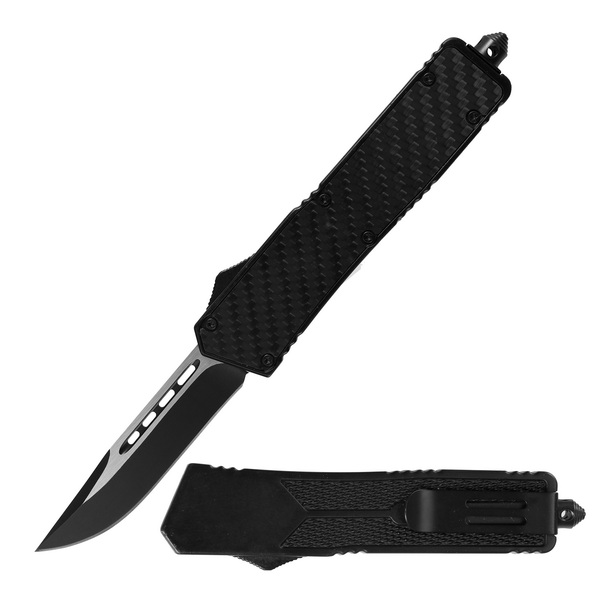
A tactical OTF knife deploys its blade straight out the front of the handle using an internal spring and a control switch, allowing much faster, one‑handed opening. In contrast, a regular folding knife usually pivots open from the side and may require two hands or more time to deploy. This speed and simplicity make OTF knives especially suitable for tactical, rescue, and self‑defense applications.
Yes. Many OTF models are designed with corrosion‑resistant steels, robust handles, and reliable mechanisms that perform well in cold, wet, or muddy conditions commonly found in Russian terrain. For survival use, it is important to choose models with durable blade steels, secure locks, and ergonomically designed handles that can be controlled with gloves.
Typically, the brand first defines its target market and product requirements, then contacts a suitable OEM factory to share drawings, reference samples, or detailed specifications. After the manufacturer evaluates the project, they will provide a quotation, timeline, and suggestions for materials and structure. Once prototypes are approved, mass production begins under a formal agreement that covers quality standards, intellectual property, and delivery terms.
Wholesalers should evaluate the manufacturer's experience with OTF mechanisms, the quality of sample products, the stability of lead times, and the transparency of pricing. It is also important to check whether the factory can offer different steel grades, handle materials, and finishes so that the wholesaler can supply multiple segments of the market, from entry‑level to premium tactical products.
Brands should work only with manufacturers that have clear quality control systems, including incoming material inspection, precision machining, multi‑stage functional testing, and final product checks. Establishing agreed‑upon specifications—such as hardness range, maximum blade play, and deployment smoothness—helps both sides measure quality objectively. Regular feedback and batch inspections further ensure that every shipment maintains the expected performance and reliability.
[1](https://www.58hrcknives.com/how-tactical-otf-knives-are-engineered-for-high-performance-tasks.html)
[2](https://takcom.com/the-precision-engineering-that-goes-into-a-premium-otf-knife/)
[3](https://eknives.com/blog/microtech-knives-manufacturing-process/)
[4](https://www.youtube.com/watch?v=EwG2oytZCl8)
[5](https://cobratecknives.com/product/special-purpose/utility-knives/otf-utility-knife/)
[6](https://knife-depot.com/blogs/sharpened-values/otf-knives-explained-the-complete-guide)
[7](https://www.tacticalsportinggoods.com/blogs/news/understanding-otf-knives-a-comprehensive-guide-to-their-features-and-uses)
[8](https://bladeops.com/blog/the-history-of-otf-knives-from-military-tool-to-everyday-essential/)
[9](https://conquesttactical.com/knife-specifications/)
[10](https://pvk.com/our-blog?p=the-shrike-otf-knife)


