
Views: 222 Author: Leah Publish Time: 2025-11-29 Origin: Site


Content Menu
● What Is an Automatic OTF Knife?
● Single‑Action vs Double‑Action Designs
● Key Internal Safety Components
● External Safeties and Lockouts
● Trigger Resistance as an Integral Safety
● Handle Structure and Material Safety
● Blade Geometry and Tip Safety
● Pocket Carry and Everyday Use
● Maintenance for Long‑Term Safety
● Release Systems and User Control
● Additional Functional Safety Features
● OEM Design Strategies for Safety and Branding
● Legal and Compliance Considerations
● User Training and Safe Practices
● FAQ
>> 1. What makes an Automatic OTF Knife safer than older switchblades?
>> 2. Can an Automatic OTF Knife fire through clothing or into a pocket by accident?
>> 3. How often should I maintain my Automatic OTF Knife to keep it safe?
>> 4. Do I need an external safety switch on my Automatic OTF Knife?
>> 5. Is an Automatic OTF Knife suitable for professional rescue or duty use?
Automatic out‑the‑front designs rely on a combination of internal engineering, external controls, and user discipline to keep deployment fast but safe in real‑world use. For brands and wholesalers working with an OEM factory, understanding these Automatic OTF Knife safety mechanisms helps in specifying products that are reliable, compliant, and attractive to serious users worldwide.
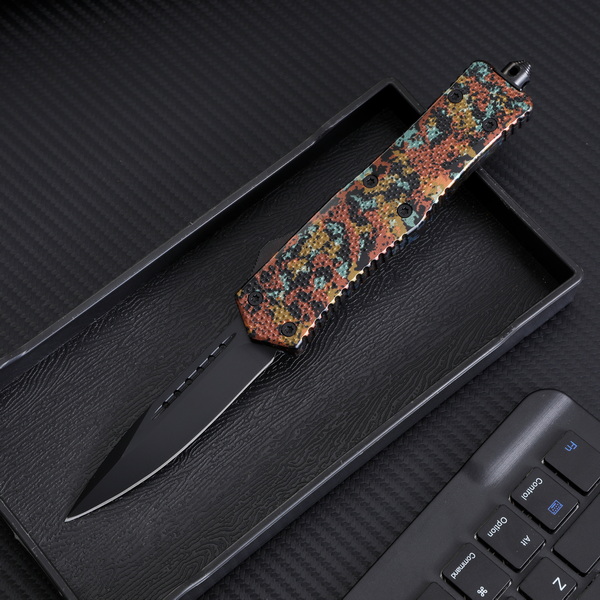
An Automatic OTF Knife is a spring‑driven knife whose blade travels straight out of the front of the handle when activated, instead of pivoting from the side like a traditional folder. The user typically pushes a button or thumb slide that tensions an internal spring and releases the blade along guide rails until it locks in the open position.[10][11][12]
Unlike manual folders, an Automatic OTF Knife keeps the blade fully enclosed in the handle when retracted, which protects the edge and reduces accidental contact during carry. Because the deployment path is linear and compact, an Automatic OTF Knife is especially popular in tactical, rescue, and outdoor scenarios where space is limited and rapid, one‑hand activation is critical.[11][13][14][10]
Automatic OTF Knives fall into two main mechanical families: single‑action and double‑action. In a single‑action Automatic OTF Knife, the button or lever uses spring power to fire the blade out, but the user must manually retract the blade and reset the spring for the next deployment.[12][10]
Double‑action Automatic OTF Knives use a more complex mechanism that both deploys and retracts the blade using the same thumb slide or button, with the spring acting in both directions. This design is currently dominant in high‑end markets because it offers fast deployment, convenient retraction, and integrated safety behavior such as predictable "off‑track" derailing when the blade meets resistance.[15][10][12]
Inside a quality Automatic OTF Knife, the blade rides on a carriage or firing plate that connects to one or more springs, typically coil or leaf springs. Lock gates, pins, and cutouts in the blade spine define the fully closed and fully open positions, preventing the blade from freely sliding once it reaches its intended stop.[10][11][12]
The thumb slide or button engages cams and ramps that first compress the spring, then release it once enough energy is stored to drive the blade forward or backward. Careful geometry of these internal parts allows the Automatic OTF Knife to deliver a strong, decisive deployment while still failing safely when something blocks the blade's travel path.[16][17][12]
One of the most important safety mechanisms in many double‑action Automatic OTF Knives is the way the blade "goes off track" when it encounters an obstacle during deployment. The spring accelerates the blade but does not rigidly push it all the way; instead the blade coasts on momentum to lock at the front, which means that any obstruction quickly kills its energy.[17][12]
If the blade tip hits fabric, cardboard, or skin before reaching full lock, it usually loses momentum and disengages from its track, stopping with much less force than a rigidly driven spike. The user can then pull or slide the blade back into the handle manually, resetting the mechanism so the Automatic OTF Knife is ready for normal operation again.[12][17]
Many single‑action Automatic OTF Knife models use a dedicated external safety switch to block the firing mechanism until the user intentionally disengages it. This safety can control an internal bar or pin that physically prevents the primary release from moving, even if the button is pressed inside a pocket or bag.[13][18][12]
Some double‑action Automatic OTF Knives also integrate external lockouts for law‑enforcement or duty use, where accidental activation must be minimized even under extreme conditions. For OEM development, offering versions with and without a manual safety switch allows brands to target different legal requirements and user preferences with the same core Automatic OTF Knife platform.[18][11][13]
Even when no separate safety slider is present, the firing control of an Automatic OTF Knife is deliberately engineered to require strong, consistent pressure. The thumb slide typically moves against detents or heavy springs and must travel a specific distance before the internal cams release the main spring.[19][11][17]
Because of this, it is difficult for an Automatic OTF Knife to fire simply from keys, coins, or clothing rubbing against the control in a pocket. Some designs add a two‑stage feel—first unlocking the mechanism, then firing—so the user senses a clear transition before the Automatic OTF Knife blade deploys.[20][17][18][10]
Structural design plays a big role in the safety of an Automatic OTF Knife, especially under impact or hard outdoor use. Many professional‑grade OTF handles use 6061‑T6 aluminum or similar alloys to provide strong but lightweight frames that protect the internal mechanism.[4][13]
Precision CNC machining of the handle interior ensures tight tolerances between rails, carriage, and blade, so the Automatic OTF Knife tracks smoothly and the lock gates engage reliably every time. Robust handle construction also helps keep the blade enclosed and aligned during drops, which reduces the chance of unintended partial deployment or misalignment that could compromise safety.[7][4][13]
Blade length, thickness, and tip style all influence the perceived and actual safety of an Automatic OTF Knife. Thicker blades can withstand heavier tasks and are less likely to bend, but they may travel with slightly more momentum and require careful tuning of the mechanism.[3][9]
Brands often choose blade shapes such as spear‑point or drop‑point that balance piercing ability with control, making the Automatic OTF Knife effective without being overly fragile or aggressive for everyday carry. Rounded or semi‑tanto tips, combined with reliable off‑track behavior, can further reduce the risk of deep accidental penetration if the knife is fired against an unintended obstacle.[8][9][3]
Most users carry an Automatic OTF Knife with a pocket clip, blade retracted and locked, so the tip is fully contained inside the handle. In this condition, the spring is either relaxed or safely captured, and the internal rear lock prevents the blade from sliding forward on its own.[17][19][10][12]
Best practice is to dedicate a pocket to the Automatic OTF Knife only, avoiding coins, tools, or other gear pressing directly on the control. Many modern models also feature deep‑carry clips and reversible mounts that allow the Automatic OTF Knife to sit securely and consistently in the same orientation, which helps the user build safe muscle memory.[4][7][19][17]
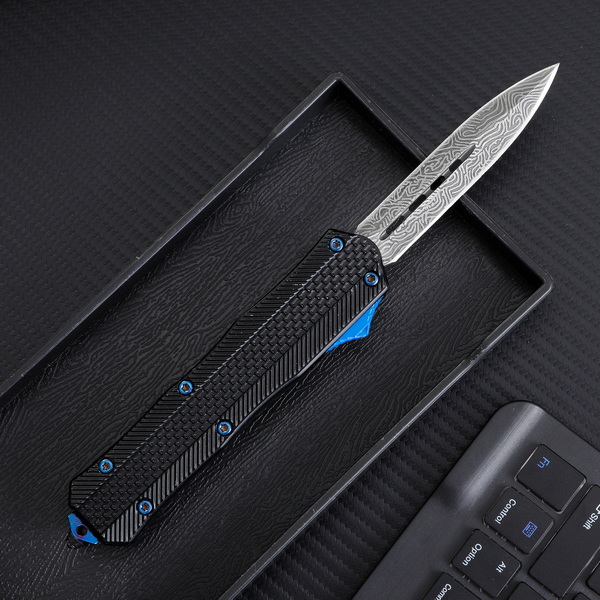
Even the safest Automatic OTF Knife can become unreliable if neglected. Dust, lint, and small debris can accumulate in the handle cavity, slowing the blade and interfering with lock engagement. Regular cleaning with compressed air or a soft brush, combined with light lubrication of rails and critical contact points, keeps the mechanism running smoothly.[19][10]
Users should periodically check that the Automatic OTF Knife deploys and retracts cleanly, with a solid click into the open and closed positions and no excessive blade play. Any repeated misfires, partial deployments, or failure to lock should be addressed immediately by cleaning, re‑lubrication, or professional service to maintain safe performance.[7][10][19]
Beyond the basic thumb slide, modern Automatic OTF Knives can use different release styles that influence both safety and user experience. Some designs hide the release button or integrate it into the frame to make accidental activation less likely and give the knife a more discreet appearance.[9]
Other Automatic OTF Knife mechanisms use axis‑style pulls, levers, or combined firing buttons that require a specific hand position to operate. These systems often increase security by demanding more deliberate, coordinated movement, which appeals to users who want the speed of an Automatic OTF Knife without sacrificing peace of mind during carry.[9]
Many Automatic OTF Knife models incorporate features that indirectly support safety by improving control in demanding conditions. Textured handle panels, rubberized inlays, and ergonomic shaping help users maintain a secure grip even when wet, cold, or wearing gloves.[3][7]
Some Automatic OTF Knives integrate glass breakers, finger choils, and guard‑like handle geometry to keep the hand from sliding forward onto the blade during thrusting tasks. For OEM projects, offering these options allows brands to position their Automatic OTF Knife as both a high‑performance tool and a carefully engineered safety product for rescue, tactical, and outdoor markets.[5][6][3][7]
For overseas brands sourcing from a Chinese OEM factory, one of the biggest advantages is the ability to standardize a proven internal Automatic OTF Knife mechanism while customizing the external design. A stable, well‑tested internal safety platform can be paired with different blade profiles, handle materials, colors, and logos to serve multiple price points and target users under the same core system.[4][7]
Offering tiered safety configurations—such as a base double‑action Automatic OTF Knife, a version with external safety, and a compact EDC model—allows partners to address different legal environments and customer expectations with minimal re‑engineering. Clear documentation, including exploded diagrams and safety explanations, helps distributors and retailers educate end users about how the Automatic OTF Knife functions and how to use it responsibly.[14][21][13][9]
Automatic OTF Knife regulations vary widely between regions, and safety features alone do not guarantee legality. Some jurisdictions regulate automatic knives based on blade length, deployment mechanism, or intended use categories such as "tactical" versus "utility."[22][20]
OEM partners should be prepared to adjust specifications—such as maximum blade length or the presence of full automatic action—to fit local rules, sometimes offering semi‑automatic or assisted‑opening variants alongside fully automatic OTF models. Brand owners are strongly advised to consult legal professionals or local authorities to confirm that their Automatic OTF Knife products and marketing claims comply with current regulations in each target market.[21][23][20][22]
Engineering can reduce risk, but safe operation of any Automatic OTF Knife still depends on user habits. Basic rules include always pointing the blade opening away from the body, keeping hands clear of the blade path, and never playing with the mechanism as a toy.[22][19]
Users should practice deployment and retraction in a controlled environment, building muscle memory for thumb slide movement, grip stability, and safe re‑holstering. Brands and OEMs can support safer use by providing clear instructions, caution labels, and educational content that outlines correct handling and maintenance for each Automatic OTF Knife model.[11][19][22]
Automatic OTF Knife safety mechanisms are the result of careful synergy between internal engineering, structural design, and informed user behavior. Off‑track blade behavior, strong trigger resistance, precise lock gates, and well‑built handles allow the modern Automatic OTF Knife to deliver rapid deployment while minimizing the risk of accidental cuts or unintended activation during daily carry.[12][17]
For overseas brands and wholesalers partnering with a Chinese OEM factory, choosing a robust internal mechanism and combining it with the right materials, ergonomics, and optional safeties creates Automatic OTF Knife products that are not only fast and reliable, but also compliant and trusted by professionals and enthusiasts around the world.[13][14]
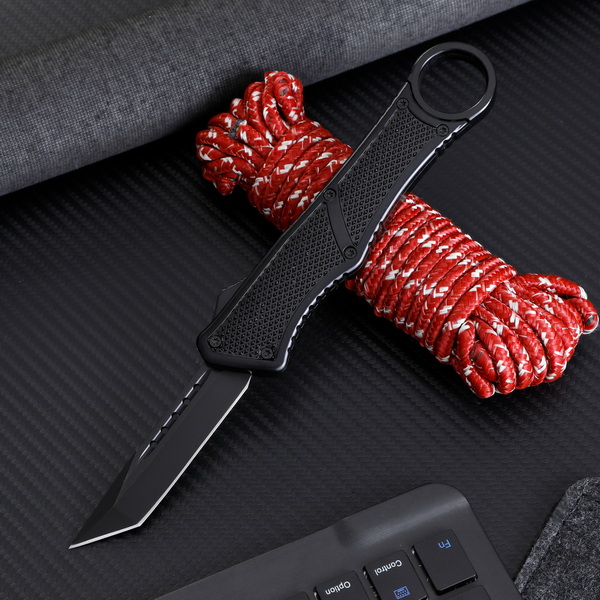
Modern Automatic OTF Knives use controlled spring systems, off‑track blade behavior, and precise lock gates, so the blade loses energy quickly if it hits an obstacle and stays locked when closed. Older switchblade designs often lacked these features and could deploy more rigidly, increasing the risk of accidental injury if misused.[20][17][22][12]
In most quality designs, the thumb slide or button requires deliberate pressure and a specific travel path, making accidental activation inside a pocket very unlikely. Even if the blade begins to deploy and meets clothing, it typically goes off track and stops rather than punching through with full force.[10][17][12]
Light maintenance is recommended whenever the Automatic OTF Knife has seen heavy use, dusty conditions, or begins to feel sluggish, which might mean every few weeks for an active EDC user. Cleaning out debris and applying a small amount of lubricant to the rails and mechanism helps maintain reliable deployment and secure lockup.[19][10]
Many double‑action Automatic OTF Knives are designed to be safe without an external safety thanks to strong trigger resistance and internal locks. However, an external safety can provide extra peace of mind for users in high‑impact environments or for brands targeting more conservative markets with stricter expectations about automatic knife safety.[18][17][12]
When engineered with robust materials, reliable double‑action mechanisms, and proper safety features, an Automatic OTF Knife can be an excellent tool for rescue, law‑enforcement, and tactical tasks. Fast one‑hand deployment, linear blade travel, and options like glass breakers and grippy handles make the Automatic OTF Knife particularly well‑suited to confined or high‑stress environments.[6][5][14][13]
[1](https://www.sogknives.com/pentagon-otf-black/)
[2](https://www.benchmade.com/products/5370fe-shootout-otf)
[3](https://tacknivesusa.com/product/tacknives-automatic-otf-knife-mlt7-series/)
[4](https://cobratecknives.com/product/special-purpose/utility-knives/otf-utility-knife/)
[5](https://store.smith-wesson.com/sale/smith-wesson-swotf9b-assist-opening-otf/SWOTF9B.html)
[6](https://www.vipertecknives.com/products/black-reaper-d-a-otf)
[7](https://ravencresttactical.com/otf-knife-models/)
[8](https://www.trueswords.com/Armed-Force-Tactical-Non-Reflective-Automatic-OTF--51801/51801.html)
[9](https://swordsswords.com/blog/essential-facts-to-know-before-purchasing-an-otf-automatic-knife/)
[10](https://nobliecustomknives.com/what-is-an-otf-knife-and-how-does-an-otf-knife-work/)
[11](https://www.tosahwi.com/fr/blogs/what-is-an-otf-knife/)
[12](https://uppercuttactical.com/blogs/news/how-does-an-otf-knife-work)
[13](https://www.tacticalsportinggoods.com/blogs/news/understanding-otf-knives-a-comprehensive-guide-to-their-features-and-uses)
[14](https://ravencresttactical.com)
[15](https://bladeops.com/blog/the-history-of-otf-knives-from-military-tool-to-everyday-essential/)
[16](https://support.benchmade.com/hc/en-us/articles/39749915869723-Knife-Opening-Actions)
[17](https://www.reddit.com/r/knives/comments/16dz9ee/i_rarely_see_safety_feature_on_otf_anybody/)
[18](https://swordsswords.com/blog/the-different-mechanisms-of-otf-knives-plunger-springassisted-and-more/)
[19](https://tacknivesusa.com/safety-suggestions-for-otf-knives/)
[20](https://www.tektoknives.com/blogs/news/understanding-different-types-of-switchblades)
[21](https://swordsswords.com/blog/different-styles-and-mechanisms-of-automatic-knives/)
[22](https://artisancutlery.net/blogs/knife-knowledge/otf-vs-folding-knives-comparison-guide)
[23](https://bladeops.com/knives/out-the-front/)


