
Views: 222 Author: Loretta Publish Time: 2025-10-03 Origin: Site


Content Menu
● Anatomy and Key Features of OTF Knives
● Noteworthy OTF Knife Specifications and Examples
● Disadvantages and Considerations
● FAQ
>> 1. What exactly is an OTF knife?
>> 2. How does a double-action OTF knife differ from a single-action one?
>> 3. Are OTF knives legal to carry?
>> 4. What are common uses for OTF knives?
>> 5. How should I maintain my OTF knife?
An OTF knife, or Out-The-Front knife, is a distinctive type of automatic folding knife where the blade deploys and retracts straight out of the front of the handle. Known for its rapid deployment, compact design, and unique mechanism, the OTF Knifehas become popular with outdoor enthusiasts, tactical users, collectors, and professionals worldwide.

Unlike traditional folding knives that pivot the blade out from the side of the handle, OTF knives slide the blade forward in a linear motion through an opening at the front of the handle. This design allows for exceptional speed and ease of access with one hand. OTF knives typically feature a spring-loaded mechanism activated by a thumb slider or button on the handle.
The rapid opening and closing action, combined with the sleek, slim profile of the knife handle, make OTF knives ideal tools for situations requiring quick blade access such as tactical engagements, outdoor survival, emergency rescue, or daily utility tasks.
There are primarily two types of OTF knives:
- Single-Action OTF Knives (SA-OTF): The blade is propelled out automatically by the spring mechanism after activating the slider/button, but it must be manually retracted, usually by using a separate lever.
- Double-Action OTF Knives (DA-OTF): Both blade deployment and retraction are automated and controlled by the same slider switch, enabling quicker and more seamless operations.
Understanding the internal and external components helps appreciate how these knives operate with precision:
- Blade: Crafted from premium steel alloys (such as S35VN, AUS-8, or 440C stainless steel), blades often feature tactical forms like spear point, double-edged, or partially serrated styles for versatile cutting.
- Handle: Made from sturdy lightweight materials such as anodized aluminum alloy (6061-T6), zinc alloy, or rubber-injected aluminum for grip comfort and durability.
- Slider Button or Trigger: Usually ambidextrous, this part activates the blade's spring mechanism to extend or retract the blade.
- Spring Mechanism: A tightly wound spring stores energy, released on slider activation to forcefully extend or retract the blade straight out of or back into the handle.
- Locking Mechanism: Secures the blade firmly in the open or closed position, contributing to user safety and blade stability during use.
- Safety Switch: Prevents accidental blade deployment, adding a critical safety layer especially during carry or storage.
- Additional Features: Some models include emergency glass breakers on the handle pommel, reversible pocket clips for versatile carry options, and blade change mechanisms that allow quick replacement of utility or standard blades.
The OTF knife's operation depends largely on its spring-driven mechanism, which is an ingenious engineering design enabling smooth and fast blade movement:
1. Starting with the blade fully retracted inside the handle, the user presses the slider button forward.
2. Pressing the slider releases the spring tension, propelling the blade straight out the front of the handle in a quick linear motion.
3. Once fully extended, the blade locks securely in place, ready for use.
4. For double-action models, pulling the slider back reverses the spring tension to pull the blade back inside the handle and lock it there safely.
5. For single-action models, blade retraction is manual, usually by pulling a specific lever.
This mechanism ensures the blade can be deployed and retracted rapidly with minimum effort, using just one hand — a vital feature in many high-stress or hands-busy scenarios.

To illustrate, many high-quality OTF knives emphasize precision craftsmanship and robust materials. For example:
- Handle Construction: Often made from anodized 6061-T6 aluminum alloys, known for corrosion resistance, durability, and lightweight feel. Handles are ergonomically designed with cross-hatch or rubberized patterns for better grip in wet or slippery conditions.
- Blade Material: Options like premium stainless steel or high-carbon steel, often coated or treated for extra corrosion resistance, wear resistance, and sharpness retention.
- Blade Styles: Double-edged spear points, partially serrated edges, or even standard utility blades for multi-purpose applications.
- Blade Change Mechanism: Some OTF knives allow quick standard blade swaps using release levers or locks integrated into the internal mechanism.
- Key Functional Features: Ambidextrous slider controls, pocket clips with reversible mounting, safety locks, glass breakers for emergency use.
Examples include tactical models with 3.5 to 4-inch blades from brands like Microtech, Benchmade, and Smith & Wesson, featuring robust steel blades, glass breaker pommels, highly textured handles, and lifetime manufacturer warranties.
- Rapid Deployment: The linear, spring-driven blade movement delivers unbeatable speed in opening the knife compared to traditional folding knives.
- One-Hand Use: Enables effortless deployment and retraction while the other hand is occupied.
- Compact and Sleek: The blade retracts fully within a slim handle, making it easy to carry discreetly with low pocket profile.
- Varied Applications: Useful for tactical operations, emergency rescues (due to glass breakers), everyday carry, camping, and survival.
- Safety Features: Locking blades and safety switches help prevent accidental blade release or injury.
- Legality Restrictions: Strict regulations affect ownership and carry in many areas, so users must carefully verify local knife laws before purchase or use.
- Mechanical Complexity: More moving parts than traditional folding knives require regular cleaning and lubrication to maintain smooth operation.
- Higher Price Point: Innovative mechanisms and premium materials often put OTF knives at a higher cost than basic folding knives.
- Less Suitable for Heavy Duty: The locking and slide mechanism, while secure, may not handle extreme prying or rugged tasks well compared to fixed blades.
To ensure smooth operation and longevity:
- Clean after use, removing dust, dirt, and moisture.
- Lubricate the blade channel and spring mechanism sparingly with specialized knife oil.
- Periodically inspect the blade and mechanism for wear or damage.
- Use manufacturer instructions for blade replacement or part servicing.
- Store in a dry environment, preferably within a protective sheath or case.
Knife laws vary widely. Some countries ban OTF knives outright, while others impose length or carry restrictions. In the United States, many states regulate or prohibit their possession or carry. Users must consult up-to-date local laws to remain compliant.
OTF knives are an exceptional category of automatic knives, prized for their out-the-front rapid deployment, compact form factor, and functional versatility. Whether single-action or double-action, their spring-driven blade mechanism supports fast one-handed use ideal for tactical, outdoor, and emergency scenarios. However, responsible ownership includes understanding legal restrictions, regular maintenance, and choosing the right model tailored to needs. These cutting-edge knives blend precision engineering with everyday practicality, making them a prized tool and collectible.
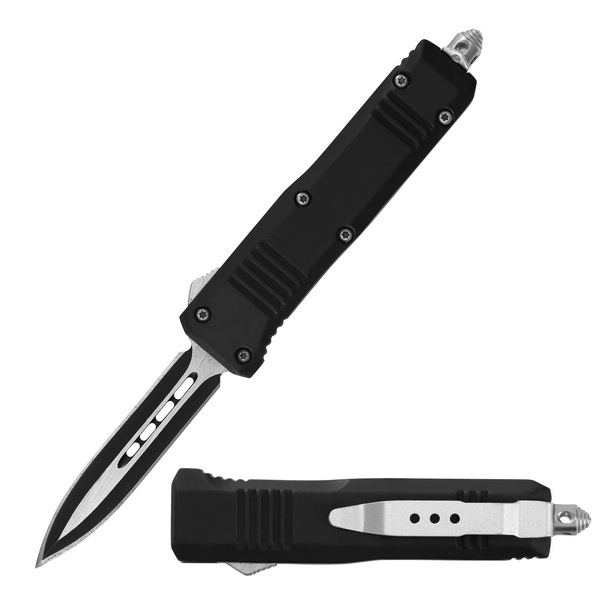
An OTF (Out-The-Front) knife is a type of automatic folding knife with a blade that slides straight out the front of the handle, offering quick one-handed deployment and retraction.
Double-action OTF knives allow both blade deployment and retraction using the same trigger or slider automatically. Single-action OTF knives deploy automatically but require manual blade retraction.
Legality varies by region. Some places have outright bans or restrictions on OTF knives. Users must check their local and state laws before buying or carrying one.
OTF knives are used for tactical operations, emergency rescue (often with glass breakers included), outdoor activities, and everyday utility tasks due to their rapid deployment.
Proper maintenance includes cleaning after use, applying lubricant to the blade channel and springs, inspecting for damage, and storing the knife in a dry place.
[1](https://cobratecknives.com/product/special-purpose/utility-knives/otf-utility-knife/)
[2](https://ravencresttactical.com/product-category/otf-knives/)
[3](https://www.budk.com/Bushmaster-Mamba-Automatic-OTF-Knife-Stainless-Ste-50276/50276.html)
[4](https://store.smith-wesson.com/tactical/knives/smith-wesson-mp-1084314-grey-spear-tip-otf/1084314.html)
[5](https://www.sogknives.com/pentagon-otf-black/)
[6](https://www.bladehq.com/cat--Out-The-Front-Automatics--41)
[7](https://microtechknives.com/collections/otfs)
[8](https://ocasoknives.com/products/lucent-automatic-otf-black-mini)
[9](https://www.benchmade.com/products/5370fe-shootout-otf)
[10](https://www.tektoknives.com/products/a5-spry)


