
Views: 222 Author: Leah Publish Time: 2025-10-11 Origin: Site


Content Menu
● Understanding OTF Knives: Mechanisms and Types
● Blade Steel: The Backbone of Heavy-Duty Performance
● Handle Materials: Durability Meets Ergonomics
● Deployment Mechanism: The Mechanical Heart
● Construction and Durability: What Makes It Heavy-Duty?
● Maintenance Tips to Maximize Lifespan
● Practical Applications of Heavy-Duty OTF Knives
● FAQ About Heavy-Duty OTF Knives
>> 2. What steel is best for heavy-duty OTF knives?
>> 3. How often should I maintain or lubricate my OTF knife?
>> 4. Are double-action OTF knives better for heavy-duty use?
>> 5. Can heavy-duty OTF knives be used in tactical environments?
Out-the-Front (OTF) knives represent a unique segment in the world of blades, featuring a blade that extends and retracts through a spring-loaded mechanism directly from the front of the handle. Among these, the Heavy-Duty OTF Knife distinguishes itself by combining superior materials, precise engineering, and a robust design to face the most demanding environments. Whether used by tactical operatives, outdoor adventurers, or professionals requiring a reliable cutting tool, these knives stand out through a combination of durability, performance, and convenience. This article delves into the key elements that define a truly heavy-duty OTF knife, from blade composition and handle construction to deployment reliability, maintenance protocols, and practical usage scenarios.
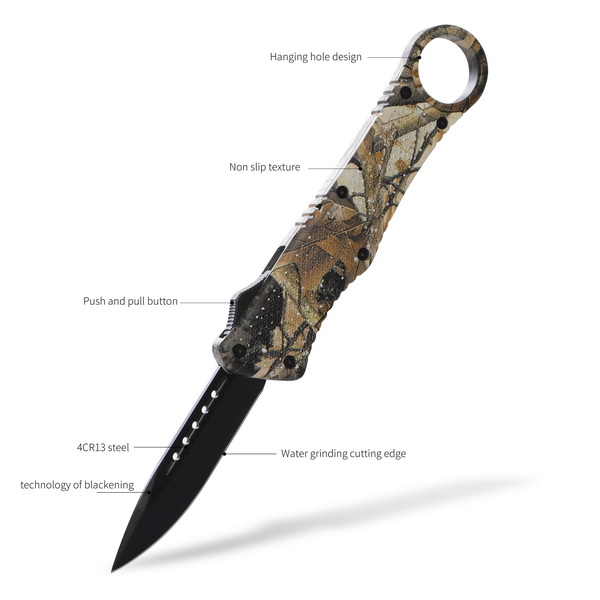
An OTF knife is characterized by its unique blade deployment style: the blade slides out of the front of the handle through a mechanism actuated by a button or slide switch. The most common types include:
- Single-Action OTF Knives: These knives have a blade that deploys automatically but requires manual retraction.
- Double-Action OTF Knives: Both blade deployment and retraction occur automatically, controlled by the same mechanism.
Double-action OTF knives are typically preferred in heavy-duty contexts because they offer rapid deployment and retraction, improving response times and safety. This action allows operators to repeatedly open and close the blade quickly without worrying about manual intervention, which is critical during high-pressure situations.[1][2]
The blade steel is arguably the most critical factor in defining a heavy-duty OTF knife. High-quality steels ensure the blade holds a sharp edge, resists corrosion, and endures the mechanical stresses of heavy use.
Some of the best steels used in heavy-duty OTF knives are:
- CPM S30V and S35VN: Known for excellent wear resistance and corrosion protection, these steels maintain edge sharpness over extended use.
- M390 and CTS-204P: These premium steels offer superior toughness and edge retention, catering well to tough cutting tasks.
- D2 Steel: A tough tool steel commonly used in heavy-duty knives, although it needs careful maintenance due to its moderate corrosion resistance.
- CPM Magnacut and 154CM: These steels combine great corrosion resistance with good edge retention and easier sharpening characteristics.
The choice of steel not only affects cutting performance but also blade longevity and ease of maintenance. Often, manufacturers balance blade thickness and steel grade to optimize strength without compromising cutting efficiency.[3][4][5][1]
For a knife to perform well under demanding conditions, the handle must do more than just look good—it must provide a secure, comfortable grip while resisting wear and environmental damage.
Popular materials in heavy-duty OTF knife handles include:
- Aerospace-Grade Aluminum: Lightweight, tough, and corrosion-resistant, aluminum is a staple in premium OTF handles. It is often anodized for color and added corrosion protection.
- G10 and Carbon Fiber Inlays: These composite materials add texture for better grip and can enhance aesthetics without adding much weight.
- Titanium and Stainless Steel: Used in high-end tactical knives, these metals offer superior strength and resistance to deformation or wear.
Design details such as ergonomic shaping, finger grooves, and textured surfaces play a crucial role in ensuring users can maintain a firm grip during rigorous tasks—even when wet or gloved—thus maximizing safety and control.[4][6][1][3]
The deployment system is what sets OTF knives apart from other folding or fixed-blade knives. A heavy-duty OTF knife relies on a precise, durable internal mechanism comprising springs, firing plates, and locks that must operate flawlessly every time.
Key aspects of a reliable deployment system include:
- Double-Action Functionality: Allows quick and effortless blade extension and retraction with the same control, supporting repeated use.
- High-Quality Springs: Springs crafted from durable alloys resist fatigue, ensuring long-term consistent blade deployment.
- Safety Features: Incorporation of locking mechanisms and safety switches to prevent accidental blade release and unintended closures.
- Tight Tolerances and Smooth Action: Precise manufacturing ensures minimal friction and reduces the chance of jamming, crucial for reliability under various conditions.
Regular maintenance, including cleaning and lubrication of the internal components, is essential to keep the deployment system functioning smoothly—especially in environments exposed to dirt, sand, or moisture.[2][7][1]
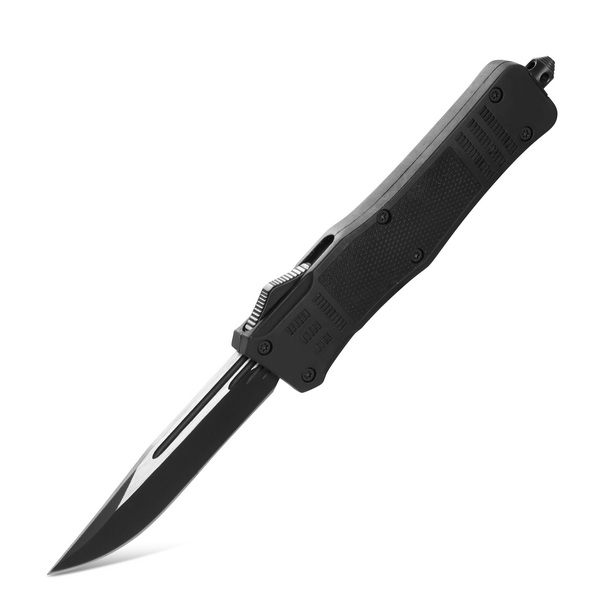
True heavy-duty OTF knives are crafted to survive demanding use and adverse conditions. Several factors contribute to their ruggedness:
- Superior Corrosion Resistance: Manufacturing with high-grade stainless steels and durable surface treatments prevents rust and wear from exposure to the elements.
- Reinforced Handle Frames: Robust structural design with reinforced materials withstands impacts, twisting forces, and pressure without failure.
- Precision Blade Locking: Trusted blade locks keep the blade safely in position during use, resisting accidental folding or wobble.
- Resilience Against Dirt and Debris: Design considerations minimize openings where dirt or grit could enter the blade channel, which could otherwise cause blade sticking or malfunction.
- Spring Durability: Use of high-quality spring materials and optimal spring tension ensures the blade deploys reliably over thousands of cycles without loss of performance.
Such features are crucial for professionals or enthusiasts relying on their knife in tactical operations, emergency situations, or harsh wilderness conditions. The combination of these traits results in a tool that can deliver consistent cutting power without compromising safety or usability.[8][9][10][1]
Care and upkeep are fundamental to maintaining an OTF knife's heavy-duty performance. Neglect can lead to malfunction, decreased blade sharpness, or mechanical failure.
Maintenance best practices include:
- Cleaning the Blade Channel: Dirt, sand, and debris can accumulate inside the blade channel, impairing blade movement. Regular cleaning is essential to avoid stuck blades or jams.
- Lubricating Springs and Pivot Points: High-quality lubricants reduce friction and wear in the deployment mechanism, preserving smooth blade action.
- Storage: Store the knife in a dry place to prevent rust formation, and avoid extended exposure to moisture.
- Inspections: Regularly check for blade play, looseness, or signs of wear in springs and locks. Timely servicing or professional repairs extend the knife's lifespan.
- Blade Sharpening: Maintain a sharp edge using appropriate sharpening tools for the steel type to keep cutting effective and safe.
Following these steps ensures that the knife remains dependable, safe, and ready for use whenever needed.[7][11]
Heavy-duty OTF knives have earned their place in a variety of demanding fields due to their unique combination of strength, speed, and convenience:
- Tactical and Law Enforcement Use: Their rapid deployment is invaluable for fast response, self-defense, and cutting through restraints.
- Rescue and Emergency Services: Reliable cutting capability enables quick action to free trapped individuals or cut safety equipment.
- Outdoor and Survival Situations: The rugged construction allows for cutting through tough materials like ropes, branches, or fabric under varied weather conditions.
- Industrial and Everyday Heavy Use: Heavy-duty OTF knives can handle work-site duties or general utility tasks where a tough, portable knife is essential.
Their versatility and reliable performance make them indispensable tools for users who demand toughness and rapid readiness in the toughest conditions.[6][1]
A Heavy-Duty OTF Knife epitomizes durability, precision, and performance through its use of premium blade steels, resilient handle materials, and finely engineered deployment mechanisms. Its design ensures reliable and rapid blade action, making it ideal for tactical, professional, and outdoor applications. With proper care and maintenance, this type of knife offers years of dependable service, cutting cleanly and consistently even under the harshest conditions. For those seeking a robust and versatile cutting tool, investing in a high-quality heavy-duty OTF knife is a smart choice.
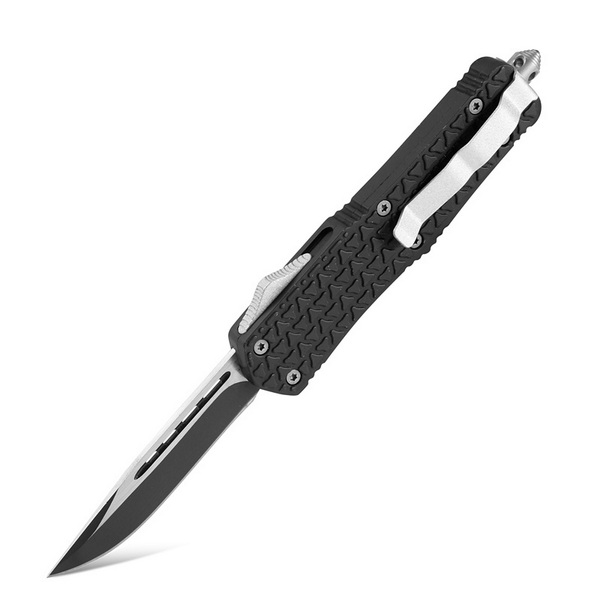
An OTF (Out-The-Front) knife is a type of automatic knife where the blade extends and retracts linearly from the front of the handle, usually via a spring-loaded mechanism activated by a button or slide switch.[12]
Steels like CPM S30V, M390, D2, and CPM Magnacut are preferred for heavy-duty OTF knives due to their excellent combination of corrosion resistance, edge retention, and toughness.[1][3]
Clean and lubricate your knife every few weeks or after exposure to dirt, sand, or moisture to maintain smooth blade operation and prevent wear.[7]
Yes, double-action OTF knives offer faster, safer deployment and retraction of the blade, making them superior for heavy-duty and tactical uses.[2][1]
Absolutely. Many heavy-duty OTF knives are specifically engineered for tactical professionals, featuring rugged construction and rapid deployment capabilities suited for demanding field conditions.[6][1]
This article provides an expert overview of the key qualities that define a Heavy-Duty OTF Knife as truly "heavy-duty," guiding readers to understand and choose the best knives for their needs.
[1](https://bladeops.com/blog/the-advantages-and-disadvantages-of-otf-knives-in-tactical-settings/)
[2](https://nobliecustomknives.com/what-is-an-otf-knife-and-how-does-an-otf-knife-work/)
[3](https://bladeops.com/blog/otf-knife-buyers-guide-what-to-look-for-in-your-next-otf-knife/)
[4](https://hiconsumption.com/gear/best-otf-knives/)
[5](https://www.58hrcknives.com/best-materials-for-otf-knife-blades-a-quick-guide.html)
[6](https://www.tacticalsportinggoods.com/blogs/news/understanding-otf-knives-a-comprehensive-guide-to-their-features-and-uses)
[7](https://bladeops.com/blog/otf-knife-care-101-maximize-the-life-of-your-knife/)
[8](https://tacknivesusa.com/otf-knife-and-spring-design-key-elements-to-identify-when-deciding-to-buy/)
[9](https://ravencresttactical.com/durability-of-ravencrest-tacticals-otf-knives/)
[10](https://www.bladehq.com/blog/how-to-choose-an-otf-knife)
[11](https://support.microtechknives.com/support/solutions/articles/67000739442-troubleshooting-guide-for-otf-knife-deployment-issues)
[12](https://www.otfknives.com/outthefrontknife/otf-knife-faq/)


