
Views: 222 Author: Leah Publish Time: 2025-11-04 Origin: Site


Content Menu
● Understanding the Basics: What Are Tactical OTF Knives?
● The Anatomy of a Tactical OTF Knife
● The Science of Precision: How OTF Knife Mechanisms Work
>> The Spring and Track System
● Blade Materials: The Real Difference Between High-End and Standard Models
>> Premium Steels for Elite Performance
>> Blade Profiles and Finishes
● Handle Construction: From Basic to Exceptional
>> Materials for Durability and Function
>> Ergonomics and Utility Features
● Engineering, Assembly, and Tolerances
>> Lifetime Warranties and Service
● Inside the OEM Factory: How Tactical OTF Knives Are Born
>> From Concept to Manufacturing
>> Quality Control, Compliance, and Global Delivery
● In The Field—Why Performance Matters
>> Everyday Utility and Legal Considerations
● Choosing the Right Tactical OTF Knife: Practical Guidance
>> Blade Length, Profile, and Finish
>> Manufacturer Reputation and Support
● FAQ
>> 1. What core feature sets premium tactical OTF knives above standard versions?
>> 2. Do high-end OTF knives require different maintenance from standard models?
>> 3. Why do some tactical OTF knives cost much more than others?
>> 4. Can OEM manufacturers really customize tactical OTF knives for any need?
>> 5. Are OTF knives legal to carry everywhere?
Tactical OTF knives, known for their swift blade deployment and compact design, are trusted tools among military professionals, law enforcement, security personnel, outdoor adventurers, and everyday carry enthusiasts. But not all OTF (Out-The-Front) knives are created equal. This comprehensive guide explores exactly what sets high-end tactical OTF knives apart from standard models, and why premium quality matters for those who demand the best. Leveraging advanced materials, precision engineering, and tailored OEM services, elite manufacturers ensure that their tactical OTF knives are ready for anything—from the harshest field operations to daily utility tasks.[9][10]
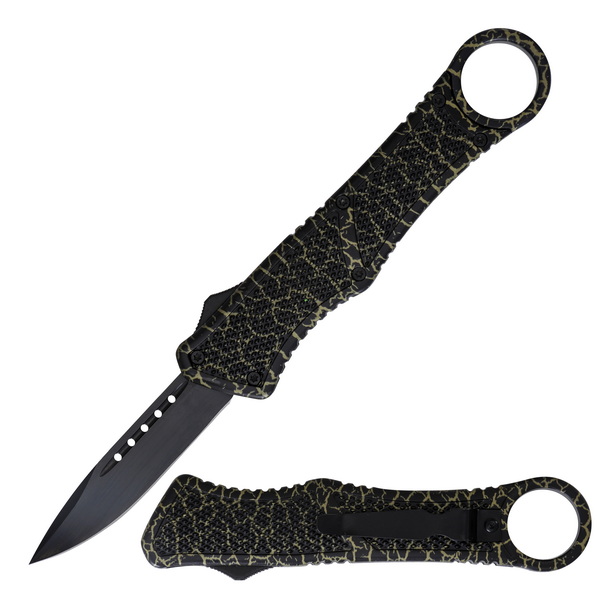
Tactical OTF knives are a distinctive category of automatic knives. Unlike traditional folders where the blade pivots out of the handle's side, OTF knives deploy the blade linearly through a slot at the front of the handle with the press of a button, thumb slide, or lever. This design enables rapid, one-handed operation—vital in high-pressure scenarios. Tactical models build on this platform with rugged construction, reliable mechanisms, and features tuned for harsh and unpredictable environments.[10][9]
A well-built tactical OTF knife integrates several major components:
- Blade: Ranges typically from 3 to 4 inches; constructed of advanced steels for optimal edge retention and toughness.[4][9][10]
- Handle: Made from premium materials like 6061-T6 aluminum, titanium, or G10 composites, engineered for light weight and high strength.[6][4]
- Deployment Mechanism: Utilizes high-strength springs, custom blade carriers, and linear track systems for flawless action.[9]
- Locking System: Secure ball-bearing, mechanical, or friction locks keep the blade firmly in place during use.[9]
Most tactical OTF knives also include features like ambidextrous pocket clips, reversible carry options, glass breakers, and textured grips for security and utility across various tasks.[5][6]
At the core of every tactical OTF knife lies a purpose-built spring system—usually a coil made of high-carbon steel—that is compressed when the blade is closed. When the deployment actuator (button or slider) is pressed, stored energy rapidly pushes the blade outward. The blade is attached to a custom carrier that moves within precision-machined tracks, minimizing wobble and ensuring smooth, consistent deployment and reliable retraction.[9]
Safety and reliability are essential in tactical environments:
- Mechanical Interlocks: On high-end models, sophisticated locking systems guarantee the blade won't close accidentally, delivering full user safety and confidence.[9]
- Secondary Safeties: Some OTF knives have backup sliders or switches to prevent accidental deployment—a critical feature in tactical work.
- Anti-Obstruction Mechanism: Many premium designs disengage the blade if an object obstructs deployment, avoiding accidental damage.[5]
The biggest performance jump comes from the choice of blade steel. High-end tactical OTF knives employ steels like M390, CPM-S35VN, or D2. These modern alloys offer unparalleled edge retention, corrosion resistance, and toughness—a must for outdoor and tactical use.[8][6]
- M390 Steel: Known for extreme wear resistance and edge holding, as well as being highly stainless.
- CPM-S35VN: Balances toughness with easy sharpening and superb edge retention, used by many top-tier brands.
- D2 Steel: A semi-stainless tool steel, highly regarded for toughness and holding a fine edge through heavy use, common in well-priced performance models.[6][8]
In contrast, standard models may use more basic steels like 440C, AUS-8, or unspecified alloys, leading to faster dulling and less resistance to corrosion.
High-end tactical OTF knives are offered with a variety of blade shapes—spear point, tanto, drop point—and treated with premium coatings (black oxide, DLC) for non-reflective surfaces and additional protection. Standard knives may offer fewer options and less robust finishes.[3][8]
Tactical OTF handles are more than just housings for action:
- 6061-T6 Aircraft Aluminum: Lightweight, tough, corrosion-resistant, and CNC-machined for perfect fit and finish.[4][6]
- G10 and Carbon Fiber: Provide secure, non-slip grip and keep weight down for fast and comfortable use.[8][6]
- Titanium: Used in ultra-premium models for unmatched toughness and corrosion resistance.
Low-end models may substitute heavy or slippery zinc alloy or low-grade aluminum, compromising the knife's long-term reliability and comfort.
Ergonomic shape, finger grooves, aggressive texturing, and functional extras like glass breakers, reversible clips, and non-slip coatings distinguish high-end models. Far from being aesthetic, these features matter in real tactical use: secure handling can mean the difference between success and failure in demanding situations.[5][6]
Elite OTF knives are CNC-machined to tight tolerances. This precision:
- Eliminates blade play (side-to-side movement)
- Ensures straight, consistent blade deployment
- Allows ultra-fast, reliable action even after years of use
OEM partners specializing in tactical knives often use state-of-the-art machinery, strict QA protocols, and detailed documentation to maintain these standards in every unit produced.[11]
Best-in-class tactical OTF knives often include lifetime warranties, underlining confidence in their build quality. Many also ship with disassembly tools so users can clean, lubricate, or inspect internals as needed. Cheaper OTF knives rarely offer this level of after-sale support.[8]
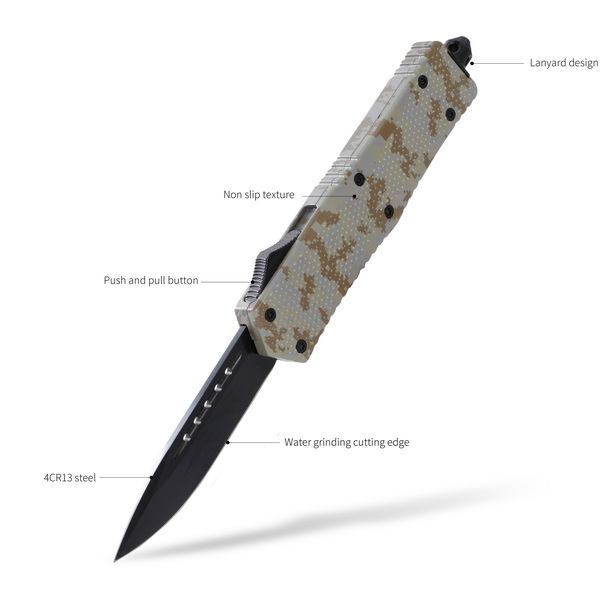
OEM manufacturing enables global brands and distributors to realize bespoke tactical OTF knife designs:
- Design & Engineering: Collaboration between OEM and client refines every detail, leveraging advanced CAD/3D modeling for optimal function and aesthetic.[11]
- Material Sourcing: Premium manufacturers source only verified, traceable steels and handle materials, guaranteeing real-world performance.
- Precision Machining: Every part (blade, handle, springs, lock) is CNC-milled or forged with computerized consistency.
- Assembly and Inspection: Experienced technicians assemble each knife by hand or with robotic assistance, followed by multi-point inspection for function, lock-up, and tolerance.
Reputable OEMs adhere to industry and legal standards, managing environmental labeling, packaging, and global logistics. Multi-stage quality checks (from hardness testing to blade deployment cycles) ensure every tactical OTF knife meets spec. The result: a tool engineered to survive the harshest conditions and strictest scrutiny.[11]
For law enforcement, military, or first responders, a split-second can be critical. The best tactical OTF knives provide:
- Rapid one-handed operation, even with heavy gloves
- Consistent, reliable blade action in cold, wet, or dirty conditions
- Mission-ready accessories like glass breakers for emergencies[7][5]
Modern tactical OTFs tailored for civilian use offer practical versatility, including safe blade lengths (3–3.5 inches for legal compliance), pocket clips for discreet carry, and sturdy construction for daily utility. It's important to understand local laws before carrying, especially with models offering automatic features and longer blades.[9]
High-end OTF knives are designed for straightforward maintenance:
- Tool-free or included-tool disassembly
- Easy access for cleaning and lubrication of internals
- Hard, wear-resistant blade steels that hold an edge over time
Routine inspection for spring tension, blade sharpness, and screw tightness further extends operational life—something cheaper models may not withstand with repeated use.[8][9]
- Double Action: Allows automatic both deploy and retract; ultimate one-handed control.[9]
- Single Action: Only automatic deploy, manual retract; slightly simpler and may be more legal in some areas.
- 3–3.5 inches: Best for everyday carry, universal legality, and practical cutting tasks.[9]
- 3.5–4 inches: Superior reach, professional use—check local law.
- Profile and finish are chosen based on application and personal preference.
Select established brands or reputable OEMs known for innovation, rigorous QC, and reliable warranties. Buying direct or through trusted partners ensures the authenticity and after-sale service of your tactical OTF knife.[11][8]
High-end tactical OTF knives distinguish themselves through premium materials, CNC precision engineering, meticulous assembly, and robust field performance. These knives are shaped by the needs of real users—military, law enforcement, outdoor, and EDC. OEM manufacturing lets brands and resellers create unique tactical OTF knives that meet any challenge, built for performance and reliability at every stage. While standard models offer basic function, only the best stand the test of time, rigorous use, and extreme conditions. Choose wisely, maintain regularly, and your premium tactical OTF knife will serve dependably for years to come.[10][8][11][9]
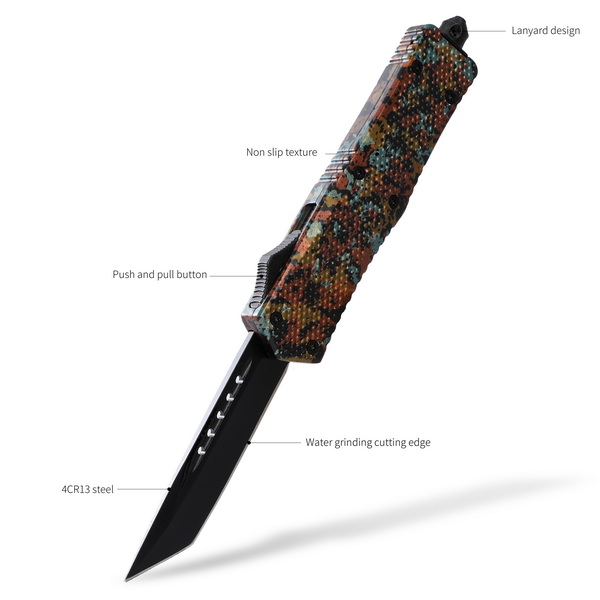
Premium OTF knives use advanced steel, precisely machined handles, and elite spring/lock mechanisms for maximum performance and resilience.[6][8]
Yes. High-end knives are designed for easier maintenance, include tools for disassembly, and withstand more frequent cleaning and sharpening without component wear.[8][9]
The cost reflects premium materials, advanced engineering, rigorous quality control, and value-added support like lifetime warranties—all of which guarantee a superior tool.[10][6]
Yes, reputable OEMs can tailor every detail, meeting strict user specs, regulatory needs, and implementing bespoke branding or packaging for global clients.[11]
No. Regulations vary widely by country, state, and city. Always check local law before carrying or importing a tactical OTF knife—especially those with automatic or dual-action features.[9]
[1](https://www.benchmade.com/products/5370fe-shootout-otf)
[2](https://kratetactical.com/shop/trump-47-otf-knife/)
[3](https://www.trueswords.com/Armed-Force-Tactical-Non-Reflective-Automatic-OTF--51801/51801.html)
[4](https://conquesttactical.com/knife-specifications/)
[5](https://ravencresttactical.com/product-category/otf-knives/)
[6](https://cobratecknives.com/product/otf-knives/cnc/special-forces/)
[7](https://store.smith-wesson.com/tactical/knives/smith-wesson-swotf9b-assist-opening-otf/SWOTF9B.html)
[8](https://core15rifles.com/krate-tactical-otf-knife-the-sandstorm/)
[9](https://knife-depot.com/blogs/sharpened-values/otf-knives-explained-the-complete-guide)
[10](https://bladeops.com/blog/otf-knife-buyers-guide-what-to-look-for-in-your-next-otf-knife/)
[11](https://www.shieldon.net/shieldon-knife-manufacturing-101/)


