
Views: 222 Author: Leah Publish Time: 2025-11-14 Origin: Site


Content Menu
● Understanding OTF Pocket Knives
>> What is an OTF Pocket Knife?
● Key Technical Standards and Design Features
>> Blade Construction and Materials
>> Handle Materials and Ergonomics
>> Mechanisms, Safety, and Locking Systems
● How OTF Pocket Knives Differ From Standard Pocket Knives
● CCC Certification: The Essentials
>> CCC Scope and Applicability
● Exporting OTF Pocket Knives: Legal and Regulatory Frameworks
>> OEM Export Compliance Checklist
● Selecting the Right OTF Pocket Knife
● Practical Tips for OEM Buyers and Brand Owners
● Benefits of OTF Pocket Knives
● FAQ
>> 1. Do all OTF pocket knives require CCC certification in China?
>> 2. What are the consequences of lacking CCC certification?
>> 3. How do U.S. import laws affect CCC-certified OTF pocket knives?
>> 4. What is the difference between single-action and double-action OTF mechanisms?
>> 5. Which blade materials and profiles are best for OTF pocket knives?
As the global market for tactical and utility knives grows more sophisticated, OTF pocket knives have carved out a prominent niche for professionals and enthusiasts alike. For Chinese manufacturers, especially those providing OEM services to international brands, ensuring compliance with China's regulatory standards, especially the China Compulsory Certification (CCC), is essential. This article delves into OTF pocket knife technology, CCC certification intricacies, industry standards, legal considerations, and critical points for successful exporting and brand partnership.[5][11][12][13][14]
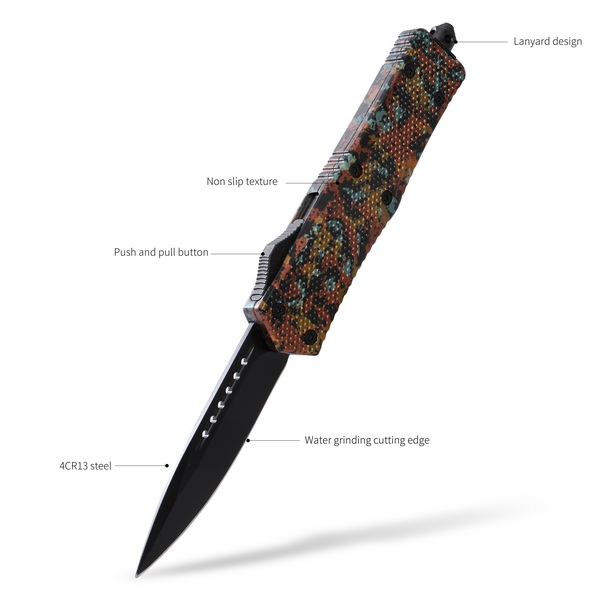
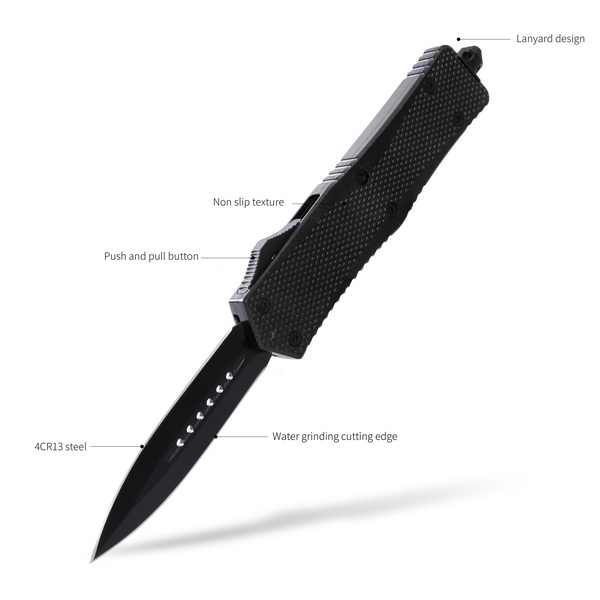
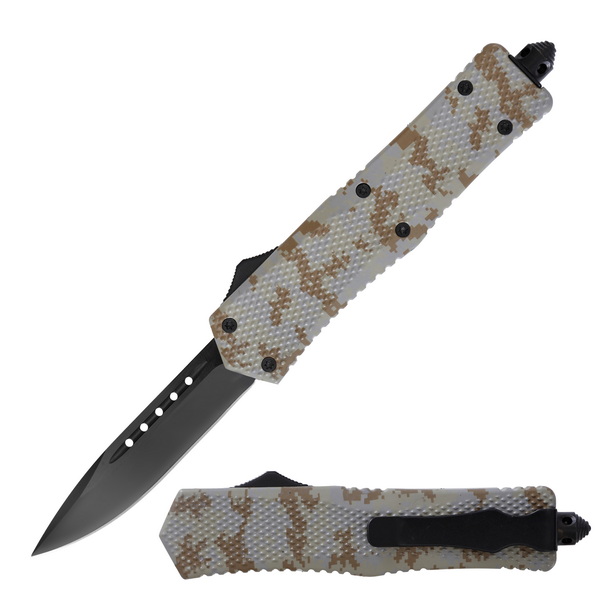
OTF stands for “Out-the-Front,” referencing knives featuring blades that deploy linearly out of the handle with the press of a button or actuator. Unlike standard folding knives, the OTF mechanism allows for near-instant one-handed use, providing exceptional versatility and appeal for tactical, EDC (everyday carry), emergency, and outdoor contexts.[13][15][16]
- Single-action OTF: Blade deploys via spring mechanism, requires manual reset.
- Double-action OTF: Both deployment and retraction occur automatically through the same actuator, ensuring rapid and seamless operation for professional or high-stress circumstances.[5][13]
OTF pocket knives are prized by law enforcement, outdoor enthusiasts, emergency responders, and collectors for their speed, compactness, and reliable performance in demanding conditions.[5]
Blade quality is a defining characteristic for OTF pocket knives.
- High-grade stainless steel (e.g., D2, CPM-S30V, M390): Delivers top-tier edge retention, corrosion resistance, and durability for rugged or everyday use.[2][5]
- Blade profiles: Options include drop point (general purpose), tanto (strong tip for piercing), spear point, and dagger (specialized cutting and penetration).[2]
Handles are often CNC-machined for precise fit and operation using premium materials:
- Aluminum: Lightweight, corrosion-resistant, and durable; often anodized for aesthetics and grip.[1][6]
- G10/Composite: Lightweight, exceptional grip and resilience, suited for tactical or outdoor use.[2][5]
- Steel: Offers substantial durability but adds weight, preferred by users who prioritize ruggedness over portability.[2]
Ergonomic designs employ textured surfaces, finger grooves, and contoured shapes to maximize comfort and safety, particularly in wet or high-stress environments.[6]
- Deployment speed: High-quality OTF knives use engineered spring mechanisms for quick, reliable opening.[6]
- Locking strength: Premium knives feature robust lock mechanisms to ensure the blade remains securely extended, minimizing accidental retraction.[6]
- Safety switches: Prevent unintended blade deployment, vital for carry safety and compliance.[5]
- Weight ranges vary from light EDC models (1.5 oz) to large tactical variants (over 6 oz), with average blade lengths typically from 3 to 3.5 inches for balanced daily carry and legal compliance.[3][8][2]
OTF pocket knives' straight-line deployment mechanism contrasts with traditional folding knives, offering faster access and unique handling techniques. Both types offer serrated or plain blades, but OTF knives prioritize instant deployment and one-handed operation, making them especially valuable for emergency or defensive use.[7][6]
The China Compulsory Certification (CCC) system is China's mandatory product safety mark for designated imports, domestically manufactured goods, and products destined for consumer and industrial markets. CCC governs conformity with safety, quality, and performance standards as defined by Chinese regulations.[11][14]
Not all OTF pocket knives are subject to CCC certification, but those fitting certain technical criteria (blade mechanisms, application, safety features) must be certified before sale or importation within China.[12][14]
1. Application Preparation: Submit detailed specs, technical drawings, and intended product use documentation.
2. Laboratory Testing: Products undergo rigorous safety, mechanical, and performance testing at accredited facilities.
3. Factory Audit: Certification auditors inspect OEM sites for compliance with regulated production standards.
4. Certificate Issuance: Upon meeting standards, manufacturers receive the CCC certificate and must properly mark products.[14][11]
5. Renewals: Periodic audits and updates are required to keep certification valid and current.[14]
Failure to obtain or properly mark products with CCC certification can result in customs seizure, rejection, fines, and reputational damage for exporters, brands, and suppliers.[14]
Knife laws differ significantly across borders and regions. While CCC certification is mandatory for certain knives in China, exporters and importers must monitor regulations in destination markets—especially regarding blade length, deployment mechanisms (automatic/spring), and safety features.[4][10][12]
- United States: Federal law permits OTF knife ownership but restricts interstate commerce. State laws vary, with many allowing blades under 3.5 inches, while some regions restrict or ban automatic knives altogether.[10][17][2]
- Europe: CE marking and other national standards may apply; blade length and automatic mechanisms often face regulation.
- Asia and other markets: Each country features distinct import requirements and restrictions on blade types and mechanisms.[18]
- Confirm supplier credentials and history of regulatory compliance.
- Prepare and submit complete technical documentation.
- Maintain regular communication with certification agencies and local legal experts.
- Keep certificates current through scheduled audits and renewals.
- Confirm destination country regulations and certifications beyond CCC.[12][14]
- Blade length: Most users and regulations favor blades between 3 and 3.5 inches.
- Blade thickness: Ranges from 0.09" to 0.12". Thicker blades increase robustness.[3][2]
- Handle length/design: Ergonomics and material selection affect grip strength and comfort.
- Single-action: Favored for simplicity and reliability; manual retraction required.
- Double-action: Offers one-handed deployment and retraction; preferred for tactical and professional use.[2][5]
- Premium steels like S35VN, M390, CTS-204P boast excellent edge retention and corrosion resistance but require advanced sharpening tools.[2]
- More common steels (154CM, AUS-8, 8Cr13MoV) are easier to maintain and sufficient for most users.[5][2]
- Aluminum: Best balance of weight and durability.[1]
- G10 and composites: Superior grip and lightness.
- Steel: Maximum durability for heavy-duty models.[6][2]
- Drop point: Versatile for everyday use.
- Tanto: Strength and precision for tactical applications.
- Spear/dagger: Specialized uses and unique appearance.[2]
- Work only with certified, proven suppliers for OTF pocket knives.
- Outline clear product performance and quality requirements.
- Invest in samples/testing prior to final order.
- Schedule compliance reviews and factory audits for ongoing assurance.
- Ensure all shipment paperwork and CCC certifications are in order for customs clearance.[11][12]
- Rapid deployment: Quick blade action optimizes utility and safety in urgent scenarios.[6][5]
- Compact and portable: Easily fits in pockets or toolkits for on-the-go access.[8][1]
- Customization: OEM options allow for tailored branding, blade specifications, and specialty use.
- Durable and reliable: Engineered for consistent performance and longevity.[1][5][6]
For manufacturers and OEM partners, securing CCC certification for OTF pocket knives ensures safe, legal distribution in the Chinese market and provides a foundation for success in international trade. Understanding technical standards, legal requirements, and OEM best practices not only supports reliable market access but strengthens partnerships and brand reputation. By choosing high-quality OTF pocket knives, maintaining rigorous compliance, and staying informed about evolving regulations, businesses are positioned to thrive in the competitive knife industry.[11][12][14]
Only knives that meet specific technical or safety criteria under the CCC catalog are subject to mandatory certification.[12][14]
Products without proper certification or marking risk customs detention, rejection, fines, and potential destruction, causing delays and reputational risk.[14]
While CCC certification is essential for the Chinese market, U.S. federal law allows OTF knife ownership but restricts interstate shipments, and regional restrictions vary considerably; always confirm local requirements before importing.[17][10]
Single-action knives deploy automatically but require manual retraction, while double-action models enable both opening and closing via the actuator for enhanced convenience.[5][2]
Premium steels like S35VN, M390, and CPM-S30V offer superior edge retention and corrosion resistance; drop point and tanto profiles are favored for their versatility and tip strength, while spear and dagger profiles serve specialized needs.[5][2]
[1](https://cobratecknives.com/product/special-purpose/utility-knives/otf-utility-knife/)
[2](https://knife-depot.com/blogs/sharpened-values/otf-knives-explained-the-complete-guide)
[3](https://www.sogknives.com/pentagon-otf-black/)
[4](https://www.tektoknives.com/blogs/news/otf-knife-laws-guide)
[5](https://www.tacticalsportinggoods.com/blogs/news/understanding-otf-knives-a-comprehensive-guide-to-their-features-and-uses)
[6](https://bladeops.com/blog/what-you-need-to-know-about-otf-knives-for-self-defense/)
[7](https://tacknivesusa.com/otf-knives-vs-standard-pocket-knives-which-is-better/)
[8](https://ocasoknives.com/products/lucent-automatic-otf-black-large)
[9](https://www.accio.com/plp/otf-automatic-knife)
[10](https://sanityjewelry.com/blogs/news/otf-knife-state-laws-legality-explained-by-sanity-jewelry)
[11](https://www.nemko.com/hazloc-china-ccc-certification)
[12](https://www.58hrcknives.com/tips-for-importers-choosing-a-reliable-otf-knife-supplier-in-china.html)
[13](https://bladeops.com/knives/out-the-front/)
[14](https://www.china-certification.com/en/glossary/ccc-certification-for-fire-safety-products-cccf/)
[15](https://ravencresttactical.com/otf-knife-buyers-guide/)
[16](https://www.bladehq.com/blog/how-to-choose-an-otf-knife)
[17](https://tacknivesusa.com/are-otf-knives-legal/)
[18](https://www.shieldon.net/regulations-on-folding-knives-in-asian-countries/)


