
Views: 222 Author: Leah Publish Time: 2025-11-29 Origin: Site


Content Menu
● What Is an Automatic OTF Knife?
● How an Automatic OTF Knife Works
● Speed and One‑Hand Deployment
● Safety and Control Advantages
● Ergonomics and Compact EDC Carry
● Versatility for Outdoor and Tactical Use
● Automatic OTF Knife vs. Manual Folding Knife
● Automatic OTF Knife vs. Side‑Opening Automatic
● Materials and Construction Quality
● Reliability, Maintenance, and Longevity
● Why Brands and OEM Buyers Choose Automatic OTF Knives
● Use Cases Where an Automatic OTF Knife Excels
● Choosing the Right Automatic OTF Knife
● FAQ
>> 1) Is an Automatic OTF Knife legal to own and carry?
>> 2) How safe is an Automatic OTF Knife in everyday carry?
>> 3) Can an Automatic OTF Knife handle heavy‑duty work?
>> 4) How should I maintain my Automatic OTF Knife?
>> 5) Why choose an Automatic OTF Knife instead of a regular folder for EDC?
Automatic OTF Knife designs have become a standout choice for serious outdoor, tactical, and EDC users because they combine rapid deployment, compact size, and modern safety systems in one advanced platform. When compared with traditional folding knives or side‑opening automatics, an Automatic OTF Knife offers straight‑line, one‑hand deployment that can make a decisive difference in demanding real‑world situations.[10][11][12]
An Automatic OTF Knife also appeals to international brands and professional buyers who need innovative, reliable tools that elevate their product line above ordinary blades. OEM‑ready Automatic OTF Knife platforms make it easier to tailor blade shapes, handle materials, and features for specific markets without sacrificing performance or quality.[11][12]
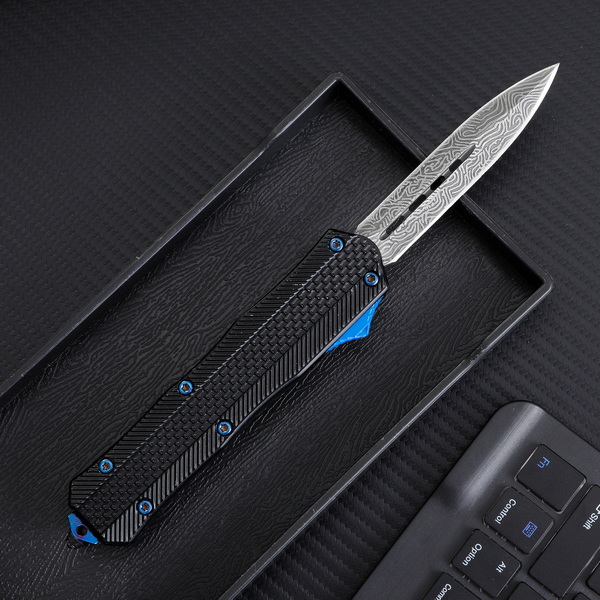
An Automatic OTF Knife (Out‑The‑Front knife) is an automatic knife whose blade travels forward in a straight line through an opening at the front of the handle instead of swinging out from the side on a pivot. When closed, the entire blade sits fully inside the handle; when activated, the blade shoots forward and locks into place, then retracts back into the handle along the same path.[13][10]
Most Automatic OTF Knife models are either single‑action or double‑action. Single‑action Automatic OTF Knife versions deploy automatically but require manual resetting of the spring, while double‑action Automatic OTF Knife systems can both deploy and retract the blade with the same switch or slider for maximum convenience.[10][13]
Inside a typical double‑action Automatic OTF Knife, the blade is attached to a carriage that rides on metal rails within the handle, guided by precisely machined channels. When the user pushes the thumb slide forward, the internal spring system stores energy and then releases it, driving the blade forward until it locks at full extension; pulling the slide back reverses this process and draws the blade safely into the handle.[7][13]
The Automatic OTF Knife mechanism includes multiple stops, latches, and springs to control blade travel and to keep it secure in both open and closed positions. Quality Automatic OTF Knife designs rely on CNC‑machined components and tight tolerances so that deployment feels crisp and repeatable, even after extended use.[4][14][7][13]
Speed is one of the main reasons users choose an Automatic OTF Knife over other knife types. With one deliberate push of the thumb, the blade deploys in a straight line from the front of the handle, which is much faster than performing several manual steps to open and lock a traditional folder under pressure.[12][15][10]
For first responders, military personnel, and outdoor professionals, the ability to open and close an Automatic OTF Knife with one hand while the other hand manages equipment, rope, or a patient is a real advantage. The one‑hand, out‑the‑front motion of an Automatic OTF Knife also works well when users are wearing gloves, when fine motor skills are reduced, or when space is limited.[15][16][17]
A well‑designed Automatic OTF Knife balances fast deployment with strong safety features. Because the blade is fully enclosed within the handle when closed, there is no exposed edge, which helps minimize accidental cuts when the knife is carried in a pocket, pouch, or backpack.[11][10]
Many Automatic OTF Knife mechanisms are engineered so that if the blade encounters a solid obstruction during deployment, the energy is released and the blade stops or deflects rather than driving with full power into the object. In addition, Automatic OTF Knife switches and sliders typically require deliberate force or a two‑stage motion, reducing the chance of the knife activating unintentionally.[14][18][19]
In daily carry, the slim, rectangular shape of an Automatic OTF Knife sits flat against the body and occupies minimal pocket space. Without the need to fold a blade to the side, an Automatic OTF Knife can deliver impressive blade length while maintaining a compact overall profile.[20][12]
The straight‑line design of an Automatic OTF Knife handle makes it easy to establish a neutral, comfortable grip for both forward and reverse holds. This consistent geometry lets users transition smoothly between precise cutting tasks and more powerful, controlled cuts without constantly repositioning the hand.[21][11]
In outdoor environments, an Automatic OTF Knife can handle tasks such as cutting cordage, slicing webbing, trimming small branches, food prep, and emergency gear adjustments. The rapid access offered by an Automatic OTF Knife is especially valuable when untangling lines, cutting harnesses, or releasing trapped fabric in bad weather or low‑light conditions.[15][21][11]
Tactical users value the Automatic OTF Knife for its intuitive deployment path and minimal movement from carry to ready position. Many Automatic OTF Knife platforms support tanto, drop‑point, dagger, and partially serrated blades, so a single knife can provide both piercing strength and slicing efficiency for a wide range of missions.[9][17][21][15]
A manual folding knife usually requires several coordinated actions—locating a thumb stud, flipper tab, or nail nick, applying pressure, rotating the blade, and ensuring the lock engages. Under stress, in gloves, or in the dark, these steps can be slower and less reliable than the straightforward thumb slide or button of an Automatic OTF Knife.[12][10][15]
Manual folders remain very popular for general use and often provide lower entry prices, a wide range of sizes, and simpler construction. However, users who prioritize extremely fast access, smooth one‑hand operation, and compact EDC carry frequently pick an Automatic OTF Knife as their primary tool and keep a manual folder as a backup or secondary blade.[20][10][12]
Side‑opening automatics also offer fast deployment, but the blade pivots out of the side of the handle and demands lateral clearance. In tight quarters, near the body, or close to obstacles, this swinging motion can be less convenient or more likely to collide with nearby objects than the straight‑line travel of an Automatic OTF Knife.[22][12][20]
With an Automatic OTF Knife, the blade moves directly out and back along the handle's axis, keeping deployment predictable, compact, and easy to control. Automatic OTF Knife users can re‑deploy or retract the blade repeatedly without altering their grip, which is ideal for dynamic situations where conditions change rapidly.[13][22][12]
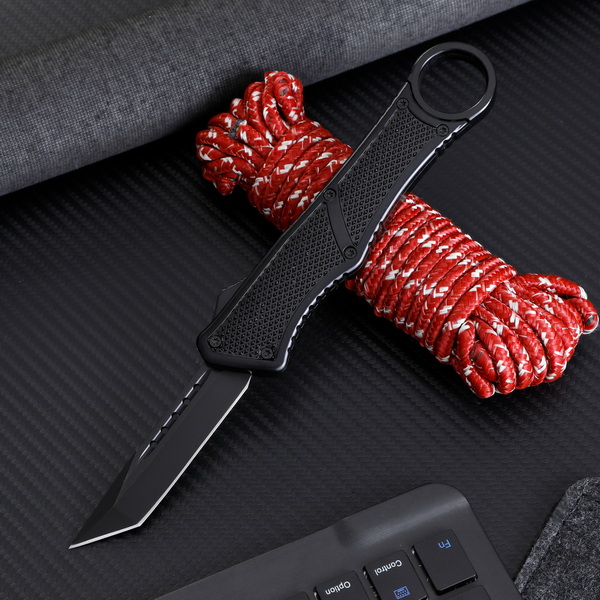
Modern Automatic OTF Knife models use high‑performance steels such as D2, 440C, and other tool steels that balance hardness, edge retention, and corrosion resistance. Handles are commonly made from aluminum alloys like 6061‑T6 or aviation‑grade aluminum, as well as zinc alloy and advanced composites, to combine strength with manageable weight.[3][6][4][7]
Precision CNC machining is critical to the success of an Automatic OTF Knife because the internal parts must slide smoothly and lock reliably within very tight tolerances. When a factory uses fully CNC‑machined components and quality control on both interior and exterior parts, the Automatic OTF Knife benefits from smoother action, better alignment, and longer service life.[4][7]
Because of the sophisticated mechanism, an Automatic OTF Knife performs best when kept clean and lightly lubricated. Regularly blowing out dust, lint, and sand from the handle, then applying a small amount of appropriate lubricant, helps the blade travel and lock consistently.[11][13]
Users should avoid using an Automatic OTF Knife as a prying tool or striking instrument, since lateral torque and impact can stress the internal rails and springs. When employed strictly as a cutting tool, a well‑engineered Automatic OTF Knife delivers reliable deployment and solid lockup over many cycles, making it suitable for long‑term professional and outdoor use.[12][11]
Before choosing an Automatic OTF Knife, it is essential to understand local regulations, since some regions treat automatic knives differently from manual folders. Restrictions may include blade length limits, conditions for concealed or open carry, import rules, or exceptions for law enforcement and military personnel.[17][22][10]
Responsible users handle an Automatic OTF Knife with the same seriousness as any other high‑performance tool, practicing safe deployment, controlled cutting techniques, and secure storage. Training with the Automatic OTF Knife in controlled environments builds muscle memory so that actions remain deliberate and safe when real emergencies arise.[17][11]
For international brands, wholesalers, and knife manufacturers, the Automatic OTF Knife category offers strong commercial potential because it appeals to EDC enthusiasts, tactical professionals, and outdoor users who want premium technology in their cutting tools. Adding an Automatic OTF Knife line helps a brand signal innovation and high performance while capturing a growing segment of the market.[17][11][12]
OEM cooperation with a specialized Automatic OTF Knife factory allows partners to customize blade grinds, coatings, handle designs, hardware colors, and packaging to match their brand identity and price position. (General OEM market insight) By combining in‑house engineering with OEM branding, a company can launch a complete Automatic OTF Knife series with consistent quality, optimized costs, and tailored features for each target region.[3][7][11][12]
In rescue and emergency scenarios, an Automatic OTF Knife can rapidly cut seat belts, webbing, or straps when every second counts. Its one‑hand deployment and compact form make it easy to access even when the user is cramped in a vehicle or confined space.[21][15][17]
In outdoor activities such as camping, climbing, and trekking, an Automatic OTF Knife offers quick solutions for cutting cordage, adjusting tents, trimming branches, or preparing food. Everyday users also appreciate how the Automatic OTF Knife streamlines common tasks like opening boxes, cutting plastic straps, or handling light utility work without needing to put down other gear.[16][21][11]
When selecting an Automatic OTF Knife, it is wise to consider blade length, steel type, edge style, and handle size to match the intended use. Thicker blades and robust steels better support heavier utility and tactical tasks, while thinner blades excel at slicing and detailed cutting.[9][3]
The choice between single‑action and double‑action also matters, with most users favoring double‑action Automatic OTF Knife designs for everyday carry because they allow rapid deployment and retraction with the same control. Buyers should also check for features like glass breakers, pocket clips, textured grips, and warranty support, all of which add value and confidence in daily use.[6][4][10][13]
An Automatic OTF Knife offers a unique combination of lightning‑fast, one‑hand deployment, compact carry, and advanced internal mechanisms that set it apart from manual folders and side‑opening automatics. With precise engineering, quality materials, and practical safety features, the modern Automatic OTF Knife is well suited to emergency responders, tactical professionals, outdoor enthusiasts, and everyday users who demand more from their primary cutting tool.[10][15][11][12]
For brands, wholesalers, and manufacturers, partnering with a skilled OEM producer of Automatic OTF Knife models opens the door to high‑value product lines that meet growing global demand for premium automatic blades. When carried responsibly and used within the law, an Automatic OTF Knife becomes not just another knife, but a high‑performance, mission‑ready instrument built for real‑world challenges.[10][11][12][17]
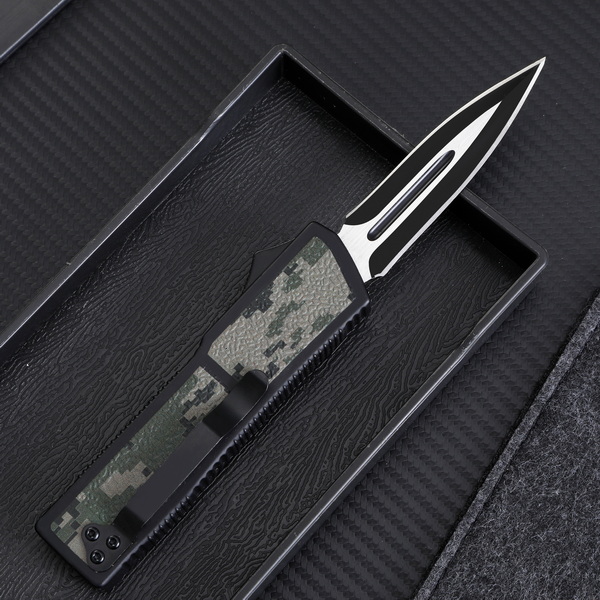
Regulations on owning and carrying an Automatic OTF Knife vary greatly between countries, states, and cities, and some jurisdictions restrict or prohibit automatic knives altogether. Before purchasing or importing an Automatic OTF Knife, always review local laws and, if needed, seek professional legal guidance to ensure compliance.[22][17][10]
A quality Automatic OTF Knife incorporates internal locks, deliberate‑force switches, and full blade containment inside the handle to help minimize accidental deployment in the pocket. Safe handling practices—such as keeping fingers clear of the blade path, engaging locks properly, and storing the knife securely—further enhance safety in daily use.[19][14][13]
An Automatic OTF Knife is optimized as a cutting and piercing tool rather than a pry bar or hammer, and it performs best when used for slicing, controlled pierces, and utility tasks. Heavy twisting, prying, or striking can damage the internal mechanism, so users should select an Automatic OTF Knife with suitable blade thickness and steel for their tasks and avoid abusive use.[3][9][11][12]
Routine maintenance for an Automatic OTF Knife includes blowing out lint and debris from the handle, wiping the blade clean after use, and applying a light lubricant approved for knives to the moving parts. Unless the manufacturer explicitly allows disassembly, it is better to leave the mechanism intact and perform external cleaning only, sending the Automatic OTF Knife for professional service if problems arise.[14][13][11]
Compared with most manual folders, an Automatic OTF Knife provides faster, more intuitive one‑hand deployment and retraction in a straight line, which is easier to manage in emergencies, in gloves, or in confined spaces. For users whose priorities are speed, compactness, and modern automatic performance, an Automatic OTF Knife is often the most effective and efficient option for everyday carry and professional use.[15][11][12][10]
[1](https://www.sogknives.com/pentagon-otf-black/)
[2](https://www.benchmade.com/products/5370fe-shootout-otf)
[3](https://tacknivesusa.com/product/tacknives-automatic-otf-knife-mlt7-series/)
[4](https://cobratecknives.com/product/special-purpose/utility-knives/otf-utility-knife/)
[5](https://store.smith-wesson.com/sale/smith-wesson-swotf9b-assist-opening-otf/SWOTF9B.html)
[6](https://www.vipertecknives.com/products/black-reaper-d-a-otf)
[7](https://ravencresttactical.com/otf-knife-models/)
[8](https://www.trueswords.com/Armed-Force-Tactical-Non-Reflective-Automatic-OTF--51801/51801.html)
[9](https://swordsswords.com/blog/essential-facts-to-know-before-purchasing-an-otf-automatic-knife/)
[10](https://artisancutlery.net/blogs/knife-knowledge/otf-vs-folding-knives-comparison-guide)
[11](https://eknives.com/blog/the-benefits-of-buying-an-otf-knife/)
[12](https://bladeops.com/blog/automatic-knife-vs-manual-folding-knife-which-is-right-for-you/)
[13](https://uppercuttactical.com/blogs/news/how-does-an-otf-knife-work)
[14](https://nobliecustomknives.com/what-is-an-otf-knife-and-how-does-an-otf-knife-work/)
[15](https://bladeops.com/blog/the-advantages-and-disadvantages-of-otf-knives-in-tactical-settings/)
[16](https://dnkknives.com/blog/what-you-need-to-know-about-otf-knives/)
[17](https://crateclub.com/blogs/loadout/are-otf-knives-good-for-self-defense-a-comprehensive-analysis)
[18](https://www.reddit.com/r/knives/comments/14gmc65/has_anyone_held_an_otf_to_their_hand_and/)
[19](https://swordsswords.com/blog/the-different-mechanisms-of-otf-knives-plunger-springassisted-and-more/)
[20](https://www.guns.com/news/otf-vs-folding-knives-for-daily-carry)
[21](https://tacknivesusa.com/the-benefits-of-buying-an-otf-knife/)
[22](https://www.vipertecknives.com/blogs/news/switchblade-vs-otf-knives-key-differences-and-which-to-choose)


