
Views: 222 Author: Leah Publish Time: 2025-11-06 Origin: Site


Content Menu
● The Mechanics of Tactical OTF Knives
>> Single-Action vs Double-Action
● Why Tactical OTF Knives Matter
>> Speed and Efficiency in Real Situations
>> Versatility
● Key Features: What to Look for in Tactical OTF Knives
>> Blade Steel
>> Handle Materials and Ergonomics
>> Locking Mechanisms and Safety
● Comparing Top Tactical OTF Knife Models
>> Mid-Range and Budget Models
● Tactical OTF Knives in Professional Use
>> Law Enforcement and Military
>> Outdoor and Survival Applications
● Maintaining Tactical OTF Knives
>> Cleaning
>> Sharpening
>> Storage
● Legal and Safety Considerations
● Choosing the Perfect Tactical OTF Knife: Step-by-Step Approach
● Frequently Asked Questions (FAQ)
>> 1. Are Tactical OTF knives legal everywhere?
>> 2. What blade steel should I choose for a tactical OTF knife?
>> 3. What's the real difference between single and double action OTF knives?
>> 4. How do I maintain my tactical OTF knife?
>> 5. Why are tactical features like glass breakers and seat belt cutters important?
Tactical OTF knives have surged in popularity among outdoor enthusiasts, first responders, and professionals needing a fast, reliable cutting tool for emergencies and daily tasks. Their defining feature—an out-the-front spring mechanism—offers swift, one-handed blade deployment even in high-stress environments. With dozens of models and features on the market, selecting the right tactical OTF knife demands a clear understanding of every aspect, from blade design to construction materials and legal considerations.[1][5][7]
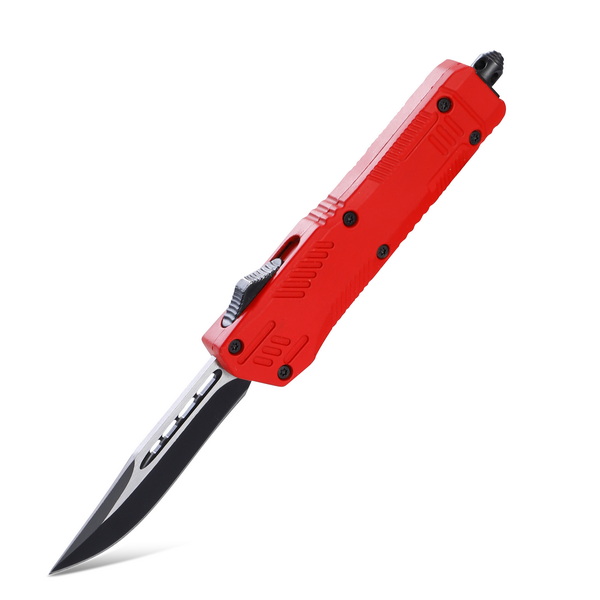
“OTF” stands for “Out-The-Front,” a mechanism in which the blade slides directly out of the handle instead of folding out to the side, as in traditional pocket knives. This design provides quick access and a distinctly modern feel, making tactical OTF knives a favorite for those who value efficiency.[5][1]
- Double-Action OTF Knives: Both deployment and retraction are performed with the same switch, offering repeated use with minimal effort. These are widely favored for everyday carry and tactical use thanks to their convenience.[1][5]
- Single-Action OTF Knives: These deploy automatically but require manual retraction. Their springs are typically stronger, favoring power over convenience, and are preferred for heavy-duty tactical scenarios.[1]
In tactical situations—whether a rescue operation or a self-defense scenario—time is of the essence. The one-handed operation of tactical OTF knives allows the user to quickly deploy or retract the blade, keeping the other hand free for critical tasks or safety.[5][1]
Modern tactical OTF knives are designed to be slim, lightweight, and robust, minimizing bulk while maximizing functionality. They fit easily in a variety of carry options including pockets, vests, and packs, making them practical for field operations and outdoor adventures.[11][1]
From slicing through rope at a campsite to gaining entry during emergency response missions, these knives offer multipurpose functionality in high-pressure environments.[5][1]
- Blade Length: For portability, blades under 3 inches are ideal, meeting many local regulations. Tactical versatility usually lies in the 3–4 inch range, while blades over 4 inches suit heavy outdoor use.[5]
- Blade Shape: Drop point offers all-around utility. Tanto is built for piercing and tactical strength, and dagger or spear point excels in self-defense and precision tasks.[5]
- Edge Type: Plain for simple cuts, serrated for rope and tougher materials, or a mixed edge for versatility.[10][5]
The choice of blade steel impacts sharpness, edge retention, corrosion resistance, and toughness:
- Premium Steels: CPM-S30V, S35VN, M390—all provide long-lasting sharpness and excellent rust resistance, preferred for professional and heavy use.[5]
- Budget Steels: D2 and 440C are solid entry-level choices, balancing cost with reliable performance.[1][5]
- Aluminum and Stainless Steel: These materials deliver durability, corrosion resistance, and a premium feel, standard for high-end tactical OTF knives.[5]
- G-10 and Carbon Fiber: Superior grip and lightweight construction, offering security during wet or slippery conditions.[5]
- Polymer Composites: Lightweight and budget-friendly for entry-level models.[5]
Grip shape, texturing, and handle contours should maximize control and comfort regardless of climate or user hand size.[7][5]
Reliable locking mechanisms enhance both safety and blade stability. Double-action models often rely on spring tension locks, while single-action OTFs favor plunge or side-button locks for greater force at deployment. Many tactical models include a secondary safety switch to prevent accidental deployment—an essential feature for military and law enforcement.[7][1][5]
- Glass Breakers: Designed for emergency car rescue or breaching glass barriers, usually at the knife's base.[5]
- Seat Belt Cutters: Integrated hooks for fast, safe cutting during vehicular accidents or extraction missions.[5]
- Deep Carry Clips: Secure, low-profile attachment options to ensure instant access and retention, minimizing loss.[7][5]
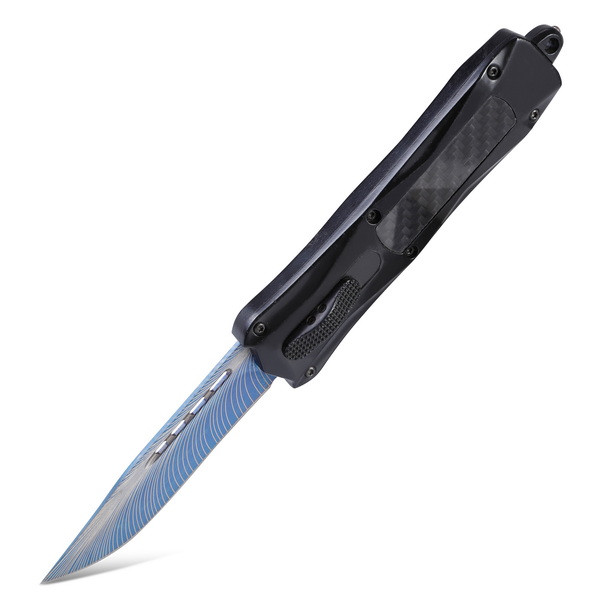
- Microtech Ultratech: Legendary for its premium steel choices (M390, CTS-204P), fast double-action deployment, and ergonomic aluminum handle. Favored by tactical professionals and collectors for its reliability.[1][5]
- Benchmade Infidel: D2 blade and aluminum handle, deep carry pocket clip, and glass breaker for tactical utility. Smooth, precise deployment and robust construction.[1][5]
- Heretic Manticore-X: Elmax blade and aggressive textured handle. Built for rugged environments and heavy use, combining performance with reliability.[1][5]
- Guardian Tactical RECON-035: CPM-154 steel, double-action mechanism, traction inlays for smoothest deployment and glass breaker feature—balanced for versatility.[1][5]
- Boker Kalashnikov OTF: D2 steel, durable aluminum handle, double-action operation. Excellent entry-level performance and affordability.[1][5]
- Smith & Wesson M&P OTF: AUS-8 steel, reliable double-action deploy, ergonomic handle, and aggressive texturing.[1][5]
- SOS OTF Knife: 440C steel, textured aluminum grip, budget-friendly, reliable and smooth action for first-time buyers.[1][5]
These knives are deployed for rapid self-defense, cutting restraints, or breaching windows in urgent response scenarios. Modern tactical OTF knives include powerful glass breakers and seat belt cutters for rescue missions, combining robust build with reliable mechanisms for continuous use.[11][1][5]
The speed of double-action OTF knives is a critical advantage in emergencies, allowing responders to act with both hands and react instantly. Serrated blades and secure grips make it easier to cut tough materials, while anti-slip handles provide safety in wet or stressful conditions.[1][5]
Campers and survivalists rely on tactical OTF knives for woodwork, food prep, paracord cutting, and shelter building. The tough materials and wear-resistant blades ensure the knife stands up to the elements and extreme activities.[11][5]
Collectors value tactical OTF knives for their innovative deployment mechanisms, limited-edition releases, and premium finishing—blending performance with artistry.[5][1]
Regular cleaning of the internal mechanism prevents dust and lint buildup, ensuring smooth blade operation:
- Blow out debris gently with compressed air.[5]
- Apply dry or teflon-based lubricants to minimize friction and avoid gumming up springs.[5]
Use quality stones or ceramic rods, keeping a consistent 20–25° angle per side. Monitor for blade play, slow deployment, or weak springs; resolve these early to maintain reliability.[5]
Keep knives in dry, protected pouches, periodically operating the mechanism to maintain spring tension and overall performance. Long-term storage in moist environments or leather sheaths is discouraged.[5]
Local, state, and national regulations on tactical OTF knives vary significantly. Check laws regarding blade length, automatic operation, and concealed carry before purchasing or traveling with your knife. Failure to comply can result in fines or legal complications, so always research your jurisdiction's rules before selecting or transporting your tactical OTF knife.[7][5]
1. Identify Your Purpose: EDC, tactical, rescue, survival or collecting—shape your decision to match your primary need.[1][5]
2. Budget Planning: High-end for professionals ($300+), mid-range for enthusiasts ($150–$300), budget options for beginners (under $150).[1][5]
3. Key Feature Selection: Pick a blade length/shape suited to your tasks, steel matching your use, deployment style, and handle for control.[1][5]
4. Compare Brands: Trust names like Microtech, Benchmade, Guardian Tactical, Hogue, Boker, or Smith & Wesson for warranty and support.[1][5]
5. Dealer Reliability: Look for reputable sellers who provide warranties, responsive customer service, and return options.[1][5]
Tactical OTF knives have earned their place as essential tools for professionals, outdoor adventurers, collectors, and everyday users. When selecting your first or next tactical OTF knife, consider blade length, steel, deployment style, handle ergonomics, extra tactical features, legal factors, and maintenance needs. With the right decision, your tactical OTF knife will deliver the speed, reliability, and performance needed for any scenario—indoors or in the field.
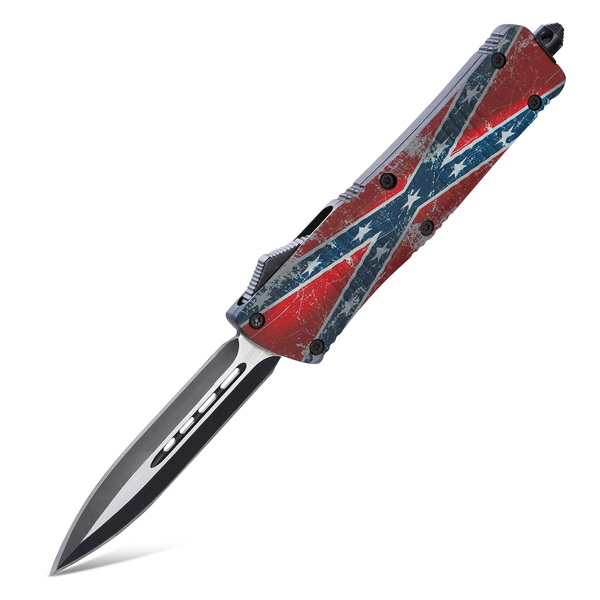
- No. Laws on OTF knives differ by region, with restrictions on blade length, automatic deployment, and concealed carry.[7][5]
- Premium steels like M390, CPM-S30V, and D2 offer balance between edge retention, toughness, and corrosion resistance for tactical tasks.[5][1]
- Double-action knives deploy and retract the blade with one switch—rapid and convenient for tactical use. Single-action deploys automatically but must be manually retracted, offering more spring force.[1][5]
- Clean the internal mechanism regularly, apply dry lubricant, sharpen the blade at proper angles, and store out of moisture to ensure lasting performance.[7][5]
- These rescue-oriented additions allow users to break glass and cut seat belts swiftly, valuable for emergency response, law enforcement, or survival settings.[11][5]
[1](https://bladeops.com/blog/otf-knife-buyers-guide/)
[2](https://ravencresttactical.com/how-to-choose-the-perfect-tactical-knife-a-comprehensive-guide/)
[3](https://knife-depot.com/blogs/sharpened-values/otf-knives-explained-the-complete-guide)
[4](https://www.youtube.com/watch?v=mk0jqi3VmUg)
[5](https://bladeops.com/blog/otf-knife-buyers-guide-what-to-look-for-in-your-next-otf-knife/)
[6](https://www.selfdefensesupply.com/otf-knives-guide)
[7](https://www.bladehq.com/blog/how-to-choose-an-otf-knife)
[8](https://ravencresttactical.com/otf-knife-buyers-guide/)
[9](https://www.tektoknives.com/collections/automatic-and-otf-knives)
[10](https://denalitacticalknives.com/blogs/news/things-to-consider-when-buying-otf-knives)
[11](https://bladeops.com/blog/the-advantages-and-disadvantages-of-otf-knives-in-tactical-settings/)


