
Views: 222 Author: Leah Publish Time: 2025-11-28 Origin: Site


Content Menu
● Introduction: Why Warranty Matters for Automatic OTF Knives
● What Is an Automatic OTF Knife?
● How an Automatic OTF Knife Works
● Advantages of Automatic OTF Knives
● Key Buying Factors Beyond the Brand Name
>> Handle Materials and Ergonomics
>> Mechanism Quality and Safety
● Why Warranty and After-Sales Service Are Critical
● Typical Warranty Coverage for Automatic OTF Knives
● Legal and Practical Considerations
● How to Evaluate an Automatic OTF Knife Brand
● Typical Use Cases for Automatic OTF Knives
● Maintenance Tips for Your Automatic OTF Knife
● How to Use Warranty and After-Sales Support Effectively
● Role of OEM Manufacturers in the OTF Market
● FAQ About Automatic OTF Knives
>> Q1: What makes an Automatic OTF Knife different from a regular folding knife?
>> Q2: Are Automatic OTF Knives legal to carry everywhere?
>> Q3: How often should I service my Automatic OTF Knife?
>> Q4: Does disassembling my Automatic OTF Knife void the warranty?
>> Q5: Why is after‑sales service so important for Automatic OTF Knife brands and OEM customers?
The Automatic OTF Knife, or “out-the-front” automatic knife, has moved from a niche tactical tool to a mainstream choice for EDC users, outdoor professionals, law enforcement, and collectors. These knives offer lightning-fast, one-handed deployment and retraction, making them ideal for high-pressure scenarios where reliability and speed are critical. Because an Automatic OTF Knife uses a complex internal spring and track mechanism, choosing a brand with a strong warranty and dependable after‑sales service is just as important as blade steel, handle design, or price.[2][3][7][8]
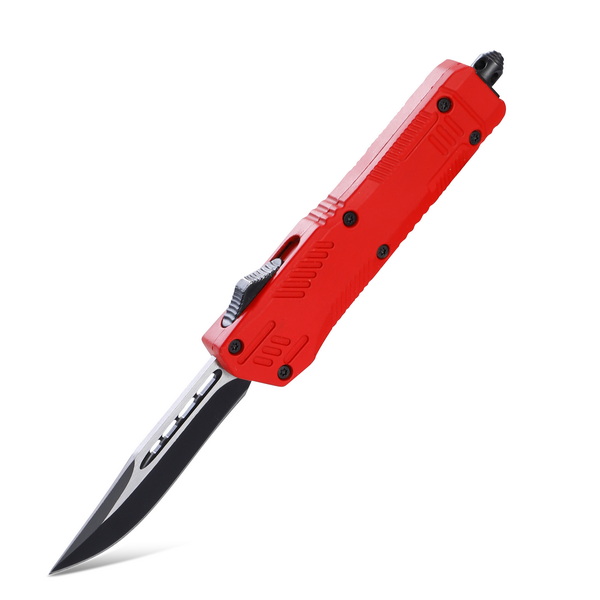
An Automatic OTF Knife is a type of switchblade where the blade extends and retracts in a straight line out of the front of the handle, instead of swinging out from the side like a traditional folder. When the user presses a button or pushes a thumb slide, a spring releases stored energy to drive the blade forward or pull it back into the handle.[3][7][2]
There are two main types of Automatic OTF Knives:
- Single‑action Automatic OTF Knife: The blade deploys automatically but must be manually retracted and reset before it can be fired again.[9][2][3]
- Double‑action Automatic OTF Knife: The same button or slide controls both deployment and retraction, giving true one‑handed operation for opening and closing.[7][2][3]
Double‑action designs dominate the modern market for tactical and EDC use because they are faster to close, easier to operate with gloves, and more convenient when the user's other hand is busy.[2][3]
Inside an Automatic OTF Knife, several critical parts work together: a strong spring, the blade, a firing plate or actuator, and a safety or lock mechanism. In the closed position, the spring is held under tension. When the user activates the switch, the firing plate releases the spring, pushing the blade along a rail system until it locks into place at full extension.[3][2]
On double‑action Automatic OTF Knives, the same control returns the blade. Pulling the switch backward captures the blade and compresses the spring again, safely returning it into the handle. This engineered choreography allows rapid deployment and retraction without the user touching the blade itself, which is a crucial safety advantage in emergencies, rescue work, and tactical situations.[8][9][2][3]
An Automatic OTF Knife offers several practical benefits that explain its popularity:
- Rapid, one‑handed deployment: A simple push on a button or slider brings the blade into action instantly, even when fine motor skills are compromised by stress or gloves.[7][2]
- Compact, symmetrical profile: Because the blade moves in line with the handle, Automatic OTF Knives can be slim, easy to pocket, and ambidextrous in feel.[10][3]
- Controlled retraction: On double‑action models, the blade retracts just as quickly as it deploys, minimizing risk when finishing a task or shifting tools.[9][3]
These features make an Automatic OTF Knife a powerful option for first responders, soldiers, rescue teams, outdoor adventurers, and EDC users who demand speed and control.
When evaluating different Automatic OTF Knife brands with warranty and after‑sales service, focus on both technical features and support policies.
High‑end Automatic OTF Knives often use premium steels such as M390, MagnaCut, S30V, or high‑end stainless options that provide excellent edge retention, corrosion resistance, and toughness. Blade geometry also matters: spear‑point and dagger profiles are popular for piercing and tactical work, while drop‑point or tanto designs suit more general EDC tasks.[1][6][8]
Handles for Automatic OTF Knives are usually made from aluminum, CF‑reinforced polymers, G‑10, or similar materials, balancing light weight with durability. Good ergonomics, traction, and secure grip reduce fatigue and enhance control, especially when hands are wet or gloved.[5][8]
A reliable Automatic OTF Knife should have:
- Solid lockup with minimal blade play.
- A safety mechanism that prevents accidental firing in the pocket.
- A robust internal track and spring system that can withstand repeated use.[2][3][7]
Poorly engineered mechanisms can misfire, fail to lock, or jam under dust and debris, which is why brand quality and after‑sales support are crucial.
Because an Automatic OTF Knife uses a refined spring system and moving internal parts, failure can occur from wear, dirt, or accidental damage. A strong warranty and responsive after‑sales service protect your investment and ensure your Automatic OTF Knife remains safe and reliable in the long term.[3][2]
Good brands typically:
- Offer multi‑year or lifetime warranties against defects.
- Provide factory cleaning, tuning, and sharpening.
- Keep spare parts and trained technicians in‑house.
- Maintain clear, easy claim processes on their websites.[8][2]
If an Automatic OTF Knife is designed as a professional tool, the brand should treat it like one—supported, maintainable, and built for years of service.
While exact terms vary, most serious manufacturers of Automatic OTF Knives include:
- Defects in materials and workmanship: Coverage against poor heat treatment, faulty springs, or misaligned components.
- Normal use: Failures under intended everyday or tactical use are generally supported, even after long periods.[8][2]
- Reasonable repair fees for abuse: Some brands will fix or replace damaged parts for a fee if the knife was obviously abused or modified.
High‑end brands also often provide sharpening, lubrication, and inspection services to keep an Automatic OTF Knife working like new.[6][1]
A complete after‑sales package for an Automatic OTF Knife usually includes:
- Professional cleaning and lubrication: Factory technicians disassemble the knife, clean out dirt, and re‑tune the mechanism.
- Sharpening and edge restoration: Many brands regrind the edge to factory angles, ensuring optimal cutting performance.
- Component replacement: Worn sliders, springs, or screws are replaced from original parts inventory.
- Customer support and technical advice: Email, phone, or chat channels help users troubleshoot minor issues before sending knives in.[2][3][8]
From a user's perspective, this level of service often matters more over time than a small difference in price.
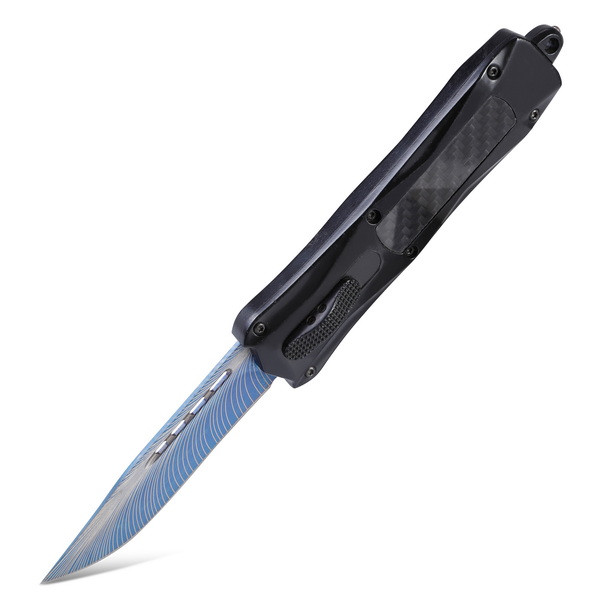
Before purchasing an Automatic OTF Knife, users must understand local regulations. Many jurisdictions set limits on blade length, restrict public carry of automatic knives, or require special permits. Blade lengths around 3–3.5 inches are common in areas where Automatic OTF Knives are legal to carry, but laws differ significantly by region.[2]
Practically, buyers should also ask themselves:
- Is this Automatic OTF Knife for professional duty, rescue, outdoor use, or everyday tasks?
- Will it be exposed to mud, sand, or salt water, demanding easy maintenance?
- Is discreet pocket carry or maximum cutting power the top priority?
The answers guide choices in size, blade shape, handle style, and the level of after‑sales backup required.
When comparing brands that offer Automatic OTF Knives with warranties and after‑sales service, consider:
1. Reputation and history
Established companies with long histories of making Automatic OTF Knives usually have more refined designs and proven service networks.[7][9]
2. Transparency of warranty terms
A reputable brand clearly posts its policies, coverage limits, and claim steps. Hidden or vague warranty wording is a red flag.[2]
3. Turnaround time for repairs
An Automatic OTF Knife is often a working tool, so repair time matters. Brands that quote realistic turnaround and meet those timelines deserve preference.
4. User reviews focused on service
Real‑world feedback about response time, repair quality, and communication is extremely valuable when choosing between Automatic OTF Knife brands.[8][2]
5. Availability of parts
If the brand or its OEM partner keeps springs, sliders, and other key parts in stock, long‑term service becomes more reliable.
A well‑supported Automatic OTF Knife can excel in multiple roles:
- Emergency and rescue: Rapid deployment to cut seat belts, clothing, or ropes, often in confined spaces.
- Tactical and law enforcement: Fast, controlled access to a sharp blade, even under stress and with minimal fine motor control.[7][2]
- Outdoor and survival: Cutting cordage, preparing kindling, or performing field repairs where one‑handed operation is valuable.
- Daily carry: Opening packages, cutting tape, or handling light utility tasks, especially for users who appreciate the mechanical precision of an Automatic OTF Knife.[10][8]
In each role, the combination of mechanical sophistication and strong after‑sales support ensures consistent performance.
Even with a strong warranty, basic care will keep an Automatic OTF Knife running smoothly and reduce the need for repair.
- Keep the mechanism clean: Periodically blow out lint, sand, or dust from the handle opening and around the button or slider.
- Use light lubrication: Apply small amounts of appropriate lubricant to internal tracks and pivot points according to brand recommendations.[3][2]
- Avoid prying or twisting: Automatic OTF Knives are cutting tools, not pry bars; misuse increases the risk of damage even if the warranty exists.
- Inspect regularly: Check for unusual sounds, excessive play, or sluggish deployment; these signs indicate it might be time for a professional service.
Proper upkeep helps any Automatic OTF Knife—whether a premium flagship model or a more affordable OEM‑made knife—deliver consistent, safe performance.
To make the most of a brand's warranty and service for an Automatic OTF Knife:
1. Register the knife if the brand offers registration; this simplifies proof of ownership and speeds claims.
2. Keep purchase records such as invoices or screenshots from authorized dealers.
3. Follow use guidelines so that failure is clearly a defect, not abuse.
4. Contact customer support early if you detect misfires, incomplete lockup, or blade wobble, rather than disassembling the knife yourself.[3][2]
Most manufacturers discourage user disassembly of Automatic OTF Knives because incorrect reassembly can compromise safety and void the warranty.
Many well‑known brands rely on highly capable OEM and ODM factories—often in China—to produce or co‑develop their Automatic OTF Knives. These factories combine CNC machining, precise heat‑treatment processes, and assembly lines specialized for automatic mechanisms. For overseas brands, wholesalers, and knife companies, choosing the right OEM partner is crucial to:
- Achieve consistent quality across large volumes.
- Develop exclusive Automatic OTF Knife designs for different markets and price segments.
- Integrate warranty repair and spare‑parts support into a global supply chain.
An experienced OEM factory can support private‑label Automatic OTF Knife projects from design to packaging, and may even help structure after‑sales workflows for regional distributors.
An Automatic OTF Knife is more than just a striking piece of hardware; it is a precision tool built around a finely tuned spring and track system that demands long‑term support. By focusing on brands that offer clear warranties, real spare‑parts availability, and responsive after‑sales service, users ensure their Automatic OTF Knife will stay reliable for daily utility, outdoor adventures, tactical missions, and emergency response. For overseas brands, wholesalers, and manufacturers, working closely with an advanced OEM factory further strengthens product quality and post‑sale service, creating a full value chain from design and production to warranty and long‑term customer satisfaction.[8][3][2]
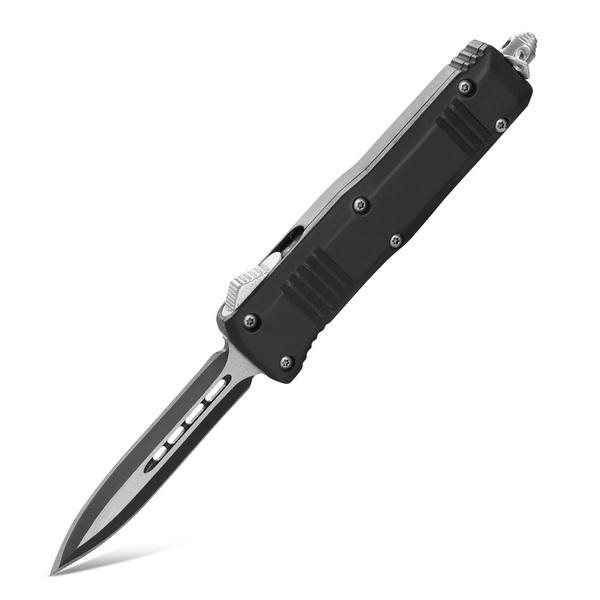
An Automatic OTF Knife uses a spring‑powered mechanism to push the blade straight out of the front of the handle, while a regular folder requires manual opening around a pivot. This provides faster, one‑handed deployment and retraction for users who need immediate blade access.[3][2]
No. Laws regarding Automatic OTF Knives vary widely by country, state, and city, with many regions limiting blade length or restricting automatic knives altogether. Always check local regulations before purchasing, carrying, or importing an Automatic OTF Knife.[2]
Service frequency depends on use and environment. Light EDC use might only require occasional cleaning and lubrication at home, while heavy tactical or outdoor use can justify periodic factory servicing to clean, tune, and inspect the internal mechanism of the Automatic OTF Knife.[3][2]
In many cases, yes. Most manufacturers warn that user disassembly of an Automatic OTF Knife can void the warranty because incorrect reassembly may damage parts or compromise safety. If problems appear, it is usually better to contact the brand's service department instead of fully disassembling the knife.[2]
Because Automatic OTF Knives rely on moving parts and strong springs, wear or contamination can affect performance over time. Robust after‑sales service—repairs, cleaning, spare parts, and clear warranty policies—ensures the knife stays dependable, protects the brand's reputation, and gives end users confidence to use their Automatic OTF Knife as a serious working tool.[8][3][2]
[1](https://www.benchmade.com/products/5370fe-shootout-otf)
[2](https://knife-depot.com/blogs/sharpened-values/otf-knives-explained-the-complete-guide)
[3](https://nobliecustomknives.com/what-is-an-otf-knife-and-how-does-an-otf-knife-work/)
[4](https://www.sogknives.com/pentagon-otf-black/)
[5](https://store.smith-wesson.com/sale/smith-wesson-swotf9b-assist-opening-otf/SWOTF9B.html)
[6](https://ocasoknives.com/products/lucent-automatic-otf-black-large)
[7](https://www.tektoknives.com/blogs/news/understanding-different-types-of-switchblades)
[8](https://eknives.com/blog/5-characteristics-to-consider-automatic-knives/)
[9](https://bladeops.com/blog/the-history-of-otf-knives-from-military-tool-to-everyday-essential/)
[10](https://tacknivesusa.com/what-is-an-otf-knife-and-how-is-it-different-from-other-switchblades/)


