
Views: 222 Author: Leah Publish Time: 2025-10-21 Origin: Site


Content Menu
● What Makes an OTF Knife Unique?
● Popular Blade Materials for Custom OTF Knives
>> Stainless Steel: Reliable and Low Maintenance
>> Carbon Steel: Superior Edge but Requires Care
>> Tool Steels and Powder Metallurgy Steels: The Premium Choice
>> How Blade Shape Influences Material Choice
● Handle Materials and Their Impact on Custom OTF Knives
● Manufacturing Process of Custom OTF Knives
>> Material Preparation and Cutting
>> CNC Machining for Handles and Tracks
>> Heat Treatment and Blade Grinding
>> Assembly of Internal Mechanisms
>> Finishing
● Practical Considerations for Custom OTF Knives
● FAQ
>> 1. What is the best steel for everyday carry custom OTF knives?
>> 2. Are carbon steel blades suitable for OTF knives?
>> 3. How does CPM-S30V compare to D2 steel for OTF knives?
>> 4. Does blade shape affect the choice of steel?
>> 5. Can Damascus steel be used for custom OTF knife blades?
Customized OTF (Out-The-Front) knives have surged in popularity across global outdoor, tactical, and everyday carry markets. For manufacturers and exporters like Yangjiang Ruizhen Industry and Trade Co., Ltd., delivering exceptional quality OEM OTF knives demands deep expertise in selecting the optimal blade materials. This comprehensive guide explores the best blade steels for custom OTF knives, emphasizing performance factors such as edge retention, corrosion resistance, toughness, and mechanical compatibility with OTF mechanisms. Alongside detailed material profiles, this article offers practical insights into manufacturing considerations, assembly precision, maintenance, and more, making it an essential resource for OEM producers aiming to meet diverse global needs.
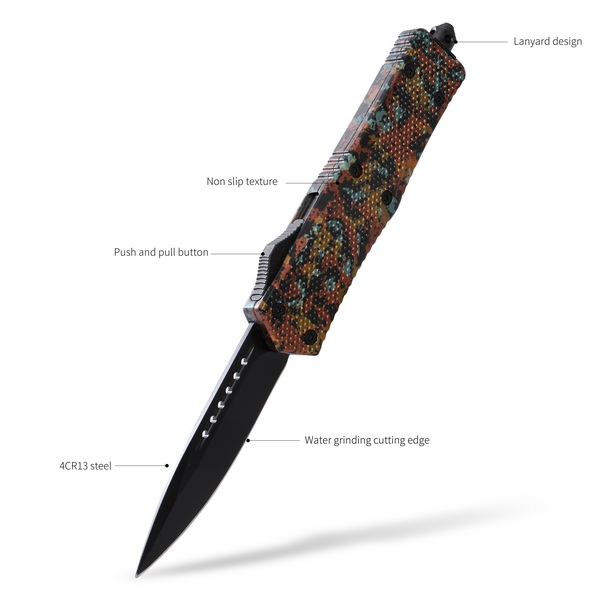
OTF knives feature a blade that slides straight out from the front of the handle, controlled by springs or manual triggers. This design requires blade steels that are not only sharp and hard but also mechanically reliable under repeated action and resistant to environmental wear. Because of their intricate internal mechanisms, OTF blades must maintain dimensional stability and resist corrosion to keep smooth deployment and locking performance.
Unlike folding or fixed blades, OTF knives operate within internal tracks and locking systems, making the choice of blade steel critical for both function and longevity. The right material choice impacts user experience significantly, particularly for custom knives tailored under OEM conditions for global clients.
Stainless steels dominate the OTF knife market due to their excellent corrosion resistance, which is vital for knives exposed to moisture, sweat, and outdoor elements. For custom OTF knives, popular stainless steels include:
- 440C: Economical with decent corrosion resistance and moderate edge retention suitable for budget-conscious products.
- VG-10: Premium Japanese steel known for excellent sharpness and rust resistance.
- 154CM: High-carbon American stainless steel balancing hardness and corrosion resistance well.
- CTS-XHP: Powder metallurgy steel offering exceptional wear resistance and toughness.
- CPM-S30V: A premium steel with superior edge retention, rust resistance, and toughness ideal for high-performance OTF blades.
Benefits of stainless steel blades:
- Resist rust and stains effectively
- Require less frequent sharpening
- Versatile for everyday carry and outdoor use
Custom OTF knives with carbon steel blades offer sharper edges and better wear resistance but at the expense of corrosion vulnerability. Carbon steel like 1095 or D2 requires regular maintenance, including thorough drying and oiling after use, to prevent rust. Carbon steel is favored for users prioritizing sharpness and edge retention over convenience.
For the most demanding custom OTF knives, powder metallurgy steels such as CPM-S30V, CPM-20CV, and M390 stand out. These steels offer:
- Superior edge retention (lasting sharper longer)
- Excellent corrosion resistance
- High toughness to resist chipping under stress
D2 steel, semi-stainless tool steel, is another option favored for its toughness and edge retention, though it requires more maintenance to avoid rust.
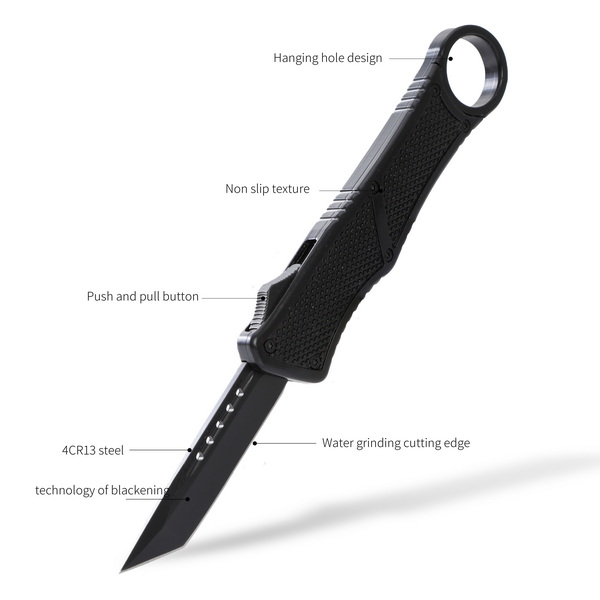
Certain blade shapes like tanto or clip point concentrate stress on the tip, requiring tougher, harder steels to avoid chipping. More versatile shapes like drop point can use a wider variety of steels. This consideration is critical in custom OTF production to match blade geometry with optimal steel for intended use.
The blade material is only part of crafting top-tier custom OTF knives. The handle's material affects grip, comfort, and durability. Common materials include:
- Aluminum: Lightweight, corrosion-resistant, and strong.
- G-10: Durable fiberglass composite with excellent grip in wet conditions.
- Carbon Fiber: Lightweight with premium appearance but less impact resistance.
- Textured Polymer: Cost-effective with solid grip and durability.
These materials support the mechanical precision needed for OTF action while delivering ergonomic handling.
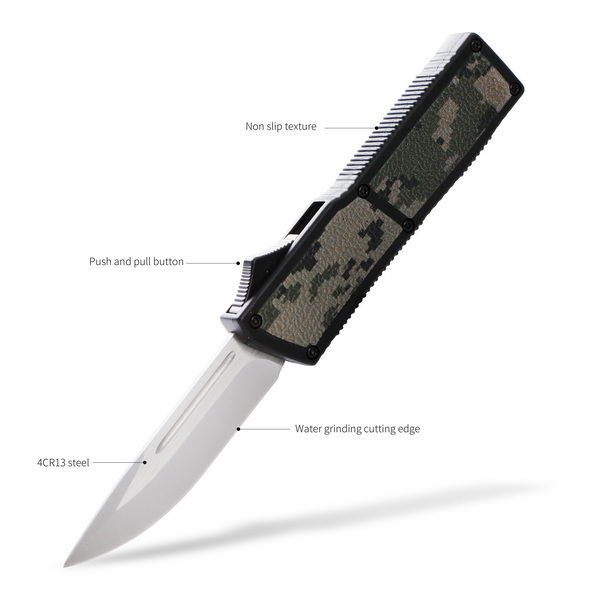
The production of custom OTF knives integrates advanced manufacturing techniques with precision craftsmanship to ensure durability, smooth function, and aesthetic appeal.
Blade steel sheets are first carefully selected based on desired properties. The steel is cut slightly larger than final dimensions to allow for precise machining and grinding later. Cutting can be done by laser or water jet with strict tolerances, critical at the initial stage to prevent defects downstream.
Handles typically start as blocks of aluminum or other chosen materials and are machined using CNC tooling. These machines create intricate internal tracks, cutouts, and end stops that enable smooth blade deployment and retraction. Achieving tolerances within 0.001 inches (a quarter of a sheet of paper's thickness) is necessary to ensure flawless mechanical performance.
Blades undergo specialized heat treatment processes tailored to the steel's chemistry, balancing hardness, toughness, and wear resistance. Once heat-treated, blades are ground to final thickness and sharpened using precision grinders. This step often includes adding bevels and refining cutting edges to exact specifications.
OTF knives have complex internal mechanisms including springs, firing plates, locking tabs, and triggers. These components are frequently crafted from stainless steel for durability and corrosion resistance. Assembly requires meticulous alignment and testing to ensure smooth trigger action and solid blade lockup, avoiding any tolerance stack issues that can degrade performance.
Final finishing involves processes such as tumbling, anodizing handles, and applying blade coatings like stonewash or DLC (Diamond-Like Carbon) for wear resistance and aesthetic appeal. Each knife passes rigorous quality control and hand sharpening before packaging.
Even the best materials require proper care:
- Clean and dry blades thoroughly after exposure to moisture.
- Oil internal mechanisms regularly, especially for carbon steels.
- Avoid harsh chemicals that may damage coatings or steel properties.
- Use suitable sharpening stones or systems to maintain edge integrity.
Because OTF knives have unique deployment mechanisms, their legal status varies worldwide. OEM manufacturers and exporters should equip clients with appropriate compliance information.
Choosing the best blade material is paramount in manufacturing custom OTF knives that meet the rigorous demands of outdoor enthusiasts, tactical users, and everyday carriers worldwide. Stainless steels like CPM-S30V, VG-10, and CPM-20CV excel for their balanced performance, corrosion resistance, and ease of maintenance. Carbon and tool steels offer sharpness and toughness for specialized needs but require more care. When combined with high-quality handle materials and precise manufacturing processes, these steels enable Yangjiang Ruizhen Industry and Trade Co., Ltd. to deliver superior OEM custom OTF knives that stand out in quality and reliability.
For everyday carry, stainless steels such as VG-10, 154CM, and CPM-S30V provide an excellent balance of corrosion resistance, edge retention, and ease of maintenance.
Yes, carbon steel blades offer superior sharpness and edge retention but require careful maintenance to prevent rusting, which may be less convenient for casual users.
CPM-S30V is a premium stainless powder metallurgy steel with superior corrosion resistance and edge retention, ideal for high-end OTF knives. D2 is tougher and durable but needs more maintenance to avoid rust.
Yes, blade shapes concentrating stress on the tip, like tanto, benefit from harder, tougher steels to avoid chipping. Versatile shapes like drop point can use a broader range of steels.
Damascus steel can be used but is less practical for OTF knives due to mechanical demands and typically requires more care to maintain its pattern and corrosion resistance. It is usually a premium aesthetic option.
[1](https://www.youtube.com/watch?v=_Xx_Gp_g2c8)
[2](https://eknives.com/blog/reate-knives-manufacturing-process-in-depth-look)
[3](https://www.58hrcknives.com/top-custom-otf-knives-manufacturers-and-suppliers-in-canada.html)
[4](https://nobliecustomknives.com/what-is-an-otf-knife-and-how-does-an-otf-knife-work/)
[5](https://eknives.com/blog/microtech-knives-manufacturing-process/)
[6](https://www.reddit.com/r/knifemaking/comments/1adimfe/building_a_custom_automatic_knife_in_under_a/)
[7](https://www.youtube.com/watch?v=EwG2oytZCl8)
[8](https://www.shieldon.net/what-you-should-know-about-design-and-custom-manufacture-of-fixed-blade-knife-in-2022/)
[9](https://tacknivesusa.com/custom-otf-knives-the-distinctive-collections-features/)
[10](https://www.58hrcknives.com/how-ruizhen-designs-industry-leading-heavy-duty-otf-knives.html)


