
Views: 222 Author: Leah Publish Time: 2025-11-01 Origin: Site


Content Menu
● What Defines a Custom OTF Knife?
● Design for Retail and E-commerce
● Quality Assurance and Testing
● Compliance, Legal, and Safety Considerations
● The Manufacturing Process of Custom OTF Knives
● Materials Trends for 2025 and Beyond
● Case for Chinese OEM Expertise
● How to Start an OEM Partnership
● Real-World Applications and Market Opportunities
● FAQ
>> 1. What is a Custom OTF Knife?
>> 2. Why work with an OEM partner for Custom OTF Knives?
>> 3. What materials are commonly used in premium Custom OTF Knives?
>> 4. Are Custom OTF Knives legal worldwide?
>> 5. How do OEM services benefit international brands?
In today's fast-paced outdoor gear ecosystem, overseas brands, wholesalers, and manufacturers seek reliable OEM partnerships to bring Custom OTF Knives to market quickly and consistently. Quality, performance, and branding must travel together from design brief to delivery, ensuring each SKU stands out in crowded e-commerce catalogs and busy retail shelves. This article explores the strategies, processes, and best practices that define successful OEM collaborations for Custom OTF Knives, covering product design, material selection, manufacturing workflows, QA systems, regulatory considerations, and go-to-market planning. It also outlines practical steps for initiating partnerships, from the RFP stage to final packaging and after-sales support. Visuals throughout the article illustrate core concepts, from internal mechanisms to finished product presentation.
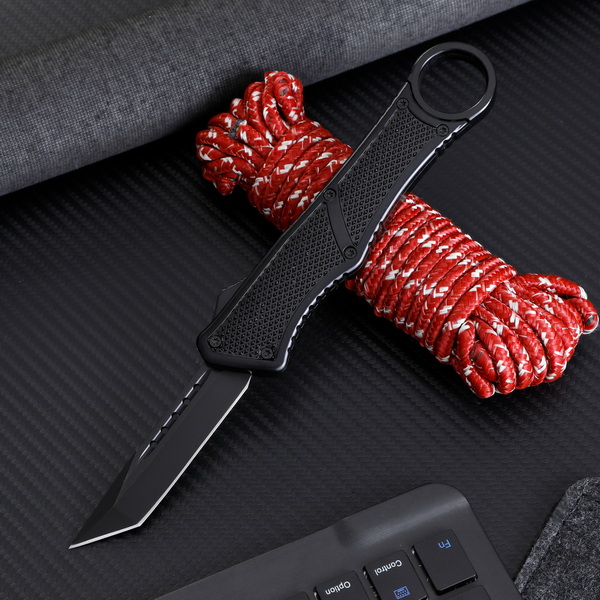
An Out-The-Front (OTF) knife deploys its blade through a front-loaded mechanism, typically driven by a spring and activated by a slider or button. In a true Custom OTF Knife, the blade geometry, deployment speed, and locking reliability are tailored to specific brand requirements and end-user expectations. Customization in an OEM context often spans:
- Blade steel selection and heat treatment profiles for edge retention, toughness, and corrosion resistance.
- Handle materials and finishes (G10, aluminum, titanium, carbon fiber, or reinforced composites) to balance grip, weight, and aesthetics.
- Deployment mechanism variants (double-action versus single-action, with considerations for smoothness, resistance, and safety).
- Surface finishes, coatings (PVD, DLC, satin), and engravings or branding elements.
- Packaging, product branding, and safety documentation aligned with each market's regulations.
Visuals you'll want near this section: a labeled diagram of the OTF action, close-up shots of blade and handle features, and a short explainer video illustrating deployment mechanics and customization options. This section anchors readers with a precise understanding of what “custom” means in the OTF context.
OEM partnerships for Custom OTF Knives revolve around end-to-end support from concept to after-sales. Key roles include:
- Collaborative product development: design briefs, CAD modeling, tolerancing, and prototyping to validate form, fit, and function.
- Tooling and production readiness: development of fixtures, jigs, and production lines aligned to MOQs and ramp plans.
- Quality assurance discipline: inline controls, end-of-line testing, and traceability systems to guarantee batch reliability.
- Compliance and documentation: assistance with labeling, safety warnings, and country-specific certifications to meet import/export requirements.
- Logistics and after-sales support: scalable shipping options, warranty management, and replacement-part availability for retailers and customers.
This section should be accompanied by a process flow illustrating the stages from concept to shipping and a short video that highlights the production line and QA checkpoints.
Material choices critically influence performance, cost, and durability in diverse environments. Common configurations for Custom OTF Knives include:
- Blades: high-carbon stainless steels and tool steels known for hardness, edge retention, and wear resistance. Heat treatment targets balance hardness with toughness to withstand deployment cycles.
- Handles: G10, aluminum, titanium, carbon fiber, and reinforced composites, selected for strength-to-weight ratios, grip texture, and corrosion resistance.
- Coatings and finishes: PVD and DLC coatings for reduced wear and corrosion protection; satin or stonewashed finishes for aesthetics and concealment of wear.
- Internal components: precision-machined slide tracks, springs, and locking discs engineered to tolerances within a few thousandths of an inch.
Quality control benchmarks include material traceability, hardness testing, surface finish inspection, and kraus-and-check style functional testing to ensure deployment speed and lock integrity. A visual comparison section can present material properties side-by-side, aiding buyers in selecting the right combination for their target markets.
For online and offline channels, how a knife is designed for presentation matters almost as much as how it performs. Key considerations include:
- Clear product storytelling: highlight deployment speed, reliability, and safety features in listings and marketing materials.
- Packaging design: secure inserts, protective blister packs, and branding that communicates premium positioning and OEM credibility.
- Listing attributes: standardized specs (blade length, overall length, weight, opening/closing force, edge geometry) and clear usage disclaimers where required by law.
A robust OEM program delivers ready-to-market SKUs with packaging, safety data, and branding assets, enabling brands to reduce time-to-market and increase consistency across geographies.
QA is the backbone of reliability and brand trust. Effective QA for Custom OTF Knives includes:
- Incoming material inspection: verifies steel grades, hardness potential, and material certifications before production begins.
- In-process controls: CNC tolerances, fit between blade, slide, and lock components, and surface finish checks during machining.
- End-of-line functional tests: deployment speed, retraction smoothness, lock security, and cycling endurance tests to simulate real-world use.
- Reliability and environmental testing: salt spray or humidity exposure, temperature cycling, and shock/drop tests to ensure performance across climates.
- Traceability and documentation: batch numbers, serial tracking, and QA records for every unit or batch, enabling rapid warranty and recall management if needed.
OTF knives are subject to varied regulatory landscapes. OEM partners must navigate:
- Jurisdictional restrictions on deployment mechanisms, blade length, or possession in certain markets.
- Safety labeling, usage warnings, and country-specific documentation to facilitate compliant sales.
- Age restrictions or licensing requirements in some regions, influencing product positioning and packaging.
- Export controls and IP protections, ensuring that design data and tooling stay secure during cross-border collaborations.
This section should pair with a compliance checklist infographic and a brief video summary of do/don't guidelines for retailers and end-users.
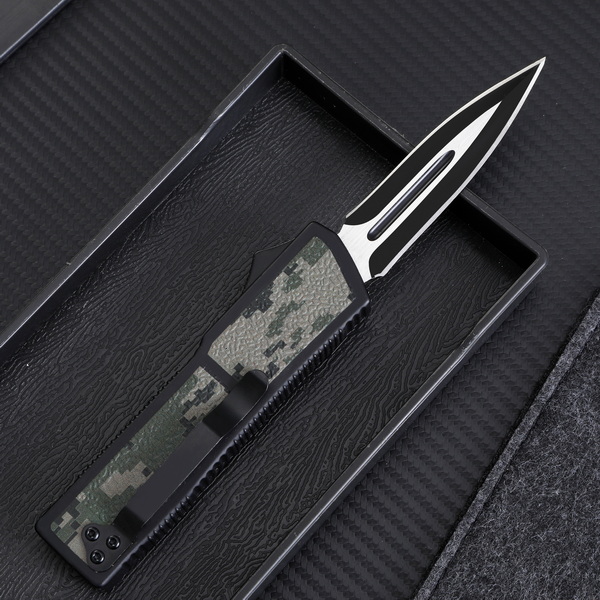
A typical Custom OTF Knives workflow in an OEM context comprises:
- Concept and brief: defining intended use, target markets, and performance criteria.
- CAD modeling and simulation: precise geometry for blade, slider, and locking components, with tolerances specified.
- Prototyping: rapid iterations to validate fit, feel, and deployment behavior.
- Tooling development: fixture, jig, and die creation tailored to the production volume.
- First article inspection: rigorous assessment of the initial parts to ensure alignment with specifications.
- Pre-production run: limited batch to validate mass production readiness.
- Mass production: calibrated machining, heat treatment, coating, and assembly processes running at planned throughput.
- Final packaging and QA: packing and quality checks aligned with branding and regulatory requirements.
A visual flow diagram accompanies this section, along with photos of sample parts across stages.
The knife industry continually evolves with advances in steel technology, coatings, and composites. Emerging trends include:
- Advanced steels with improved toughness and corrosion resistance, enabling sharper edges and longer service life.
- Lightweight, high-strength handle materials that enhance ergonomics for extended use.
- Wear-resistant coatings that endure deployment cycles without cracking or delaminating.
- Sustainable and recyclable packaging materials aligned with eco-conscious consumer segments.
Discussing these trends helps brands plan long-term SKUs and sustainable cost models.
China remains a critical hub for high-precision manufacturing, with capabilities spanning design support, rapid prototyping, volume production, and global logistics. When brands consider Chinese OEM partners for Custom OTF Knives, they should evaluate:
- Capability alignment: whether the partner can meet tolerances, material requirements, and design intent.
- IP protection: robust NDAs, secure data handling, and clearly defined ownership terms.
- Communication standards: clear project management, regular updates, and multilingual support where needed.
- Quality assurance and traceability: transparent QA records and scalable testing capabilities.
A regional map illustrating supply-chain breadth and a vendor onboarding checklist can illustrate these capabilities for brands exploring partnerships.
Practical steps to initiate a successful partnership:
- Define product requirements: performance targets, target markets, and regulatory considerations.
- Request prototypes and samples: verify tolerances, deployment feel, and aesthetic alignment.
- Align MOQs and pricing: establish realistic production volumes and pricing structures.
- Set QA expectations: define QA steps, acceptance criteria, and documentation needs.
- Determine labeling and branding: artwork files, branding guidelines, and packaging standards.
- Finalize logistics: shipping terms, lead times, and incoterms that fit the buyer's supply chain.
- Protect IP: establish NDAs and clear terms for data sharing and design ownership.
Clarify a straightforward RFP checklist to guide brands through supplier evaluation and onboarding.
Custom OTF Knives serve multiple channels:
- Outdoor adventure and expedition gear: camping, trekking, bushcraft, and survival kits.
- Professional and training sectors: law enforcement, EMS, and tactical training facilities (subject to legal allowances in each jurisdiction).
- Collector and enthusiast markets: limited runs, serial numbering, and unique finishes for premium appeal.
- E-commerce and retail: fast-throughput SKUs, compelling product pages, and consistent branding across platforms.
A gallery-style section featuring lifestyle shots and application images reinforces the practical usefulness and aspirational appeal of Custom OTF Knives in different environments.
Partnering with a capable OEM for Custom OTF Knives accelerates time-to-market, ensures consistent quality, and delivers scalable production aligned with international e-commerce and retail demands. A well-structured OEM relationship reduces risk, enables rapid iteration, and supports diverse market strategies—from premium limited runs to broad distribution. By prioritizing design collaboration, stringent QA, regulatory readiness, and compelling visual storytelling, brands can build a resilient portfolio of Custom OTF Knives that resonates across global markets.
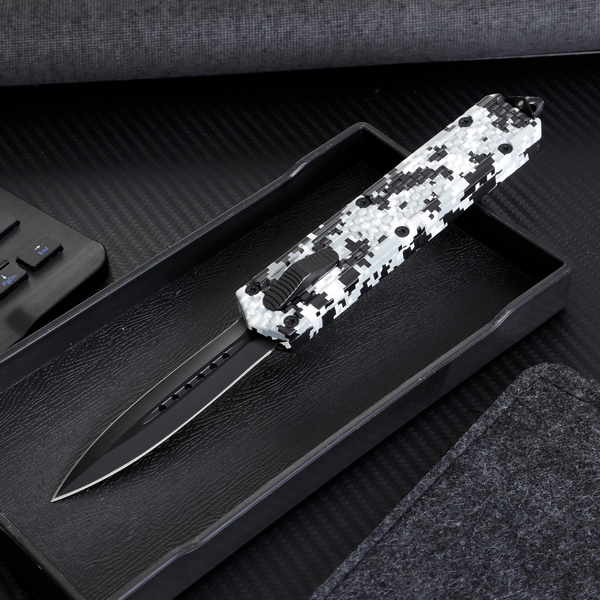
- Answer: An Out-The-Front knife whose blade deploys automatically through a front-loading mechanism, typically activated by a slider or button; customization encompasses blade steel, handle materials, coatings, and branding.
- Answer: OEM partners enable design collaboration, tooling development, controlled production, consistent QA, and scalable supply to meet international brand requirements while enabling faster time-to-market and cost efficiency.
- Answer: Premium blades often use high-carbon stainless steels or tool steels with appropriate heat treatments; handles employ G10, aluminum, titanium, carbon fiber, or reinforced composites; coatings include PVD or DLC for protection and aesthetics.
- Answer: Legal status varies by country and region; some locales regulate deployment mechanisms or blade dimensions, requiring careful compliance planning, labeling, and certifications for each market.
- Answer: They provide coordinated product development, predictable lead times, quality control, cost efficiencies, and scalable production aligned with global distribution and e-commerce strategies.
[1](https://www.58hrcknives.com/top-custom-otf-knives-manufacturers-and-suppliers-in-germany.html)
[2](https://www.youtube.com/watch?v=EwG2oytZCl8)
[3](https://www.yorksaw.com/blade-manufacturing/)
[4](https://eknives.com/blog/reate-knives-manufacturing-process-in-depth-look)
[5](https://www.youtube.com/watch?v=_Xx_Gp_g2c8)
[6](https://tacknivesusa.com/custom-otf-knives-the-distinctive-collections-features/)
[7](https://www.reddit.com/r/knifemaking/comments/1adimfe/building_a_custom_automatic_knife_in_under_a/)
[8](https://nobliecustomknives.com/what-is-an-otf-knife-and-how-does-an-otf-knife-work/)
[9](https://knife-depot.com/blogs/sharpened-values/otf-knives-explained-the-complete-guide)
[10](https://eknives.com/blog/microtech-knives-manufacturing-process/)


