
Views: 222 Author: Leah Publish Time: 2025-10-11 Origin: Site


Content Menu
● Understanding Heavy-Duty OTF Knives
● The Importance of Blade Steel
● Top Blade Steels for Heavy-Duty OTF Knives
>> D2 Steel
>> M390 Steel
>> CPM-Magnacut
● Blade Thickness and Shapes for Heavy-Duty Use
● Handle Materials and Ergonomics
● Locking Mechanisms and Safety Features
● Extra Features for Enhanced Functionality
● Maintenance Tips for Heavy-Duty OTF Knives
● Frequently Asked Questions (FAQ)
>> 1. What steel is best for heavy-duty OTF knife blades?
>> 2. Should I choose single-action or double-action OTF knives for heavy-duty tasks?
>> 3. How thick should the blade of a heavy-duty OTF knife be?
>> 4. Which handle materials provide the best grip and durability for heavy-duty OTF knives?
>> 5. How should I maintain my heavy-duty OTF knife?
Heavy-Duty OTF (Out-the-Front) knives have established themselves as essential tools among outdoor enthusiasts, tactical professionals, first responders, and collectors worldwide. Their signature design allows the blade to deploy quickly and smoothly straight out of the handle, operated conveniently with one hand. The critical factor that determines the performance, durability, and reliability of these knives is the material used for their blades. This article provides an in-depth exploration of the best materials for heavy-duty OTF knife blades, highlighting the steel types favored for strength and longevity, handle materials, deployment mechanisms, and other critical features that make these knives ideal for demanding outdoor and tactical tasks.
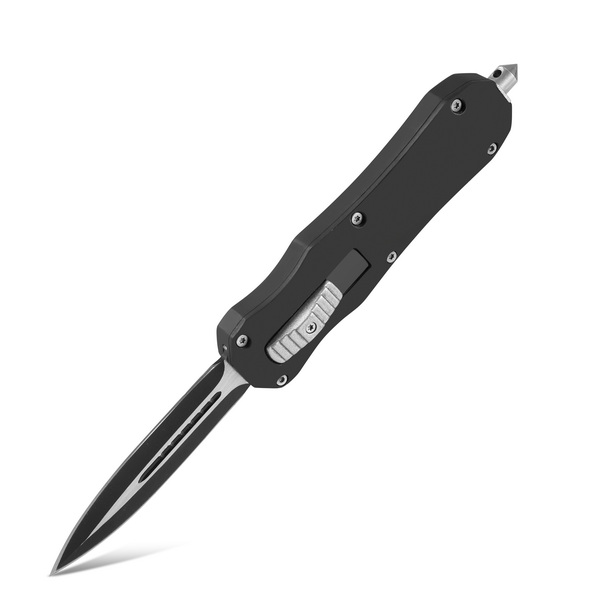
A heavy-duty OTF knife is specifically engineered to withstand rigorous cutting tasks typical in tactical, survival, and emergency contexts. These knives feature larger, thicker blades made from high-quality steel, designed to endure harsh environments while retaining sharpness and structural integrity. Their unique out-the-front deployment mechanism allows instant blade access, a crucial advantage when quick, precise action is necessary.
Blade steel quality is arguably the most crucial component of a knife's effectiveness. It directly impacts edge retention, toughness, resistance to corrosion, and overall durability—key attributes especially for heavy-duty applications where the blade regularly faces abrasive surfaces, heavy use, and environmental challenges. Choosing the right steel ensures the knife remains reliable and serviceable over long periods.
D2 steel is one of the most popular choices for heavy-duty knives due to its excellent wear resistance and toughness. It is a semi-stainless tool steel with a high carbon content, granting it the ability to maintain a sharp edge for extended periods. While it is not fully stainless and requires some maintenance to prevent corrosion, its combination of hardness and durability makes it cost-effective and dependable for rugged outdoor and tactical OTF knives.
These two premium stainless steels are among the top choices for high-end heavy-duty OTF knives. Through powder metallurgy, both CPM-S30V and its improved variant CPM-S35VN deliver exceptional edge retention, corrosion resistance, and toughness. CPM-S35VN offers enhanced toughness and easier sharpening without sacrificing edge retention. Knives made from these steels perform well in varied and demanding conditions while requiring less upkeep.
M390 is a remarkable premium stainless steel lauded for its superior corrosion resistance, wear resistance, and edge stability. Its fine-grained powder metallurgy makes it both tough and easy to sharpen, perfect for heavy-duty OTF knives used frequently in wet or harsh outdoor environments. The steel holds its edge longer than many conventional steels, making it ideal for users who want reliability under extreme conditions.
A newer addition to the high-performance steel family, CPM-Magnacut balances toughness, corrosion resistance, and edge retention exceptionally well. It performs impressively under impact and abrasive tasks without chips or dulling. Its versatility makes it a worthy choice for heavy-duty OTF applications where knife users demand strength, longevity, and quick edge renewal.
These steels provide a good balance of sharpness, toughness, and corrosion resistance. Although they are not classified as premium steels like M390 or CPM-S30V, they still offer reliable performance for medium- to heavy-duty OTF knives. Their popularity stems from affordability and effectiveness when coupled with proper heat treatment.
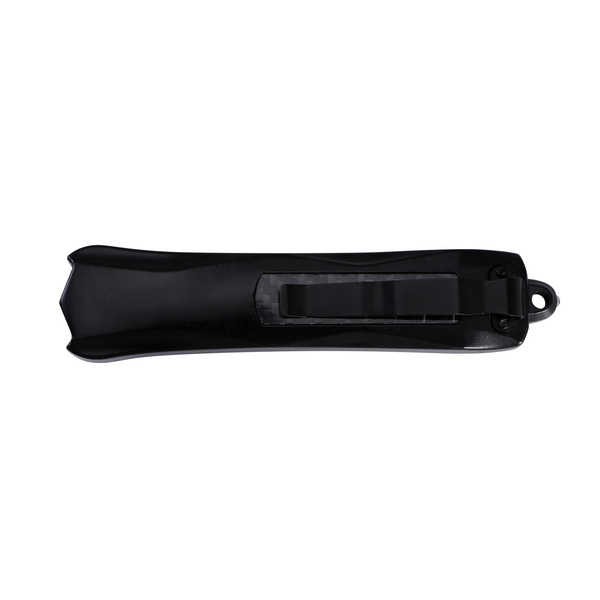
Blade thickness plays a significant role in the strength and resilience of heavy-duty knives. A thicker blade ranging from 0.12 to 0.17 inches or more can resist bending or breaking under pressure during tough jobs. Popular blade shapes in OTF knives for heavy-duty use include:
- Tanto: Featuring a reinforced tip, excellent for piercing and prying.
- Drop Point: Offers powerful control and versatility in cutting.
- Spear Point: Balanced for piercing and slicing tasks.
- Double-Edge Dagger: Optimized for thrusting and combat applications.
Each shape serves specific purposes, enhancing the knife's suitability for various outdoor and tactical scenarios.
The choice of handle materials affects grip security, durability, and comfort—vital for prolonged or demanding use.
- Aluminum: Lightweight yet durable and corrosion-resistant, often anodized for scratch resistance.
- G-10: A composite laminate that remains grippy even when wet and withstands impacts without cracking.
- Carbon Fiber: Extremely lightweight with a sleek finish but slightly less impact-resistant.
- Textured Polymer: Economical and effective at providing solid grip quality, typical in budget-focused knives.
Ergonomic handle designs reduce user fatigue and improve maneuverability, which is crucial when performing intensive cutting tasks under adverse conditions.
Heavy-duty OTF knives generally feature either single-action or double-action deployment mechanisms.
- Single-Action OTF Knives: The blade is deployed with a button or switch and retracted manually. These knives often have more robust springs and simpler internal mechanisms, making them suitable for heavy-duty work requiring toughness over speed.
- Double-Action OTF Knives: The blade deploys and retracts with the same button action, enabling faster, repeated blade use. This functionality benefits tactical professionals and first responders who need rapid blade access and retraction.
Users should consider their primary application when choosing between these mechanisms to balance convenience against durability.
A reliable locking system is essential for safe and effective heavy-duty knife use. Plunge locks or spring tension locks are common in OTF knives, securing the blade firmly during use to prevent accidental collapses. Additionally, many models incorporate secondary safety switches or locks that prevent accidental deployment, aligning with safety standards necessary in professional and outdoor environments.
Heavy-duty OTF knives often include practical features tailored to specific tasks, such as:
- Glass Breaker Tips: Designed for emergency rescue operations.
- Seat Belt Cutters: Offer quick cutting of safety harnesses in vehicle emergencies.
- Serrated or Partially Serrated Edges: Improve effectiveness cutting tough fibrous materials, ropes, or straps.
- Textured Handles and Pocket Clips: Facilitate secure carry and provide enhanced grip under slippery or gloved conditions.
These enhancements increase the knife's versatility beyond just cutting applications.
Proper care maximizes the lifespan and reliability of heavy-duty OTF knives. Recommended maintenance includes:
- Cleaning the blade and internal mechanism regularly using compressed air and alcohol wipes.
- Applying light lubrication with Teflon-based or synthetic oils to facilitate smooth blade deployment.
- Sharpening blades periodically with whetstones, guided systems, or professional sharpening to maintain optimal cutting performance.
Routine maintenance prevents corrosion, reduces wear on the mechanism, and ensures dependable operation when every second counts.
Selecting the best materials for a heavy-duty OTF knife blade involves balancing toughness, edge retention, corrosion resistance, and ease of maintenance. Steels like D2, CPM-S30V, M390, and CPM-Magnacut are widely recognized as top choices for their durability and performance under demanding conditions. Combined with durable handle materials, secure locking systems, and practical features, these high-quality blades provide unmatched reliability for tactical users, first responders, outdoor enthusiasts, and collectors alike. When well-maintained, a heavy-duty OTF knife not only excels in utility but becomes a trusted companion in critical moments.
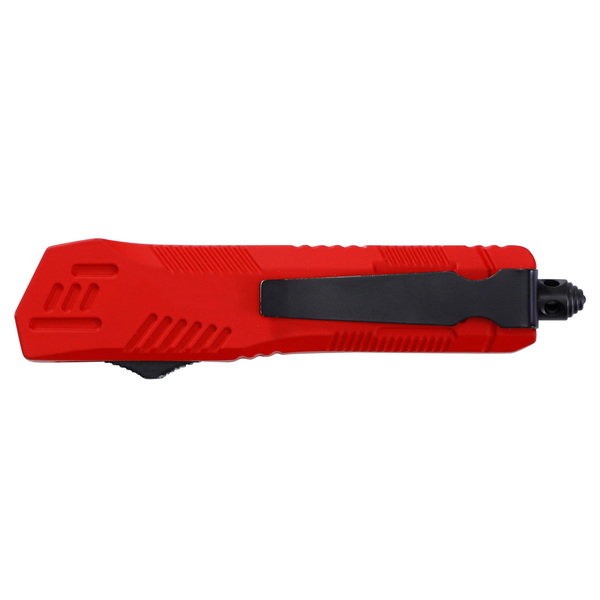
D2 steel is an excellent choice for heavy-duty use due to its toughness and edge retention, while premium stainless steels like CPM-S30V and M390 provide superior corrosion resistance and longer-lasting sharpness.
Single-action knives offer stronger mechanisms better suited for tough jobs but require manual blade retraction. Double-action knives enable faster repeated deployment and are ideal for tactical or rapid-use needs.
A blade thickness of 0.12 to 0.17 inches or more is recommended to ensure strength and durability during heavy cutting applications.
Aluminum and G-10 are favored for their excellent durability and secure grip, even in wet or demanding conditions, making them ideal for rugged outdoor use.
Regular cleaning, light lubrication, and timely sharpening are essential. Maintaining the internal mechanism and blade ensures smooth deployment and long-lasting sharpness.


