
Views: 222 Author: Leah Publish Time: 2025-11-08 Origin: Site


Content Menu
● Introduction to Tactical OTF Knives
● The Mechanics and Action Types of OTF Knives
>> OTF Knife Deployment: How It Works
● Key Considerations: Why Blade Length Matters
>> Functionality, Comfort, and Task Suitability
● Blade Types and Their Tactical Advantage
● Comparing Blade Lengths: Advantages and Trade-Offs
● Tactical Scenarios and Real-World Applications
>> Law Enforcement and Security
>> Outdoor, Survival, and Everyday Use
● Maintenance Tips for Tactical OTF Knives
● Advanced Topics: OTF Knife Innovations and Custom Options
● FAQ
>> 1. What is the best Tactical OTF Knife blade length for everyday carry?
>> 2. Are OTF knives safe to deploy quickly?
>> 3. How do I maintain my Tactical OTF Knife for optimal performance?
>> 4. Is it legal to carry a Tactical OTF Knife everywhere?
>> 5. What blade shape should I choose for tactical purposes?
Tactical OTF Kniveshave gained increasing recognition for their rapid deployment, robust engineering, and diverse applications among professionals and enthusiasts. Selecting the correct blade length is essential not only for task suitability but also legal compliance and carrying comfort. This comprehensive guide explores in depth how to choose the optimal OTF knife size for tactical, outdoor, and everyday use.
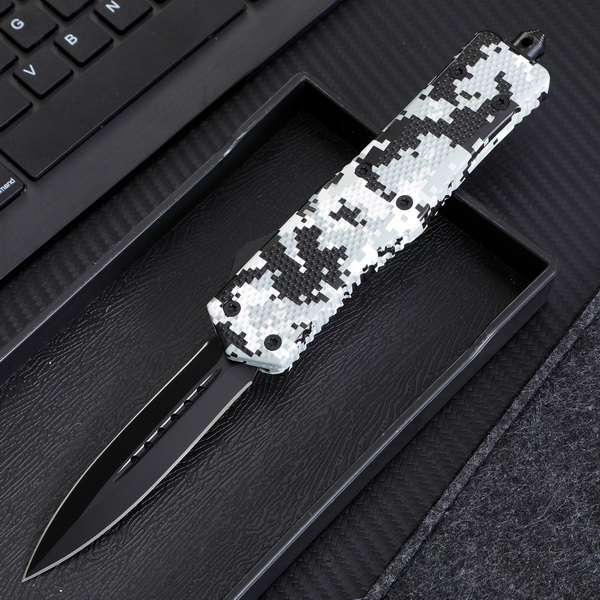
Tactical OTF (Out-The-Front) knives differentiate themselves through an innovative mechanism where the blade ejects and retracts directly through the handle's front. Their swift action and one-handed operation make them popular among law enforcement, military personnel, security professionals, outdoor adventurers, and knife collectors. With such widespread use, blade length becomes central to both functionality and compliance with regional regulations.[1][2][4]
OTF knives utilize either a single-action or double-action mechanism:
- Single-action: Blade deploys at the press of a button, but requires manual retraction. Simpler, reliable, and suited for those seeking straightforward operation.[4][5]
- Double-action: Blade both ejects and retracts automatically via the same slider/switch, maximizing speed and one-handed convenience. Most recommended for tactical or everyday carry.[6][7]
The core mechanism comprises a spring system—usually high-centered carbon steel—ensuring longevity and reliable snap-action performance.[2][5]
Advanced safety features are critical, such as blade locks and fail-safes to prevent accidental deployment. Many double-action knives automatically stop the blade if resistance is met, reducing risk of injury.[7][4]
Blade length directly affects the practical use of a tactical OTF knife, dictating what jobs it can perform and how conveniently it can be carried.
- Short blades (≤3 inches): Compact, easy to conceal, highly legal in restrictive regions, and excellent for precise tasks such as box opening, food prep, or minor repairs. Often the most versatile for everyday carry.[11][12]
- Medium blades (3–4 inches): Offer a crucial balance of cutting power and portability. They excel in tactical roles, self-defense situations, and as reliable all-rounders for outdoor activities.[1][2]
- Long blades (>4 inches): Deliver maximum cutting surface and reach, ideal for heavy outdoor or survival tasks. However, they may face more legal restrictions and can be less comfortable for day-to-day carry.[9][11]
OTF knife legality is heavily dictated by blade length. For example, California limits OTF blades to 2.5 inches, while many US states fall within a 3–4 inch range. Check local laws to ensure compliance before purchasing or carrying any OTF knife.[12][4]
The geometry and steel type of a Tactical OTF Knife can optimize its performance for specific tasks:
- Drop Point: Most versatile, suitable for slicing and general utility work.
- Tanto: Reinforced tip for piercing and tactical self-defense.
- Spear Point: Excellent thrusting capabilities and symmetrical design for both defensive and practical needs.
- Clip Point: Finer, sharper point for precise detail work or skinning.[4][7]
Blade materials like D2, AUS-8, and 154CM are highly regarded for sharpness retention and durability in tactical models. Handle materials such as aluminum, G-10, and titanium also provide a mix of strength, lightness, and comfort.[13][6][4]
| Blade Length | Utility | Carry Comfort | Legal Status | Best Application |
|---|---|---|---|---|
| ≤3 inches | Precise, versatile, legal | Highest | Easiest, most common | EDC, travel, restrictive regions |
| 3–4 inches | Good power, tactical flexibility | Good | Often compliant | Self-defense, law enforcement, outdoors |
| >4 inches | Maximum reach/cutting surface | Bulky | Often restricted | Heavy utility, survival, rescue |
- Short Blades: Safe choice almost everywhere, offering EDC versatility and non-threatening profiles.[12]
- Medium Blades: Best suited for multipurpose use—balancing defensive capability with pocket-friendliness.[2][1]
- Long Blades: Specialized; ideal for rescue or survival, but can be uncomfortable and less legal.[11]
Handle shape, texturing, and size are critical for safe, efficient use during demanding scenarios. Tactile grips (checkering, rubber inlays, or deep finger grooves) keep the knife secure even in wet or gloved hands. A well-designed pocket clip ensures the OTF knife remains accessible yet unobtrusive.[13][4]
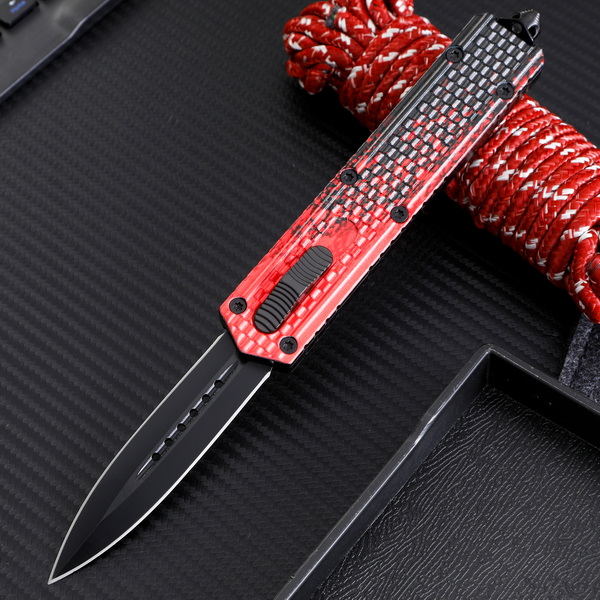
OTF knives with medium-length blades are widely used for rapid response situations, such as vehicle extrication, seatbelt cutting, and emergency access. Double-action models allow officers to keep attention and one hand free while deploying the blade.[14][7][4]
Outdoor adventurers benefit from the robust build and multi-use capabilities of larger OTF knives—cutting branches, food prep, first-aid, and shelter building. EDC users gravitate towards compact, controllable knives for box opening, utility tasks, and protection.[11][12]
Proper maintenance ensures peak deployment performance and blade longevity:
- Clean Regularly: Keep the internal track and spring mechanism free from debris, dust, and moisture.
- Lubricate: Apply appropriate lubricants to the spring assembly, roller bearings, and slide track.
- Sharpen as Needed: Use a sharpening stone or guided system aligned with the blade's grind for best results.
- Inspect Safety Features: Regularly test all locking and safety mechanisms to avoid accidental deployment.[6][4]
Cleaning and lubricating your OTF knife monthly (or after field use) helps maintain smooth deployment and security.
Manufacturers now use CNC-machined titanium, advanced steels, and ceramic bearings for maximum performance. Electropolished and DLC-coated blades resist corrosion in harsh tactical environments.
Chinese tactical knife OEMs often offer bespoke blade lengths, materials, and finishes for renowned global brands, allowing customization to user or regional regulations. This flexibility meets the evolving needs of the tactical, outdoor, and professional user base.
Choosing the optimal blade length for a Tactical OTF Knife involves balancing intended uses, deployment speed, portability, and legal compliance. Short blades provide universal carry and subtlety, medium blades offer the best trade-off for tactical versatility, and longer blades address demanding survival or rescue tasks. Whichever size you select, focus on build quality, ergonomic design, reputable materials, and diligent maintenance to get the best from your tactical OTF knife investment.[1][4][12]
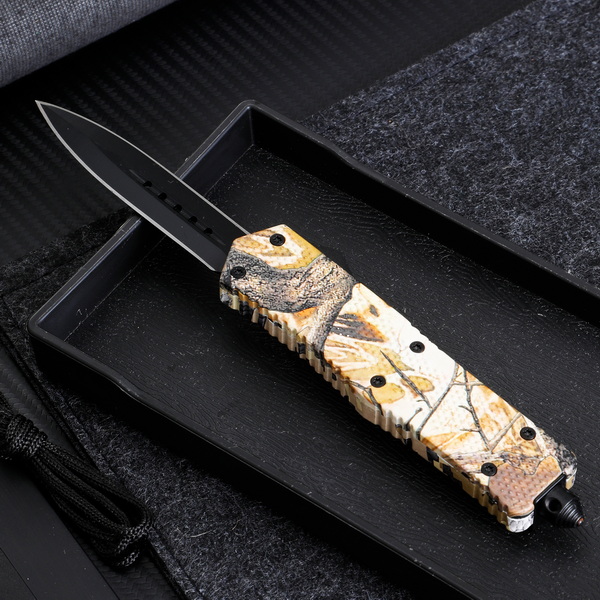
The 3–4 inch range is generally considered ideal for everyday carry and tactical flexibility, providing ample cutting power while remaining legal in most regions.[12][1]
Double-action OTF knives, equipped with modern safety mechanisms and failsafes, are engineered for rapid yet secure deployment in urgent situations.[4][6]
Regular cleaning, lubrication, and periodic sharpening will keep your knife's deployment and cutting ability at its best. Inspect safety and locking features frequently.[6][4]
No—regulations differ globally and by state. Always check local statutes regarding blade length and automatic knife carry before purchasing or carrying an OTF knife.[4][12]
Drop point and tanto blades are most recommended for tactical deployment, offering both durability and piercing capability in high-pressure scenarios.[7][4]
[1](https://www.tacticalsportinggoods.com/blogs/news/understanding-otf-knives-a-comprehensive-guide-to-their-features-and-uses)
[2](https://knife-depot.com/blogs/sharpened-values/otf-knives-explained-the-complete-guide)
[3](https://www.bladehq.com/blog/how-to-choose-an-otf-knife)
[4](https://bladeops.com/blog/what-is-an-otf-knife/)
[5](https://uppercuttactical.com/blogs/news/how-does-an-otf-knife-work)
[6](https://www.selfdefensesupply.com/otf-knives-guide)
[7](https://crateclub.com/blogs/loadout/are-otf-knives-good-for-self-defense-a-comprehensive-analysis)
[8](https://ravencresttactical.com/otf-knife-buyers-guide/)
[9](https://mtrdefense.com/knives/otf-/)
[10](https://www.youtube.com/watch?v=mk0jqi3VmUg)
[11](https://bladeops.com/blog/otf-knife-buyers-guide/)
[12](https://www.tektoknives.com/blogs/news/best-blade-length-for-your-otf-knife)
[13](https://ravencresttactical.com/tactical-knife-size-and-weight-considerations-what-you-need-to-know/)
[14](https://bladeops.com/blog/the-advantages-and-disadvantages-of-otf-knives-in-tactical-settings/)


