
Views: 222 Author: Leah Publish Time: 2025-11-12 Origin: Site


Content Menu
>>> Features
>>> Advantages
>>> Disadvantages
>> Automatic OTF Pocket Knives
>>> Features
>>> Advantages
>>> Disadvantages
● Comparing Manual and Automatic Deployment
● Blade Styles, Materials, and Ergonomics
● Deployment Mechanism Details
● Practical Considerations for Various Users
>> First Responders and Tactical Professionals
>> Outdoor Enthusiasts and EDC Practitioners
● Technical Specifications Across Popular Models
● Legal and Ethical Considerations
● Choosing the Right OTF Pocket Knife
● Current Trends and Innovations
● Applications: From Defense to Daily Utility
● Pitfalls and How to Avoid Them
● The Future of OTF Pocket Knives
● Frequently Asked Questions (FAQ)
>> 1. What distinguishes an OTF Pocket Knife from other pocket knives?
>> 2. Are automatic OTF Pocket Knives legal in all locations?
>> 3. What maintenance does an OTF Pocket Knife require?
>> 4. Which deployment style is better for professionals?
>> 5. How do I select the right OTF Pocket Knife for my needs?
OTF Pocket Knives, known as Out-The-Front knives, have reshaped the world of compact, versatile, and tactical tools for outdoor enthusiasts, professionals, and EDC aficionados. Their distinctive mechanism—where the blade moves linearly out the front of the handle—offers a unique blend of speed, safety, and aesthetic appeal. Understanding the differences between manual and automatic deployment is crucial for anyone seeking the ideal OTF pocket knife for practical use, collection, or professional needs.[2][8][11]
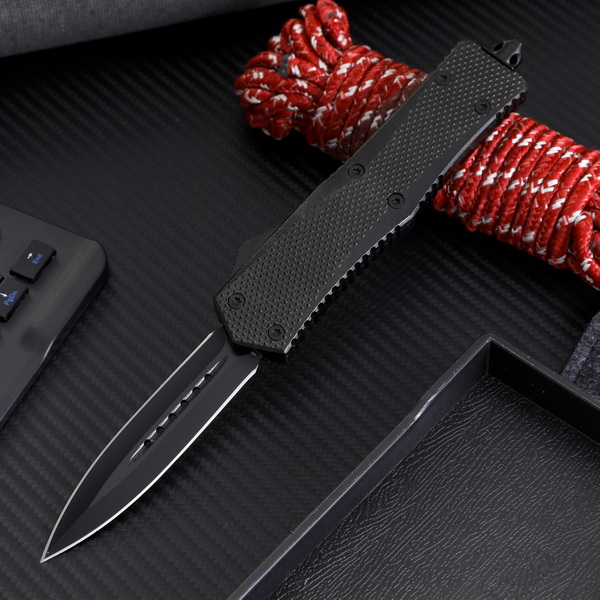
Unlike traditional folders or fixed blades, the OTF Pocket Knife launches its blade straight out from the handle with impressive efficiency. This forward deployment allows quick, one-handed operation favored especially in emergencies, outdoor pursuits, and tactical use.[8][11][2]
Key attributes:
- Direct, linear blade action.
- Compact, easily concealable design.
- Robust locking mechanisms for dependable carry.
- Available in manual and automatic deployment formats.
Manual OTF Pocket Knives demand direct user input—sliding a lever or button physically moves the blade in and out of the handle, with no spring assistance. These knives are often preferred for their simplicity and reliability, especially in gritty, unpredictable environments.[11][12][2]
- Absence of internal springs means less maintenance.
- Direct feedback for safer control and precision.
- Universally legal in more regions due to non-automatic operation.[12][13][2]
- Fewer moving parts reduce risk of failure.
- Legal compliance enables carry in areas with restrictions on automatic knives.
- Enhanced durability under hard use.
- Slower opening speeds.
- Requires deliberate, consistent manual effort for every deployment and retraction.
- May be harder to operate under duress, such as with gloved or wet hands.
The automatic OTF Pocket Knife, often described as a switchblade, employs a spring mechanism to propel the blade instantly at the press of a button or slide. Double-action models allow both deployment and retraction via the same control, while single-action designs use the spring for extension only, with manual retraction.[2][8][11]
- Internal spring powered for quick blade deployment.
- Single-action or double-action options for personalized utility.
- Markets to users seeking rapid response tools for emergencies and defense.
- Ultra-fast, one-handed access to the blade.
- Ergonomic, effortless operation for tactical professionals and first responders.
- Slick, modern aesthetic and robust construction.
- Complex internals require occasional cleaning and maintenance.
- Automatic deployment is regulated and even prohibited in certain jurisdictions.[13][14][12]
- Potential for spring wear or malfunction if poorly maintained.
Choosing between manual and automatic OTF Pocket Knives centers around deployment speed, control, legal regulations, and intended use.[3][11][2]
Manual OTF:
- Slow, controlled blade action.
- Minimal maintenance.
- Greater legality internationally.
Automatic OTF:
- Instantaneous deployment and retraction.
- Exceptional for emergency response.
- Maintenance required for optimal reliability.
- Legal status varies widely.
OTF Pocket Knives come in diverse blade profiles—from wharncliffe, tanto, dagger, spear point, to clip point. Material choices range from classic D2 to high-tech CPM MagnaCut or Böhler M390MK steels, with blades designed for edge retention, corrosion resistance, and versatile field use.[3][2]
Handle materials, most often aluminum or composite, ensure weight reduction and firm grip for safe manipulation. Knurled textures and milled surfaces are commonplace on premium models, boosting control during deployment and use.[2][3]
Manual deployment relies on sliding levers, demanding force throughout the blade's travel. The tension is constant and predictable, which can promote a sense of safety and operational feedback. Automatic mechanisms, by contrast, store potential energy in springs, releasing it with a tactile click and launching the blade with impressive speed.[11][2]
Double-action automatics enable the user to reverse the blade with equal ease—ideal when seconds count. Single-action automatics pair spring-driven opening with manually driven closure, simplifying construction but requiring an extra operational step.[5][2]
Notable points:
- Button or slider resistance is engineered for safe, intentional operation.[5]
- Dual springs in double-action models ensure smooth, controlled blade movement.
- Ergonomic button design promotes comfort and confidence in use.
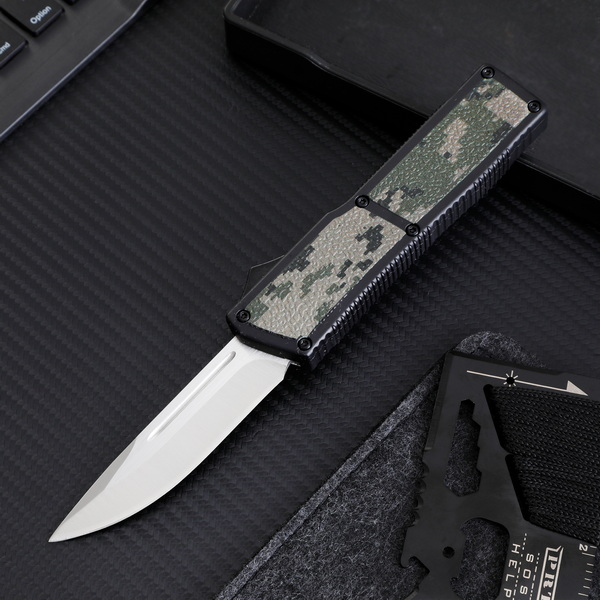
The speed and one-handed nature of automatic OTF Pocket Knives are invaluable for medical personnel, law enforcement, and military operatives. Quick blade access can be lifesaving—whether cutting seatbelts in a rescue or defending oneself in close-quarters situations.[8][11]
Manual OTF models often appeal to those regularly navigating rugged, dirty, or inclement environments, where simple mechanics trump spring-based designs for durability and field maintenance.[11][2]
For those who prize craftsmanship, reliability, and legal compliance, manual OTF Pocket Knives offer a practical, robust solution with fewer legal hurdles and reduced potential for mechanical issues.[8][11]
A closer look at market-leading OTF Pocket Knife models illustrates the diversity in technical features and configuration.[1][3][2]
- Microtech Ultratech: Double-action, 3.4” M390/CTS-204P blade, aluminum handle, renowned ergonomics.[3][2]
- Benchmade Infidel: Double-action, 3.91” D2 steel, aluminum handle, deep carry pocket clip, glass breaker.[1][2]
- Heretic Manticore-X: Double-action, 3.75” Elmax blade, textured aluminum handle, aggressive design.[2]
- Pro-Tech Dark Angel: Single-action, 3.8” CPM S35VN blade, aluminum handle, smooth deployment.[2]
- Smith & Wesson M&P OTF: Double-action, 3.5” AUS-8 blade, ergonomic handle, excellent value for entry-level buyers.[2]
Laws regulating OTF Pocket Knives differ globally and often locally. In many countries, automatic blades (switchblades) are restricted to law enforcement, military, or specific professions. Manual OTF Pocket Knives, lacking the “automated” action, are generally permissible with less legal complication.[14][12][13]
Key advice:
- Always check federal, state/provincial, and local knife laws before purchase and carry.
- Automatic deployment may require permits or be outright banned.
- Some jurisdictions set blade length limits (typically under 3 inches) for legal carry.[8][2]
Regular, mindful upkeep maximizes the lifespan of any OTF Pocket Knife:
- Clean the internals and blade thoroughly to prevent debris accumulation.
- Lubricate moving parts sparingly.
- Inspect lockup strength and look for excessive blade play.
- For spring-assisted models, monitor spring tension—replace as recommended by the manufacturer.
Considerations for selection:
- Deployment mechanism (manual for reliability and legality, automatic for rapid access).
- Blade profile and steel (wharncliffe, dagger, tantō; M390, CPM S35VN, D2).
- Handle ergonomics and grip quality.
- Locking and safety features.
- Price and warranty.
- Intended environment: field, tactical, urban EDC, or collection.
Manufacturers continually refine OTF Pocket Knives for improved ergonomics, steel quality, and deployment mechanics. Notable emerging features include:[3][2]
- Ultra-smooth double-action springs.
- Proprietary hardware for security and aesthetics.
- Enhanced grip surfaces and pocket clips.
Buyers increasingly prioritize deep-carry features, safety mechanisms, and maintenance-friendly designs. New steels like CPM MagnaCut or Böhler M390MK are raising the bar for edge retention and toughness.[3][2]
Real-world use shows automatic OTF Pocket Knives provide an adrenaline-charged, reliable edge in time-sensitive settings. The confidence inspired by a solid lockup is universally praised. Manual OTF Pocket Knives, meanwhile, often win accolades for durability and legal accessibility, especially among global adventurers and outdoor professionals.[11][2]
While OTF Pocket Knives are renowned for tactical use, their versatility extends to day-to-day utility, camping, hiking, rescue, and professional environments. Their direct deployment makes quick work of cordage, packaging, and other field tasks. Tactical users value instant blade access, while EDC proponents enjoy the blend of style, function, and convenience.[8][2]
- Not researching legal status before purchase leads to confiscation or fines.
- Ignoring regular maintenance causes sluggish deployment and possible mechanical failure.
- Purchasing low-quality OTF Pocket Knives often results in subpar performance and frustration.
- Overlooking handle ergonomics and blade steel can compromise safety and edge retention.
Expect continued advances in materials science, spring technology, and handle construction. With growing consumer demand, OTF Pocket Knives will integrate even smoother deployment, lighter yet tougher construction, and improved safety for every user segment.[3][2]
OTF Pocket Knives occupy a special niche within the cutlery landscape—combining pioneering technology, practical design, and adaptable performance. The choice between manual and automatic deployment reflects personal priorities: speed, safety, reliability, and regulatory flexibility. Educated decision-making ensures every user finds an OTF Pocket Knife tailored to their environment, budget, and daily demands. With diligent maintenance and a thoughtful approach to legalities, your OTF Pocket Knife can remain a trusted companion for years to come.[11][8][2]
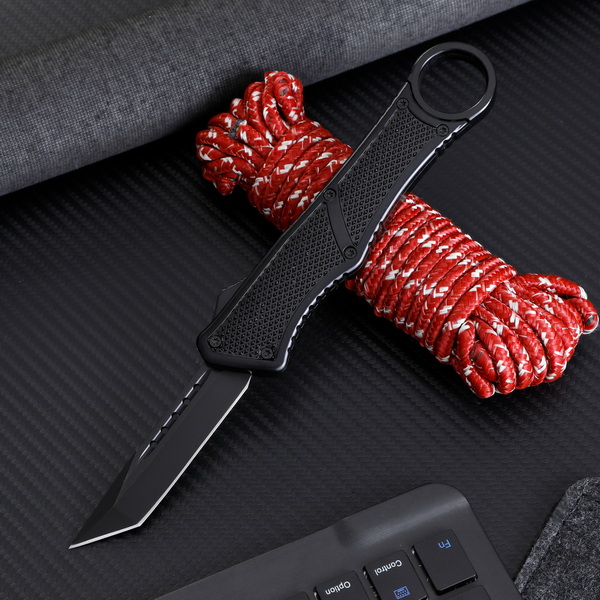
The blade of an OTF Pocket Knife deploys directly out the front of its handle, differing from traditional side-folding designs and offering immediate one-handed access.[8][11]
No. Automatic OTF Pocket Knives are subject to special regulations or bans in many regions, unlike manual designs, which are more widely permissible. Always check your local laws before purchasing or carrying an OTF Pocket Knife.[12][13][14]
Routine cleaning, occasional lubrication, and regular checks for blade play or spring tension help keep your OTF Pocket Knife operating smoothly. Follow manufacturer recommendations, especially for automatic models.[11][8]
First responders and tactical staff often prefer automatic OTF Pocket Knives for rapid, one-handed access. Manual knives offer more reliability and legal accessibility, ideal for users in restrictive environments.[2][8][11]
Consider legal status, functionality (manual or automatic), blade style, steel quality, ergonomics, price, and intended environment. Look for reputable brands and models with positive user feedback and warranty.[3][11][2]
[1](https://knifeinformer.com/the-best-otf-knife-for-your-money/)
[2](https://bladeops.com/blog/otf-knife-buyers-guide/)
[3](https://hiconsumption.com/gear/best-otf-knives/)
[4](https://www.youtube.com/watch?v=mk0jqi3VmUg)
[5](https://sharperapex.com/benchmade-shootout-an-otf-in-the-back-of-the-pack/)
[6](https://www.tacticalsportinggoods.com/blogs/news/ultimate-guide-to-the-top-10-otf-knives-of-2025-features-reviews-and-recommendations)
[7](https://www.recoilweb.com/best-otf-knife-out-the-front-is-back-187300.html)
[8](https://knife-depot.com/blogs/sharpened-values/otf-knives-explained-the-complete-guide)
[9](https://tacknivesusa.com/the-ultimate-otf-knife-buying-guide/)
[10](https://www.58hrcknives.com/otf-pocket-knife-vs-traditional-folding-knife-which-one-is-right-for-you.html)
[11](https://bladeops.com/blog/otf-knife-buyers-guide-what-to-look-for-in-your-next-otf-knife/)
[12](https://www.benchmade.com/blogs/beyond-the-bench/knife-opening-guide)
[13](https://swordsswords.com/blog/automatic-knives-vs-manual-knives-which-is-right-for-you/)
[14](https://ravencresttactical.com/navigating-otf-knife-legalities-what-you-need-to-knowotf-knife-legalities/)


