
Views: 222 Author: Leah Publish Time: 2025-10-15 Origin: Site


Content Menu
● Understanding Heavy-Duty OTF Knives
>> Core Features of Heavy-Duty OTF Knives
● Deployment Mechanisms Explained
● Why Choose a Heavy-Duty OTF Knife?
● Common Uses of Heavy-Duty OTF Knives
● Choosing Your Heavy-Duty OTF Knife
>> Steel Quality and Blade Construction
>> Handle Material and Ergonomics
>> Deployment Type and Locking Reliability
● Maintaining Your Heavy-Duty OTF Knife
● Popular Heavy-Duty OTF Knives
● FAQ About Heavy-Duty OTF Knife Deployment
>> 1. What distinguishes a heavy-duty OTF knife from other knives?
>> 2. Is it legal to carry heavy-duty OTF knives everywhere?
>> 3. How durable are the blades on these knives?
>> 4. How do single-action and double-action OTF knives differ?
>> 5. What maintenance is needed to keep an OTF knife functional?
Out-The-Front (OTF) knives, especially heavy-duty models, are prized by tactical professionals, outdoor enthusiasts, and anyone in need of a reliable, quick-deploying knife capable of withstanding tough use. This comprehensive guide dives deep into heavy-duty OTF knives, their design specifics, deployment mechanisms, practical applications, selection criteria, maintenance, and legal considerations to provide a thorough understanding of these powerful tools.
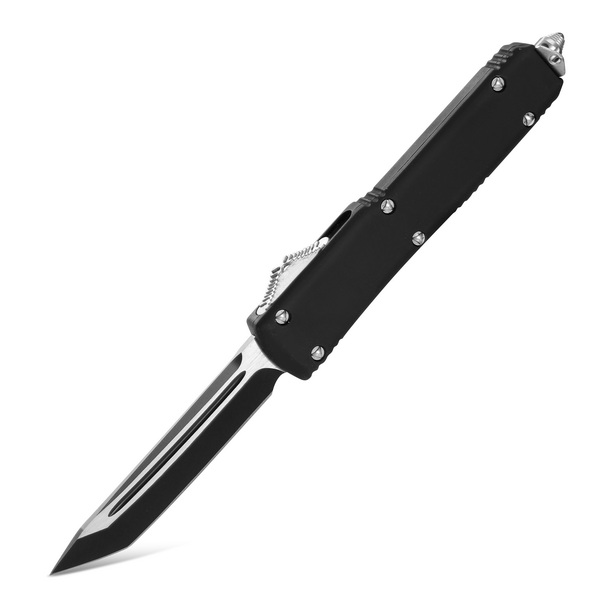
A Heavy-Duty OTF Knife is characterized by a blade that slides out from the front of the handle along a straight track, unlike folding knives that pivot. The heavy-duty aspect indicates designs tailored to robust use, incorporating thicker blades, stronger locking mechanisms, and premium-quality materials. This combination ensures the knife is not only quick to deploy but also resilient under demanding tasks such as cutting, slicing, prying, and survival scenarios.
- Blade Construction: These knives feature blades generally thicker than 0.12 inches, made from high-performance steels such as CPM MagnaCut, Böhler M390, or CPM S30V that ensure exceptional edge retention and corrosion resistance.
- Handle Materials: The handle is usually fabricated from durable aluminum alloys, titanium, or carbon fiber composites, balancing strength and weight for comfort in extended use.
- Reliable Deployment Mechanism: Heavy-duty OTF knives come with single-action or double-action spring-loaded mechanisms allowing swift blade release—with single-action often offering more deployment power.
- Ergonomic Designs: Designed to enhance grip and control, handles often have textured or contoured surfaces that minimize slip during heavy or tactical use.
The deployment system is what distinguishes heavy-duty OTF knives. The knife's blade swiftly slides out of the front of the handle via a spring mechanism when a button or slider is activated. Understanding the two main types of OTF mechanisms is key to selecting the right knife.
In single-action OTF knives, pressing the slider or button releases a spring that shoots the blade forward quickly. However, blade retraction must be done manually, typically by sliding the button back or unlocking a secondary mechanism. This system often delivers the most powerful blade launch, favored for tactical scenarios where fast access is vital.
Double-action OTF knives allow both extension and retraction of the blade using the same slider or button. This mechanism offers convenience and faster cycling through blade positions, making it popular for everyday carry and practical use where quick blade stowage is necessary.
Heavy-duty OTF knives combine the benefits of automatic deployment with rugged construction to meet the needs of users in demanding environments.
- Speed and Efficiency: The spring-loaded mechanism provides nearly instant blade access, crucial in emergencies or high-pressure situations.
- Durability: Heavy-duty construction with thicker blades and solid materials ensures the knife withstands harsh cutting, prying, and survival tasks.
- Safety and Comfort: The ergonomic design and locking mechanisms provide secure handling and prevent accidental blade closure or deployment.
- Portability: Despite their toughness, OTF knives remain compact when the blade is retracted, making them easier to carry discreetly compared to fixed blades.
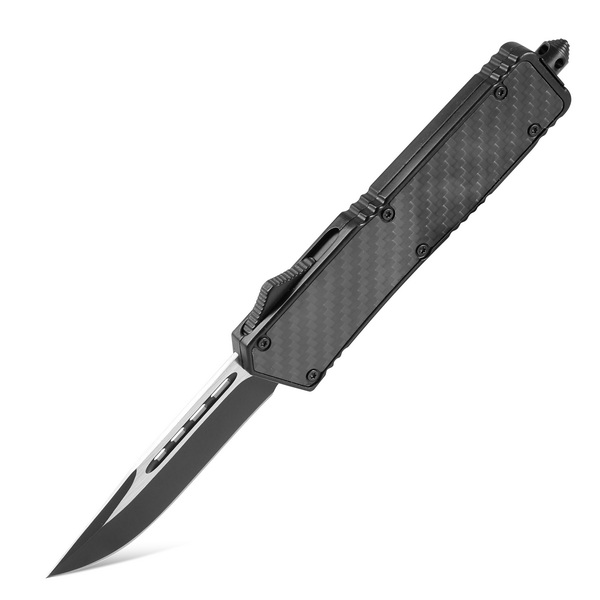
Heavy-duty OTF knives excel in various scenarios due to their rapid deployment and strength.
- Tactical and Defense: Law enforcement, military personnel, and security professionals rely on these knives for rapid blade access in self-defense or utility situations.
- Outdoor Adventures: Hikers, campers, and survivalists benefit from the knife's robust design to cut ropes, carve wood, open containers, or execute other demanding tasks.
- Everyday Carry (EDC): For those preferring convenience combined with toughness, OTF knives make reliable tools for daily chores, from opening boxes to occasional heavy cutting.
When selecting a heavy-duty OTF knife, consider these crucial factors to ensure the knife fits intended use and reliability requirements:
Top-tier steels like CPM MagnaCut or Böhler M390 are preferred for their superior edge retention, toughness, and corrosion resistance. Blade thickness generally ranges from 0.12 to 0.16 inches, providing a balance of cutting efficiency and durability.
The handle's strength and grip comfort are vital for heavy-duty use. Aluminum alloys combine lightness and robustness. Titanium offers exceptional strength at a higher price point, while carbon fiber composites add both lightness and style. Textured or sculpted grips enhance control, minimizing hand fatigue during prolonged use.
Choose between single-action or double-action deployment depending on personal preference and use cases. A well-engineered locking mechanism is necessary for safety, preventing blade wobble or accidental closure during rigorous tasks.
Heavy-duty OTF knives may feature tanto, drop point, spear point, or double-edge blades. Each style has specific advantages—tanto edges excel in piercing and tactical applications, while drop points provide versatile all-around cutting performance.
Proper upkeep maximizes the performance and lifespan of heavy-duty OTF knives:
- Routine Cleaning: Periodic disassembly (if the model allows) to clear dirt, debris, and lint from the blade channel and mechanism is essential for smooth operation.
- Lubrication: Apply quality lubricants to moving parts to reduce friction and prevent corrosion.
- Edge Sharpening: Maintain the blade edge using suitable sharpening tools for a clean, precise cut.
- Inspect Locks and Springs: Regularly check locking mechanisms and springs for signs of wear or weakness to ensure safe usage.
Some of the top-rated heavy-duty OTF knives favored by enthusiasts and professionals include:
- Heretic Knives Hydra V3: Famous for its robust single-action mechanism, thick CPM MagnaCut blade, and tactical readiness.
- Microtech Combat Troodon Gen III: Known for its tactical application with a 4-inch Böhler M390 steel blade, combining speed with precision.
- Benchmade Autocrat: A premium double-edge tactical OTF with G-10 handles and an acclaimed safety locking system.
- Kershaw Livewire: Marketed as an excellent value option, sporting CPM MagnaCut steel and a smooth double-action mechanism.
- Hawk Knife Designs Deadlock Model C: Renowned for zero blade play, titanium construction, and near-artisanal craftsmanship.
These knives exemplify the blend of fast deployment and heavyweight construction that defines heavy-duty OTF knives.
Heavy-duty OTF knives are often classified legally as switchblades or automatic knives, taking a guarded stance in many jurisdictions. Ownership, carry, or transport may face restrictions or prohibitions based on local laws. Users are strongly advised to research relevant legislation thoroughly before acquiring or carrying any heavy-duty OTF knife.
Heavy-duty OTF knives are unmatched in their combination of rapid blade deployment, superior durability, and ergonomic design. Whether for tactical missions, outdoor survival, or everyday use, these knives deliver reliable performance when it matters most. Understanding the nuances of blade materials, deployment mechanisms, and legal requirements empowers users to select and maintain an OTF knife that meets their specific needs safely and effectively.
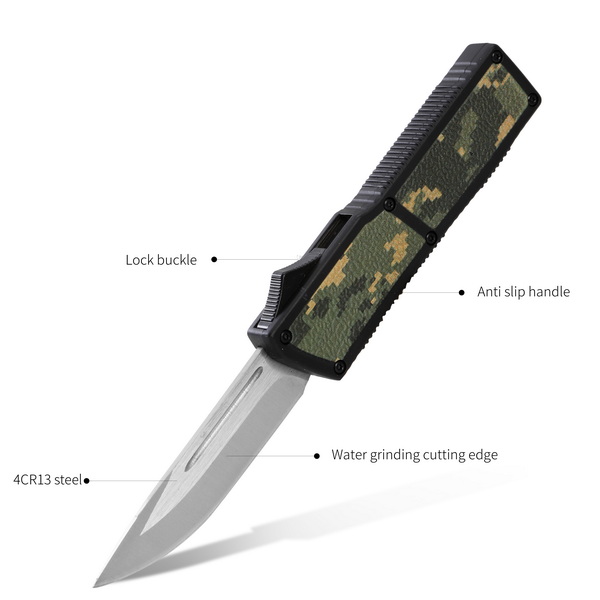
A Heavy-Duty OTF Knife features a thick, strong blade that deploys straight out of the handle via a spring mechanism, built with premium materials for intense use and rapid access, unlike foldable knives which pivot.[1]
Legality varies significantly by location, as many regions restrict or prohibit carrying OTF knives due to their automatic deployment. It's crucial to consult local laws before carrying.[1]
These knives use hardened steels such as CPM MagnaCut and Böhler M390, offering excellent edge retention, corrosion resistance, and toughness suitable for demanding tasks.[1]
Single-action knives deploy the blade with a button but require manual retraction, offering more deployment force. Double-action knives allow both extend and retract with a single control, prioritizing convenience.[1]
Regular cleaning of internal mechanisms, lubrication, sharpening blades, and inspecting locks and springs keep the knife operating reliably and safely over time.[1]
[1](https://hiconsumption.com/gear/best-otf-knives/)


