
Views: 222 Author: Leah Publish Time: 2025-10-12 Origin: Site


Content Menu
● Introduction to Heavy-Duty OTF Knives for Hunting
● Understanding Heavy-Duty OTF Knives
● Advantages of Heavy-Duty OTF Knives for Hunting
>> Instant, One-Handed Deployment
>> Compact and Streamlined Carry
>> Superior Materials for Longevity
>> Double-Action Safety and Convenience
● Potential Drawbacks of Heavy-Duty OTF Knives for Hunters
>> Structural Limitations vs Fixed Blades
>> Legal and Cost Considerations
● How Heavy-Duty OTF Knives Compare to Other Hunting Knives
● Essential Maintenance Tips for Heavy-Duty OTF Knives
● FAQ
>> 1. What defines a heavy-duty OTF knife compared to a standard one?
>> 2. Are there legal restrictions on carrying heavy-duty OTF knives for hunting?
>> 3. How should I maintain my heavy-duty OTF knife after hunting trips?
>> 4. Can heavy-duty OTF knives efficiently skin and process game?
>> 5. What are the limitations of using a heavy-duty OTF knife on hunting trips?
Heavy-duty Out-The-Front (OTF) knives have gained a strong following among hunters and outdoor enthusiasts for their rapid blade deployment, ergonomic design, and adaptability. Known for blades that slide directly out of the handle's front, OTF knives utilize spring-loaded mechanisms activated by thumb slides or switches to provide quick single-handed use. Many hunting situations demand quick access to a reliable cutting tool for skinning, dressing game, or emergency use, making the distinctive features of heavy-duty OTF knives especially appealing.
This article delves into heavy-duty OTF knives for hunting by exploring their build, advantages, potential drawbacks, maintenance, and how they compare to traditional hunting knives. It equips readers with detailed insights to decide whether investing in a heavy-duty OTF knife fits their hunting and outdoor needs.
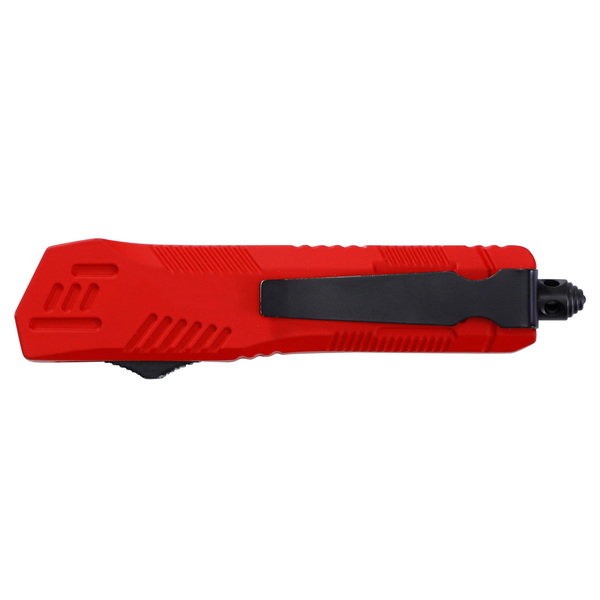
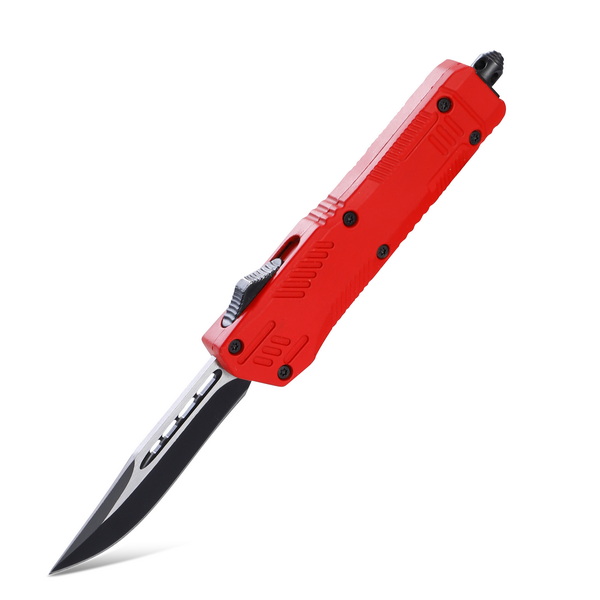
Heavy-duty OTF knives represent a tough and durable iteration of classic Out-The-Front knives. They are specifically engineered to withstand the demanding environments that hunters encounter. Key characteristics of heavy-duty OTF knives include:
- Premium blade steels: Materials such as CPM S30V, M390, or D2 steel are chosen for their exceptional toughness, edge retention, and corrosion resistance.
- Robust Handle Materials: High-quality aluminum alloys, titanium, or carbon fiber are commonly used to ensure a solid grip and reduce weight.
- Double-action mechanisms: These enable both extended and retraction of the blade through a single control switch, facilitating safe and controlled use.
- Reinforced locking mechanisms: Crucial to maintaining blade stability during heavy use, preventing accidents and blade wobble.
These design essentials make heavy-duty OTF knives fit for cutting thick ropes, processing tough game hides, and other outdoor tasks that demand reliability under pressure.
One of the most significant benefits of heavy-duty OTF knives is their instantaneous blade access. Hunters often have their hands full—whether carrying game or handling other gear—and the ability to deploy a knife swiftly with one hand is invaluable. This quick action can be lifesaving in emergencies such as removing tangled fishing line, cutting paracord, or performing first aid.
Heavy-duty OTF knives fold into compact handles that reduce bulk and snag hazards, ideal for carrying on belts, vests, or pockets without inconvenience. This sleek profile allows hunters to keep their knives accessible yet out of the way during long walks or stalks.
Many hunting-specific OTF knives come with blade styles optimized for skinning, slicing, and piercing tasks. Drop point blades excel in game processing, offering precision and control, while tanto blades provide strong piercing tips ideal for tougher materials. Specialized dual-edge or serrated options also exist, enhancing flexibility in diverse hunting scenarios.
Crafting heavy-duty OTF knives with premium steels ensures that the blade maintains sharpness longer and withstands exposure to moisture, dirt, and blood without rusting. Durable handle materials further reinforce longevity and add comfort and safety in gripping the knife tightly in wet or cold conditions.
Double-action mechanisms simplify knife operation, allowing the blade to be extended and retracted easily using the same thumb slide or button. This feature enhances user safety by eliminating the need to touch the blade directly and facilitates quick repeated use without manual blade closure.
The intricate internal mechanical design of OTF knives introduces a relative vulnerability compared to fixed-blade knives. While heavy-duty OTF knives are sturdy for most cutting tasks, they generally are not suited for extreme activities like prying open objects, chopping wood (batoning), or heavy-duty leverage. For such tasks, fixed blades supply unmatched structural integrity.
The compact internal blade track and spring system that enable rapid deployment are also prone to collecting dirt, dust, and residue from outdoor use. If not cleaned and lubricated regularly, the mechanism can jam or become stiff, reducing reliability. Hunters must be disciplined about upkeep to maintain optimal performance.
OTF knives fall under various legal restrictions in different countries, states, or municipalities, sometimes classified as automatic or switchblade knives subject to bans or permits. Hunters must verify their local laws before purchasing or carrying an OTF knife. Additionally, the precision engineering and materials in heavy-duty OTF knives tend to drive prices higher than many folding or fixed-blade hunting knives.
Heavy-duty OTF knives stand out for their rapid blade deployment and compactness, but differ significantly from more traditional hunting knives:
- Deployment Speed: OTF knives deploy instantly with one hand; folding knives require manual unfolding; fixed blades are always ready but bulkier.
- Carrying Convenience: OTF knives offer slim profiles that are easy to carry; fixed blades require sheaths; folding knives vary in size.
- Blade Strength: Fixed blades lead in durability for heavy prying or chopping, OTF knives have mechanical constraints, and folding knives offer moderate strength.
- Maintenance: OTF knives need frequent cleaning and oiling to prevent jams, folding knives need occasional care, and fixed blades need minimal maintenance.
- Legal Restrictions and Cost: OTF knives are often more regulated and generally cost more due to complex mechanisms.
Hunters should assess their specific needs. Quick accessibility and compactness may tip the balance toward OTF knives for some, while others prioritize durability or cost-effectiveness with fixed or folding knives.
To ensure a heavy-duty OTF knife remains a dependable hunting companion:
- Regular Cleaning: After use, especially in dusty or wet environments, blow compressed air into blade channels and clean surfaces with a soft cloth.
- Proper Lubrication: Use light synthetic oils sparingly on sliding parts to maintain smooth action while preventing dirt buildup.
- Edge Management: Keep blades razor-sharp for skinning and detailed cutting by regular honing with stones or stropping.
- Routine Inspection: Check for blade play, wear on springs, and locking mechanism function to address issues early.
- Safe Storage: Store knives dry, and operate the blade occasionally if unused for long periods to maintain spring health.
Neglecting maintenance risks blade jams and reduced performance when hunting.
Heavy-duty OTF knives excel for hunting due to their instant blade deployment, compact carry, and specialized designs suited for field dressing, cutting, and emergency situations. Their premium materials and double-action mechanisms enhance reliability and user safety. However, hunters should recognize their structural limits compared to fixed blades, keep up with regular maintenance, and verify legal restrictions before purchase. When chosen wisely, a heavy-duty OTF knife is a worthy addition to hunting gear that offers both convenience and performance in the field.
Heavy-duty OTF knives are built with stronger blade steels, reinforced internal mechanisms, and durable handle materials designed to endure rigorous hunting and tactical use, unlike standard OTF knives which may prioritize compactness over toughness.
Yes, many regions consider OTF knives as automatic or switchblades, which are restricted or illegal in some jurisdictions. It is essential to research local laws before carrying an OTF knife while hunting or outdoors.
Thoroughly clean debris from the blade track and mechanism, apply light lubrication to moving parts, regularly sharpen the blade, and inspect locking and spring functions. Proper maintenance ensures reliability and safety.
Absolutely. Many feature blade styles like drop point or tanto, which provide control, precision, and sharpness needed for skinning and field dressing game effectively.
They are less capable of prying or heavy chopping than fixed blades, require consistent cleaning to avoid mechanism failure, tend to be more expensive, and may be legally restricted in some areas.


