
Views: 222 Author: Leah Publish Time: 2025-11-24 Origin: Site


Content Menu
● What Is an OTF Pocket Knife?
● Why Warranty and Support Matter
● Key Warranty Terms to Understand
● Common Warranty Exclusions on OTF Knives
● How Warranty Differs for OEM, Retail, and Custom Brands
● Evaluating Customer Support Quality
● Blade Materials, Durability, and Warranty Implications
● Legal and Practical Considerations Before Purchase
● Matching Knife Design to Warranty Expectations
● Maintenance Practices That Keep Warranties Valid
● What to Do If You Need Warranty Service
● How OEM Factories Help Build Stronger Warranty Programs
● FAQ
>> 1. Is an OTF Pocket Knife safe to use every day?
>> 2. How do I know if a brand offers a good warranty on an OTF Pocket Knife?
>> 3. Does blade steel affect warranty decisions?
>> 4. Can I disassemble my OTF Pocket Knife without losing warranty coverage?
>> 5. What should OEM or private-label buyers ask about warranty when choosing a factory?
Choosing the right OTF Pocket Knife is not only about sharpness, style, or deployment speed; it is also about how well the knife will be supported over the long term. A strong warranty and reliable after-sales support protect your investment and build confidence in your gear as you carry and use it in demanding outdoor or tactical environments.[1][3]
An OTF Pocket Knife is a precision mechanical tool, and every moving part—from the internal spring to the firing switch—can experience wear over time. When you understand what kind of warranty stands behind the knife, and how responsive the brand or manufacturer is when problems arise, you are far more likely to end up with a tool you can trust day after day.[8][1]

An OTF Pocket Knife (Out-The-Front pocket knife) is a type of automatic or assisted-opening knife where the blade deploys straight out of the front of the handle rather than pivoting from the side like a traditional folding knife. This design allows extremely fast, one-handed deployment and compact carry for everyday, tactical, and rescue use.[3][1]
There are two main categories of OTF Pocket Knife mechanisms. Single-action models deploy automatically but must be manually pulled back or reset, while double-action models use the same switch or slider to both extend and retract the blade. Double-action OTF Pocket Knives are especially popular for EDC and professional use because they are convenient, fast, and easy to control with one hand.[1][3]
When purchasing an OTF Pocket Knife, the warranty and support determine how long your knife can realistically stay in service under real-world conditions. Mechanical failures such as weakened springs, switch wear, or alignment issues may occur after extended use, and a solid warranty reduces the cost and stress of resolving these issues.[5][1]
A brand or OEM factory that offers transparent, well-structured warranty coverage is signaling confidence in production quality, materials, and internal quality control processes. Strong customer support also protects retailers and overseas distributors from excessive returns and dissatisfied buyers, which is critical if you are reselling or building your own OTF Pocket Knife brand.[8][1]
Before committing to any OTF Pocket Knife, take time to read and understand the actual warranty language. Different manufacturers can use similar phrases while offering very different levels of protection, so details matter a great deal.[4][1]
Important warranty elements include:
- Coverage Duration: Some brands offer a limited lifetime warranty, while others provide one-, two-, or five-year coverage. Longer terms are helpful, but only when backed by realistic service practices.[1][8]
- Scope of Coverage: A strong warranty covers defects in materials and workmanship on the blade, handle, locking mechanism, and deployment system. Some policies may exclude cosmetic wear or damage from abuse, which is standard in the knife industry.[5][1]
Also check whether the warranty covers labor and shipping, or only replacement parts. A warranty that includes repair work, parts, and return shipping can save significant money when a heavily used OTF Pocket Knife eventually needs professional service.[4][1]
No matter how generous the policy, every OTF Pocket Knife warranty includes exclusions. Understanding these limitations before purchase helps prevent unpleasant surprises later and encourages proper use and maintenance.[5][1]
Typical exclusions include:
- Abuse or Misuse: Using an OTF Pocket Knife as a pry bar, screwdriver, or hammer will usually void coverage. These knives are cutting tools, not construction levers.[1][5]
- Unauthorized Modifications: Regrinding the blade, replacing springs with non-original parts, or disassembling sealed components may cancel the warranty instantly. OTF mechanisms are finely tuned, so many brands require factory-only internal work.[3][5]
Cosmetic wear such as scratches, small dings, or finish fading is also rarely covered. When buying an OTF Pocket Knife for heavy outdoor work, accept that normal signs of use are part of the tool's life and not automatically a warranty issue.[4][1]
If you are sourcing OTF Pocket Knives as a brand owner, wholesaler, or distributor, your warranty reality is slightly different from an individual buyer. For OEM and private-label clients, the base factory warranty is often adapted into a custom policy that carries the reseller's logo and contact points while relying on the factory's technical expertise behind the scenes.[8][1]
Advantages for OEM and B2B partners include:
- Custom Warranty Length: OEM factories can agree to match the level of coverage required by your market, whether that means a one-year limited warranty or extended multi-year support.[8][1]
- Branded After-Sales Experience: Paperwork, QR codes, and online registration forms can be printed with your brand identity, while repairs are still handled at the factory level. This setup helps strengthen your brand image without requiring your own in-house repair workshop.[1][8]
Such arrangements are particularly valuable for foreign brands importing OTF Pocket Knives from high-volume manufacturing hubs, because having clear service pathways reduces customs disputes, return costs, and negative customer feedback.[8][1]
Beyond warranty paperwork, real service quality for an OTF Pocket Knife is reflected in how fast and clearly a company responds when something goes wrong. Support speed and clarity are crucial factors, especially for international buyers.[1][8]
Useful indicators of strong support include:
- Multiple Contact Channels: Email, online forms, phone, and sometimes social media communication, all clearly listed and monitored.[8][1]
- Response Time and Tone: Brands that answer within one business day, provide step-by-step instructions, and follow up until the issue is solved show a serious commitment to after-sales service.[1][8]
For OEM and wholesale partners, dedicated account managers or B2B service portals make it much easier to coordinate warranty claims from retailers and end users. This professional structure reduces turnaround times and builds trust across the entire supply chain for OTF Pocket Knives.[8][1]
The steel and materials used in an OTF Pocket Knife influence not only cutting performance, but also how often the knife may need service under warranty. Premium steels such as M390, CPM-S30V, and high-end tool steels provide outstanding edge retention and durability but may also require careful heat treatment and machining.[6][1]
If a factory invests in precision heat treatment, rigorous quality control, and reliable internal components, warranty claims tend to be lower because blades chip less and mechanisms maintain smoother deployment. When evaluating a supplier, check what steels and handle materials they use, and ask whether those materials are standard across their OTF Pocket Knife range or limited to specific premium models.[6][1]
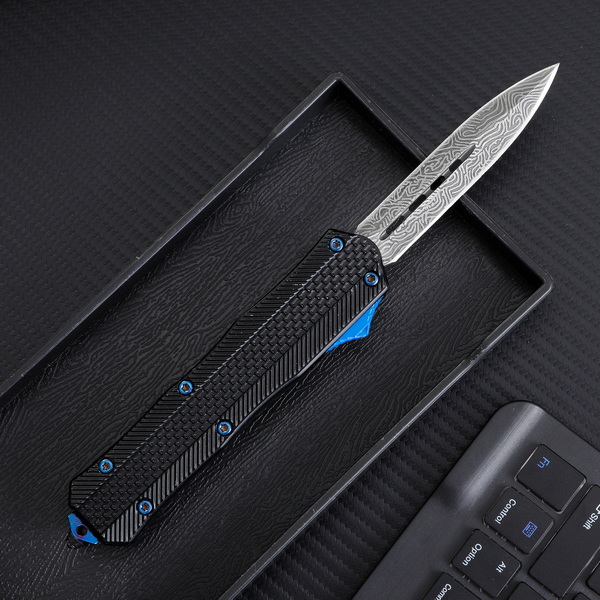
While the main focus here is warranty and support, legal and practical aspects must not be ignored when selecting an OTF Pocket Knife. Many jurisdictions have specific restrictions on automatic knives, blade length, and carry conditions, which can affect how and where your knife is used.[2][8]
From a practical standpoint, matching blade length and design to your primary use—EDC, rescue, tactical, or outdoor survival—affects wear and warranty claims. A longer, heavier-duty OTF Pocket Knife used for demanding cutting tasks will experience more stress than a compact EDC model used mainly for packaging and light work.[2][1]
To get the most out of a warranty, choose an OTF Pocket Knife designed for its intended workload. For example, a slim EDC-oriented OTF may not be suited to constant, heavy cutting in a construction environment, even if it carries a generous warranty.[4][1]
Look at these design elements:
- Blade Length and Geometry: Shorter blades (around 3–3.5 inches) are often ideal for everyday carry and may place less stress on the mechanism, while longer blades are better for outdoor or tactical roles but demand stronger internal engineering.[2][1]
- Handle Ergonomics and Grip: A secure, textured handle reduces accidents and misuse, helping prevent damage that might otherwise be blamed on the knife. Good ergonomics also make the OTF Pocket Knife safer and more comfortable for extended work.[3][5]
When all these factors match your usage, warranty support becomes a backup plan rather than something you expect to need frequently.
Proper maintenance greatly reduces the risk of failure and keeps the warranty of your OTF Pocket Knife valid. Many brands publish simple maintenance guidelines, and following them closely may be a condition of retaining coverage.[1][8]
Best practices include:
- Regular Cleaning: Blow out dust, lint, and grit from the blade channel and handle openings, especially if the knife is carried in a pocket or used in sandy or dusty conditions.[8][1]
- Correct Lubrication: Use light, appropriate lubricants in small amounts. Over-lubrication can attract debris into the mechanism, while heavy or sticky oils may slow deployment.[1][8]
Avoid excessive force when operating the switch or slider, and do not “snap” the blade against very hard objects. Respecting the mechanical limits of the OTF Pocket Knife preserves smooth performance and lowers the risk of denial when presenting a warranty claim.[3][1]
When something goes wrong with an OTF Pocket Knife, having a clear plan speeds up the resolution. Most brands outline a standard process, and being organized from the start can shorten the time your knife spends away at the service center.[8][1]
Typical steps include:
1. Collect Documentation: Keep invoices, order numbers, and any registration confirmation ready. Many brands require proof of purchase to activate warranty rights.[1][8]
2. Contact Support First: Describe the issue clearly with photos or short videos if possible. Sometimes the problem can be solved with cleaning or minor adjustment, saving the need to ship the knife.[8][1]
If a return is required, follow packaging and shipping instructions exactly, and avoid sending accessories that are not needed. OEM and international buyers should coordinate with their supplier or account manager to ensure claims are processed efficiently.[1][8]
For brands that do not manufacture knives themselves, working with an experienced OEM factory is the foundation of a credible warranty. A capable partner can design and produce OTF Pocket Knives that meet your performance requirements while also helping you create realistic, competitive warranty terms for your market.[8][1]
OEM benefits often include:
- Shared Quality Control Standards: The factory's testing, inspection, and reliability data can inform your warranty duration and conditions, preventing over-promising or under-supporting your line.[1][8]
- Centralized Repair and Parts Supply: Instead of developing your own repair network from scratch, you can rely on the OEM's technicians and spare part inventory to handle complex mechanical work on OTF Pocket Knives.[8][1]
For foreign wholesalers and brand owners, this partnership model lowers operational risk while enabling high service standards for customers worldwide.
Choosing an OTF Pocket Knife with the right warranty and support is essential for anyone who values reliability, safety, and long-term performance. Beyond appearance and deployment speed, you should carefully analyze coverage duration, exclusions, repair or replacement policies, and the real responsiveness of the support team. By matching knife design and materials to your intended use, following maintenance recommendations, and partnering with professional OEM factories when building your own brand, you gain both a high-performance OTF Pocket Knife and a solid safety net when problems arise. A knife backed by clear, dependable warranty and support is not just a tool—it is a dependable companion for outdoor adventures, tactical operations, and everyday tasks over many years.
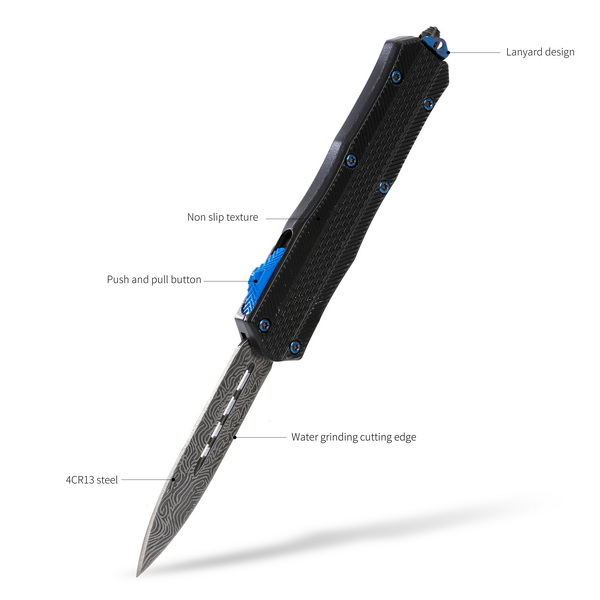
Yes, a well-designed OTF Pocket Knife with a reliable locking mechanism and quality materials can be safe for everyday carry when used responsibly. Always follow the manufacturer's safety guidelines and local laws, and keep the mechanism clean for consistent performance.[3][1]
Look for clearly written terms that specify duration, what parts are covered, and whether repairs or replacements are offered. A good warranty on an OTF Pocket Knife will also provide straightforward contact information, defined procedures, and realistic limitations instead of vague promises.[1][8]
Blade steel itself does not directly change the written policy, but higher-grade steels combined with strict quality control usually result in fewer defects and lower claim rates. Brands that invest in premium steels and better manufacturing practices for OTF Pocket Knives often feel confident enough to offer longer or more comprehensive warranties.[6][1]
In most cases, opening the internal mechanism without authorization can void the warranty. Many manufacturers only allow basic external cleaning and strongly prefer that any internal repairs or spring replacements on OTF Pocket Knives be performed at an authorized service center.[3][1]
OEM buyers should ask how warranty claims will be handled, what coverage period the factory recommends, and whether repairs, replacements, and spare parts will be available long-term. It is also wise to confirm whether the OEM can support branded documents and dedicated contacts for your OTF Pocket Knife line, especially if you sell internationally.[8][1]
[1](https://bladeops.com/blog/otf-knife-buyers-guide/)
[2](https://knife-depot.com/blogs/sharpened-values/otf-knives-explained-the-complete-guide)
[3](https://www.bladehq.com/blog/how-to-choose-an-otf-knife)
[4](https://tacknivesusa.com/the-ultimate-otf-knife-buying-guide/)
[5](https://denalitacticalknives.com/blogs/news/things-to-consider-when-buying-otf-knives)
[6](https://knifeinformer.com/the-best-otf-knife-for-your-money/)
[7](https://hiconsumption.com/gear/best-otf-knives/)
[8](https://ravencresttactical.com/otf-knife-buyers-guide/)
[9](https://www.youtube.com/watch?v=mk0jqi3VmUg)
[10](https://www.tektoknives.com/blogs/news/a-buyers-guide-to-automatic-knives)


