
Views: 222 Author: Leah Publish Time: 2025-11-02 Origin: Site


Content Menu
● Core Design Elements to Assess
>> Deployment mechanism reliability
>> Handle materials and ergonomic design
>> Safety systems and reliability
>> Maintenance and serviceability
● OEM-Centric Manufacturing Considerations
>> Material sourcing and supply chain stability
>> Manufacturing processes and quality control
>> Compliance and safety standards
>> Production planning and lead times
● Market Positioning and Value Proposition
>> Brand storytelling and positioning
>> Target market segments and use cases
>> Competitive differentiation
>> Pricing strategy and value engineering
● How to Choose the Right Tactical OTF Knife for Your Needs
>> Step 1: Define deployment requirements
>> Step 2: Set material and durability expectations
>> Step 3: Evaluate safety and compliance
>> Step 4: Assess OEM capabilities
>> Step 5: Plan for after-sales support
>> Step 6: Sourcing and supplier evaluation
● Case Studies and Collaboration Scenarios
>> Case study: European distributor branding program
>> Case study: Regulatory-compliant design for government procurement
>> Case study: Rapid prototyping for market testing
● Safety, Compliance, and Legal Considerations
>> Global regulatory landscape
>> Certifications and third-party testing
● The OEM Partnership Advantage
>> Flexibility, scale, and speed to market
>> Quality assurance and traceability
● Practical Buying Guide for OEM Clients
>> How to evaluate potential OEM partners
>> Pilot and sampling programs
>> Intellectual property protection
● FAQ
>> 2) What is the difference between single-action and double-action OTF knives?
>> 3) Why are OTF knives popular in tactical settings?
>> 4) What should OEM partners consider when sourcing Tactical OTF Knives?
>> 5) How can brands ensure the quality of OEM OTF knife production?
In the rapidly evolving world of outdoor and tactical tools, Out-the-Front OTF knives have carved out a distinctive niche. For brands, wholesalers, and OEM partners—especially those working across borders from China to international markets—selecting the right Tactical OTF Knife entails a careful balance of deployment mechanics, material science, ergonomic design, safety, regulatory compliance, and scalable manufacturing capability. This article lays out a comprehensive framework for evaluating, selecting, and sourcingTactical OTF Knives that can be produced under robust OEM programs. It also outlines how to translate product specifications into compelling brand stories that resonate with distributors and end users alike.
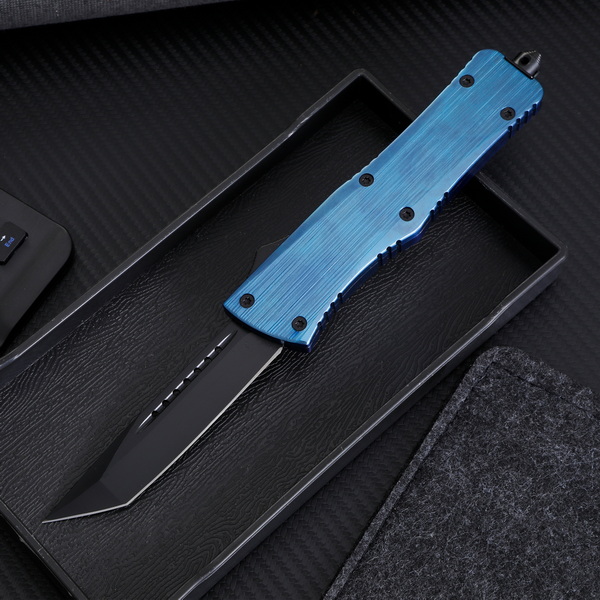
An OTF knife is a blade that deploys directly from the front of the handle, activated by a switch or button. This mechanism enables rapid, one-handed deployment, which is highly valued in high-pressure environments. OTF knives can be categorized by action type: single-action and double-action. Single-action models deploy automatically but require manual retraction or resetting, while double-action designs extend and retract with the same actuator, delivering faster cycle times and smoother operation under continuous use. Both variants have found favor in tactical applications due to their speed, compact form factor, and reliability when properly engineered and manufactured.
Precision tolerances and robust internal components reduce wobble and misdeployment. In challenging environments, sealing around the deployment system helps protect springs and gears from dust, grit, and moisture, extending service life and reducing maintenance downtime.
The blade is the heart of the knife. Steel choices influence edge retention, corrosion resistance, toughness, and ease of sharpening. Common considerations include stainless versus PM steels, and specific alloys such as CPM-S30V, CPM-S35VN, M390, CTS-204P, D2, and other modern equivalents. Blade geometry—whether straight-backed, drop point, tanto, spear point, or dagger—affects cutting performance, piercing capability, and maintenance expectations. For OEM programs, selecting a blade with predictable heat-treatment response and supply stability is essential.
Handle construction affects grip security, balance, weight, and durability. Materials like aluminum alloys with anodizing, G-10, and reinforced polymers are common in Tactical OTF Knives. Ergonomics—finger grooves, texturing, and palm swell—enhance control in wet or gloved conditions and influence user satisfaction across different regions and use cases.
A dependable locking mechanism, honest deployment feedback, and reliable retraction (where applicable) are non-negotiable for professional use. Safety certification and clear user instructions add confidence for international buyers, regulators, and end users.
Field-friendly designs that allow lubrication, inspection, and straightforward disassembly reduce downtime and enhance total cost of ownership for OEM clients. Clear service guides and access to spare parts are critical for sustaining long-term partnerships.
Form-factor must align with end-user needs and legal constraints in target markets. Lightweight configurations benefit EDC and agile operations, while heavier builds may emphasize durability for hard-use environments.
For OEM programs, consistent access to blade steel, springs, bearings, and handle components is essential. Establishing traceability, approved supplier lists, and contingency plans mitigates risk of disruption across international shipments.
Precision machining, heat treatment, surface finishing, and assembly processes must be standardized to deliver uniform performance. A robust QA system—covering dimensional checks, deployment tests, drop tests, corrosion resistance tests, and functional cycling—helps reduce defects and returns and supports sustainable production scaling.
OEM partnerships thrive on customization: laser engraving logos, color anodizing, special blade coatings, packaging variants, and value-added options such as training kits or branded documentation. Clear scope and feasibility discussions early in a project prevent scope creep and ensure timely delivery.
International markets bring diverse regulatory requirements around knife classification, permissible blade lengths, labeling, and packaging. Proactive compliance planning—comprising technical files, user manuals, safety warnings, and country-specific documentation—smooths import processes and reduces post-sale risk.
Understanding minimum order quantities, tooling readiness, and ramp-up timelines is critical. Flexible scheduling, buffer stock, and phased production runs help accommodate design iterations and market testing without compromising delivery commitments.
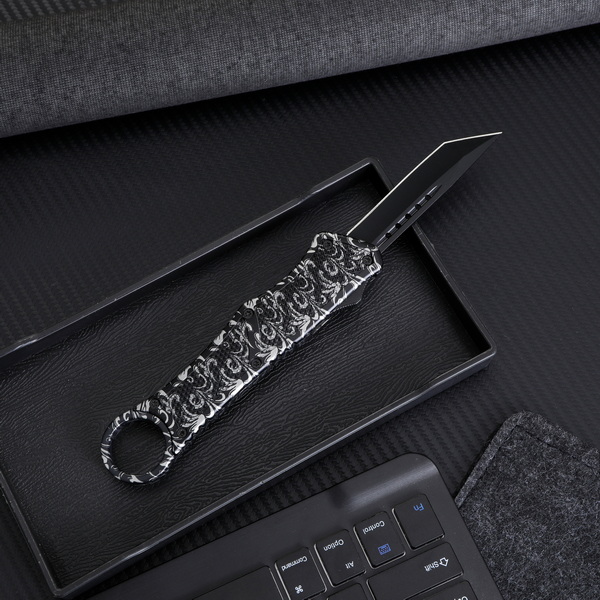
Emphasize performance attributes such as deployment speed, reliability under stress, rugged construction, and thoughtful safety features. Craft messaging that appeals to outdoor professionals, tactical operators, and premium OEM clients seeking customization and predictable supply.
- Military and law enforcement support tools, where reliability and legal compliance are paramount.
- Emergency responders requiring rapid threat assessment capabilities.
- Outdoor professionals and enthusiasts who value compact, durable, and easily maintained tools.
- OEM partners pursuing white-label or co-branded solutions for regional distributors.
Differentiate through deployment speed, edge retention, corrosion resistance, ergonomic optimization, and tailored packaging. Offer post-sale support, warranty structures, and transparent quality data to build trust with distributors and end users.
Balance material and process costs with performance benefits, warranty coverage, and service support. Provide tiered configurations and option packs to meet varied regional requirements and price points, while maintaining consistent quality.
Assess whether a single-action or double-action mechanism best suits the intended workflow, including the environment (wet, dusty, cold), frequency of deployment, and one-handed usability with gloves.
Identify environmental conditions and determine suitable blade steel, coatings, and handle materials. Consider factors such as corrosion resistance, edge stability, and maintenance practicality in target markets.
Incorporate robust safety features and ensure alignment with knife-law classifications and import regulations in target regions. Prepare labeling, user instructions, and safety warnings accordingly.
Confirm the feasibility of customization, production capacity, lead times, tooling readiness, and the ability to provide documentation and traceability. Validate quality systems and supplier approvals relevant to international buyers.
Establish clear warranty terms, spare parts availability, and service processes. Transparent communication on maintenance needs, replacement components, and warranty coverage strengthens partner confidence.
Request factory audits, references, and sample programs. Ensure traceability of critical components and adherence to international standards. Build a supplier risk register to monitor ongoing performance.
- Scope: Custom branding on blade etching, three handle colors, and tiered packaging with marketing inserts. Result: shortened time-to-market, stronger brand alignment, and higher distribution velocity.
- Scope: Emphasis on durable materials, traceable components, and comprehensive documentation. Result: smoother validation processes and increased adoption in regulated markets.
- Scope: Iterative blade geometry and handle ergonomics with direct user feedback loops. Result: optimized product-market fit before mass production, reducing risk and cost.
Knife laws vary widely by country and region. OEM partners must maintain awareness of classifications, permissible blade configurations, and import controls to avoid distribution delays or legal complications.
Clear labeling of country of origin, model, and safety warnings is essential. Provide comprehensive user manuals and safety guidelines tailored to regional requirements.
Pursue third-party certifications where appropriate to build buyer confidence, particularly for professional or government procurement contexts.
OEM collaborations enable brands to scale production, customize features, and leverage specialized manufacturing capabilities without building internal capacity from scratch.
A structured QA workflow with traceable components and transparent test data fosters trust with international buyers and distributors.
From design brief through prototyping, validation, and full-scale production, a well-defined partnership reduces time-to-market and enhances product consistency.
- Review manufacturing certifications, monthly production capacity, tooling readiness, and sample availability.
- Assess communication responsiveness, project management capabilities, and a mature quality system.
- Provide explicit specifications for blade length, material, finish, handle texture, packaging requirements, and lead times. Include testing plans and post-sale expectations.
- Initiate with controlled pilot orders to verify build quality, tolerances, and deployment performance before committing to larger runs.
- Establish NDAs, design ownership terms, and licensing arrangements to safeguard brand identity and proprietary designs.
Selecting the right Tactical OTF Knife for your needs requires a holistic assessment of deployment performance, material choices, ergonomic design, safety, regulatory compliance, and OEM capability. A successful OEM partnership blends engineering excellence with rigorous quality assurance, clear documentation, and transparent supply-chain practices. By aligning technical specifications with brand storytelling and market realities, manufacturers and distributors can deliver reliable, high-performance Tactical OTF Knives that meet international demand while maintaining safety, compliance, and long-term support.
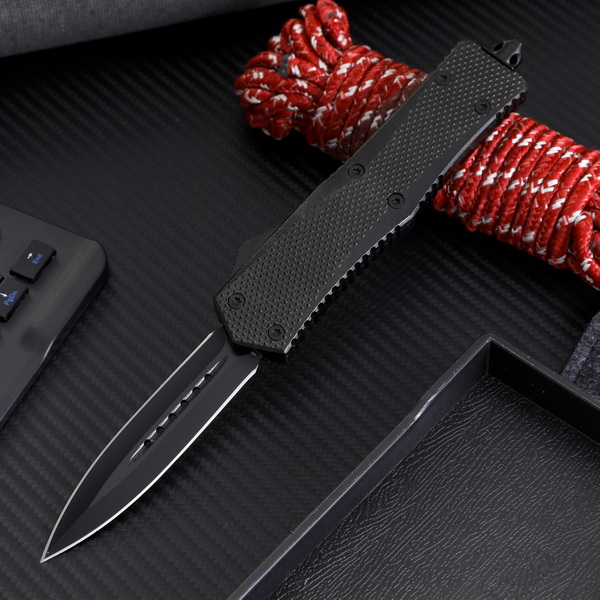
- An Out-the-Front knife deploys its blade straight out from the front of the handle via a button or switch, enabling rapid, one-handed deployment. This mechanism distinguishes OTF knives from folding or fixed-blade designs.[1][2]
- Single-action deploys automatically but requires manual retraction, while double-action deploys and retracts via the same actuator, enabling faster cycle times and smoother operation in repetitive use.[5][1]
- They offer rapid deployment, one-handed operation, compact form factors, and reliable performance under stress, which is highly valued in professional contexts and for premium OEM offerings.[8][1]
- Material quality and consistency, deployment mechanism reliability, safety features, customization options, lead times, and regulatory compliance across target markets.[3][1]
- Implement rigorous QA/testing protocols, supplier due diligence, clear product specifications, pilot runs, and strict traceability of components and processes.[3][5]
[1](https://bladeops.com/blog/otf-knife-buyers-guide-what-to-look-for-in-your-next-otf-knife/)
[2](https://www.selfdefensesupply.com/otf-knives-guide)
[3](https://knife-depot.com/blogs/sharpened-values/otf-knives-explained-the-complete-guide)
[4](https://www.tacticalsportinggoods.com/blogs/news/ultimate-guide-to-the-top-10-otf-knives-of-2025-features-reviews-and-recommendations)
[5](https://bladeops.com/blog/otf-knife-buyers-guide/)
[6](https://ravencresttactical.com/ravencrest-tactical-otf-knife-buyers-guide/)
[7](https://www.stunster.com/blog/the-ultimate-guide-to-otf-out-the-front-knives/)
[8](https://uppercuttactical.com/blogs/news/how-does-an-otf-knife-work)
[9](https://tacknivesusa.com/what-is-an-otf-knife-and-how-is-it-different-from-other-switchblades/)
[10](https://www.youtube.com/watch?v=WN8PDfEbZw4)


