
Views: 222 Author: Loretta Publish Time: 2025-10-08 Origin: Site


Content Menu
● The Importance of Customizing OTF Knives
● Research and Concept Development
● Selecting the Optimal Blade Style and Steel
>> Blade Coatings and Finishes:
● Designing the Handle: Comfort Meets Style
● Choosing the Right OTF Mechanism and Lock
● Adding Custom Branding and Personalization
● Collaborating with Reliable Manufacturers
● Prototyping, Testing, and Quality Assurance
● Marketing Custom OTF Knives Effectively
● Legal and Logistical Considerations
● FAQ
>> 1. What makes OTF knives different from traditional folding knives?
>> 2. Can I customize the type of steel used in my OTF knives?
>> 3. How long does it take to produce a custom OTF knife order?
>> 4. Are OTF knives legal internationally?
>> 5. What are common customization options for OTF knives?
Outdoor Tactical Folding (OTF) knives have become a highly sought-after tool among outdoor enthusiasts, collectors, tactical professionals, and everyday users. Their sleek, compact design, rapid one-handed deployment, and functional reliability make them a staple in the knife market. For brands, wholesalers, and retailers looking to carve out a niche, customizing OTF knives can create a unique product line that resonates with target customers while enhancing brand identity and profitability. This article provides a detailed, step-by-step guide on how to successfully customize OTF knives for your brand or store, offering insights on design, materials, manufacturing, and marketing strategies.
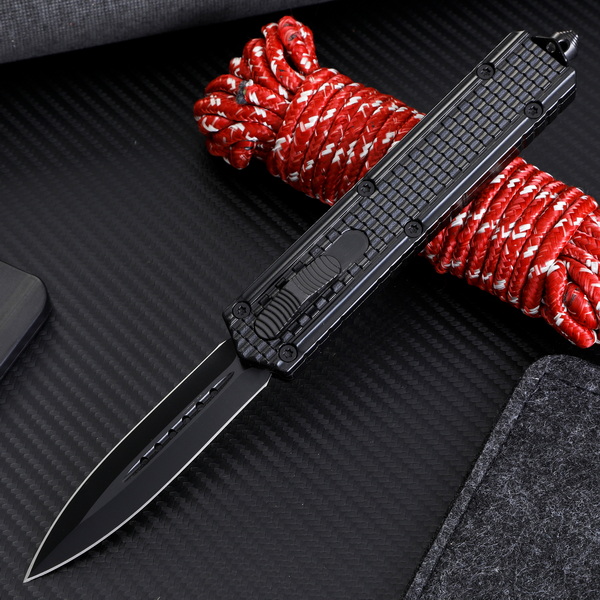
An OTF knife—short for Out-The-Front knife—is defined by its blade's deployment style. Rather than pivoting open like traditional folding knives, an OTF knife's blade slides straight out from the handle through a spring-loaded mechanism. This deployment method enables fast and intuitive one-handed operation, a feature prized in tactical and emergency situations.
OTF knives come in two main types: single-action, where the blade deploys automatically but must be retracted manually, and double-action, where a single switch both deploys and retracts the blade. This functionality influences the knife's complexity, cost, and appeal depending on your target market.
Custom OTF knives can give you a competitive edge in a rapidly growing market. Customization enables you to:
- Define Your Brand Identity: Unique design elements and personalized branding differentiate your products visually and functionally.
- Cater to Specific Needs: From tactical users who require robust features to collectors who prize aesthetics, customization allows you to tailor products for different niches.
- Add Value and Quality: Superior materials, coatings, and ergonomic designs increase perceived value and justify premium pricing.
- Build Loyalty: Offering limited editions or bespoke options creates exclusivity and enhances customer loyalty.
Before beginning the customization process, conduct thorough research on current OTF knife trends, materials, customer preferences, and regulatory requirements in your sales regions. Use this research to generate inspiration and practical concepts for your custom knife line.
Explore the latest innovations in blade shapes, handle ergonomics, blade coatings, locking mechanisms, and colorways. Pay attention to what your target customers value most—whether it is tactical reliability, compactness, aesthetic appeal, or multifunctionality.
The blade is the heart of any knife, and choosing the right style and material determines its performance and appeal.
- Tanto: Known for its reinforced tip, ideal for piercing tough materials.
- Drop Point: A versatile blade shape with a strong tip, good for general use.
- Spear Point: Symmetrical design optimal for penetration and precision cutting.
The steel selection influences sharpness, edge retention, corrosion resistance, and price. High-quality steels widely used in OTF knives include:
- D2: Semi-stainless tool steel with high wear resistance.
- S35VN: Premium stainless steel offering excellent toughness and edge retention.
- M390: High-end steel known for corrosion resistance and extraordinary durability.
Coatings not only protect the blade but enhance aesthetics. Popular options include matte black oxide, stonewashed finish, titanium nitride, and anodizing. These coatings also reduce glare and increase scratch resistance.
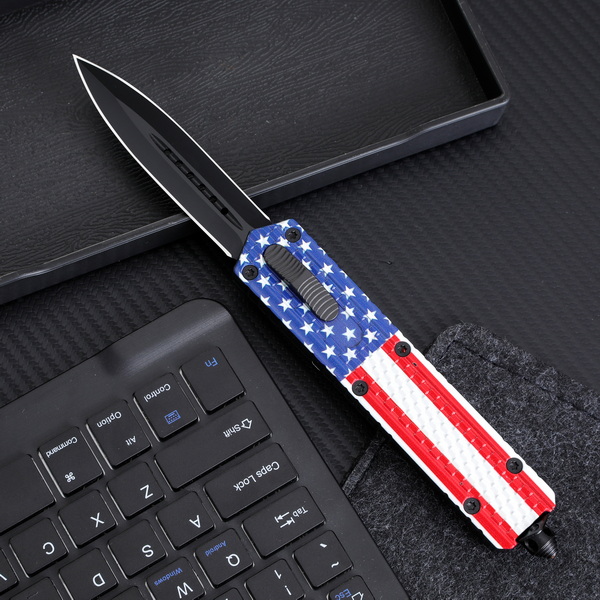
The handle design significantly impacts user experience in grip, balance, and overall ergonomics. It also serves as a canvas for brand expression.
- Aluminum Alloy: Lightweight and durable, often anodized in various colors.
- Carbon Fiber: Strong, lightweight, with a distinctive woven look.
- G10: Composite material offering excellent grip texture and toughness.
- Titanium: Premium metal that combines strength, corrosion resistance, and luxury appeal.
Ergonomics should deliver a secure grip, especially for tactical or outdoor use in wet or rough conditions. Textured surfaces, finger grooves, and rubber inserts help prevent slipping.
Select handle colors and finishes that align with your brand palette. Limited edition knives can feature custom colors or patterns to enhance collectability.
The mechanism behind blade deployment and locking is critical for the knife's reliability and user safety.
- Double-Action Mechanism: Enables the blade to deploy and retract with the same thumb slide, offering convenience but requiring precise engineering.
- Single-Action Mechanism: Deploys the blade with a button or slide but requires manual retraction, simpler and often more durable.
Ensure the locking system securely holds the blade in both extended and retracted positions to prevent accidental closure or deployment.
Custom branding makes your OTF knives identifiable and memorable.
- Laser Engraving: Provides precise and durable logos or patterns on blade or handle surfaces.
- Custom Sheaths: Embroidered or molded sheaths enhance perceived value and provide functional protection.
- Packaging Design: Consider premium boxes or sleeves that tell your brand story and create a luxury unboxing experience.
Custom serial numbers or edition markings can further personalize limited runs.
A key to successful OEM knife customization is partnering with an experienced, dependable manufacturer. In China, Yangjiang Ruizhen Industry and Trade Co., Ltd. stands out for their expertise in producing high-quality, customizable OTF knives for global clients.
Benefits of working with a professional OEM factory include:
- Access to a wide range of steel grades, coatings, and handle materials.
- Stringent quality control processes to ensure consistency.
- Bulk production capabilities with flexibility for custom orders.
- Competitive pricing that supports profitable margins.
- Assistance with regulatory compliance.
Before full-scale production, develop prototypes to evaluate the knife's performance, ergonomic comfort, and durability. Field testing by individuals representing your end users provides real-world feedback and identifies areas for refinement.
Assess the knife's:
- Spring tension and blade deployment smoothness.
- Lock integrity under stress.
- Corrosion resistance during exposure to moisture.
- Handle grip and comfort during extended use.
Refine designs based on this feedback to ensure final products meet or exceed quality expectations.
A good marketing strategy can amplify your brand's impact and boost sales.
- Visual Content: High-quality photos and compelling videos showing the knife in tactical, outdoor, or everyday scenarios attract attention.
- Unique Selling Points: Emphasize your custom features such as exclusive blade steels, ergonomic handles, or limited editions.
- Storytelling: Share your brand's commitment to quality and innovation through product narratives.
- Social Media Engagement: Collaborate with influencers and engage in outdoor or knife enthusiast communities for authentic promotion.
- Customer Testimonials: Use reviews and unboxing videos to build trust.
Navigating legal restrictions is critical when distributing OTF knives internationally. Many countries classify OTF knives as concealed weapons and regulate their sale and carry.
- Research import and export regulations carefully.
- Provide customers with clear information regarding legal ownership.
- Evaluate shipping options that comply with customs and transportation rules.
On logistics, work with manufacturers offering transparent production timelines and reliable shipping services to meet consumer demand promptly.
Customizing OTF knives is a strategic way to advance your brand or store in an ever-evolving marketplace. By meticulously choosing blade designs, steels, handle materials, reliable mechanisms, and personalized branding, you create products that captivate customers and fulfill specific needs. Partnering with a trusted manufacturer like Yangjiang Ruizhen Industry and Trade Co., Ltd. ensures high manufacturing standards and smooth OEM cooperation. With a focused marketing approach and attention to quality, your custom OTF knives can become a hallmark of innovation, reliability, and style.
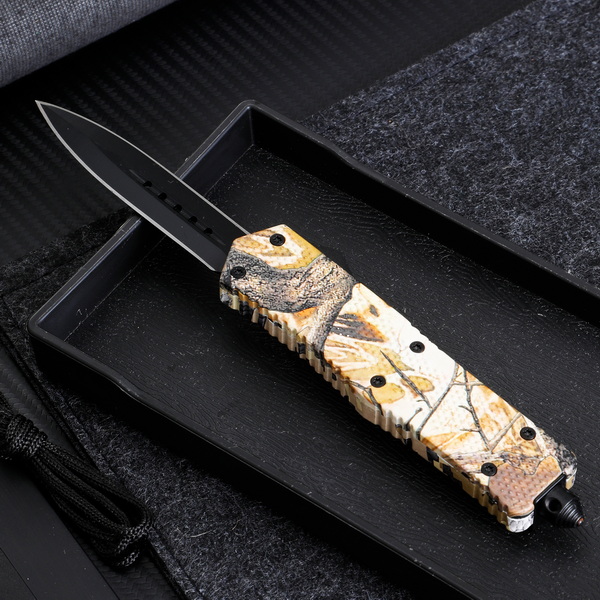
OTF knives deploy their blades straight out of the handle with a spring mechanism, enabling rapid one-handed use, whereas traditional folding knives pivot open on a hinge.
Yes, customized OTF knives can be manufactured with a variety of premium steels such as D2, S35VN, and M390 based on performance needs and budget.
Production times generally range from 30 to 60 days depending on order quantity, design complexity, and material availability.
Legality depends on the country or region's knife laws. It is essential to verify regulations concerning purchase, ownership, and carry before marketing internationally.
Options include blade styles, handle materials and colors, locking mechanisms, blade coatings, laser engraving, sheath design, and packaging customization.


