
Views: 222 Author: Leah Publish Time: 2025-11-14 Origin: Site


Content Menu
● The Mechanics and Appeal of OTF Pocket Knives
>> What Makes OTF Pocket Knives Unique
>> Historical and Cultural Significance
● Understanding OTF Knife Construction
>> Internal Engineering: Springs, Tracks, and Locks
>> Blade Profiles and Edge Options
● Handle Materials and Ergonomics
● Blade Size and Legal Considerations
● Action Types and Their Benefits
>> Single-Action OTF Pocket Knives
>> Double-Action OTF Pocket Knives
● Deployment Mechanism and Safety Features
● Real-World Applications for OTF Pocket Knives
● Top Criteria for Selecting an OTF Pocket Knife
● Advanced Considerations: Custom OTF Pocket Knives
● OTF Pocket Knife Safety and Etiquette
● Frequently Asked Questions (FAQ)
>> 1. What does OTF mean in OTF Pocket Knife?
>> 2. Are OTF Pocket Knives legal everywhere?
>> 3. What is the difference between single-action and double-action OTF knives?
>> 4. What maintenance steps ensure longevity for OTF Pocket Knives?
>> 5. What blade steel is recommended for collectors and enthusiasts?
Selecting the right OTF pocket knife (Out-The-Front Pocket Knife) is a turning point for any collector or knife enthusiast. With a unique deployment mechanism, diverse materials, and a legacy of innovative design, OTF Pocket Knives serve as quintessential collectibles and reliable everyday tools. This comprehensive guide expands on every crucial aspect to ensure collectors and enthusiasts can confidently select, maintain, and appreciate these precision instruments.[1][4][11]
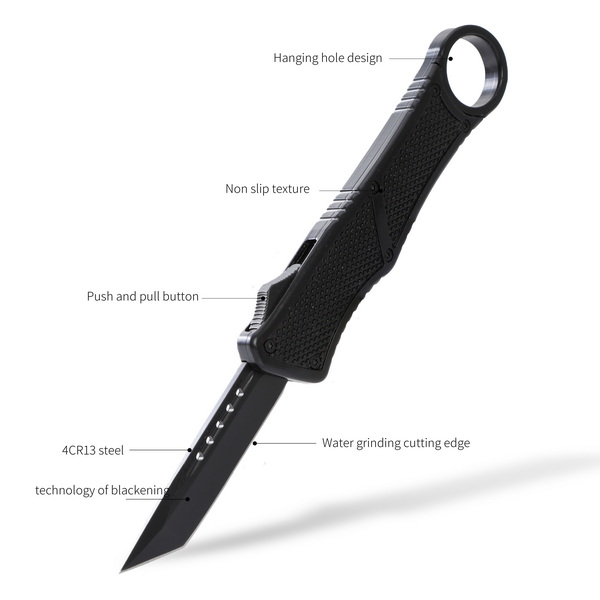
An OTF Pocket Knife stands out for its automatic deployment mechanism. Unlike traditional folding knives, the OTF blade ejects in a straight line from the front of the handle, driven by an internal spring system. This design enables rapid, one-handed blade access—making OTF knives ideal for tactical, emergency, and everyday use.[4][5][1]
OTF knives are available as single-action and double-action models:
- Single-action OTF Pocket Knives: Deploy automatically but require manual retraction. They have fewer internal parts, yielding robust performance and greater simplicity at a lower cost.[5][6][4]
- Double-action OTF Pocket Knives: Deploy and retract using the same thumb slide or switch. Their complex construction allows rapid, repeatable one-handed operation—favored by professionals and enthusiasts who value convenience.[6][4][5]
OTF Pocket Knives have roots tracing back to the early 19th century in Europe, but they gained widespread appeal in the mid-20th century as tactical and collectible items. Their distinct appearance, sound, and mechanical complexity have made them iconic. Conversely, concerns about misuse have led to regulatory and legal restrictions in various regions.[12][1][4]
The heart of any OTF Pocket Knife is its spring system—usually a high-carbon steel coil that stores and releases energy when the knife is activated. This spring propels the blade along a set of precision-machined tracks inside the handle, providing both speed and guidance during deployment and retraction.[1][5]
A robust locking mechanism ensures that once deployed, the blade stays in place. Typical lock styles include ball-bearing, mechanical, or friction locks, each tailored for security and performance.[5][1]
OTF Pocket Knife blades come in a variety of profiles:
- Drop Point: All-purpose, offering durability and easy control—excellent for general use.[1]
- Tanto: Strong, angular tip for piercing—favored for tactical or rescue purposes.[1]
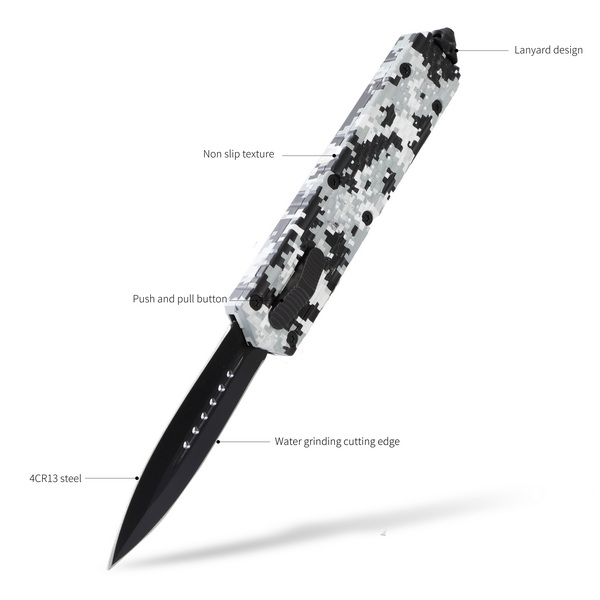
- Dagger/Spear Point: Double-edged for optimal penetration, though these often have tighter legal restrictions.[5][1]
Edge types include straight (easy to sharpen and clean), serrated (effective for tough materials), and partially serrated (for versatility). Single-edge models offer safer day-to-day utility, while double-edge versions are generally chosen for self-defense.[3]
- Premium Steels (S35VN, M390, CTS-204P): Top-grade edge retention and corrosion resistance, though sharpening may require advanced tools.[1]
- Standard Steels (154CM, AUS-8, D2, 8Cr13MoV): Balance between performance and ease of sharpening—suitable for frequent maintenance or heavy use.[10][1]
The handle plays a pivotal role in both comfort and durability:
- Aluminum: Lightweight, corrosion-resistant, and often textured for grip—common in premium OTF knives.[1]
- Carbon Fiber: Ultra-light and visually striking, though sometimes less secure when wet.[1]
- G10 and Other Composites: Superior texturing and grip, making them popular for tactical and field use.[1]
- Steel: Heavier, but appropriated for maximum toughness and a solid, "premium" feel.[1]
Ergonomic design enhances control and reduces fatigue, especially when the OTF Pocket Knife is used for extended periods.
Blade length affects functionality, legal compliance, and portability:
- Mini OTF Pocket Knives: Blades under 2 inches—suitable for keychain carry and everyday small tasks.[3]
- Medium OTF Pocket Knives: 2 to 3 inches—balanced for legal carry in many regions.[3][1]
- Large OTF Pocket Knives: Over 3 inches—maximum utility and cutting power, better for heavy-duty or specialized applications but subject to stricter legal scrutiny.[3][1]
Many jurisdictions cap legal blade lengths at 3 or 3.5 inches for automatic knives. Always check local laws before purchasing or carrying an OTF Pocket Knife to avoid penalties.[12][1]
These models are mechanically simpler, more reliable (fewer moving parts), and usually more budget-friendly. The manual retraction offers a tactile, satisfying experience and additional control, making them ideal for enthusiasts who enjoy hands-on mechanics. They also often face fewer legal issues.[4][6][5]
Favored for daily carry, rescue operations, and tactical use, double-action OTF knives excel in speed and one-handed convenience. They can, however, be more complex to maintain and generally cost more because of their intricate internal parts.[4][5]
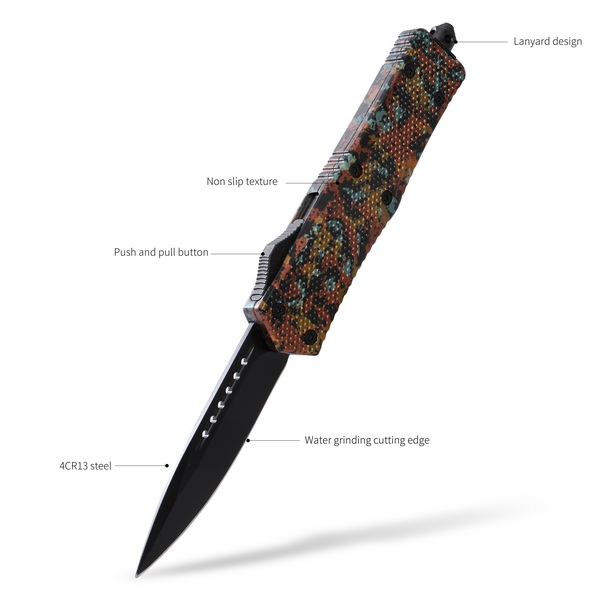
OTF Pocket Knives utilize either a button, slide, or lever as the deployment mechanism. High-quality models implement a safety lock to prevent unintentional blade release, providing peace of mind—especially if the knife is carried in a pocket or bag.[5][1]
Security features may include:
- Safety switch to block accidental activation.
- Blade retracement safeguards.
- Glass-breakers and emergency tools for professional or tactical needs.
While prized by collectors, OTF Pocket Knives are highly functional tools for:
- Everyday cutting tasks and office use.
- Outdoor activities including camping, hiking, and fishing.
- Self-defense and tactical operations by law enforcement and first responders.
- Emergency rescue scenarios requiring swift blade access.
Their versatility, reliability, and compact sizes allow OTF Pocket Knives to excel across many scenarios.
Consistent maintenance is key to preserving performance:
- Use dry, non-gumming lubricants on the spring and tracks.
- Blow out debris with compressed air, especially after outdoor use.
- Avoid disassembly unless instructed by the manufacturer, as improper handling can affect warranty and function.[13][14]
- Sharpen regularly according to use; a quality sharpening system or professional service is often required for premium steels.[1]
- Wipe blades clean and apply a thin coat of oil after exposure to sweat, water, or corrosive materials.
- Store the OTF Pocket Knife in a cool, dry environment.
- Display options—open or closed—are largely aesthetic, but always keep the blade clean and lubricated, especially before long-term storage.
When selecting an OTF Pocket Knife, consider:
- Intended Use: EDC, collection, tactical, or emergency?
- Legal Compliance: Is your desired blade length and mechanism legal in your area?
- Blade Quality: What steel and grind best matches your cutting needs?
- Handle Ergonomics: Does it feel secure and comfortable in your hand?
- Action Type: Do you prefer simple, ultra-reliable single-action or the convenience of double-action?
- Safety: Does it feature a robust safety lock and reputable deployment mechanism?
- Brand and Warranty: Reputable brands often provide better craftsmanship, warranties, and support.
Benchmark brands prized for quality and innovation include Microtech, Benchmade, Boker, RavenCrest Tactical, and others.[15][16][17]
For enthusiasts seeking standout collectibles or performance, custom and semi-custom OTF Pocket Knives offer unique materials, hand-finished details, and artisan-grade performance. Expect premium steels, bespoke handle materials (such as rare woods, stabilized bone, or meteorite), fine filework, and personalized engravings.
Custom knives can be a significant investment, but they are the jewels of any advanced collection and represent the pinnacle of OTF Pocket Knife craftsmanship.
Responsible OTF Pocket Knife ownership includes:
- Using the knife only for its intended tasks—never as a prying or striking tool.
- Storing out of the reach of children.
- Respecting legal constraints at public venues, airports, or other sensitive areas.
Collecting and carrying OTF Pocket Knives is both a privilege and a responsibility.
Choosing the perfect OTF Pocket Knife requires balancing mechanical excellence, visual allure, legal requirements, and hands-on feel. Collectors and enthusiasts should focus on blade material, deployment mechanism, safety features, and brand integrity for years of satisfaction and performance. With regular maintenance and a thoughtful approach, an OTF Pocket Knife can become a centerpiece in any collection—or a faithful companion for everyday tasks.
OTF stands for Out-The-Front, describing a knife whose blade extends straight out of the handle's front via an automatic mechanism, rather than folding from the side.[4][5]
No. OTF knives are strictly regulated in many jurisdictions, often depending on blade length and mechanism. Verify local laws before purchasing or carrying one to avoid penalties.[12][1]
Single-action OTF knives deploy automatically but need manual retraction. Double-action knives deploy and retract using the same control, offering greater convenience.[6][4][5]
Regularly lubricate the internal mechanism with a dry knife lubricant, clear debris with compressed air, and sharpen as needed, especially after heavy use or exposure to moisture. Avoid disassembly unless permitted by the brand.[14][13]
Premium steels such as S35VN, M390, D2, and CTS-204P offer exceptional edge retention and corrosion resistance, making them highly sought after for both collection and use.[10][1]
[1](https://knife-depot.com/blogs/sharpened-values/otf-knives-explained-the-complete-guide)
[2](https://bladeops.com/blog/otf-knife-buyers-guide/)
[3](https://tacknivesusa.com/what-is-an-otf-knife-and-how-is-it-different-from-other-switchblades/)
[4](https://www.selfdefensesupply.com/otf-knives-guide)
[5](https://nobliecustomknives.com/what-is-an-otf-knife-and-how-does-an-otf-knife-work/)
[6](https://uppercuttactical.com/blogs/news/how-does-an-otf-knife-work)
[7](https://ravencresttactical.com/otf-knife-buyers-guide/)
[8](https://www.stunster.com/blog/the-ultimate-guide-to-otf-out-the-front-knives/)
[9](https://www.youtube.com/watch?v=WN8PDfEbZw4)
[10](https://swordsswords.com/blog/otf-knife-ultimate-buyers-guide-get-the-right-knife/)
[11](https://www.tacticalsportinggoods.com/blogs/news/understanding-otf-knives-a-comprehensive-guide-to-their-features-and-uses)
[12](https://ravencresttactical.com/navigating-otf-knife-legalities-what-you-need-to-knowotf-knife-legalities/)
[13](https://axialknives.com/blogs/the-weekly-blade/how-to-clean-and-care-for-your-otf-knife-no-disassembly-required)
[14](https://www.bladehq.com/blog/basic-otf-care-maintenance)
[15](https://bladeops.com/knives/out-the-front/)
[16](https://ravencresttactical.com)
[17](https://microtechknives.com/collections/otfs)


